
What are Early Warning Signs of Chassis Rust?
- Lloyd Saunders
- 13 minutes ago
- 6 min read
For many vehicle owners in the UK, the chassis is a case of "out of sight, out of mind." We spend hours polishing the paintwork and vacuuming the interior, yet the most critical structural component of the vehicle: the chassis: remains hidden beneath the car, vulnerable to the relentless assault of road salt, moisture, and grime.
Rust is a progressive disease for metal. It doesn't happen overnight, but once it gains a foothold, it spreads with devastating efficiency. Identifying the early warning signs of chassis rust is the difference between a simple preventative car rustproofing treatment and a costly, stressful MOT failure involving structural welding.
At Rustec, we specialise in the preservation and restoration of vehicle underbodies. In this comprehensive guide, we will detail exactly how to spot the early indicators of corrosion before they compromise your vehicle's safety and resale value.
The Deceptive Appearance: Why "Looks Fine" Isn't Enough
A common question we receive at Rustec is: "Why does my van look fine on the outside but is rusting underneath?"
Modern manufacturing often includes high-quality paint finishes on the body panels, but the same level of protection is rarely afforded to the chassis and suspension components. Furthermore, many modern vans and 4x4s feature box sections and hollow frames. While these are excellent for structural rigidity, they act as traps for salt-laden water.
Corrosion often starts from the inside out. By the time you see rust on the exterior of a sill or a frame rail, it has often already compromised the integrity of the metal from within. This is why a professional automotive undercoating near me search usually leads owners to Rustec; we look beyond the surface to the core structural health of the vehicle.
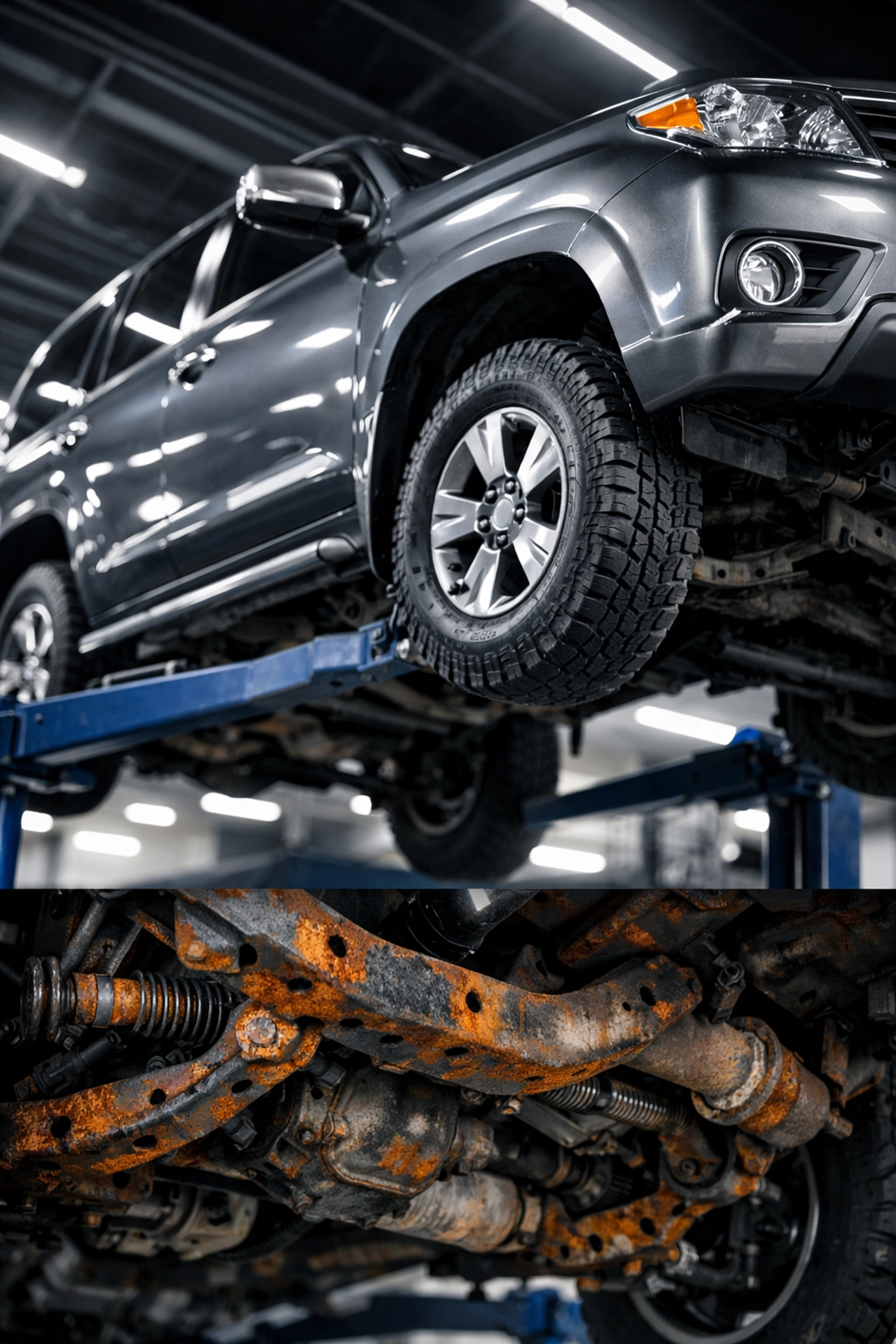
01: Bubbling or Blistering Paintwork
One of the most reliable early warning signs of chassis rust is the appearance of small bubbles or blisters under the paint or factory underseal. These aren't just aesthetic blemishes; they are clear indicators that oxidation is occurring beneath the protective layer.
When moisture penetrates a microscopic chip in the paint, it reacts with the steel to form iron oxide (rust). As rust forms, it expands, pushing the paint away from the metal surface. If you notice "swollen" areas on your chassis rails, sills, or suspension mounts, the rust process has already begun. At this stage, the rust is likely still "surface rust," but if left untreated, it will quickly progress into structural pitting.
02: The Appearance of "Orange Dust" or Discoloration
During your own visual inspection, keep an eye out for fine, orange or reddish-brown dust. This is often found around bolts, seams, and where two metal components meet. This discoloration is the earliest visible stage of surface rust.
While it may look harmless, this "rust staining" indicates that the factory protection has failed. In the UK’s damp climate, this surface oxidation can transition into scaly rust in a matter of months. Identifying this early allows for a much simpler intervention. You can learn more about the early stages in our post on how to remove rust from my car’s underside.
03: Scaly Texture and Flaking Metal
If you run your hand along a chassis rail (while the vehicle is safely supported) and feel a rough, sandpaper-like texture, or if bits of metal flake off under your touch, you have moved past the "warning" stage and into active corrosion.
Scaly rust occurs when the oxidation has penetrated deeper into the metal. At this point, the metal is beginning to delaminate. While this is more serious than surface staining, a high-quality car undercoating near me service can often stop this in its tracks: provided the metal still retains its structural thickness. If you are unsure if your vehicle has reached the point of no return, read our expert analysis on whether a rusty chassis can be saved.
04: Rust Staining Around Wheel Arches and Sills
The wheel arches are the "front lines" of the battle against rust. They are constantly pelted with road debris, stones, and salt spray. Early signs of trouble here include brown staining along the inner lip of the arch or where the plastic liner meets the metal.
Because these areas are so exposed, they are often the first place an MOT tester will look. If you spot rust here, it is a virtual certainty that the rest of the underbody requires a comprehensive inspection. For owners of specific commercial vehicles, such as the Ford Transit, this is a notorious weak point. We have developed a specific rust prevention solution for Ford Transit vans to address this very issue.
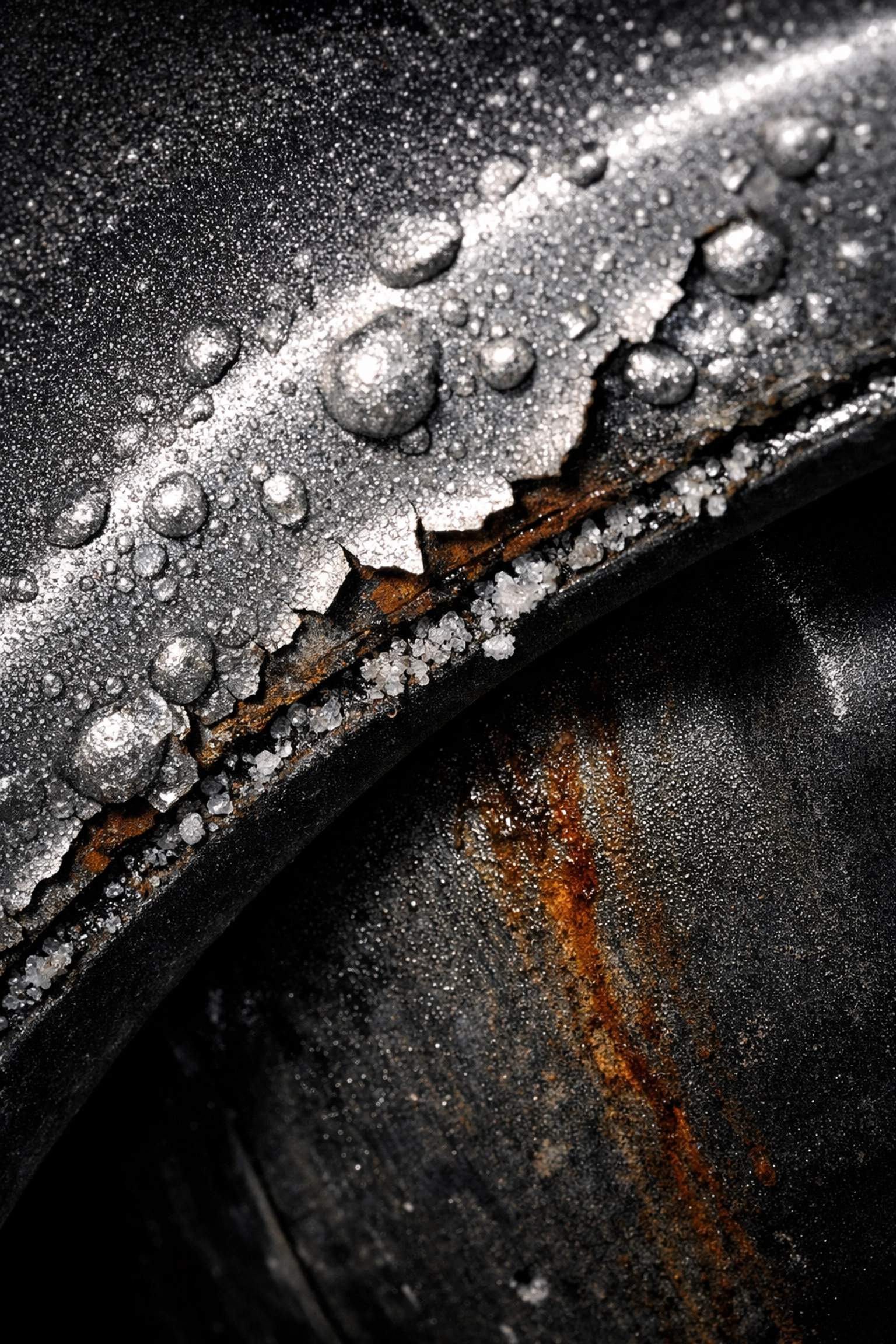
Surface Rust vs. Structural Rust: Knowing the Difference
It is vital to distinguish between surface rust and structural rust, especially when preparing for an MOT.
Surface Rust: This is purely superficial. It is the oxidation of the very top layer of metal. It has not yet "eaten" into the component. It is not an MOT failure, but it is a warning that the vehicle needs car rustproofing immediately.
Structural Rust: This is also known as "excessive corrosion." It occurs when the rust has thinned the metal significantly or created holes. If this occurs within 30cm of a load-bearing point (like a suspension mount or seatbelt anchorage), it is an automatic MOT failure.
Understanding this distinction is key to managing your vehicle's maintenance budget. Treating surface rust now with a premium product like Dinitrol 4941 is significantly cheaper than paying for structural welding later. You can find more detail on this in our guide: Why your MOT failed due to rust and what to do next.
The Rustec Professional Inspection Process
At Rustec, we don't just "spray over" the problem. Our process is designed to identify these early warning signs and address them with scientific precision.
01: Comprehensive Inspection & Strip Down: We remove all undertrays and wheel arch liners to reveal the hidden areas where rust loves to hide.
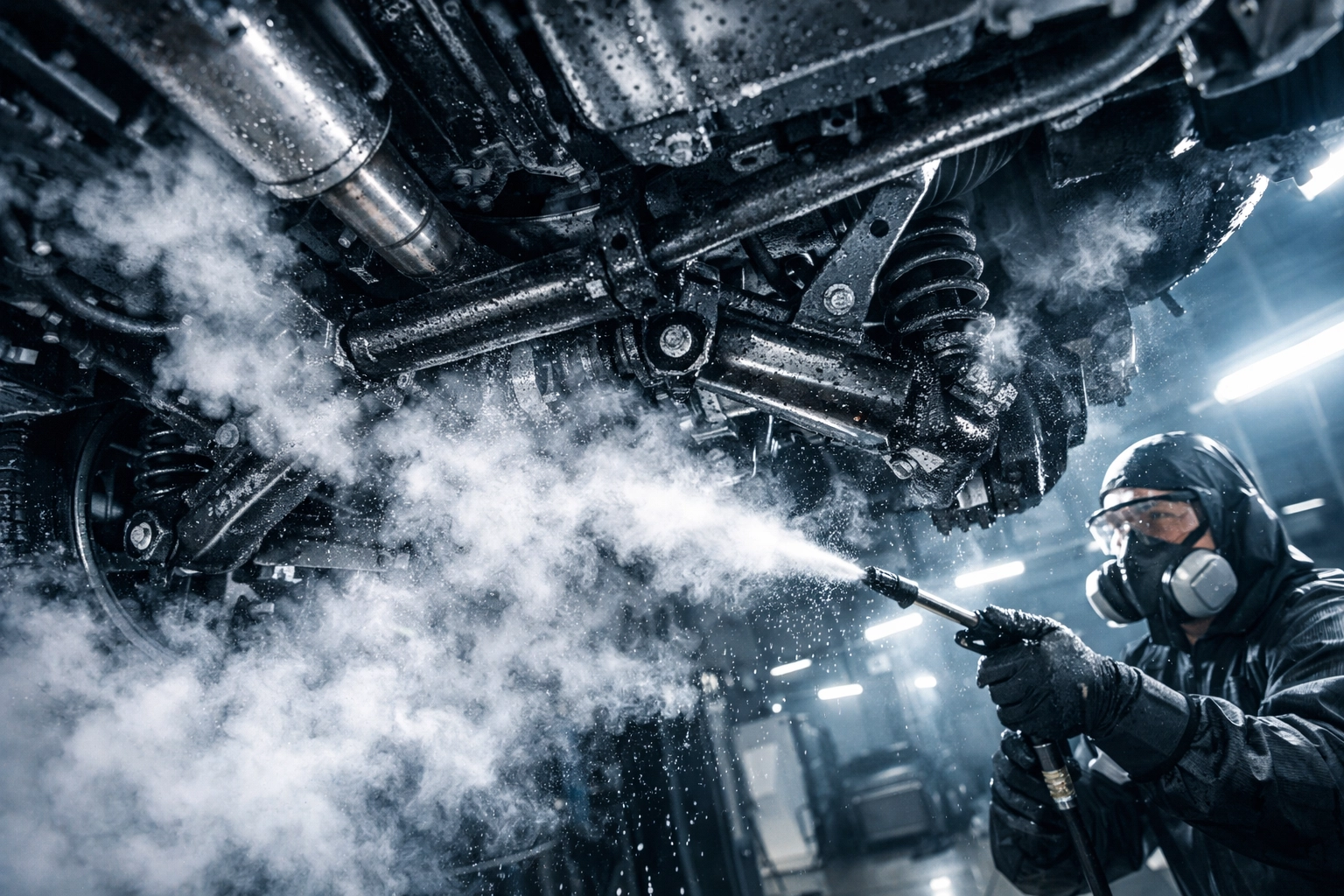
02: Thorough Undercarriage Steam Clean: We use high-pressure, high-temperature steam to remove all grease, salt, and loose debris. This is the only way to truly see the condition of the metal.
03: Meticulous Masking: We protect your brakes, exhaust, and electrical sensors. We take pride in our precision; your vehicle's mechanical components will remain untouched by the coating.
04: Professional Rust Treatment: If surface rust is found, we treat it with high-quality converters or primers before applying the final protective layers.
05: Application of Premium Dinitrol® Products: We use the industry-leading Dinitrol® system, including cavity waxes for internal box sections and heavy-duty underbody waxes for external surfaces.
Why You Should Never Wait Until the MOT
Checking for rust only once a year during an MOT is a high-risk strategy. By the time an MOT tester flags rust, it is often because it has become a safety issue.
By proactively searching for automotive undercoating near me and booking a professional treatment, you are investing in the longevity of your "pride and joy." A rust-free vehicle not only performs better and stays safer but also commands a much higher resale value. Prospective buyers of 4x4s and classic cars will almost always look under the vehicle before they look at the service history.
Frequently Asked Questions
Can I just paint over the rust myself? We strongly advise against this. Standard paints often trap moisture against the metal, actually accelerating the corrosion process. Professional rustproofing requires specific products that chemically neutralise oxidation. For a deeper dive, see our post: Is it safe to paint over rust before underseal?
Does rustproofing last forever? While our treatments are designed for maximum longevity, the UK’s environment is harsh. We provide an official treatment service booklet and recommend periodic inspections to ensure your "Life Long Dinitrol®" protection remains intact. You can read more about how long rustproofing lasts here.
What if I have an electric vehicle? Electric vehicles are just as susceptible to chassis rust as internal combustion cars, often more so due to the weight of the batteries stressing the frame. We have specialised techniques for EVs; check out Do electric cars rust? for more information.
Protect Your Investment with the Rustec Guarantee
Don't let early warning signs turn into permanent damage. Whether you have a brand-new vehicle that needs its first layer of protection or an older car showing the first signs of "orange dust," Rustec is here to help.
Our specialist team provides a 100% satisfaction guarantee, photo documentation of the work performed, and even a free courtesy car (subject to availability) while your vehicle is in our care. We treat every vehicle with the meticulousness it deserves, ensuring it stays rust-free for its entire life.
Ready to safeguard your vehicle? Enquire by filling out the quick quote box below, or if you still have a question or would like more information, don't hesitate to get in touch. Click the button below and ask away: our team of experts is ready to help you maintain your vehicle in optimal condition for a lifetime.
Comments