
Is it safe to paint over rust before underseal?
If you've spotted rust forming on your vehicle's underside, your first instinct might be to grab a tin of paint and cover it up before applying underseal. It seems logical: hide the rust, seal it in, problem solved. Unfortunately, this approach can actually make matters significantly worse.
The short answer is no: painting over rust before applying underseal is not safe and can accelerate corrosion rather than prevent it.
Understanding why this common approach fails is essential for anyone serious about protecting their vehicle from rust. In this comprehensive guide, we'll explain the science behind why this method backfires, what actually happens beneath those layers, and the correct sequence of treatments that will genuinely protect your vehicle for years to come.
Why Painting Over Rust Creates More Problems
When rust forms on metal, it creates an unstable, porous surface. Rust isn't simply a discolouration: it represents active corrosion where iron oxide is continuously forming as the metal reacts with moisture and oxygen.
Here's what happens when you paint directly over rust:
The paint cannot properly adhere to the rough, uneven rust surface
Moisture and oxygen remain trapped beneath the paint layer
The rust continues spreading underneath, unseen
Paint begins to bubble, flake, and peel as rust expands beneath it
You've now hidden the problem whilst it grows worse
Painting over rust without proper preparation is essentially applying a cosmetic cover over an active wound. The underlying issue continues to deteriorate, often more rapidly than if left untreated, because moisture becomes trapped in a warm environment: ideal conditions for accelerated corrosion.
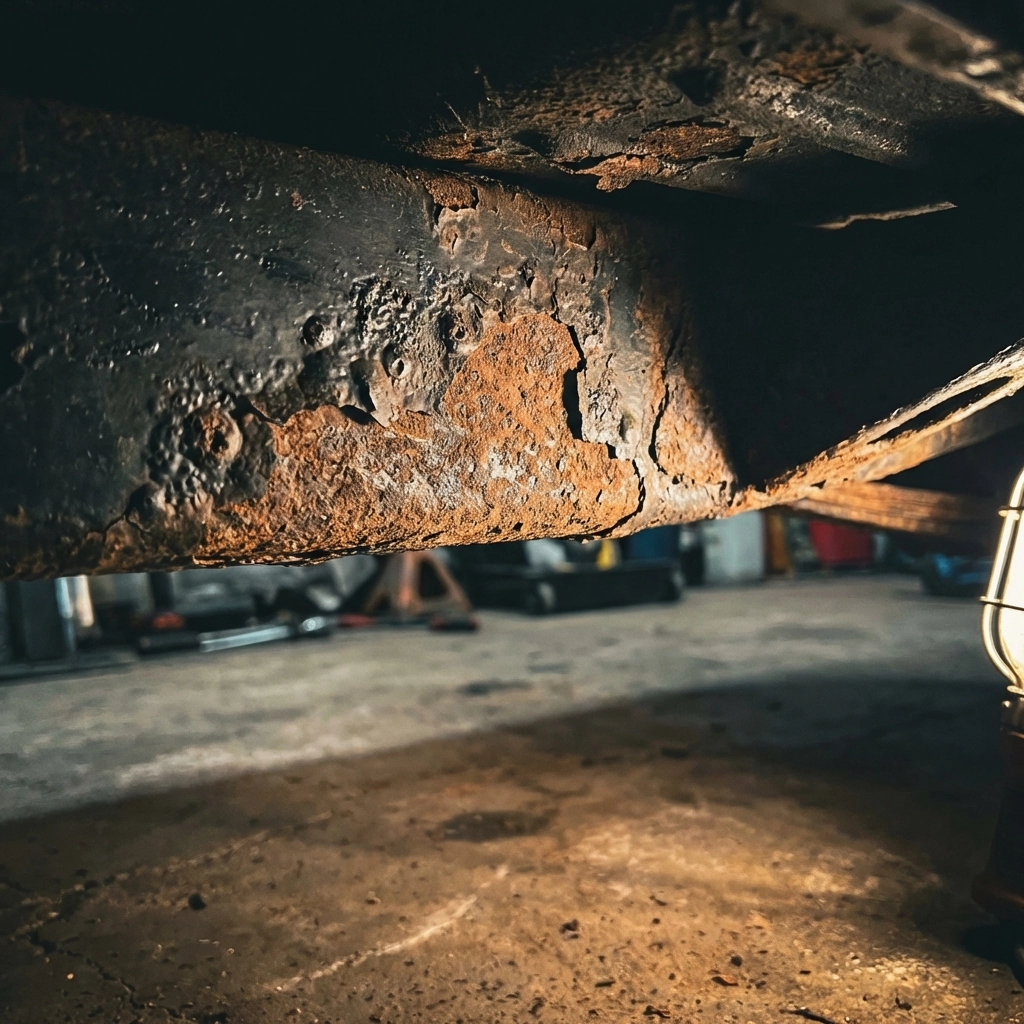
The Underseal Trap: A Critical Warning
The situation becomes significantly more problematic when underseal is applied on top of paint that's covering rust. This creates what professionals call a "moisture trap": and it's one of the most damaging mistakes vehicle owners make.
Here's the sequence of failure:
Rust is painted over without proper treatment
Underseal is applied on top of the paint
Any moisture present becomes sealed between layers
Water cannot evaporate and remains in constant contact with metal
Corrosion accelerates dramatically beneath the sealed layers
The underseal eventually cracks or lifts, allowing more moisture ingress
By the time damage becomes visible, structural integrity may be compromised
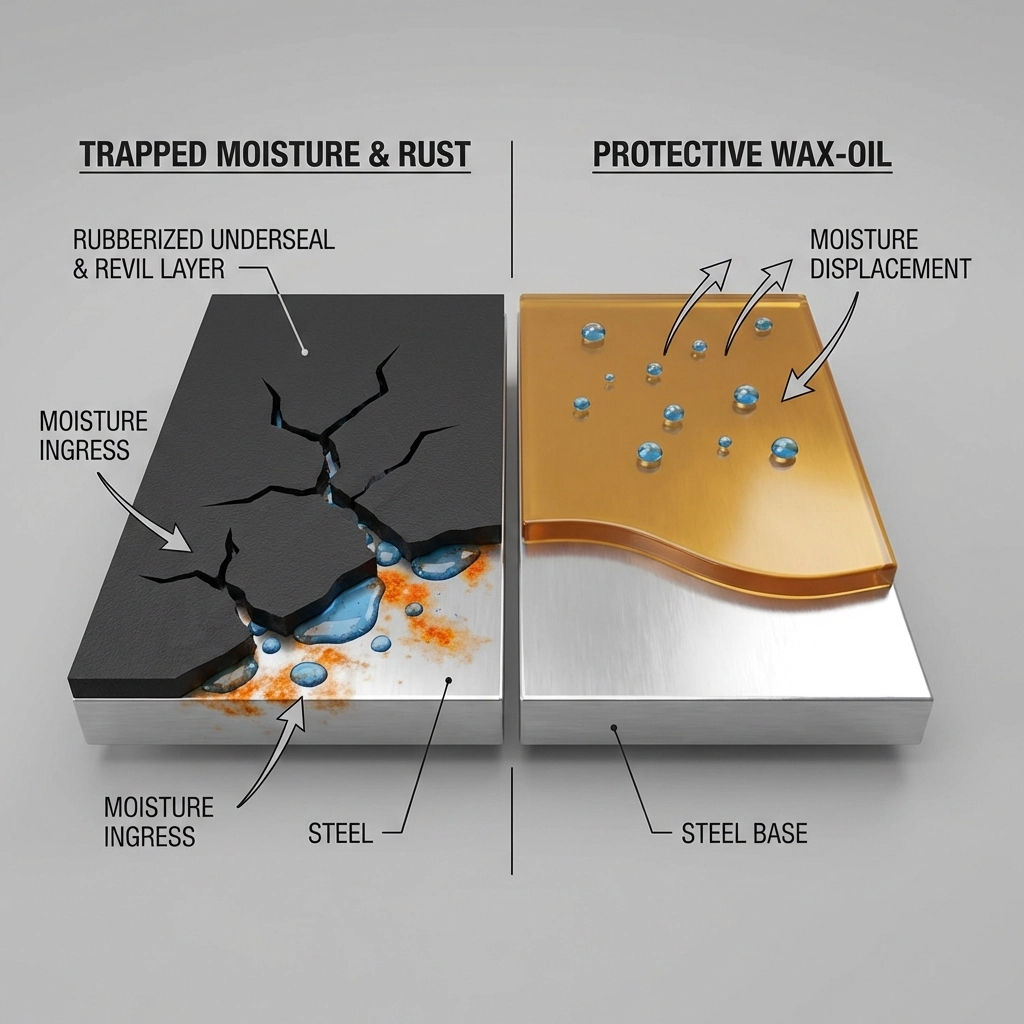
Traditional rubberised underseal is particularly problematic in this scenario. Once it begins to fail: and all coatings eventually will: it creates edges and gaps where water can penetrate. This moisture then becomes trapped between the rigid underseal and the metal surface, with no means of escape.
Industry professionals explicitly warn against applying any underseal-type coating on top of paint, as these treatments accelerate corrosion once they fail. The very protection you sought becomes the mechanism of your vehicle's deterioration.
The Correct Approach: Proper Rust Treatment Sequence
Effective rust prevention requires a methodical, thorough approach. Cutting corners at any stage compromises the entire treatment. Here's the sequence that actually works:
Step 01: Thorough Inspection and Assessment
Before any treatment begins, a comprehensive inspection is essential. This involves examining all rust-prone areas: wheel arches, chassis rails, suspension mounting points, door sills, and box sections: to determine the extent and severity of corrosion.
Surface rust behaves very differently from structural rust. Understanding what you're dealing with determines the appropriate course of action.
Step 02: Complete Rust Removal or Conversion
Loose rust must be mechanically removed. This involves:
Wire brushing to remove flaky, loose corrosion
Grinding where necessary to reach solid metal
Treating remaining rust with phosphoric acid-based rust converters
Ensuring all loose material is eliminated before any coating is applied
This step cannot be rushed or skipped. Any rust left beneath subsequent layers will continue to spread, making your efforts worthless.
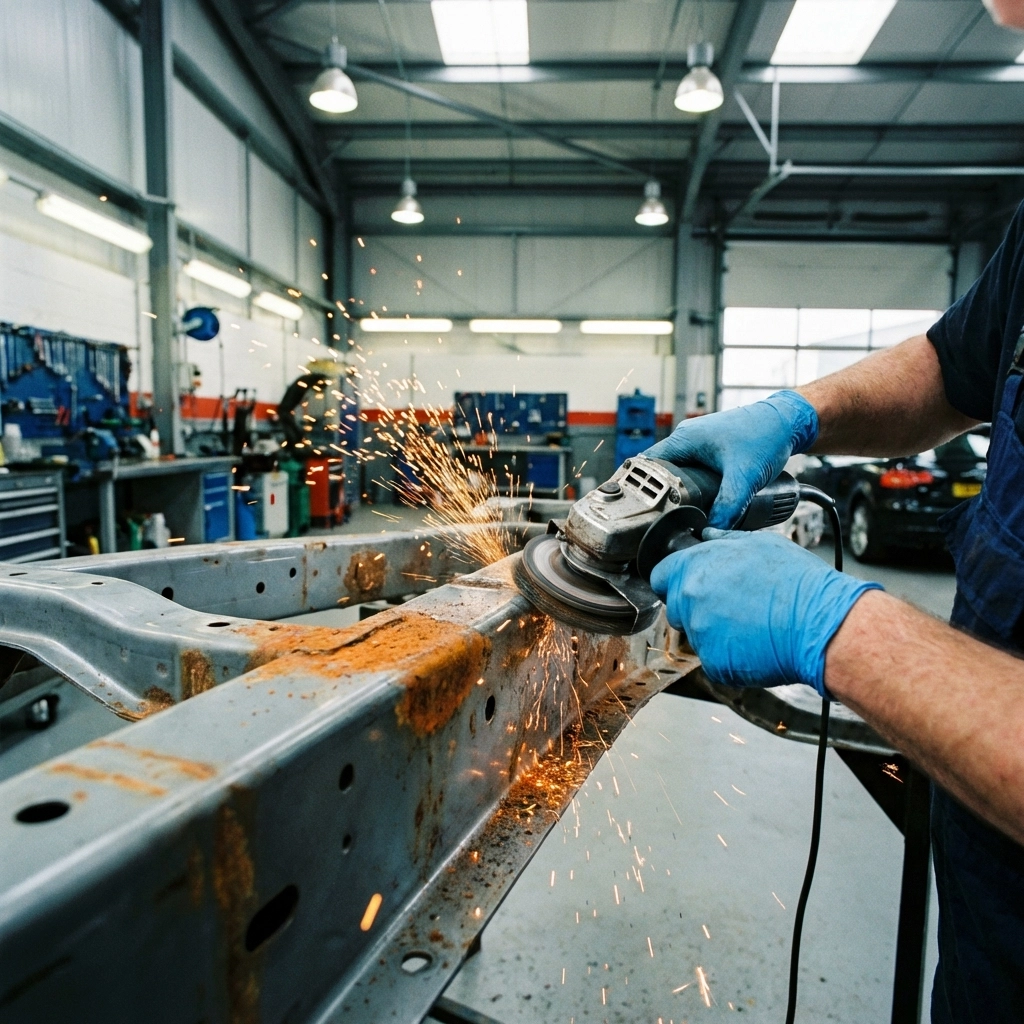
Step 03: Appropriate Priming
Once rust has been properly removed or converted, a rust-inhibiting primer designed for automotive use should be applied. This primer creates a stable base layer that:
Bonds to the prepared metal surface
Provides corrosion-inhibiting properties
Creates an appropriate surface for subsequent coatings
Step 04: Choose the Right Protection System
Here's where many vehicle owners go wrong. After priming, avoid applying traditional rubberised underseal on top of paint. Instead, wax-oil based protection systems offer far superior long-term results.
Products like Dinitrol cavity wax and underbody treatments remain flexible, allowing them to move with the vehicle's metal as it expands and contracts with temperature changes. They're self-healing to some degree: minor damage doesn't create permanent moisture entry points.
Why Wax-Oil Systems Outperform Traditional Underseal
Understanding the difference between protection systems is crucial for making informed decisions about your vehicle's care.
Traditional rubberised underseal:
Becomes brittle over time
Cracks and lifts, allowing moisture ingress
Traps water against metal surfaces
Difficult to inspect metal condition beneath
Often hides advancing rust until structural failure occurs
Wax-oil based systems (such as Dinitrol):
Remain flexible throughout their lifespan
Self-heal minor damage
Displace moisture rather than trapping it
Allow for easier inspection and maintenance
Penetrate into seams and box sections where rust often begins
At Rustec, we exclusively use Dinitrol products for precisely these reasons. Our comprehensive rustproofing treatments are designed to provide lifetime protection rather than a temporary cosmetic fix.
What If Your Vehicle Already Has Painted-Over Rust?
If you've already painted over rust, or purchased a vehicle where this has been done, don't panic: but do act promptly.
Assessment is the first priority. The extent of damage beneath the paint needs professional evaluation. In many cases, the affected areas can be properly stripped back, rust removed or converted, and correct protection applied.
However, if rust has been allowed to progress beneath paint and underseal for an extended period, structural repairs may be necessary before rustproofing can be effective. There's little point in protecting metal that's already compromised beyond safe use.
Key questions to consider:
How long has the rust been painted over?
Is there traditional underseal applied on top?
Are there visible signs of bubbling, flaking, or lifting?
Has the vehicle been used in harsh conditions (coastal areas, winter roads)?
A thorough inspection will reveal whether simple remedial work is sufficient or whether more substantial repairs are required first.
The Professional Approach: What Proper Treatment Involves
When you bring your vehicle to Rustec for rustproofing, we follow a meticulous process designed to deliver genuine, lasting protection:
01: Comprehensive Inspection Every vehicle receives detailed examination with photo documentation, identifying all areas of concern.
02: Full Undercarriage Steam Clean Removing all dirt, salt, and debris ensures treatments can bond properly to metal surfaces.
03: Rust Treatment Any existing corrosion is properly addressed: removed, converted, or stabilised as appropriate.
04: Dinitrol Application Our technicians apply the correct Dinitrol products to each area: cavity wax for box sections, appropriate underbody treatments for exposed surfaces.
05: Quality Assurance Every treatment is inspected before completion, ensuring comprehensive coverage.
This methodical approach is why we're able to offer our Rustec Guarantee: because we know the work has been done properly, not simply covered over.
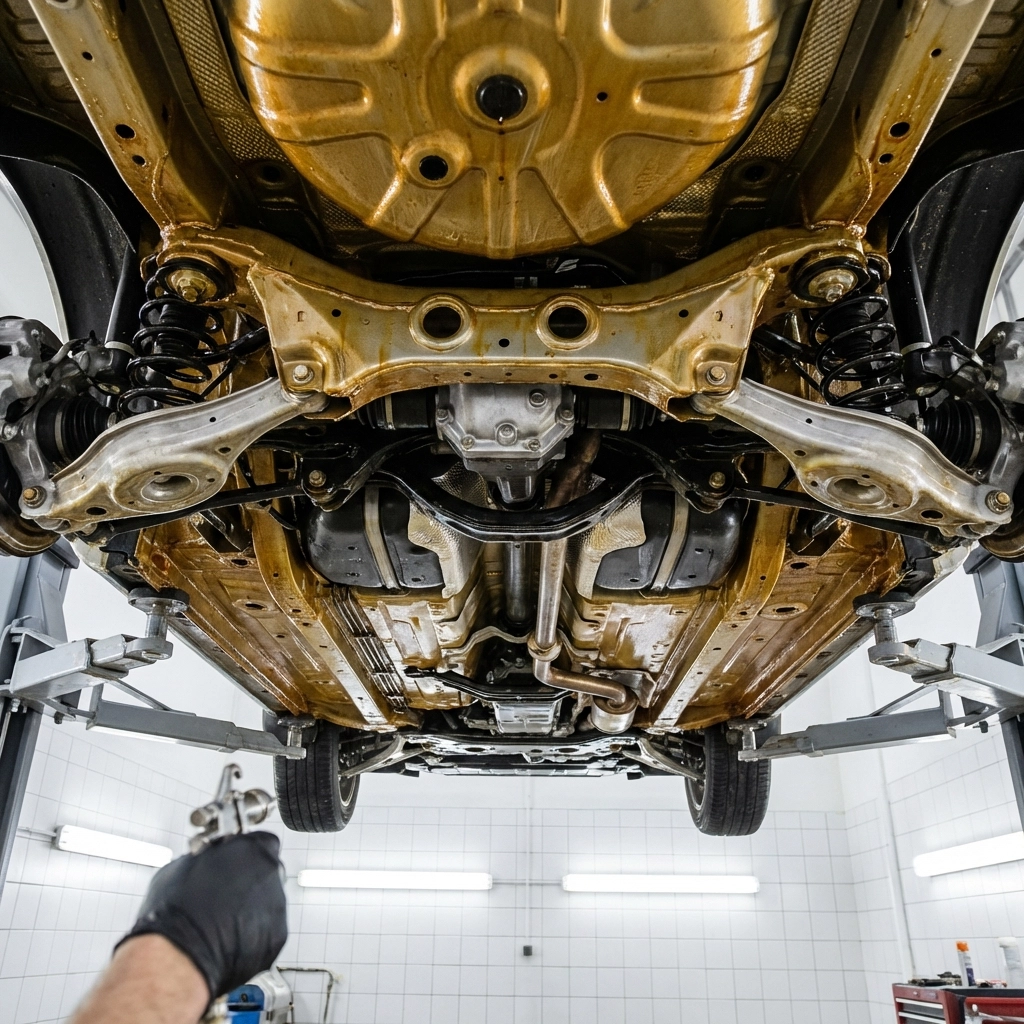
Prevention Is Always Better Than Cure
The most effective approach to rust is preventing it from forming in the first place. If you're fortunate enough to own a vehicle without significant rust, protecting it now will save considerable expense and inconvenience later.
New vehicles are not immune. Factory protection is often minimal, and UK road conditions: with their combination of salt, grit, rain, and temperature fluctuations: create ideal conditions for corrosion to begin.
Investing in proper rustproofing treatment before rust establishes itself is significantly more cost-effective than remedial work after the fact. Your pride and joy remains rust-free throughout its life, maintaining both its appearance and its value.
Taking the Next Step
If you're concerned about rust on your vehicle: whether you've spotted early signs, inherited a vehicle with painted-over corrosion, or simply want to protect a new purchase: professional assessment provides clarity on the best path forward.
Our team at Rustec specialises in comprehensive vehicle protection using premium Dinitrol products and proven techniques. We'll provide honest assessment of your vehicle's condition and recommend appropriate treatment.
Don't let rust compromise your vehicle's safety, appearance, or value. Get in touch with Rustec today to discuss how we can help protect your vehicle for the long term.
Comments