
Do Company Fleet Vehicles Need Rustproofing?
Yes, rustproofing company fleet vehicles is a strategic business investment that delivers substantial financial and operational returns. For organizations maintaining vehicles beyond five years or operating in challenging UK environments, rustproofing represents not merely a protective measure but a comprehensive cost-management strategy that directly impacts your bottom line.
The financial case is compelling and straightforward: preventative rustproofing costs significantly less than premature replacement or extensive corrosion repairs. Most fleet managers report that professional rustproofing investments pay for themselves within 18-24 months through reduced maintenance costs alone: making this one of the most cost-effective vehicle preservation strategies available to UK businesses.
The Financial Case for Fleet Rustproofing
When evaluating rustproofing for your company fleet, the numbers speak for themselves. A professional rustproofing treatment typically costs between £400-£800 per vehicle, depending on vehicle size and the comprehensiveness of the treatment. This modest investment protects against premature replacement costs that can range from £15,000 to £50,000+ per vehicle: a difference that directly affects fleet operating budgets and capital expenditure planning.

Consider the cumulative effect across your entire fleet. A company operating 20 commercial vehicles could invest approximately £10,000-£16,000 in comprehensive rustproofing for the entire fleet. Without this protection, even losing just two vehicles prematurely to corrosion damage could cost £30,000-£100,000 in replacement expenses: not including the operational disruption and administrative burden of early vehicle retirement.
Extended vehicle lifespan represents the most significant financial advantage. Professional rustproofing treatments create a barrier against the moisture, road salt, and environmental contaminants that cause premature corrosion. By preventing rust formation at vulnerable points throughout the vehicle structure, rustproofing extends the functional service life of fleet vehicles by years, allowing you to maximize return on your initial capital investment.
Higher resale values at fleet refresh time provide another substantial financial benefit. When replacing aging fleet vehicles, corrosion-free examples command substantially higher resale prices than equivalent vehicles showing rust damage. Clean, well-maintained underbodies and cavity areas signal to buyers that the vehicle has received proper care: translating directly into better trade-in values and stronger negotiating positions.
Reduced repair costs complete the financial picture. Rust-related repairs rank among the most expensive maintenance issues fleet managers face, often involving structural repairs, panel replacements, and chassis restoration work. Professional rustproofing prevents these costly interventions before they become necessary, keeping vehicles productive and minimizing workshop downtime.
Operational Benefits Beyond Cost Savings
The operational advantages of fleet rustproofing extend well beyond direct cost savings. Reliability and uptime improve dramatically when vehicles maintain structural integrity and corrosion-free mechanical systems. Rust compromises critical components including brake lines, fuel lines, suspension mounting points, and exhaust systems: any of which can cause unexpected breakdowns that disrupt operations and scheduling.
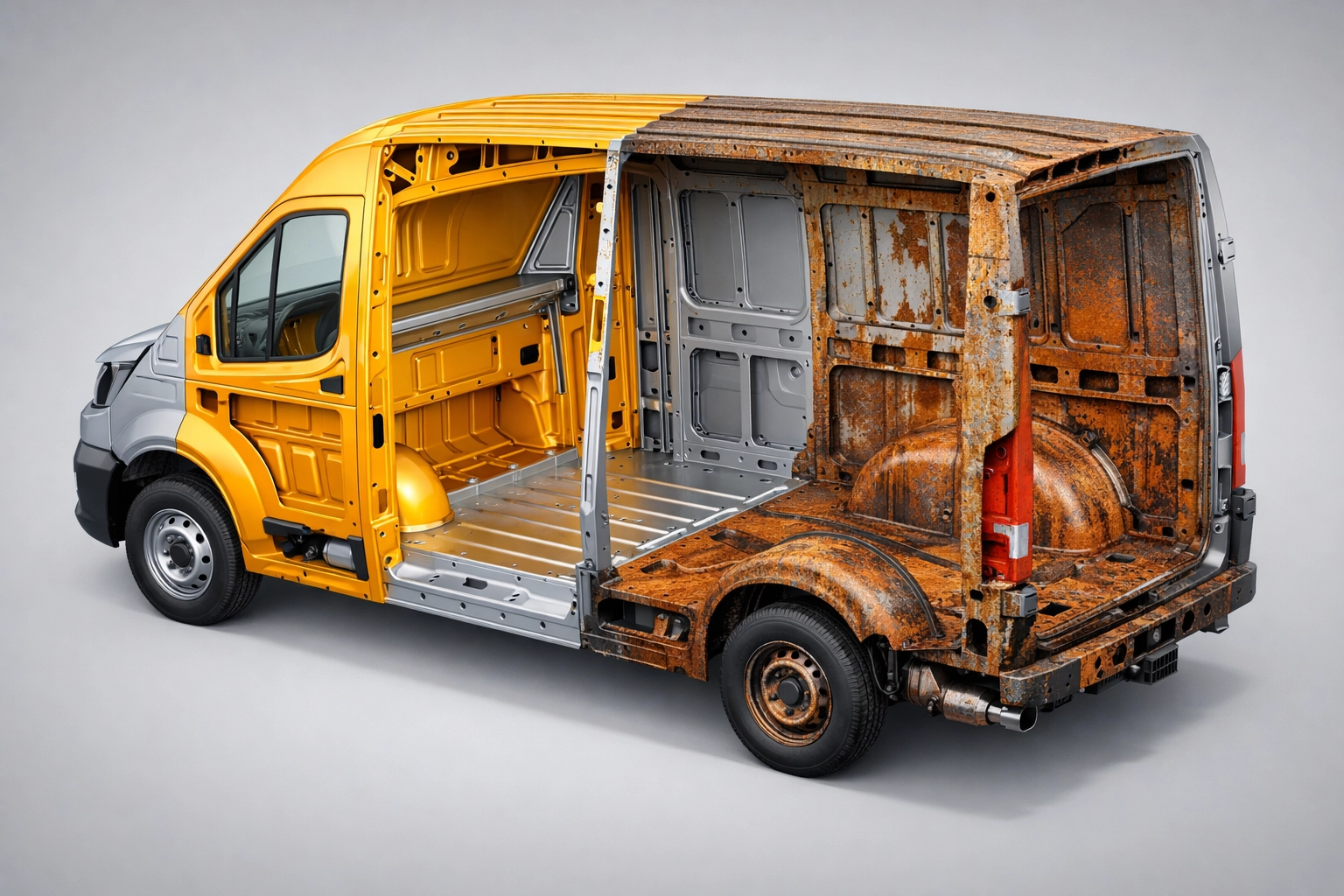
Fleet vehicles demand consistent availability. Whether operating delivery vans, service vehicles, or company cars, unexpected breakdowns create cascading operational challenges. Professional rustproofing reduces the likelihood of corrosion-related failures, improving fleet reliability and reducing the administrative overhead associated with managing breakdown recovery, arranging replacement vehicles, and coordinating emergency repairs.
Maintenance scheduling becomes more predictable with rustproofed fleet vehicles. Rather than responding to progressive corrosion damage that worsens unpredictably, fleet managers can implement planned preventative maintenance programs. This predictability allows better resource allocation, more efficient workshop utilization, and reduced emergency repair costs.
Administrative efficiency improves as well. Rustproofed vehicles require fewer insurance claims for corrosion damage, less coordination with body shops for structural repairs, and reduced documentation of progressive deterioration. The administrative time saved accumulates significantly across larger fleets, allowing fleet managers to focus on strategic planning rather than reactive problem-solving.
Safety and Compliance Considerations
Safety considerations make rustproofing essential for responsible fleet management. Corrosion compromises structural integrity in ways that directly affect vehicle safety. Rust damage to suspension mounting points, chassis rails, and subframes can create dangerous handling characteristics and increase accident risk: exposing your organization to liability concerns that extend far beyond simple repair costs.
Critical safety systems require corrosion-free operation. Brake lines, fuel lines, and steering components must maintain structural integrity to function safely. Rust perforation in any of these systems creates immediate safety hazards that can endanger drivers, passengers, and other road users. Professional rustproofing protects these vulnerable systems from the inside out, with cavity wax treatments reaching areas that external applications cannot access.
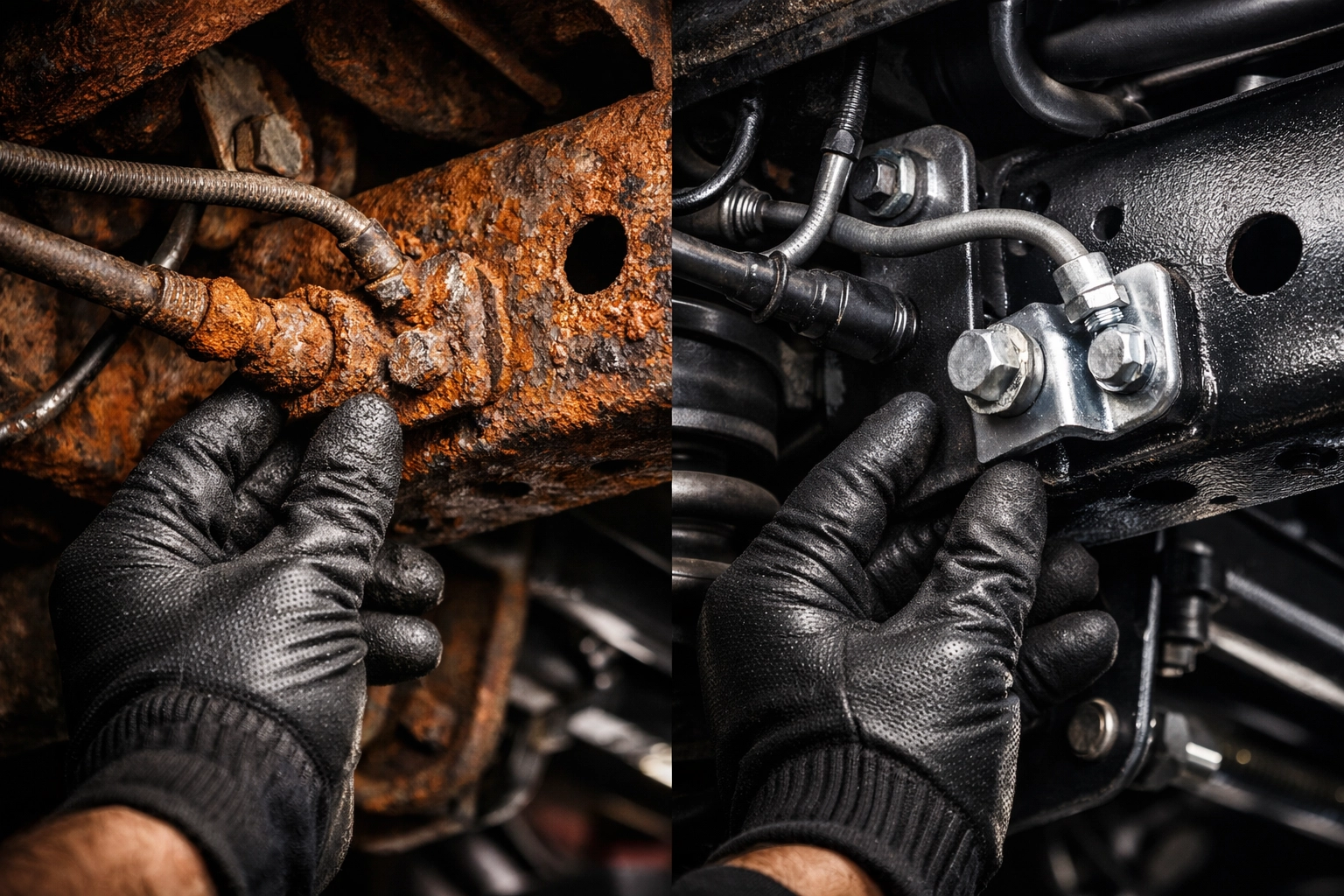
MOT compliance represents a significant concern for fleet operators. Fleet vehicles must pass regular MOT inspections, and rust-related failures have become increasingly common as testing standards tighten. Structural corrosion can render vehicles unroadworthy, creating immediate compliance issues that remove vehicles from service until repairs are completed. Excessive corrosion affecting prescribed areas results in automatic MOT failure: potentially sidelining multiple vehicles simultaneously if fleet-wide rust problems develop.
The compliance implications extend beyond simple pass/fail considerations. MOT advisories for developing rust issues signal future problems that will require attention. Professional rustproofing prevents these advisories from escalating into failures, maintaining vehicle compliance and avoiding the operational disruption of failed inspections.
When Fleet Rustproofing Becomes Essential
Certain operating conditions make rustproofing transition from advisable to essential. Harsh operating environments dramatically accelerate corrosion rates, making preventative treatment critical for vehicle preservation. Coastal areas expose vehicles to salt-laden air that attacks metal surfaces continuously. Winter operations in regions using road salt create particularly aggressive corrosion conditions, with salt spray reaching every exposed surface and penetrating cavity areas through ventilation openings and drainage holes.
Vehicle retention periods determine rustproofing priority. Organizations planning to keep vehicles longer than five years should consider rustproofing essential rather than optional. The longer you intend to operate vehicles, the more time corrosion has to develop: and the more valuable rust prevention becomes. For fleets operating on extended replacement cycles, professional rustproofing represents fundamental asset protection rather than optional enhancement.
Commercial vehicle types face particular corrosion challenges. Vans and trucks feature numerous joints, seams, and mounting points where moisture accumulates and corrosion initiates. Load-bearing areas endure regular flexing that cracks protective coatings, exposing bare metal to the elements. Commercial vehicles also operate more intensive duty cycles, covering higher mileages in more demanding conditions than typical passenger cars: accelerating corrosion development without proper protection.
Work vans carrying equipment and materials face additional moisture exposure from internal sources. Loading and unloading operations, combined with equipment storage, introduce moisture that becomes trapped in cavity areas. Professional cavity wax treatment creates a water-displacing barrier in these vulnerable spaces, preventing internal corrosion that external treatments cannot address.
Long-Term Value and Vehicle Lifecycle Management
Strategic fleet management requires considering total cost of ownership across the complete vehicle lifecycle. Professional rustproofing affects every stage of this lifecycle: from initial deployment through eventual disposal: making it a cornerstone of effective fleet management strategy.
Lifecycle cost analysis reveals rustproofing's true value. While initial treatment represents an upfront investment, the cumulative savings in reduced repairs, extended service life, and improved resale values far exceed treatment costs. Organizations tracking total cost of ownership metrics consistently find that rustproofed vehicles cost less to operate per mile than untreated equivalents: particularly in the crucial later years when corrosion typically accelerates.
Fleet standardization becomes easier when rustproofing is implemented across all vehicles. Consistent preventative treatment creates predictable maintenance requirements and uniform vehicle conditions, simplifying management decisions and improving operational planning. Rather than managing vehicles with varying corrosion states requiring individual assessment, fleet managers can implement consistent policies based on known protection levels.
Professional rustproofing also supports corporate sustainability initiatives. Extending vehicle service life reduces the environmental impact of premature replacement, lowering the carbon footprint associated with manufacturing new vehicles. Organizations pursuing environmental, social, and governance (ESG) objectives can cite extended vehicle lifecycles as tangible evidence of resource stewardship and waste reduction.
Professional Treatment Delivers Maximum Protection
For company fleet vehicles, professional rustproofing treatment provides substantially better protection than DIY approaches. Professional facilities offer comprehensive inspection, thorough preparation, complete coverage including difficult-to-reach areas, and proper application of premium-quality products like Dinitrol, the industry-leading rust prevention system trusted by commercial operators worldwide.
Professional treatment includes cavity wax injection to protect internal box sections, door skins, sills, and chassis cavities where DIY applications cannot reach. These areas are particularly vulnerable in commercial vehicles, making professional cavity treatment essential for complete protection. The meticulous approach ensures every vulnerable area receives appropriate protection, creating comprehensive coverage that preserves vehicle value and extends operational life.
For organizations serious about fleet asset protection, professional rustproofing represents a strategic investment with measurable returns. The combination of reduced repair costs, extended vehicle life, improved reliability, and enhanced resale values creates compelling business justification that makes rustproofing an essential component of effective fleet management.
Protect your company fleet investment with professional rustproofing from Rustec. Our comprehensive treatments using premium Dinitrol products deliver the long-term protection your vehicles need. Contact us today to discuss fleet rustproofing solutions tailored to your operational requirements and budget.
Comments