
What Does Underbody Rust Look Like?
For many vehicle owners in the UK, the underside of their car or van is a case of "out of sight, out of mind." We spend hours polishing the paintwork and vacuuming the interior, yet the most critical structural components of our vehicles are constantly bombarded by road salt, grit, and standing water.
In our humid climate, rust is not a matter of if, but when. Understanding what underbody rust looks like in its various stages is the first step in preserving your vehicle’s longevity and ensuring it remains safe for the road. At Rustec, we specialise in identifying and halting these issues before they become terminal.
Whether you are searching for car underseal near me or simply want to know if your vehicle is at risk, this guide will help you decode the visual signs of corrosion.
The Three Stages of Underbody Corrosion
Rust does not happen overnight. It is a progressive chemical reaction between iron, oxygen, and moisture. By identifying which stage your vehicle is in, you can make an informed decision about the type of vehicle rustproofing services near me that you require.
1. Surface Rust: The Early Warning
Surface rust is the most common form of corrosion found on vehicles that are a few years old.
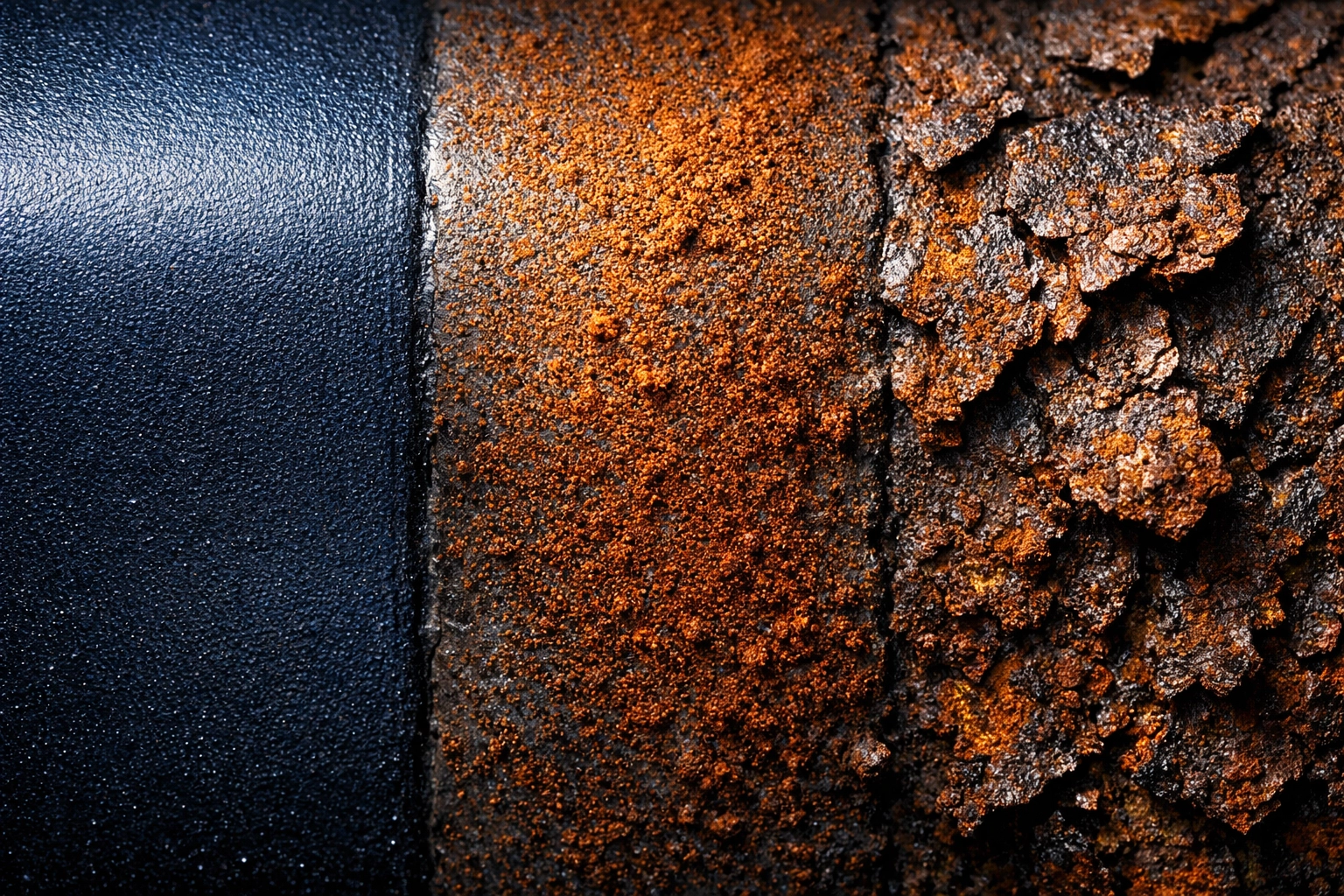
What it looks like: It typically appears as a thin, reddish-brown or orange "dusting" on the surface of metal components. It is usually flat and does not feel particularly rough to the touch.
Where to find it: You will often see this on exhaust heat shields, suspension arms, and the outer edges of the chassis rails.
The Verdict: While surface rust is not structurally dangerous yet, it is a clear indicator that the factory protection has failed. If treated now with a premium solution like Life Long Dinitrol®, you can prevent it from progressing.
2. Scale Rust: The Structural Threat
If surface rust is left untreated, it begins to penetrate deeper into the metal. This is known as scale rust.
What it looks like: The metal begins to look "pitted" or rough. You may see physical flakes of rust starting to peel away. The texture is uneven, and the metal may feel thicker in some spots due to the expansion of the oxide layer.
Where to find it: Common in wheel arches and along the main chassis beams where road debris often strikes.
The Verdict: Scale rust is a serious concern. It is actively eating into the thickness of the metal. At this stage, a comprehensive inspection is required to ensure the metal is still strong enough to be preserved without welding.
3. Penetrating Rust: The MOT Failure
This is the final stage of corrosion where the metal has been entirely consumed.
What it looks like: You will see visible holes, "Swiss cheese" patterns, or edges that crumble when touched. In some cases, the metal may look heavily distorted or "delaminated," where layers of steel are separating like an old book.
Where to find it: Inner sills, body mounts, and suspension mounting points.
The Verdict: This is structural failure. A vehicle in this condition will fail its MOT and is potentially dangerous to drive. Can a rusty chassis be fixed? Yes, but it will require professional welding and fabrication before any rustproofing can be applied.
Why Does My Van Look Fine But Is Rusting Underneath?
It is a common frustration for owners of vans and 4x4s: the bodywork looks pristine, but the mechanic delivers bad news during the MOT. This happens because modern vehicles are often painted to a high standard on the "A-surfaces" (the parts you see), but the "B-surfaces" (the underside) receive minimal protection from the factory.
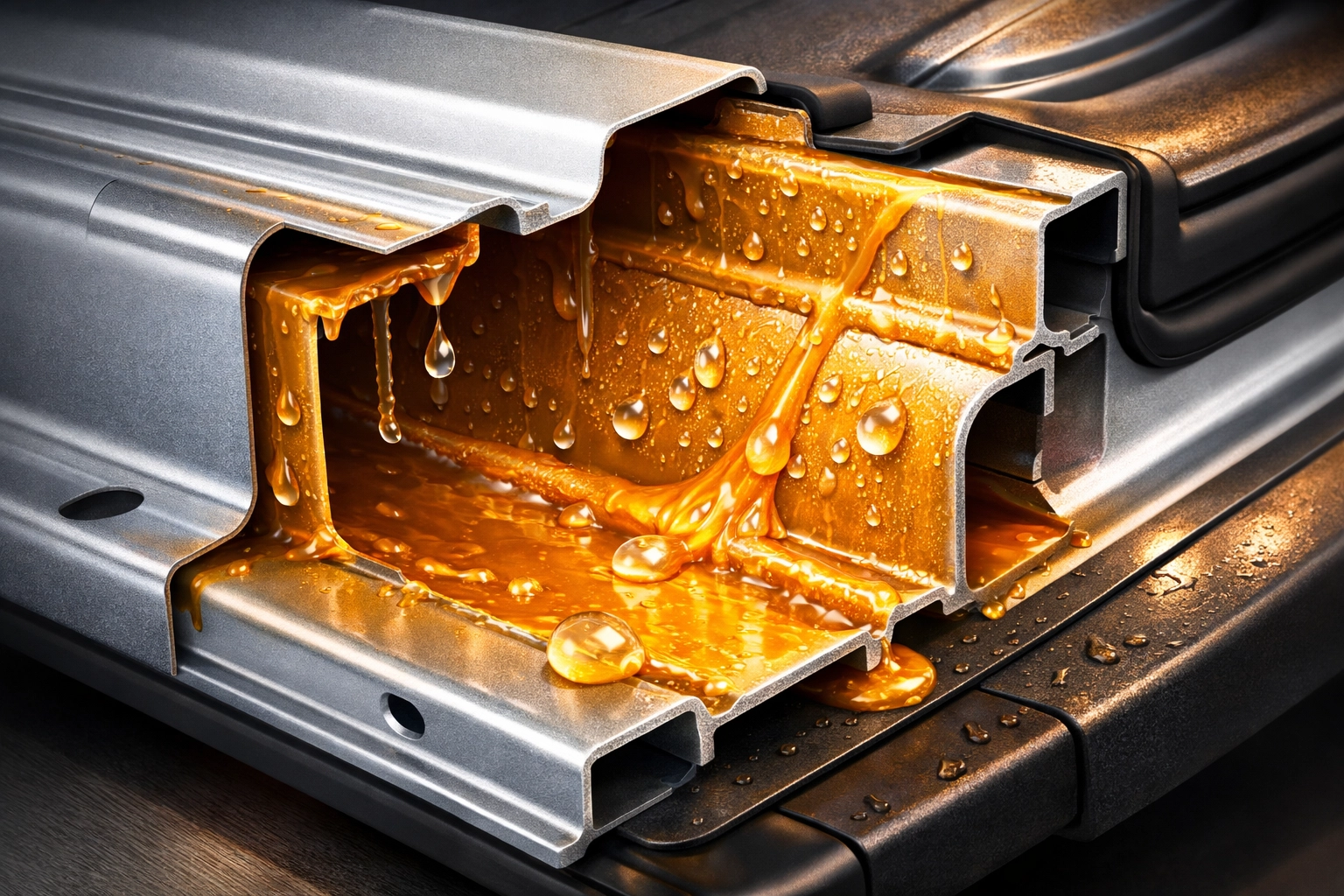
Vans, in particular, often have box sections and cavities that trap moisture and salt. Rust usually starts from the inside out. By the time you see rust bubbling under my paintwork on the exterior sills, the internal structure is often heavily compromised. This is why we emphasise the importance of cavity wax as part of our premium treatment packages.
How to Check Your Car for Rust Before an MOT
An MOT tester is looking for corrosion within 30cm of a "prescribed area", which includes suspension mounts, seatbelt anchor points, and steering components. To check your vehicle at home, follow these steps:
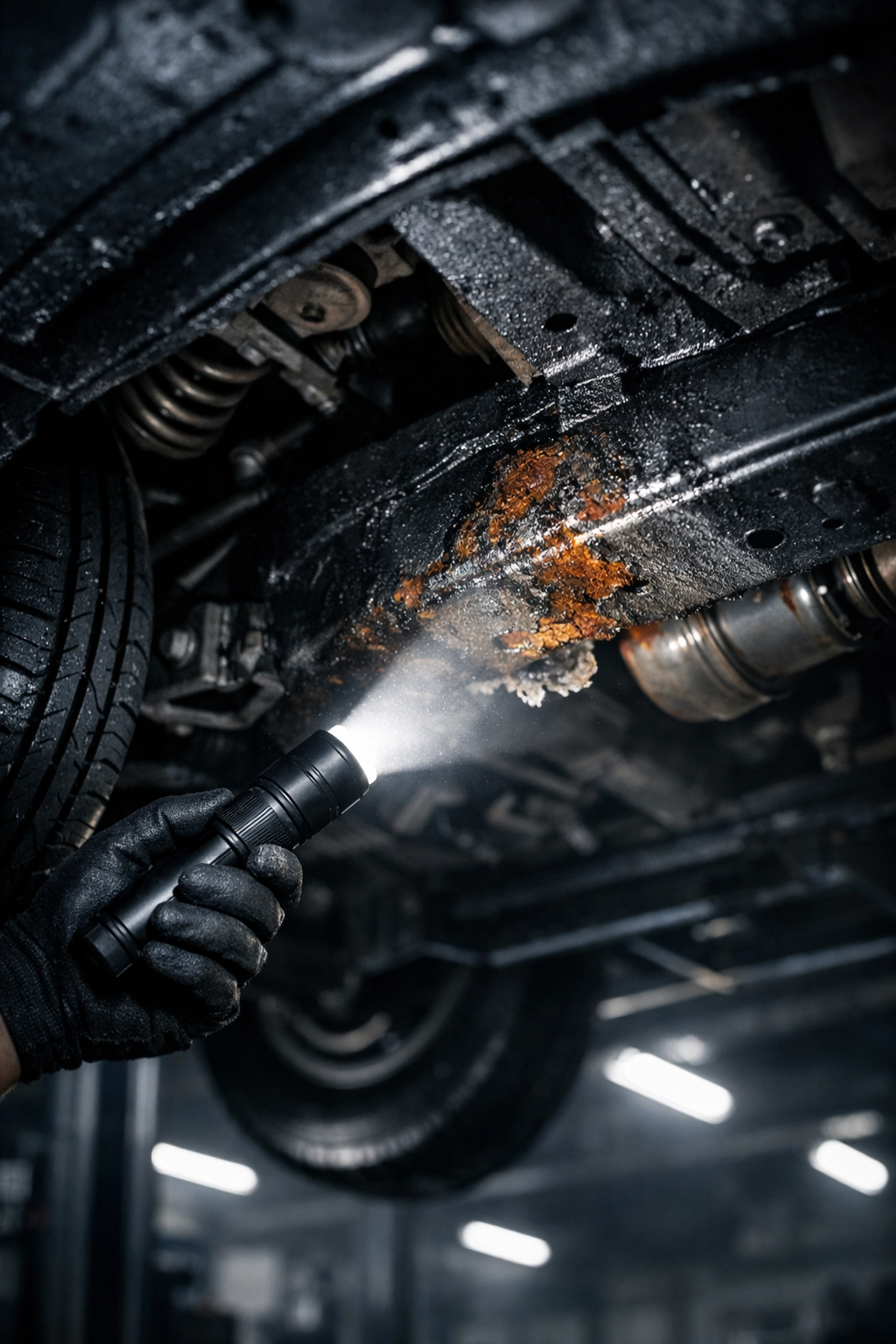
The Light Test: Use a high-powered torch to inspect the wheel arches. Look for any areas where the original underseal looks "puffy" or "blistered."
The Touch Test: (Wear gloves!) Run your hand along the inner sills. If the texture feels like sandpaper or if bits of metal flake off, you have a problem.
The Tap Test: Using a small hammer or the handle of a screwdriver, gently tap along the chassis rails. A healthy chassis should have a clear, metallic "ring." A dull "thud" often indicates that the metal is thin or full of internal scale.
The "Bridge" Effect: Look for areas where the underseal has detached from the metal but is still hanging in place. This creates a pocket that traps salt water against the steel, accelerating rot at an alarming rate.
If you are unsure of what you are looking at, we recommend visiting one of our specialist locations for a professional assessment. We offer expert services across the country, including:
Should I Repair Rust Before Rustproofing?
A common question we receive is: “Can I just underseal over the rust?”
The answer is a firm no. Applying a thick underseal over active corrosion is one of the worst things you can do for your vehicle. It hides the problem, traps moisture, and allows the rust to spread unseen.
At Rustec, our process is built on transparency and precision. If we find structural rust during our 01: Inspection & strip down, we will inform you immediately.
Surface rust can often be treated with high-quality rust converters and Dinitrol RC900.
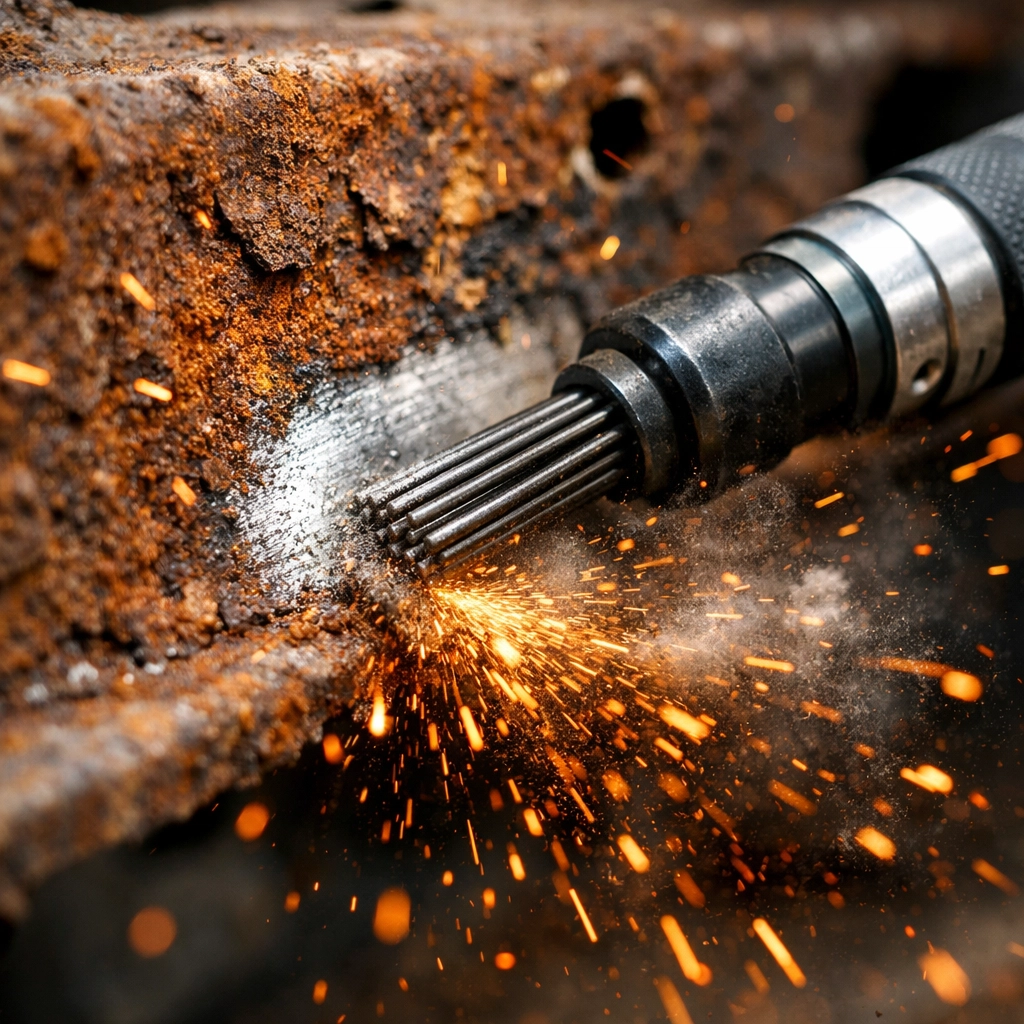
Scale rust must be mechanically removed using wire brushes or needle scaly tools.
Structural rust must be cut out and replaced with fresh steel.
Only once the metal is stable do we proceed with our multi-stage protection, ensuring your vehicle rustproofing services near me provide a genuine long-term solution rather than a cosmetic cover-up.
Why Choose Rustec for Your Underbody Protection?
When you search for car underseal near me, you will find many garages that simply "spray and go." At Rustec, we take a different approach. We treat every vehicle as if it were our own, following a meticulous process that guarantees results.
Our Multi-Stage Process:
Full Undercarriage Steam Clean: We remove all road salt, grease, and debris to reveal the true state of the metal.
Meticulous Masking: We mask up brakes, exhaust systems, and electrical sensors to ensure the protection only goes where it is needed.
Dinitrol® Application: We use the highest-quality products, including Dinitrol ML for deep penetration into cavities and Dinitrol 4941 for a robust, self-healing underbody shield.
Photo Documentation: You will receive photos of the process, providing peace of mind and raising the resale value of your vehicle.
Our Rustec Guarantee: We stand by our work with a 100% satisfaction guarantee and a commitment to maintaining your vehicle in optimal condition for a lifetime.
Frequently Asked Questions
Can rust spread if I leave it untreated? Yes, rapidly. Once the protective oxide layer (the rust) becomes porous, it draws in more moisture and oxygen, creating a "cancerous" effect that spreads across the metal panel.
What is the difference between surface rust and structural rust? Surface rust is aesthetic and sits on top of the metal. Structural rust has compromised the thickness and strength of the steel, making it unsafe.
Do electric cars rust? Absolutely. While they lack an exhaust system, they still have a steel chassis and suspension components. You can read more about this in our article: Do electric cars rust?
Why is rust bubbling under my paintwork? This usually means the rust started on the inside of the panel (the cavity) and has eaten its way through to the exterior. This is a sign that the internal protection has failed.
Protect Your Investment Today
Your vehicle is likely one of your most expensive assets. Don't let the British weather and salted roads devalue it. Whether you drive a classic Defender, a modern work van, or a brand-new EV, professional rustproofing is the best investment you can make for its future.
If you have spotted signs of corrosion or simply want to prevent them from ever appearing, our team is here to help. We offer a free courtesy car (subject to availability) and a transparent, professional service that sets the industry standard.
Please enquire when booking to discuss the best package for your specific vehicle.
Enquire by filling out the quick quote box below or visit our [contact page] to find your nearest specialist. Your pride and joy deserves the Rustec Guarantee.
Comments