
How do I remove rust from my car's underside?
Rust on your vehicle's underside is more than just an eyesore: it's a serious threat to your car's structural integrity and safety. The undercarriage faces constant exposure to moisture, road salt, and debris, making it particularly vulnerable to corrosion. Whether you're dealing with early surface rust or more advanced oxidation, understanding how to properly address underbody rust can save you thousands in repair costs and extend your vehicle's lifespan significantly.
Understanding Underbody Rust: Assessment Before Action
Before diving into removal techniques, conduct a thorough inspection of your vehicle's underside. Elevate your car safely using proper jack stands: never rely on a hydraulic jack alone for extended work periods. Look for three distinct types of rust:
Surface rust appears as light brown or orange discoloration that hasn't penetrated deeply into the metal. This is the easiest to treat and represents the ideal time for intervention.
Scale rust shows as flaky, layered oxidation that has begun eating into the metal substrate. This requires more aggressive treatment but remains manageable with proper techniques.
Penetrating rust has created holes or severe structural weakness in the metal. At this stage, professional welding and fabrication may be necessary, and simple removal techniques won't suffice.
Essential Safety Considerations
Working beneath a vehicle demands absolute attention to safety protocols. Ensure your car is on level, solid ground with wheel chocks in place. Use appropriate personal protective equipment including safety glasses, dust masks, and work gloves. The chemicals and debris involved in rust removal can cause serious harm without proper protection.
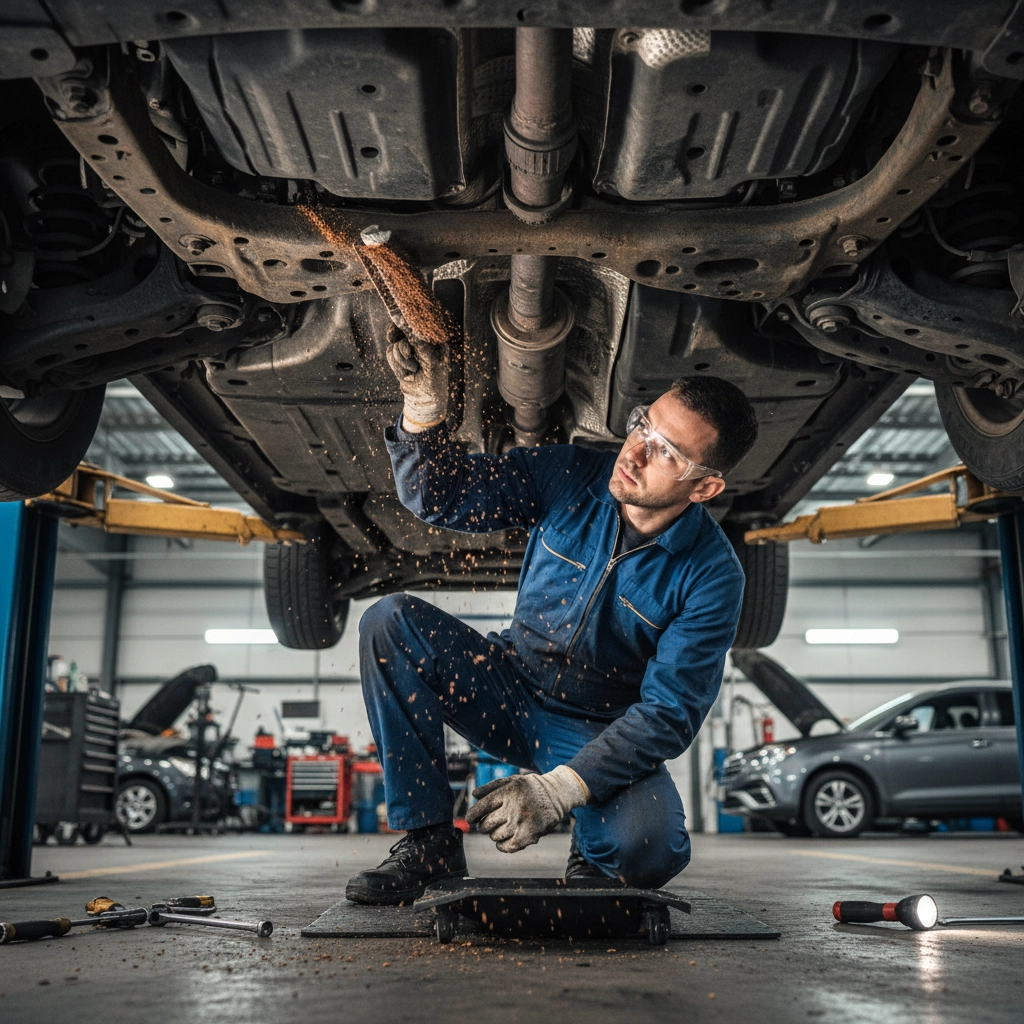
Ventilation becomes critical when using chemical rust treatments or solvents. Work in well-ventilated areas or outdoors whenever possible, as many rust removal products release toxic fumes that can accumulate in enclosed spaces.
Step-by-Step DIY Rust Removal Process
Initial Preparation and Cleaning
Begin by removing loose debris, mud, and surface contamination from the affected areas. A pressure washer proves invaluable here, helping dislodge accumulated grime that could interfere with treatment products. Pay particular attention to areas where debris typically accumulates: around suspension components, inside frame rails, and behind splash shields.
Apply a quality degreaser to all surfaces you plan to treat. Allow it to penetrate for the recommended time: typically 10-15 minutes: before rinsing thoroughly. This step ensures optimal adhesion of subsequent treatments and prevents contamination from interfering with the rust removal process.
Physical Rust Removal Techniques
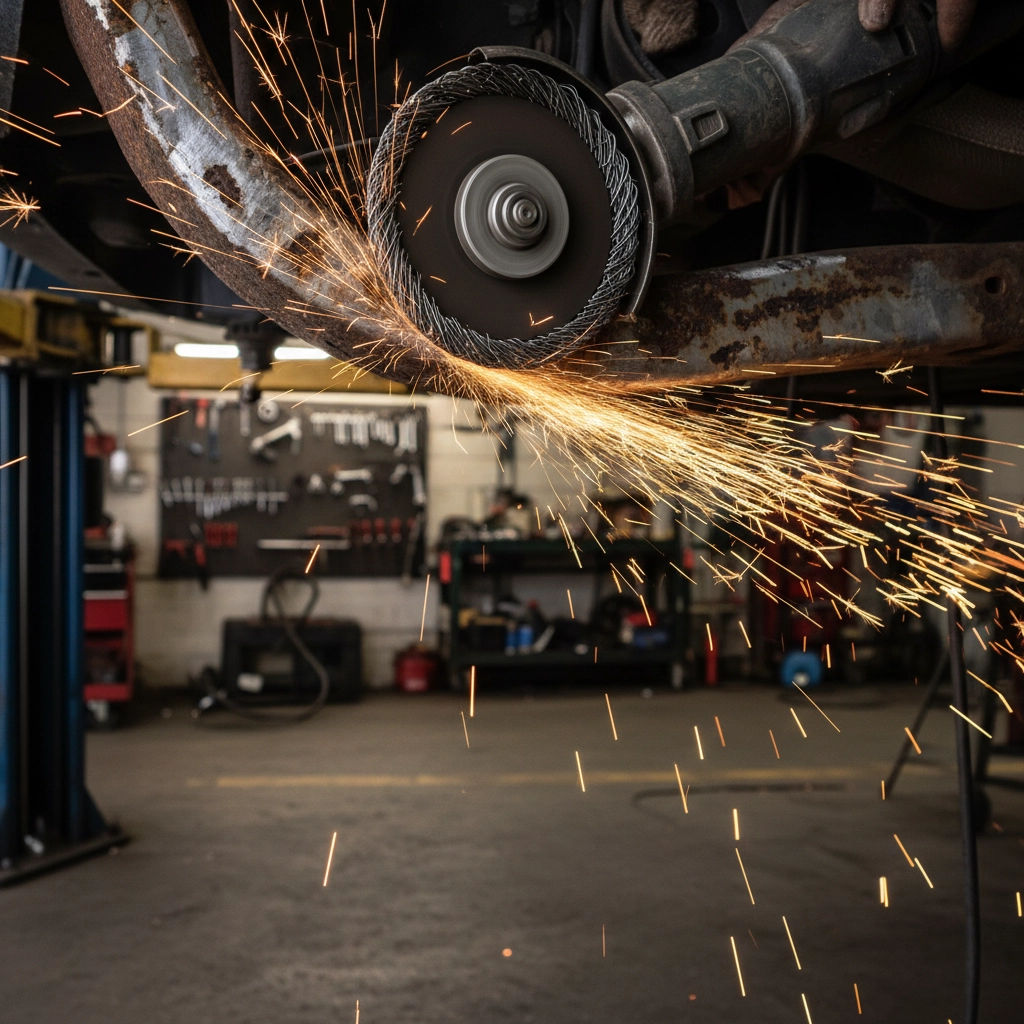
For surface rust, begin with less aggressive methods. Wire brushes, steel wool, or abrasive pads can effectively remove light oxidation without damaging underlying metal. Work systematically, ensuring complete removal of all visible rust particles.
More advanced rust requires mechanical intervention. A die grinder equipped with wire wheel attachments provides excellent results for moderate to severe rust. Work in sections, maintaining consistent pressure to avoid gouging the metal substrate. Follow up with progressively finer abrasives to create a smooth surface ready for treatment.
Chemical Treatment Options
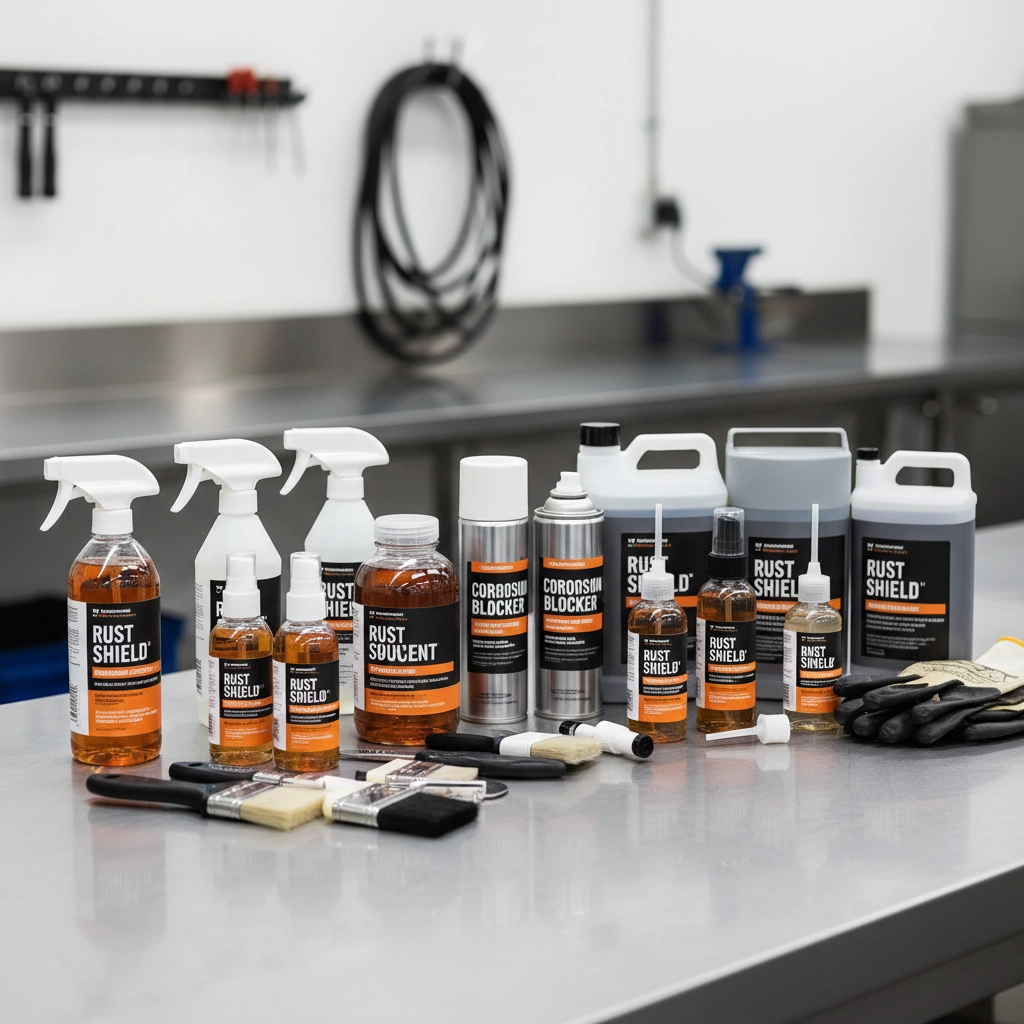
Modern rust converters offer excellent results for areas where complete physical removal proves difficult. These products chemically convert iron oxide into a stable compound that can be painted over. Apply according to manufacturer specifications, ensuring complete coverage of all affected areas.
For stubborn rust in hard-to-reach locations, penetrating rust treatment chemicals can displace moisture and oxygen while providing ongoing protection. Products containing phosphoric acid excel at neutralizing existing rust while creating a protective barrier against future oxidation.
Advanced Treatment and Protection
Surface Preparation for Coating
After removing visible rust, thoroughly clean all treated surfaces with a lint-free cloth and appropriate solvent. Any remaining contamination will compromise the adhesion and effectiveness of protective coatings. Allow surfaces to dry completely before proceeding: moisture trapped beneath coatings inevitably leads to continued corrosion.
Protective Coating Application
Professional-grade undercarriage treatments like Dinitrol provide superior long-term protection compared to consumer alternatives. These products penetrate existing rust while creating a flexible, self-healing barrier that moves with the vehicle's natural flex and expansion cycles.
Apply coatings in thin, even layers rather than attempting to achieve full coverage in a single application. Multiple thin coats provide better adhesion, more complete coverage, and superior durability compared to single thick applications.
When to Call Professional Services
Certain situations demand professional intervention rather than DIY approaches:
Structural rust affecting chassis rails, suspension mounting points, or safety-critical components requires expert assessment and potentially expensive fabrication work. Attempting DIY repairs on structural elements compromises vehicle safety and may void insurance coverage.
Extensive rust coverage across multiple systems often proves more cost-effective to address professionally. Specialists possess the equipment, experience, and product access to handle comprehensive restoration efficiently.
Limited time or equipment constraints make professional services attractive. Proper underbody treatment requires considerable time investment and specialized tools that may not justify purchase for occasional use.
The Critical Importance of Ongoing Protection
Rust removal represents only half the battle: preventing future corrosion requires ongoing attention and proper protection. The UK's challenging climate, with its combination of moisture, road salt, and temperature fluctuations, creates ideal conditions for accelerated corrosion.
Regular underbody cleaning, particularly during winter months, helps remove corrosive road salt before it can cause damage. Annual inspection and touch-up treatments maintain protective barriers and address minor issues before they become major problems.
Professional Treatment Advantages
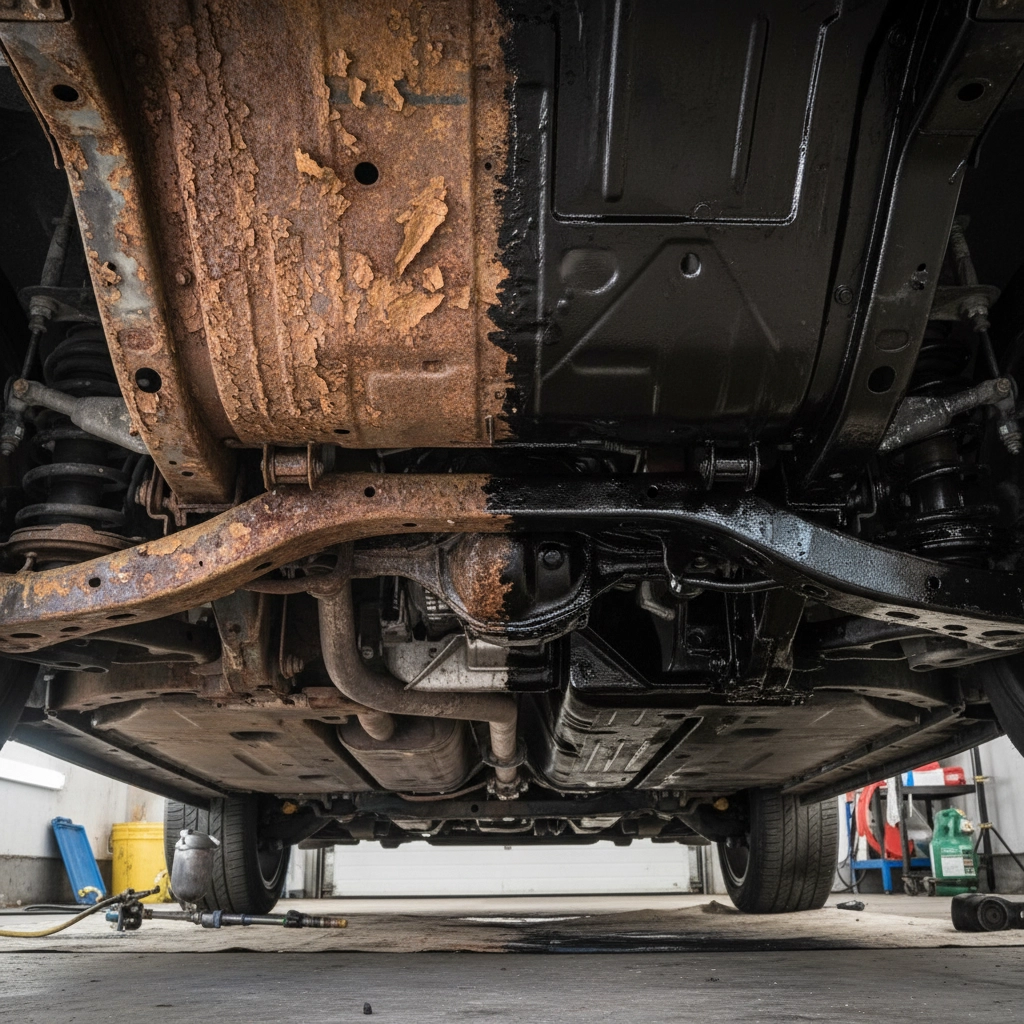
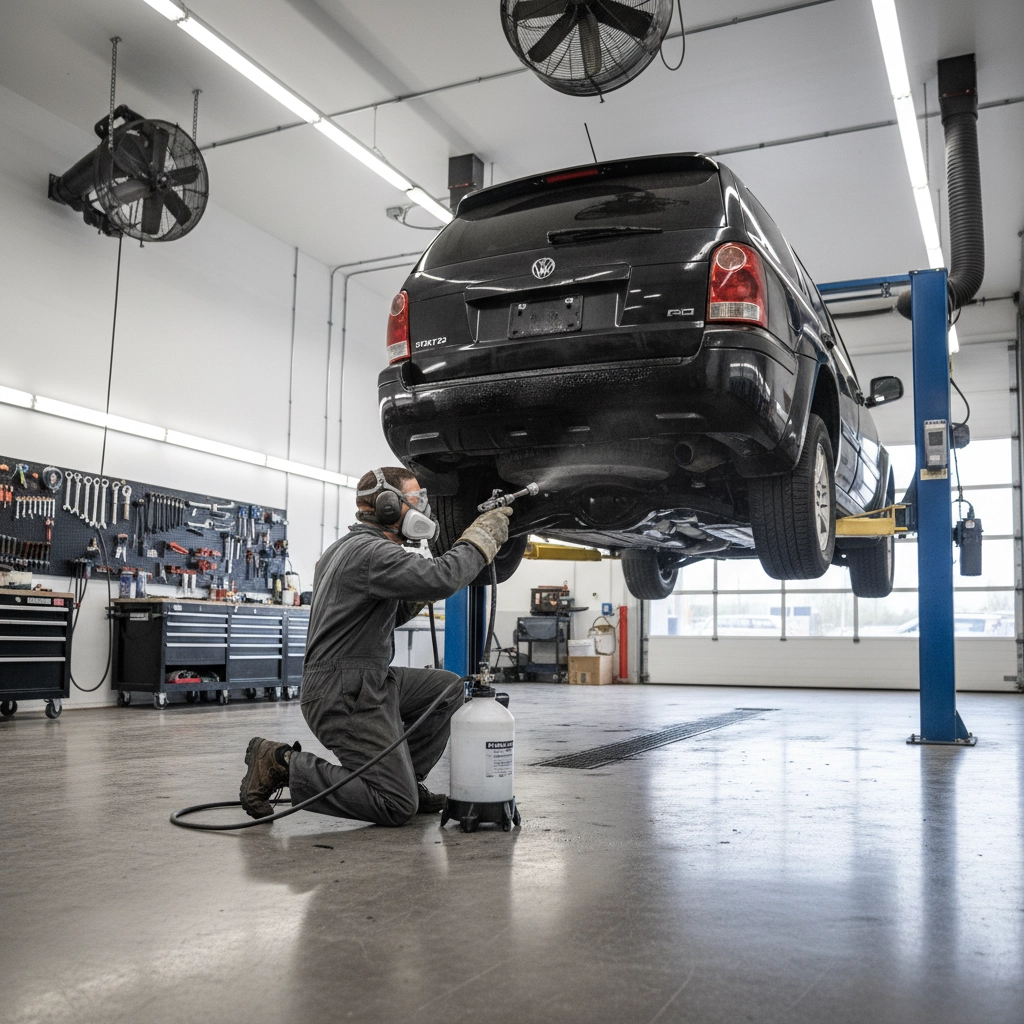
While DIY rust removal can address immediate concerns, professional rustproofing services offer significant advantages for long-term vehicle protection. Specialized equipment ensures complete coverage of difficult-to-reach areas, while professional-grade products provide superior performance and longevity compared to consumer alternatives.
Professional treatments typically include comprehensive underbody cleaning, thorough rust treatment, and application of premium protective coatings designed specifically for UK conditions. Many services also provide documentation and warranties that add value during vehicle resale.
Maintenance and Long-term Success
Successful rust prevention requires ongoing commitment rather than one-time intervention. Establish regular inspection schedules, particularly before and after winter seasons when road salt exposure peaks. Address minor rust spots immediately rather than allowing them to develop into major problems.
Consider professional annual inspections and touch-up treatments as preventive maintenance rather than repair expenses. This approach proves far more cost-effective than addressing major rust damage after it has developed extensively.
Making the Right Choice for Your Vehicle
Whether to tackle underbody rust removal yourself or engage professional services depends on several factors: the extent of existing damage, your available time and equipment, and your comfort level with automotive maintenance tasks.
For vehicles showing early-stage rust or requiring preventive treatment, professional rustproofing provides optimal protection and peace of mind. The comprehensive approach, quality materials, and expert application ensure maximum effectiveness and longevity.
Protect Your Investment with Professional Underbody Treatment
Don't let underbody rust compromise your vehicle's safety, performance, or value. Rustec's comprehensive underbody protection services combine thorough cleaning, professional-grade rust treatment, and premium protective coatings designed specifically for UK driving conditions.
Our expert technicians provide complete photo documentation of your vehicle's condition, apply treatments using specialized equipment for optimal coverage, and back our work with industry-leading warranties. Contact Rustec today to schedule your comprehensive underbody inspection and treatment: because prevention is always more cost-effective than repair.
Ready to protect your vehicle from underbody rust? Contact Rustec for a comprehensive assessment and professional treatment quote.
Comments