
What's the Real Cost of Ignoring Rust?
Many vehicle owners consider rustproofing an optional extra: something that can wait until tomorrow. However, the financial and practical consequences of ignoring rust protection can be substantial. Understanding the true cost of rust neglect reveals why preventative treatment represents not an expense, but a strategic investment in your vehicle's longevity and value.
The Immediate Financial Impact
Rust repair costs escalate rapidly once corrosion takes hold. What begins as minor surface oxidation quickly penetrates deeper into metal structures, requiring increasingly complex and expensive remediation. Professional rust repair typically ranges from £300 for minor cosmetic work to several thousand pounds for structural chassis repairs. In severe cases, particularly when corrosion affects load-bearing components, costs can exceed £5,000: often approaching or surpassing the vehicle's market value.
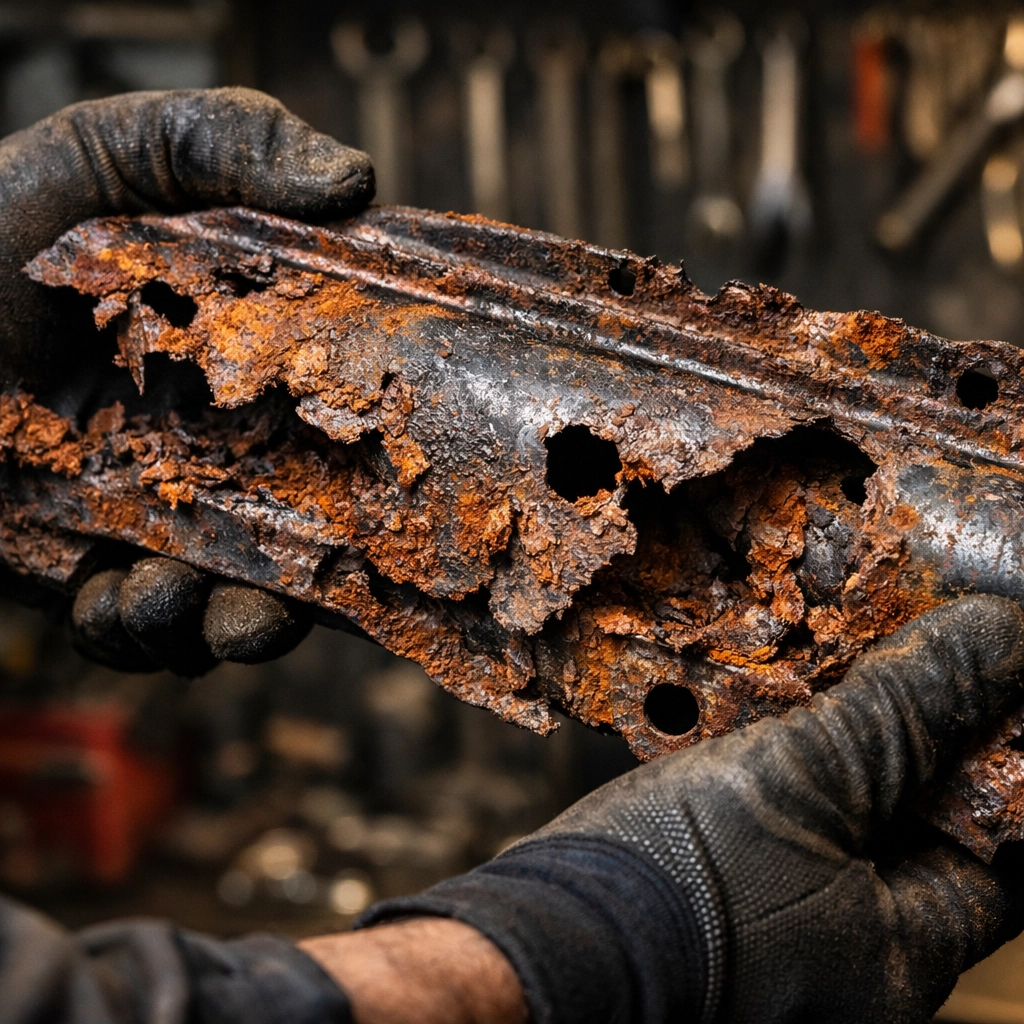
The timing of these expenses adds further complication. Rust damage rarely announces itself conveniently; instead, it reveals itself during MOT inspections, pre-sale surveys, or when selling your vehicle: precisely when you can least afford unexpected expenditure. This unpredictability transforms rust from a maintenance issue into a financial liability that can derail vehicle ownership plans and budgets.
MOT Failures and Roadworthiness Concerns
Corrosion represents one of the most common reasons for MOT failure in the United Kingdom. Structural rust affecting safety-critical areas: including chassis rails, suspension mounting points, brake lines, and floor pans: results in automatic failure. Even minor corrosion can trigger advisory notices that reduce buyer confidence and complicate private sales.
The consequences extend beyond the test fee itself. A rust-related MOT failure necessitates repairs before retesting, often requiring immediate work at whatever cost the garage quotes. Vehicle owners lose negotiating leverage when facing legally mandated repairs with a deadline. Furthermore, the inability to drive a failed vehicle legally creates secondary costs: alternative transportation, potential loss of work time, and the inconvenience of coordinating repairs urgently.
Preventative rustproofing eliminates this scenario entirely. A comprehensive treatment applied to a clean, rust-free vehicle provides continuous protection against the corrosion that causes MOT complications, ensuring your vehicle passes inspection year after year without rust-related issues.
Catastrophic Resale Value Depreciation
Rust damage devastates vehicle resale value more severely than virtually any other condition issue. Prospective buyers immediately recognize corrosion as a red flag indicating poor maintenance, hidden damage, and future problems. Even modest visible rust can reduce sale prices by 20-40% compared to equivalent rust-free examples.
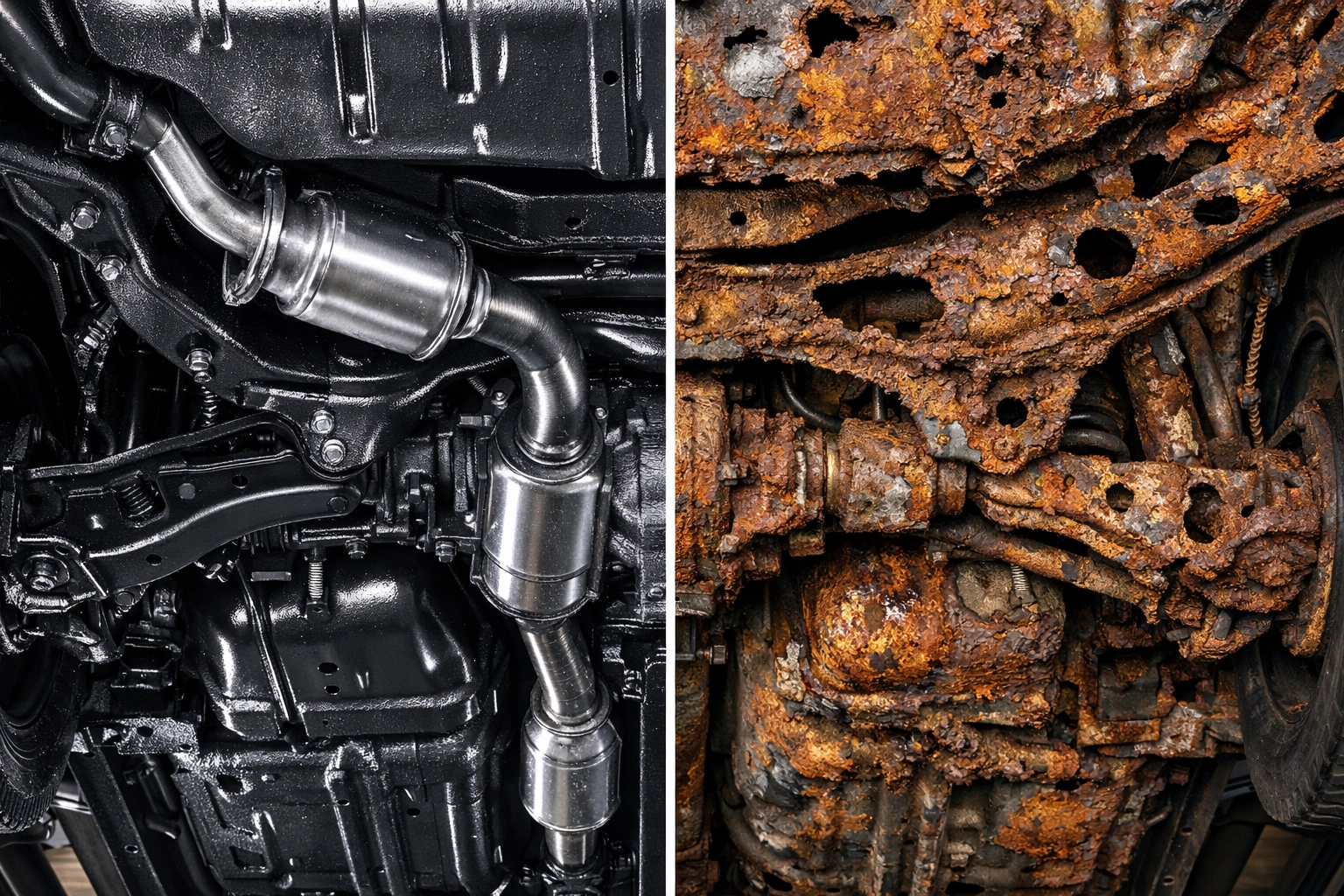
This depreciation operates on two levels. First, the direct reduction: buyers either walk away entirely or make substantially lower offers when they spot rust. Second, the extended selling period: corroded vehicles take significantly longer to sell, forcing owners to reduce asking prices progressively to attract buyers. The combination creates a compounding loss that can cost thousands of pounds.
For 4x4s, commercial vehicles, and premium marques, this impact intensifies. Land Rover Defenders, Toyota Hilux models, and classic vehicles command strong prices when properly maintained: but lose value precipitously when rust appears. A rust-free Defender can sell for £10,000-£15,000 more than a corroded equivalent, demonstrating how rust prevention directly translates into retained equity.
Professional rustproofing provides documented proof of preventative care that reassures buyers and justifies premium pricing. The official treatment service booklet, photo documentation, and guarantee certificate demonstrate conscientious ownership, directly raising the resale value of your vehicle.
Safety and Structural Integrity Risks
Beyond financial considerations, rust compromises vehicle safety in ways that endanger occupants and other road users. Corrosion weakens structural components designed to protect passengers during collisions. Chassis rails, crumple zones, and seatbelt mounting points all lose integrity as rust progresses, potentially failing at precisely the moment their strength becomes critical.
Suspension and steering components affected by corrosion present handling unpredictability and potential failure risks. Corroded brake lines can rupture suddenly, leading to complete brake system failure. These scenarios transform rust from an aesthetic concern into a genuine safety hazard.
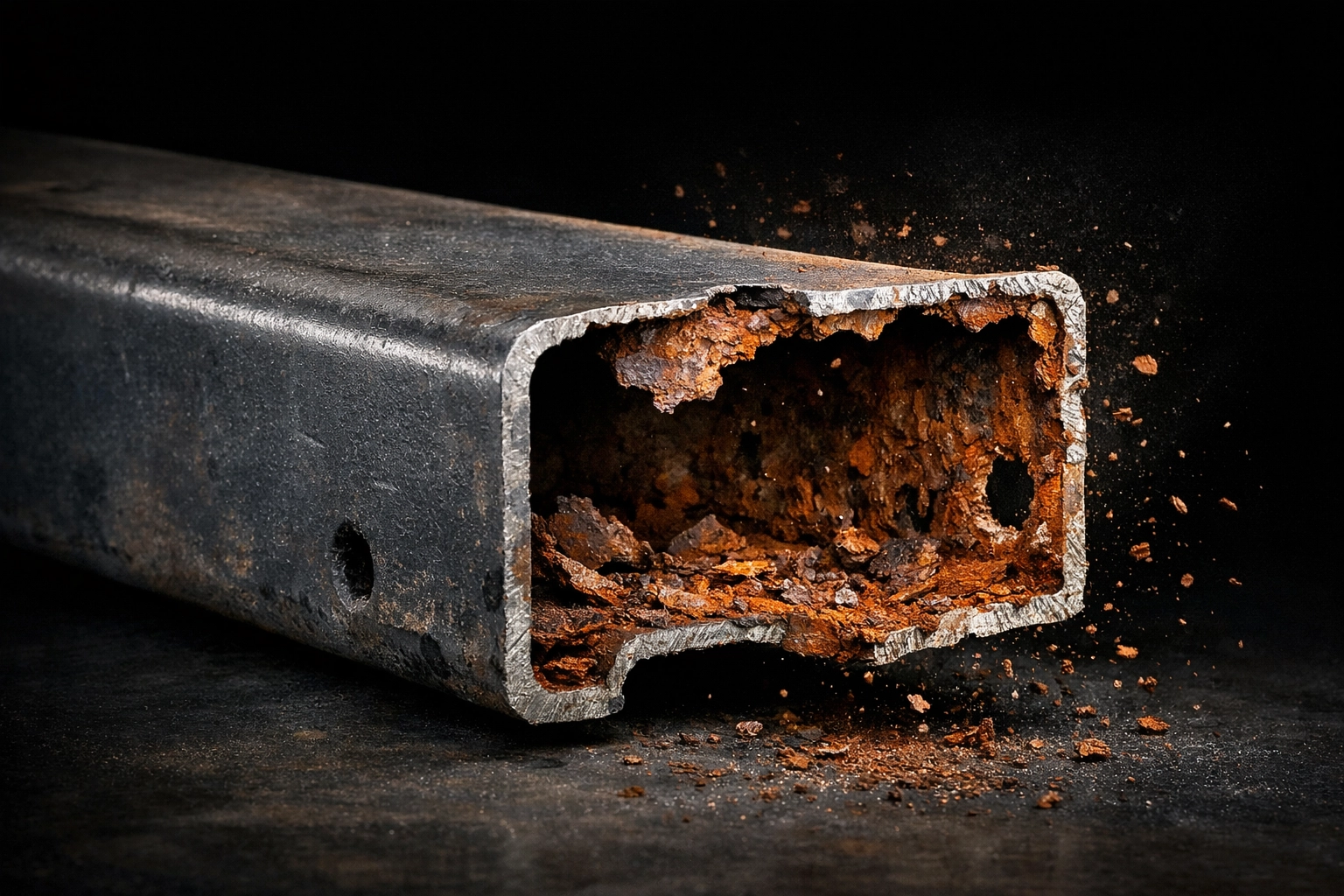
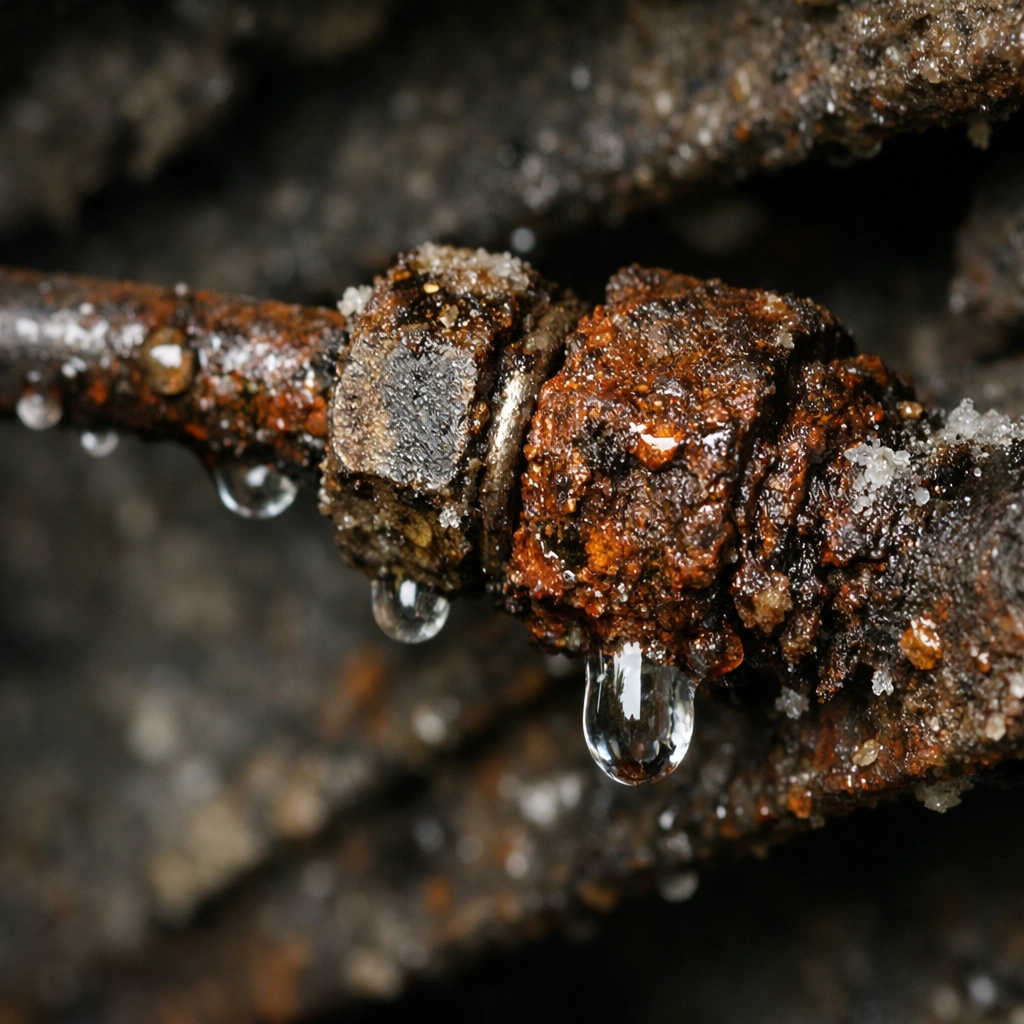
The UK climate: with its combination of road salt, persistent moisture, and temperature fluctuations: accelerates corrosion rates significantly. Vehicles operating in coastal regions or regularly exposed to winter gritting face particularly aggressive rust development. Without protective treatment, structural corrosion becomes not a possibility but an inevitability.
The Compounding Effect of Delay
Rust progression follows an exponential pattern. Small areas of surface corrosion expand continuously, with each winter cycle accelerating deterioration. The longer treatment is delayed, the more extensive damage becomes, and the more expensive remediation grows.
This compounding effect means that rust ignored for one year doesn't simply create one year's worth of damage: it creates conditions for accelerated future corrosion. Once rust penetrates past protective coatings and reaches bare metal, it spreads rapidly along internal cavities, behind panels, and through seams that cannot be accessed without extensive disassembly.
Professional cavity wax treatment prevents this progression entirely by displacing moisture and sealing metal surfaces comprehensively. The Dinitrol® products used in premium rustproofing treatments penetrate deeply into joints, seams, and hollow sections, providing protection that remains effective for years.
Prevention Versus Cure: The Mathematics
A comprehensive professional rustproofing treatment typically costs between £400-£700 depending on vehicle size and condition. This one-time investment provides protection lasting years, particularly when combined with appropriate maintenance and occasional top-up applications.
Compare this with rust repair scenarios:
Minor rust treatment and paint correction: £300-£800
Welding repairs for structural corrosion: £800-£2,500
Chassis section replacement: £2,000-£5,000+
Complete chassis replacement or vehicle write-off: £5,000-£15,000+
The economic argument becomes clear. Investing £500 in preventative treatment eliminates the risk of £5,000 repair bills while simultaneously preserving resale value, ensuring MOT compliance, and maintaining safety standards.
For commercial fleet operators and company vehicle managers, this calculation multiplies across entire fleets. Rustproofing programmes that cost several hundred pounds per vehicle prevent thousands in premature replacement costs, downtime expenses, and residual value loss.
The Rustec Approach to Cost-Effective Protection
Rustec's comprehensive rustproofing treatments address every aspect of corrosion prevention with meticulous attention to detail. Each service includes:
Thorough undercarriage steam cleaning to remove contaminants
Complete vehicle inspection with photo documentation
Application of highest-quality Dinitrol® products to underside, wheel arches, and exposed metalwork
ML cavity wax injection into doors, sills, chassis sections, and hollow panels
Comprehensive coverage that protects against UK weather conditions
Every treatment comes with our Rustec Guarantee and is documented in an official service booklet, providing verifiable proof of preventative care that protects your investment and raises resale value.
Taking Action Before Costs Escalate
The question facing every vehicle owner isn't whether rust will occur without protection: UK conditions make corrosion virtually certain: but rather whether you'll invest modestly in prevention or pay substantially for cure.
Rustproofing represents one of the most cost-effective maintenance decisions available, delivering protection that preserves value, ensures safety, and eliminates the expensive complications of rust repair. The real cost of ignoring rust isn't simply the repair bill when corrosion eventually appears; it's the accumulated loss of vehicle value, the safety compromise, the MOT complications, and the stress of unexpected major expenses.
If you still have a question or would like more information about protecting your vehicle from the true costs of rust, don't hesitate to get in touch with our team of rustproofing specialists.
Comments