
What is cavity wax and why is it important?
Meta Title: What is Cavity Wax? Why Your Chassis Needs Internal Protection Meta Description: Cavity wax is the most critical part of rustproofing. Learn how it stops internal chassis rot and prevents £2k-£5k in resale value loss. URL Slug: what-is-cavity-wax-and-why-is-it-important
Cavity wax is a specialized, high-creep protective coating designed to protect the internal, hard-to-reach sections of a vehicle's chassis and bodywork. While most people focus on the visible underbody, the real damage usually starts where you can’t see it, inside the sills, pillars, and box sections. In the UK’s damp, salt-heavy climate, cavity wax is the only way to prevent a car from rotting from the inside out.
In this guide, we’ll break down exactly what this substance is, why it is the "secret weapon" of professional rustproofing, and how it can save you thousands in structural repairs and depreciation.
The Short Answer: Why Cavity Wax Matters
If you only treat the outside of your vehicle, you are only doing half the job. Cavity wax reaches the areas that underseal cannot. It displaces moisture, seals out oxygen, and coats the internal "voids" of your vehicle with a self-healing, water-repellent barrier. Without it, condensation and road salt sit trapped inside your chassis rails, silently eating through the metal until it's too late for an MOT fix.
In UK conditions, corrosion is not a question of if , but when.
The "Iceberg" Model: Why Most Rust is Hidden
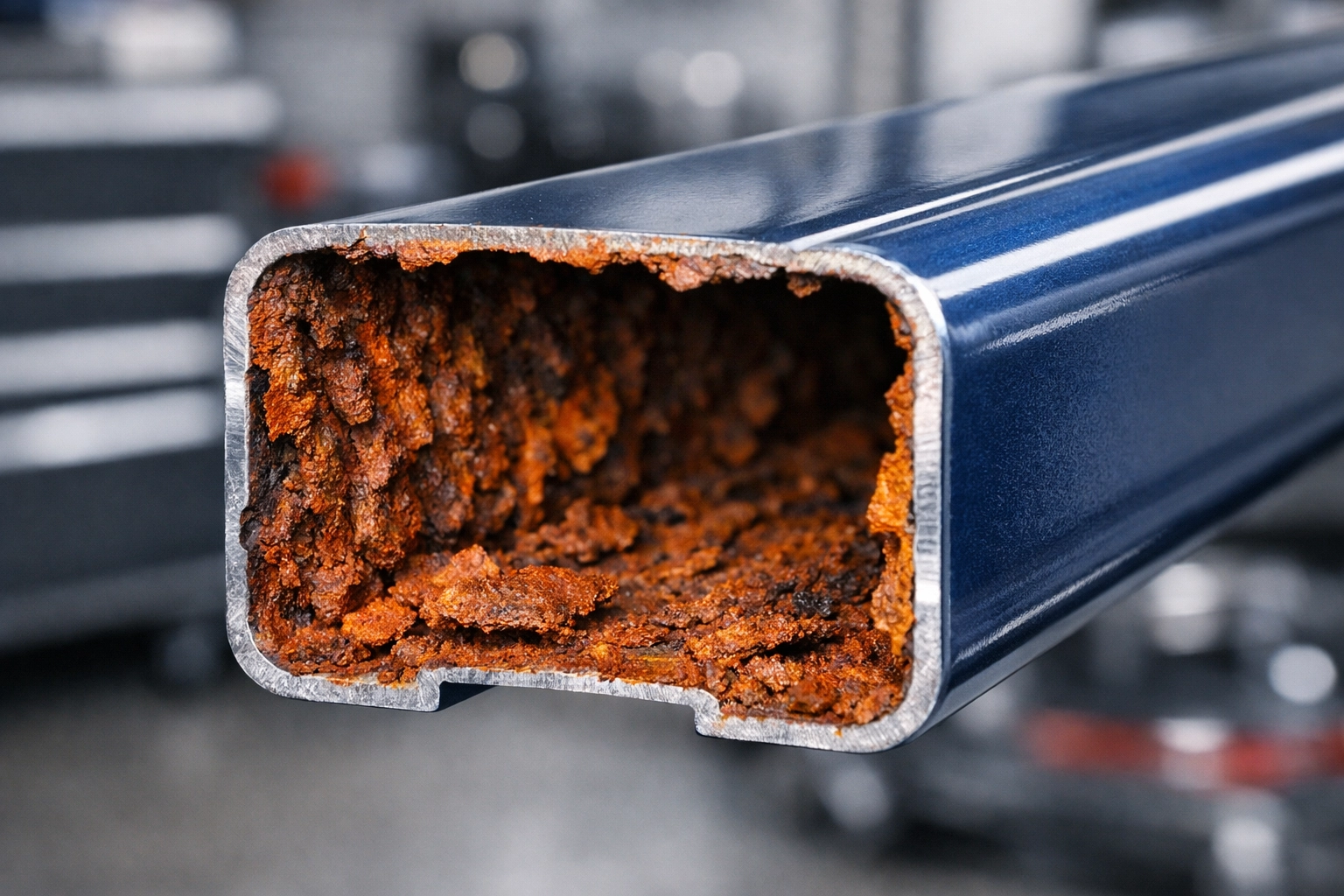
When we talk to customers at Rustec, we often use the "Iceberg" model to explain corrosion. What you see on the surface, the odd bubble of paint or a bit of flake on a suspension arm, is usually just the 10% that’s visible. The other 90% of the rust is hidden deep inside the vehicle's structure.
Because modern cars are built with hollow box sections to save weight and increase strength, they act like structural "straws." They suck up moisture and road salt through drainage holes and seams. Once that moisture is inside, it has nowhere to go. It sits in the dark, damp crevices of your sills and chassis rails, creating a perfect environment for corrosion. By the time you see rust on the outside, the structural integrity of the metal is often already compromised.
What Exactly is Cavity Wax?
Unlike traditional underseal, which is designed to be thick and durable to withstand road debris and stone chips, cavity wax is formulated to be thin, "creepy," and non-drying.
Its primary job isn't to look pretty; it's to move. When we inject high-quality cavity wax (like Dinitrol ML) into a vehicle, it seeks out the tightest seams and welds. It uses capillary action to "creep" into every microscopic gap.
Key Characteristics of Premium Cavity Wax:
Self-Healing: If the chassis flexes or the wax is disturbed, it remains soft enough to "flow" back over the gap, maintaining the seal.
Moisture Displacement: It literally pushes water away from the metal surface before sealing it.
High Penetration: It can soak through existing light surface rust to reach the base metal and stop the oxidation process.
Low Viscosity (during application): It is applied as a mist or thin liquid to ensure it reaches the far ends of a chassis rail.
For a deeper look at how this differs from the external coatings we use, you might want to read our post on rustproofing vs undersealing: what’s the real difference?.
The Visual Mental Model: The Raincoat vs. The Thermal Underwear
Think of professional rustproofing like dressing for a winter storm in the Scottish Highlands.
Your external underbody coating is the Raincoat. It’s the tough, outer shell that takes the brunt of the wind, rain, and road salt. It stops the elements from getting to the core.
Cavity wax is the Thermal Underwear. It’s the layer that sits closest to the body, protecting the vital internal parts where the raincoat can't reach. If you wear a raincoat without the thermals, the cold still gets to you. If you underseal a car without cavity wax, the moisture already trapped inside will still rot the metal from the within.
Why Cavity Wax is Essential for the UK Climate
The UK presents a "perfect storm" for vehicle corrosion. We have high humidity year-round, which keeps metal surfaces damp. We also have a massive amount of road salt applied during the winter. When salt mixes with water, it creates an electrolyte that accelerates the chemical reaction of rusting.
Inside a chassis rail, this salty mist doesn't just wash away. It clings to the internal walls. Standard factory protection on many modern vehicles is shockingly thin, often just a light dusting of primer or a minimal amount of wax that evaporates or dries out over the first 3-5 years.
A poor rustproofing job can be worse than doing nothing, as it traps moisture and accelerates corrosion. This is why the quality of the wax and the method of application are more important than the brand name on the tin.
The Financial Justification: Why It Pays for Itself
Investing in a professional cavity wax treatment isn't just about maintenance; it's about protecting your capital.
Resale Value: A vehicle with a documented, professional rustproofing service history typically commands a much higher price on the used market. For high-value vehicles like Land Rover Defenders, classic cars, or modern 4x4s, the difference in resale value can be between £2k–£5k.
Repair Costs: Once rust takes hold in a structural sill or a chassis mounting point, the only fix is cutting and welding. Professional welding for an MOT failure often costs between £1k–£3k depending on the complexity.
Longevity: By treating the cavities early, you effectively "freeze" the condition of the metal, allowing you to keep your pride and joy for a lifetime rather than seeing it scrapped due to structural rot.
If you are currently looking for a provider to handle this, we recommend reading our guide on how to choose the best rustproofing service near me to ensure you're getting a professional-grade application.
The Rustec Elite Standard: The 72-Hour Process
At Rustec, we don't believe in "quick" jobs. You cannot properly apply cavity wax to a damp or dirty vehicle. Our Rustec Elite Standard is a meticulous 72-hour process that ensures the wax actually does its job.
01: Inspection & Strip Down: We remove all plastic undertrays, wheel arch liners, and bung plugs to expose every access point.
02: Comprehensive Underbody Steam Clean: We remove years of accumulated road salt and grime.
03: 24-Hour Industrial Drying: This is the most skipped step in the industry. We use high-powered air movers to ensure the internal cavities are bone-dry before we inject the wax. If you spray wax over water, you trap the moisture against the metal.
04: Meticulous Masking: We mask off brakes, exhaust, and electrical sensors. We even check if cavity wax affects electrics or sensors (spoiler: only if applied incorrectly!).
05: Cavity Wax Injection: We use specialized 360-degree injection wands to fog the internal sills, pillars, and chassis rails.
06: Underbody Coating: We apply the durable outer layer to the exposed chassis.
07: Reassembly & Quality Control: Everything is put back together, and the service is documented.
Where Does Cavity Wax Go?
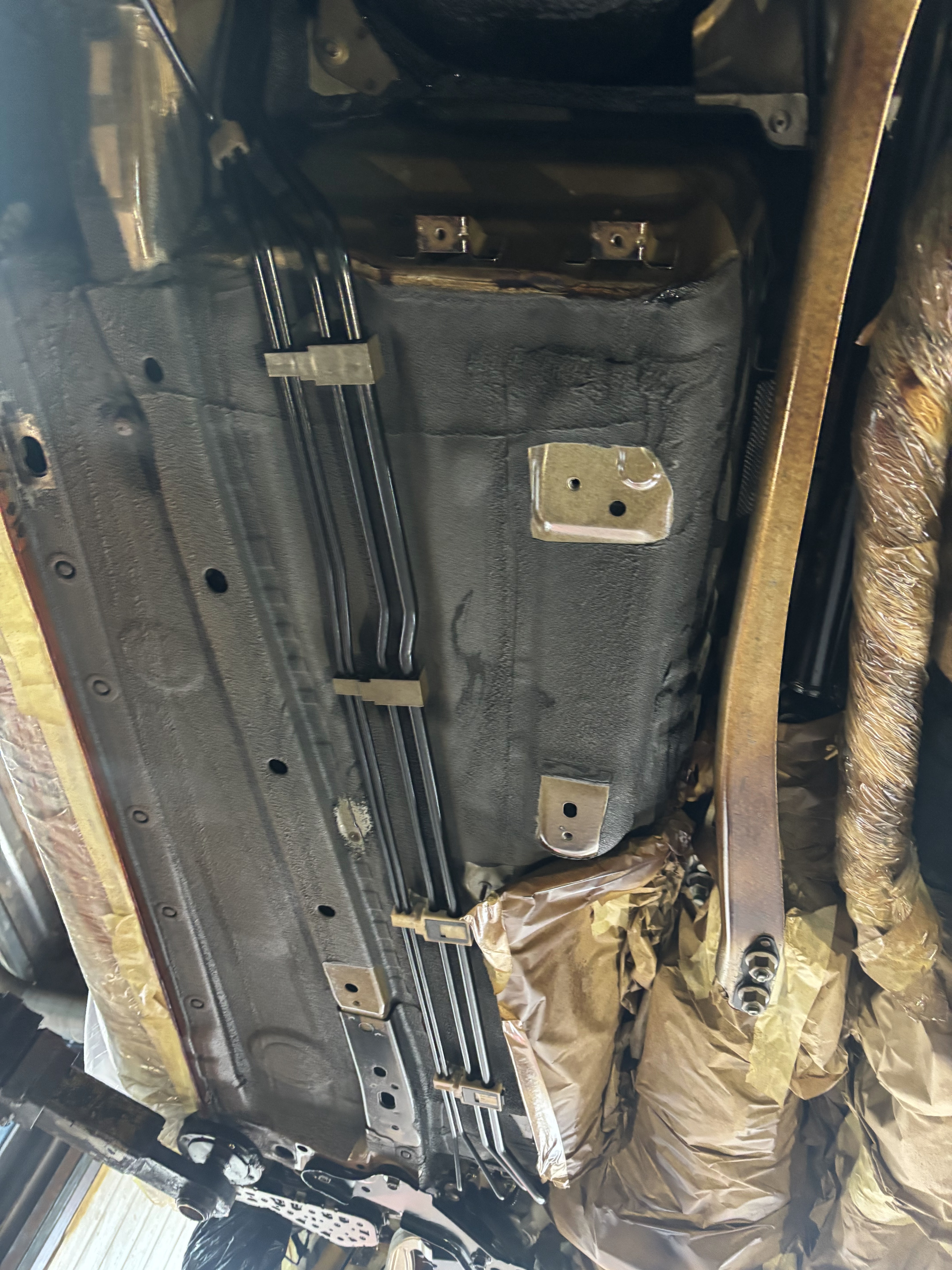
When we treat a vehicle, we target specific "corrosion hotspots." These include:
Chassis Rails: The main structural "bones" of your vehicle.
Sills: The sections running under the doors, which are notorious for rot.
Door Bottoms: Water runs down the windows and collects at the bottom of the doors.
Wheel Arches: Specifically the "lips" and seams where metal panels meet.
Pillars (A, B, and C): Internal structures that provide rollover protection.
Brake and Fuel Lines: We also ensure that rustproofing protects brake lines by using specific translucent waxes in these areas.
Comparison: Professional Cavity Wax vs. DIY Options
Feature | Rustec Elite Standard | Typical DIY / "Quick" Shop |
Preparation | 24-hour industrial drying | Air-line blow dry or none |
Equipment | High-pressure 360° injection wands | Aerosol cans with short straw |
Coverage | Total internal saturation | Patchy / surface only |
Longevity | 5+ years (with top-ups) | 12-18 months |
Risk | Zero (fully masked & professional) | High (clogging drains/mess) |
Final Takeaway
Cavity wax is not an "optional extra" in the world of rust protection; it is the foundation. Without internal protection, your vehicle is essentially a ticking time bomb for corrosion. By displacing moisture and sealing the internal steel, you are addressing the root cause of "hidden rust."
Whether you have a brand-new vehicle or a cherished classic, the goal is the same: regret minimization. It is far cheaper to prevent rust today than it is to weld it tomorrow.
Frequently Asked Questions
Does cavity wax smell? Initially, yes. There is a "newly treated" wax smell for the first 7-10 days as the solvents evaporate. It is not unpleasant, and most customers actually enjoy it as it's a sign their vehicle is protected.
Will it block my drainage holes? Not if applied by a professional. Part of the Rustec Elite Standard includes clearing all drainage points after application to ensure water can still escape the vehicle.
How often does it need to be reapplied? While the main external coating is very durable, we recommend a regular maintenance inspection. Cavity wax is usually topped up every 2-3 years to ensure the "creep" remains active.
Can I apply it over existing rust? Yes, high-quality cavity waxes like Dinitrol ML are specifically designed to penetrate light surface rust and stop it from progressing. However, if the rust is heavy and flaking, it may require mechanical removal first.
If you want to protect your vehicle properly : not just cover it up : the best time to act is before corrosion progresses. You can book a free inspection or request a quote here.

Comments