
Your Vehicle Is Exposed Daily: The Hidden Cost of UK Roads
- Lloyd Saunders
- May 12
- 5 min read
Every time you drive on a UK road, your vehicle is under active chemical and physical attack. The combination of abrasive road grit, high humidity, and aggressive road salt creates a corrosive brine that settles into the deepest recesses of your chassis. This hidden exposure leads to structural decay that is often invisible until it is too late. Professional rustproofing is the only way to stop this inevitable cycle of degradation.
The Invisible Threat: A Visual Mental Model
Think of your vehicle’s chassis like the foundations of a coastal home. You wouldn’t build a house on the shoreline without sealing the concrete against saltwater. Driving in the UK without underbody protection is exactly like leaving those foundations exposed to the tide. By the time you see a crack in the wall (visible rust on the bodywork), the structural integrity underneath is already compromised. Prep and sealing are the only things standing between a sound structure and a total loss.
Ownership Identity: The Preservation Mindset
People who keep their vehicles long-term think differently. They understand that protecting the chassis early is far cheaper than repairing structural damage later. The owners who preserve their vehicles properly are almost always the ones who avoid expensive surprises down the line. If you view your vehicle as a disposable appliance, you may ignore the underside. However, if you view it as a high-value asset, you know that the chassis is the single most important component to maintain. Elite owners don’t wait for problems; they prevent them.
The Harsh Reality of UK Driving Conditions
In the UK, we face a "perfect storm" for automotive corrosion. Our winters involve heavy salting of the roads, but the danger doesn't end when the gritters stop. This salt remains in the environment, mixing with rain to form a liquid brine that is blasted into your vehicle's box sections and sills at 60mph.
Furthermore, the UK's average humidity levels rarely drop low enough for an unprotected chassis to ever truly dry out. This constant moisture, trapped against bare metal or failing factory coatings, accelerates the oxidation process 24/7. In UK conditions, corrosion is not a possibility : it is an inevitability without proper protection. Whether you are looking for rustproofing near me or trying to understand the risks, the environment is working against your vehicle every single day.

The Financial Consequence of Neglect
Doing nothing leads to financial loss. Many owners believe they are "saving money" by skipping underbody treatments, but the math does not support this. The discrepancy between the cost of rustproofing in the UK and the cost of restorative work is staggering.
Professional Rustproofing: £500 – £1,200 (One-time investment for years of protection).
Structural Welding & Repairs: £1,000 – £4,000+ (Required once the chassis fails).
Resale Value Loss: £2,000 – £5,000 (A rusty chassis is the biggest deterrent for savvy buyers).
Beyond the immediate repair costs, there is the risk of a total loss. A vehicle that fails its MOT on structural corrosion often costs more to fix than it is worth, effectively turning a valuable asset into scrap.
When to Act: The Critical Windows
The biggest mistake is waiting until rust becomes visible. If you can see rust on the sills or arches, the internal box sections are likely already heavily corroded.
0–3 Years (The Prevention Window): This is the gold standard. Protecting a vehicle while the factory finish is still intact ensures it stays that way.
3–5 Years (The Ideal Window): Most factory protection begins to fail here. Acting now stops minor surface issues from becoming structural.
Visible Rust (The Urgent Window): If you see orange "bloom," the clock is ticking. You need an immediate intervention to stabilise the metal.
Advanced Rust (The Time-Sensitive Window): When holes appear, rustproofing is no longer enough; you need vehicle welding followed by protection.
Competitor Contrast: Speed vs. Substance
Most quick rustproofing services focus on appearance and speed. They may offer a "while-you-wait" service that involves a quick jet wash and a thick layer of bitumen-style underseal sprayed over the dirt. This is a catastrophic error. A poor rustproofing job can be worse than doing nothing, as it traps moisture and accelerates corrosion.
We focus on preparation, internal protection, and long-term structural preservation. That difference is why some treatments last months : and others protect vehicles for years. While others might offer a cheap car underseal near me that hides problems, we expose, treat, and seal them properly.
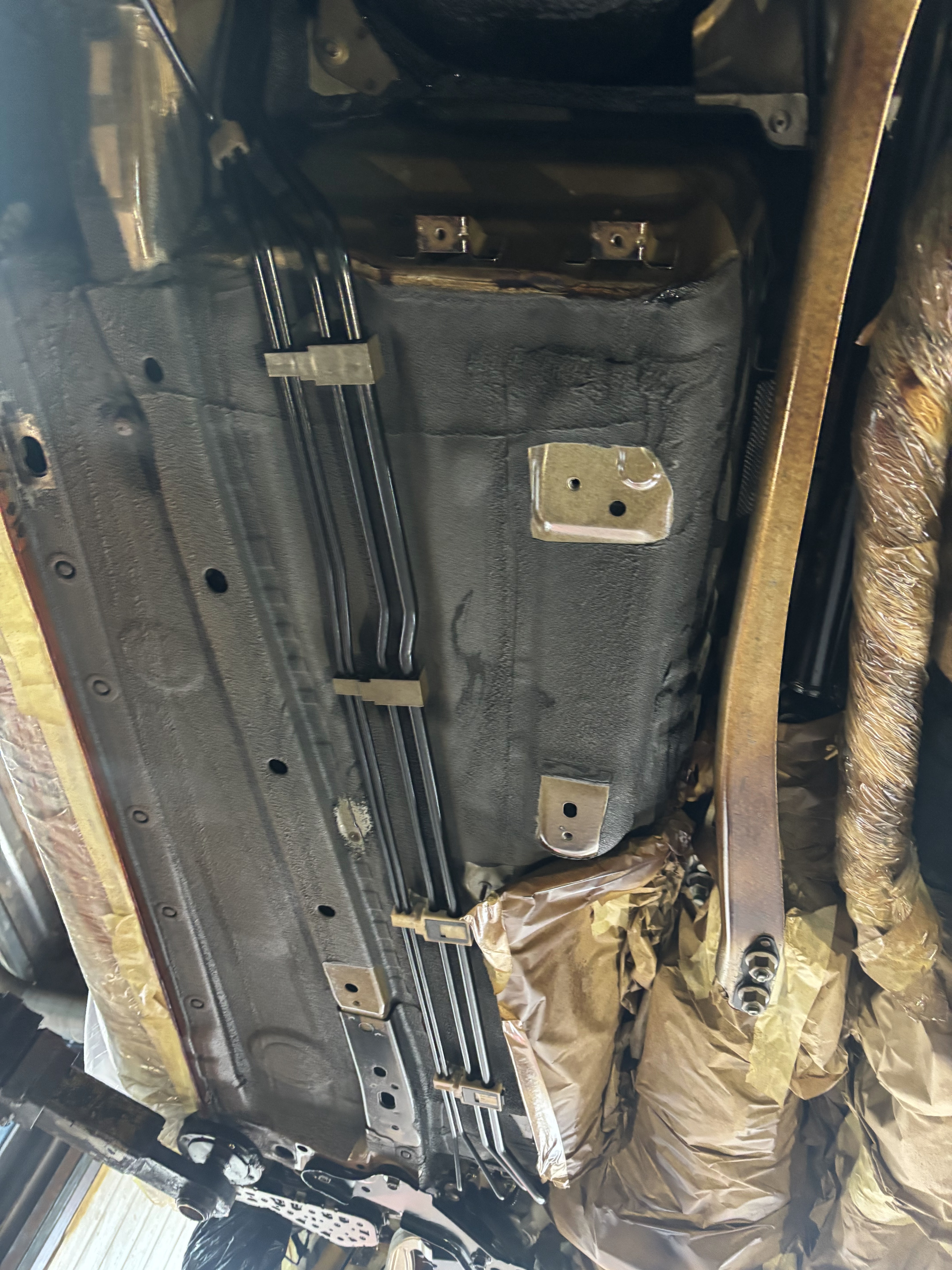
The Rustec Elite 72-Hour Standard
We do not offer "fast" services because quality rustproofing requires time. Our proprietary 72-hour process is designed for maximum longevity and effectiveness:
Stage 1: Deep Cleansing: We remove all road grime, salt, and loose debris from the chassis using specialized high-pressure equipment.
Stage 2: Technical Drying: The vehicle is dried thoroughly. Applying product to a damp chassis is the primary cause of rustproofing failure.
Stage 3: Precision Masking: We mask off all sensitive components, including the exhaust, braking systems, and electrical connectors, to ensure a clean, professional finish.
Stage 4: Cavity Wax Injection: We inject high-grade waxes into sills, doors, and box sections: the areas where rust actually starts.
Stage 5: External Coating: We apply a durable, self-healing underbody coating to the exposed chassis rails and floor pans.
This meticulous approach is why we are considered the best rustproofing method for UK vehicles.
Buyer Psychology: Regret Minimisation
"I wish I had done this sooner." This is the phrase we hear most often from clients who bring us vehicles that already require extensive welding. The frustration of seeing a well-maintained engine and interior attached to a rotting frame is immense. By acting now, you eliminate the future stress of MOT failure and the massive depreciation that comes with a neglected underbody. Think about the peace of mind that comes with knowing your vehicle is immune to the UK's winter roads.

FAQ: Protecting Your Investment
Yes. Any corrosion within 30cm of a "prescribed area" (suspension mounts, seatbelt anchors, steering components) is an automatic failure. If the rust is structural, the vehicle is deemed unroadworthy and cannot be driven away.
A professional treatment using the Rustec Elite Standard typically lasts between 3 to 5 years, depending on mileage and usage. We recommend an annual inspection to ensure the coating remains intact.
Absolutely. For high-end 4x4s, classics, and performance cars, a documented professional rustproofing history is a massive selling point. It proves the owner cared for the vehicle's structural integrity, often allowing for a significantly higher asking price.
Is DIY rustproofing worth it?
DIY kits exist, but they lack the pressure required for deep cavity injection and the industrial-grade prep equipment we use. Without a hoist and professional drying facilities, DIY attempts often trap moisture, doing more harm than good.
Rust doesn’t wait until it becomes visible.
By the time most owners notice a problem, the damage underneath has already started costing them money.
Waiting feels cheaper in the short term : but it nearly always becomes more expensive later.
👉 Book your inspection now [https://calendly.com/rustec-works/free-vehicle-inspectioni] and protect your vehicle before corrosion takes hold.
Related Rustec Posts:
Comments