
Every Winter Adds Damage: The Cumulative Cost of UK Road Salt
Direct Answer: Why One More Winter Matters
Every UK winter introduces a fresh layer of corrosive road salt that penetrates chassis crevices, meaning that for every year a vehicle remains unprotected, the cumulative damage and eventual repair costs grow exponentially. Waiting is not a neutral act; it is an active decision to allow chemical erosion to degrade your vehicle’s structural integrity. In the UK, road salt doesn’t just sit on the surface, it embeds itself in box sections, sills, and chassis rails where it draws in moisture year-round. If you haven't protected your vehicle, the cost of rectification increases with every frost.
Visual Mental Model: The Debt of Corrosion
Think of winter salt as compound interest on a debt you don't want. Every year you wait to protect your chassis, the "interest" (corrosion) makes the final bill significantly higher. In the first year, the "debt" is small, perhaps just surface debris. By year three, the interest has compounded, and the salt has eaten through factory coatings. By year five, the debt has spiralled into structural damage. You can either pay a small "deposit" now for protection or face the full, compounded "debt" of welding and massive depreciation later.
The Reality of the UK Winter Attack
The UK’s approach to winter road safety is a death sentence for unprotected steel. Local authorities spread approximately 2 million tonnes of rock salt (sodium chloride) across the road network every year. This salt is hygroscopic, meaning it actively attracts and holds moisture against the metal components of your vehicle.
Even when the roads appear dry in March or April, the residual salt remains trapped in the "V" sections of the chassis and inside the sills. It continues to work long after the winter sun has come out. Because our climate is perpetually humid, the electrochemical process of rusting never truly stops. In UK conditions, corrosion is not a question of if , but when.
Financial Consequence: The Price of Procrastination
Many owners view rustproofing as an optional expense. This is a fundamental misunderstanding of vehicle economics. Doing nothing leads to financial loss. The math is simple and unavoidable:
Resale Value Loss: A vehicle with visible chassis corrosion or even "advisory" rust on an MOT certificate will typically see a £2k–£5k reduction in trade-in or private sale value. Buyers are increasingly savvy; they know a rusty chassis is a ticking time bomb.
Welding and Repair Costs: Once rust becomes structural, you are no longer looking at prevention. You are looking at surgery. Professional welding to chassis rails, outriggers, or sills can easily cost between £1k–£4k+ depending on the severity and vehicle type.
MOT Failure: Corrosion within 30cm of a mounting point is an automatic MOT failure. This often happens silently, hidden behind plastic undertrays.
By contrast, a professional best rustproofing method for UK vehicles typically costs between £500 and £1,200. It is the only automotive service that offers a direct, multi-thousand-pound return on investment by halting depreciation and eliminating the need for future structural repairs.
WHEN TO ACT: The Window of Opportunity
The biggest mistake is waiting until rust becomes visible. Once you can see it on the outer sills or arches, the internal cavities are likely already compromised.
Vehicle Age | Status | Action Required |
0–3 Years | Prevention Phase | Critical. This is the cheapest and most effective time to seal the vehicle before salt ingress begins. |
3–5 Years | Ideal Window | Mandatory. Most factory "waxes" have dried or cracked by now. Treatment is essential to stop established salt from biting. |
5–8 Years | Urgent Action | High Risk. Surface rust is likely present. Professional cleaning and conversion are required before it turns structural. |
8+ Years | Time-Sensitive | Assessment Needed. Requires a specialist inspection to determine if the metal is still thick enough to save. |

The Rustec Elite Standard vs. Quick-Spray Services
There is a dangerous trend in the UK for "same-day" rustproofing. You must understand one thing: a poor rustproofing job can be worse than doing nothing, as it traps moisture and accelerates corrosion. If a provider offers to spray your car while you wait, or without a multi-day drying process, they are sealing in the very salt and moisture that causes the damage.
The 72-Hour Elite Process
At Rustec, we do not compromise. Our process is designed for longevity, not speed.
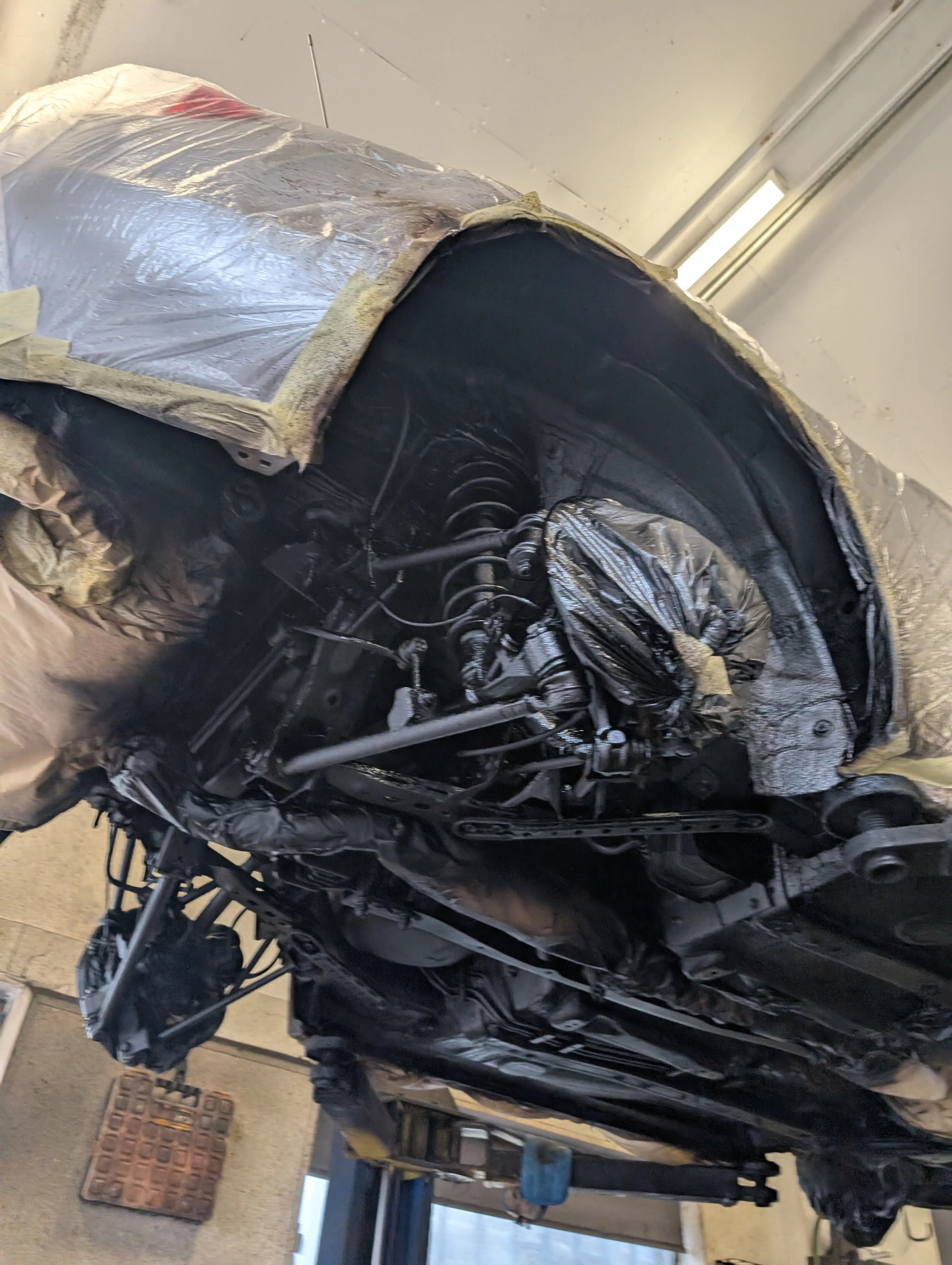
Deep Cleaning: We remove years of accumulated road salt and mud using specialized high-pressure equipment.
Extended Drying: The vehicle is dried thoroughly in a controlled environment. Spraying onto damp metal is the primary cause of rustproofing failure.
Meticulous Masking: We mask off brakes, exhaust systems, and sensors. Precision matters.
Cavity Wax Injection: We use specialized wands to reach the interior of the chassis, where 90% of rust starts.
Underbody Coating: A durable, self-healing barrier is applied to all exposed metal surfaces.
Comparison Table: Value vs. Risk
Feature | Rustec Elite (72-Hour) | Cheap/Quick Service (1-Day) |
Preparation | Full steam clean & 24h+ dry | Basic jet wash or none |
Cavity Work | Full internal injection | External spray only |
Masking | Comprehensive (brakes/sensors) | Minimal or none |
Risk | Zero moisture entrapment | High risk of "sealing in" rust |
Longevity | Multi-year protection | Often flakes within 12 months |

Buyer Psychology: Regret Minimisation
We speak to hundreds of vehicle owners every year. The most common phrase we hear is: "I wish I had done this three years ago."
Corrosion is an "iceberg" problem. What you see on the surface is only 10% of the issue. The hidden cost of ignoring vehicle rust is the sudden, catastrophic realization that your vehicle is worth half what you thought it was, or that it has failed an MOT beyond economical repair. By acting now, you are choosing to be the owner who sells a "rust-free, protected" vehicle for a premium, rather than the one who has to explain away a corroded chassis. To see the long-term benefit, consider how long rustproofing lasts in the UK when done to the Elite standard.
Process Matters More Than Product
It is a common misconception that the brand of wax or oil is the most important factor. While we use professional-grade materials, the process matters more than the product. A premium coating applied over a salty, damp chassis will fail. A meticulously prepared surface, treated by experts who understand the cost of rustproofing in the UK and the value of preservation, will last for years.

FAQ: Protecting Your Investment
Q: Is it worth rustproofing a car that already has some rust? A: Yes, provided the rust is surface-level. Our process involves treating and converting surface rust before sealing it. This stops the "compound interest" of corrosion from turning into structural failure. If you're wondering does rustproofing increase resale value, the answer is a resounding yes, especially on vehicles prone to corrosion.
Q: Will rustproofing affect my MOT? A: A professional application makes your MOT smoother. Testers prefer to see a clean, protected chassis rather than one crumbling with rust. We ensure that all moving parts and inspection points remain accessible.
Q: How often do I need to re-treat? A: With the Rustec Elite Standard, you are looking at a multi-year protection window. We recommend a quick annual inspection to check for physical scrapes or stone chips that may have breached the barrier.
Q: Can I not just wash the salt off myself? A: Surface washing helps, but it cannot reach the inside of the chassis rails or the tight crevices above the fuel tank where salt accumulates. Only high-pressure cavity injection can reach the areas that matter.
Final Action Trigger
Every day your vehicle remains unprotected on UK roads is a day it loses value. The chemical process of corrosion is already happening, whether you can see it or not. You can either invest in a professional 72-hour treatment today, or you can pay for welding and suffer thousands in resale loss tomorrow.
If you want to protect your vehicle properly : not just cover it up : the best time to act is before corrosion progresses. You can book a free inspection or request a quote here.
In UK conditions, corrosion is not a question of if ; but when. Delaying turns prevention into welding bills and resale loss. Book your inspection now.
Comments