
Your Car Is Sitting in Salt: The Silent Chassis Killer
Your car is likely sitting in salt right now, even if there hasn't been a fresh snowfall for weeks. In the UK, road salt doesn't simply disappear; it lingers in the chassis, traps moisture, and creates a highly corrosive electrolytic solution that eats metal from the inside out. Without professional intervention, this salt residue acts as a silent killer, compromising structural integrity long before you see a single bubble of rust on the bodywork.
In this guide, we examine why UK road salt is so uniquely destructive, the hidden "iceberg" of corrosion, and why the Rustec Elite Standard is the only way to ensure your vehicle survives the British climate.
The Invisible Threat: Why Salt Lingers
Many UK drivers believe that once the roads look clear and the temperature rises above freezing, the threat of corrosion has passed. This is a dangerous misconception. Local councils across the UK apply millions of tonnes of rock salt (sodium chloride) to the roads every year. This salt is hygroscopic, meaning it actively attracts and holds onto moisture from our humid British air.
Even in spring and autumn, the residue left behind in the crevices of your chassis remains active. When salt, water, and oxygen combine on metal surfaces, they create an electrochemical reaction that accelerates rust at an alarming rate. It isn't just the salt you see on the surface; it is the salt brine that has "crept" into your box sections, sills, and chassis rails.
In UK conditions, corrosion is not a question of if , but when.
The Iceberg Model: Hidden Inside-Out Corrosion
Corrosion on a vehicle is like an iceberg: what you see on the surface is only a tiny fraction of the actual problem.
Most structural failure starts inside the hollow cavities of the vehicle. Road spray forces salt-laden water into drain holes, seams, and box sections. Because these areas have poor airflow, they stay damp for weeks. While the exterior paint might look pristine, the internal structural steel is being thinned by rust. By the time you notice "surface rust" on the exterior of a chassis rail, the internal structure is often already compromised.

Visual Mental Model: The House Paint Analogy
Proper rustproofing is like painting a house: the preparation matters just as much as the coating. If you slap high-quality gloss over rotten, damp wood, the wood continues to rot underneath, and the paint will eventually peel off.
At Rustec, we don't just "underseal" cars. We follow a clinical process to ensure the substrate is clean, dry, and chemically prepared before any protective layer is applied. Spraying a thick black coating over salt and moisture is the fastest way to kill a chassis. A poor rustproofing job can be worse than doing nothing, as it traps moisture and accelerates corrosion.
The Financial Reality: Prevention vs. Repair
Ignoring the salt sitting in your chassis is a high-stakes gamble with your vehicle's resale value and its MOT future.
Consider the typical costs involved:
Structural Welding: If a chassis rail or sill fails an MOT, professional welding repairs typically cost between £1,000 and £3,000, and the vehicle is never truly the same again.
Depreciation: A vehicle with visible underbody corrosion or a history of structural "patches" can see a £2,000 to £5,000 drop in resale value compared to a clean, rustproofed example.
Rustec Prevention: A professional treatment is a fraction of these costs and serves as an investment that protects the vehicle for years to come.
Is underbody rust common in the first 3 years? Unfortunately, the answer is yes, making early intervention essential.
The Rustec Elite Standard: Our 72-Hour Clinical Process
We do not offer "while-you-wait" undersealing. Real protection requires time, precision, and the right environment. Our proprietary Rustec Elite Standard is a meticulous 72-hour process designed to neutralize the salt threat.
01: Comprehensive Inspection & Strip Down
We remove all plastic undertrays, wheel arch liners, and heat shields. You cannot protect what you cannot see. We then perform a comprehensive inspection to identify existing corrosion.
02: Deep Clean & Decontamination
The vehicle undergoes a thorough undercarriage steam clean and a salt-neutralizing wash to remove the "silent killer" residue from every nook and cranny.
03: Drying & Clinical Masking
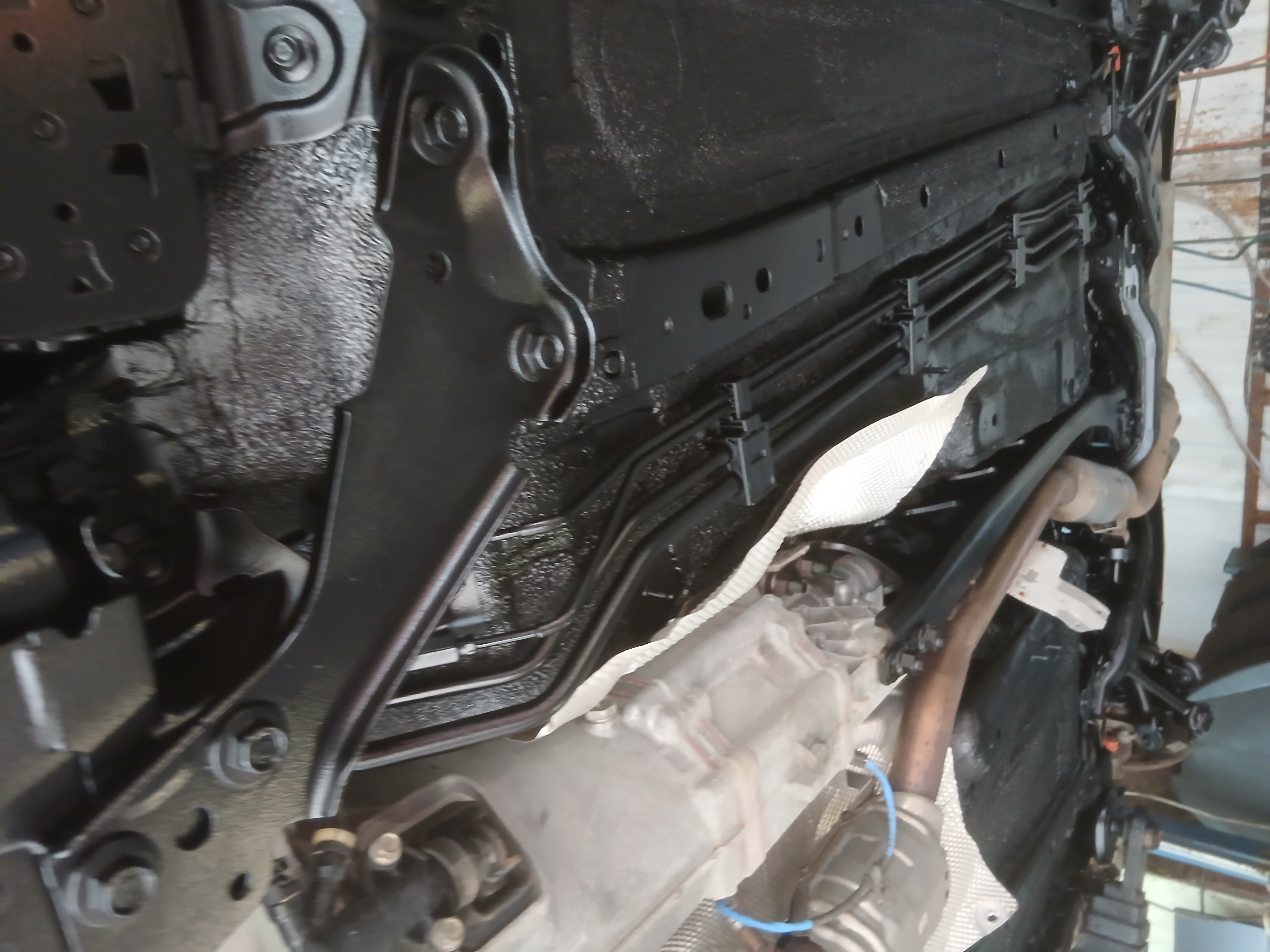
The vehicle is dried overnight using industrial heaters. Once dry, we meticulously mask off the brakes, exhaust, engine, and electrical sensors. We treat your vehicle with clinical respect, ensuring the product only goes where it is needed.

04: Cavity Injection & Underbody Coating
Using long-life Dinitrol® products, we inject high-creep cavity waxes into all box sections and sills. This is followed by a premium underbody coating that provides a self-healing, durable barrier against future salt exposure.
Why "Quick Jobs" Fail
The market is flooded with "cheap" rustproofing options that take a few hours. These services typically involve spraying a product over a dirty chassis without removing liners or properly drying the vehicle.
Feature | Cheap "Quick" Spray | Rustec Elite Standard |
Preparation | None/Surface wipe | Deep steam clean & salt removal |
Drying Time | Minutes | 24+ Hours with heat |
Masking | Minimal | Meticulous (Brakes, Exhaust, Sensors) |
Cavity Wax | Often skipped | Full internal injection |
Longevity | 6–12 Months | Multi-year protection |
Risk | High (Traps moisture) | Minimal (Clinical process) |
Applying a coating over road salt effectively "seals in" the corrosive agent. This is why the hidden cost of ignoring vehicle rust often manifests as a catastrophic failure a year or two after a "cheap" treatment.
UK Specifics: Road Salt and Humidity
The UK has a particularly challenging climate for vehicles. Unlike colder regions where the air is dry, the UK is damp and humid. When councils spread salt, it dissolves into a fine mist that hangs in the air and is sucked into every cavity of your vehicle as you drive. This salt-spray doesn't just sit on the bottom; it migrates.
Owners of newer vehicles often assume they are safe, but even new cars need rustproofing in the UK because factory protection is often designed for global markets, not the salt-heavy, damp roads of Britain.
Frequently Asked Questions
Does road salt affect my brake lines?
Yes. Salt is a primary cause of brake line corrosion. During our process, we clean and protect these lines, though we always recommend regular inspections as part of your vehicle's maintenance. For more details, see does rustproofing protect brake lines.
How long does a Rustec treatment last?
While it depends on mileage and usage, a professional Dinitrol® treatment typically provides robust protection for 3–5 years before a top-up is recommended. We provide a full guide on treatment lifespan here.
Can I just wash the underside of my car to remove salt?
While regular rinsing helps, it cannot reach the salt trapped inside chassis rails and box sections. Furthermore, high-pressure washing can sometimes force salt and water deeper into seams where it cannot escape, potentially doing more harm than good.
Final Takeaway
Your vehicle is one of your most significant investments. Allowing road salt to sit in the chassis is an invitation for structural rot. By the time the damage is visible, the repair bill is often staggering. A professional, clinical rustproofing treatment is the only way to neutralize the threat and maintain your vehicle in optimal condition for a lifetime.
If you want to protect your vehicle properly : not just cover it up : the best time to act is before corrosion progresses. You can book a free inspection or request a quote here.
Comments