
Why Quick Rustproofing Fails: The Hidden Risk of Rushed Protection
Direct Answer: Why Speed Kills Rust Protection
A "quick" rustproofing job often fails because it skips critical preparation and drying phases, trapping moisture and road salt behind the coating. This creates a micro-environment where corrosion accelerates from the inside out, completely hidden from view. A poor rustproofing job can be worse than doing nothing, as it traps moisture and accelerates corrosion. Real protection requires time for deep cleaning, complete moisture evaporation, and precision application: none of which can be achieved in a "while-you-wait" service.
The Wet Wall Metaphor: Why Preparation Dictates Protection
To understand why a rushed job is a liability, consider this visual mental model: Treating a car without proper drying is like painting over a wet wall. On the surface, the wall looks fresh and clean. However, the moisture trapped behind the paint has nowhere to go. It soaks into the structure, rots the wood, and creates mould. By the time you see the paint bubbling, the structural damage is already done.
In the automotive world, the "paint" is the underseal, and the "wet wall" is your chassis. If a technician sprays a thick coating over a frame that hasn't been professionally dried for at least 24 hours, they are sealing in the very elements that cause rot.
The Hidden Risk: Inside-Out Corrosion (The Iceberg Model)
Most vehicle owners only worry about rust when they see orange bubbles on the sills or arches. This is a fundamental misunderstanding of how corrosion works in the UK. Think of rust like an iceberg: what you see on the surface is only 10% of the problem.
The real destruction happens inside the chassis rails, door bottoms, and box sections. Quick services focus on the visible exterior, spraying a "black-and-shiny" layer that looks good to the untrained eye but leaves the internal cavities vulnerable. Without dedicated cavity wax injection, the vehicle continues to rot from the inside out. By the time the rust becomes visible on the exterior panels, the structural integrity of the chassis is often already compromised.

UK-Specific Context: The Salt and Humidity Trap
The UK climate is uniquely hostile to automotive steel. We deal with high humidity, consistent rainfall, and a heavy reliance on road salt during the winter months. Road salt is hygroscopic, meaning it actively draws moisture from the air.
If a "quick" rustproofing service sprays over even a microscopic layer of salt or road film, that salt remains active under the coating. It will continue to draw moisture through the pores of the metal, creating a concentrated electrolytic cell that eats through steel with terrifying speed. Only a meticulous, multi-stage cleaning process followed by a 72-hour drying and application window can neutralise this threat. In UK conditions, corrosion is not a question of if : but when.
Financial Consequence: The High Cost of "Cheap" Services
Choosing a rushed service to save a few hundred pounds is a false economy that leads to catastrophic financial loss.
Rustproofing (Professional): £500 – £1,200 (One-off investment in longevity).
Welding Repairs: £1,000 – £4,000+ (Required once structural MOT failure occurs).
Resale Value Loss: £2,000 – £5,000 (The "stigma" of a rusty or poorly undersealed vehicle).
A vehicle with a service history showing a rushed, peeling undercoat is a red flag to any serious buyer or dealer. It suggests neglect and hidden damage. Conversely, a documented best rustproofing method for UK vehicles preserves the vehicle as a premium asset.
WHEN TO ACT: The Critical Windows
The biggest mistake is waiting until rust becomes visible. Once you can see it, you are no longer in the "prevention" phase; you are in the "damage limitation" phase.
Vehicle Age | Status | Action Required |
0–3 Years | Prevention Phase | Optimal Window. Protect factory-fresh steel before salt ingress begins. |
3–5 Years | Ideal Window | Critical. Most factory protection has failed by year three. Act now to stop surface rust. |
5+ Years | Urgent Phase | High Priority. Surface rust is likely present. Requires professional treatment to stop spread. |
Visible Rust | Damage Phase | Emergency. Corrosion is established. Waiting longer leads to structural failure. |
Comparison: The Rustec Elite Standard vs. Quick Services
Rushed services rely on "spray and go" tactics. They often ignore the 72-hour standard required for a professional bond.
Feature | Cheap/Quick Service (1-4 Hours) | Rustec Elite Standard (72 Hours) |
Preparation | Pressure wash only (or skipped) | Deep steam clean + mechanical de-scaling |
Drying Time | Blown dry or ignored | 24-hour industrial dehumidified drying |
Masking | Minimal or none (overspray risk) | Full masking of brakes, exhaust, and sensors |
Cavity Work | Often skipped | 360-degree internal cavity wax injection |
Longevity | 6–12 months (peels/traps moisture) | Multi-year durable protection |
Risk Level | High (Accelerates hidden rot) | Zero (Complete preservation) |
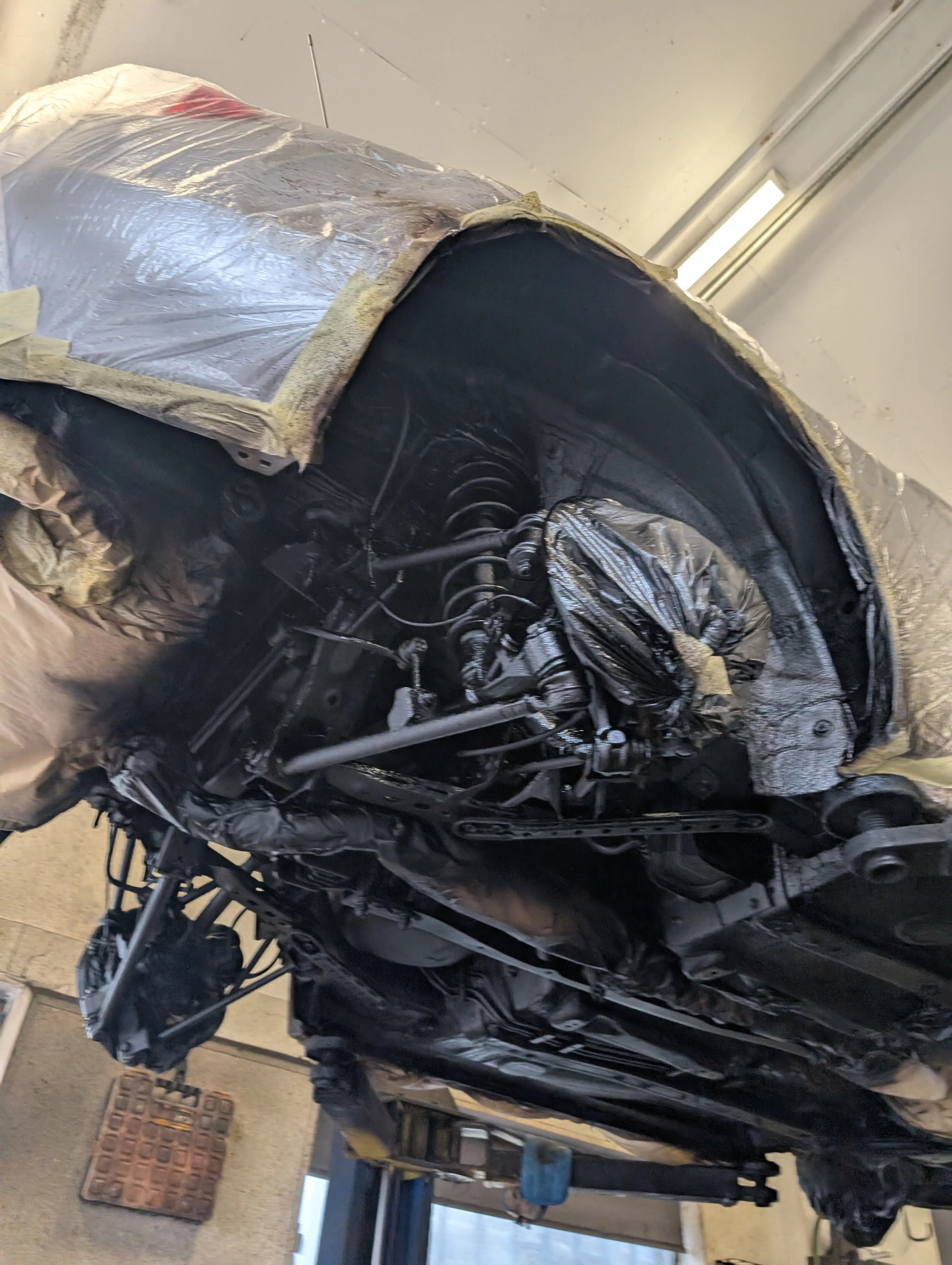
The Rustec Elite 72-Hour Standard
Process matters more than product. You can use the most expensive wax in the world, but if you apply it to a damp chassis, it will fail. At Rustec, we adhere to a rigid sequence that ensures total protection.
Stage 1: Deep Decontamination. We remove every trace of UK road salt, mud, and grease using high-pressure steam cleaning.
Stage 2: Extended Drying. The vehicle is placed in a controlled environment for a minimum of 24 hours. We ensure the steel is bone-dry, including inside the box sections.
Stage 3: Precision Masking. We meticulously cover all components that should not be coated, such as brake discs, exhaust systems, and electrical sensors.
Stage 4: Internal Cavity Injection. We use specialised wands to flood the internal chassis rails and sills with high-creep cavity wax.
Stage 5: External Shielding. A heavy-duty, self-healing underbody coating is applied to provide a physical barrier against how road salt damages vehicles.
Buyer Psychology: Minimising Regret
We speak to hundreds of owners who say the same thing: "I wish I had done this sooner."
The regret of seeing a vehicle you love: and paid a significant amount for: fail an MOT due to "excessive corrosion" is avoidable. Doing nothing leads to financial loss. Owners often assume that modern manufacturing or "factory underseal" is enough. It isn't. Most manufacturers provide the bare minimum to get the car past its warranty period. After that, you are on your own.
By investing in a professional process now, you eliminate the "what if" and ensure your vehicle remains structural sound and easy to maintain for years to come.

Take Action Before Corrosion Spreads
If you want to protect your vehicle properly : not just cover it up : the best time to act is before corrosion progresses. A "quick" fix is a dangerous illusion that can cost you thousands in the long run. Demand a process that respects the science of corrosion.
In UK conditions, corrosion is not a question of if : but when. Delaying turns prevention into welding bills and resale loss. Book your inspection now.
FAQ: Common Concerns About Professional Rustproofing
Is it really worth the extra cost compared to a quick spray?
Yes. A quick spray often traps moisture against the metal, which actually speeds up the rusting process. Professional rustproofing is an investment in the vehicle's structural integrity. Saving £300 today can lead to a £3,000 welding bill in three years.
How long does a professional treatment last?
When applied via the Rustec Elite Standard, the protection is designed to last several years, depending on mileage and usage. We recommend periodic inspections to ensure the physical barrier remains intact. You can read more about how long rustproofing lasts in the UK to understand the maintenance cycle.
Can I just do this myself at the weekend?
DIY is possible, but most home setups lack the industrial steam cleaning and dehumidified drying environments necessary for a professional bond. Without the ability to properly clean and dry the internal cavities, a DIY job often suffers from the same "trapped moisture" issues as a rushed commercial service.
Does professional rustproofing affect my MOT?
It improves your chances of passing. An MOT inspector needs to see the structural condition of the chassis. A professional, clean application of a translucent or high-quality black wax is perfectly acceptable. However, a "sloppy" job that covers grease, dirt, or moving parts can lead to MOT advisories or failures.
Comments