
Why do Toyota Hilux and Land Cruisers rust so badly?
Toyota has built an exceptional reputation for reliability and longevity. The Hilux and Land Cruiser, in particular, are celebrated worldwide for their robust engineering and ability to withstand punishing conditions. Yet there is a persistent and frustrating paradox that owners across the UK encounter: these legendary workhorses are prone to significant rust problems.
If you own a Hilux or Land Cruiser: or you are considering purchasing one: understanding why these vehicles rust so badly is essential. More importantly, knowing how to protect your investment can save you thousands in repairs and preserve the long-term value of your vehicle.
The Rust Reputation: Not Just Anecdotal
Walk into any 4x4 forum, speak with mechanics who specialise in off-road vehicles, or simply inspect the underside of a five-year-old Hilux, and you will find the evidence. Rust on Toyota trucks and SUVs is not merely a possibility: it is a well-documented reality that affects models across multiple production years.
This may seem contradictory. After all, Toyota vehicles are engineered to survive extreme environments, from African deserts to Australian outback trails. However, the conditions these vehicles face in the UK present a very different challenge: one that factory protection often fails to address adequately.
Understanding the Root Causes
Chassis Design Vulnerabilities
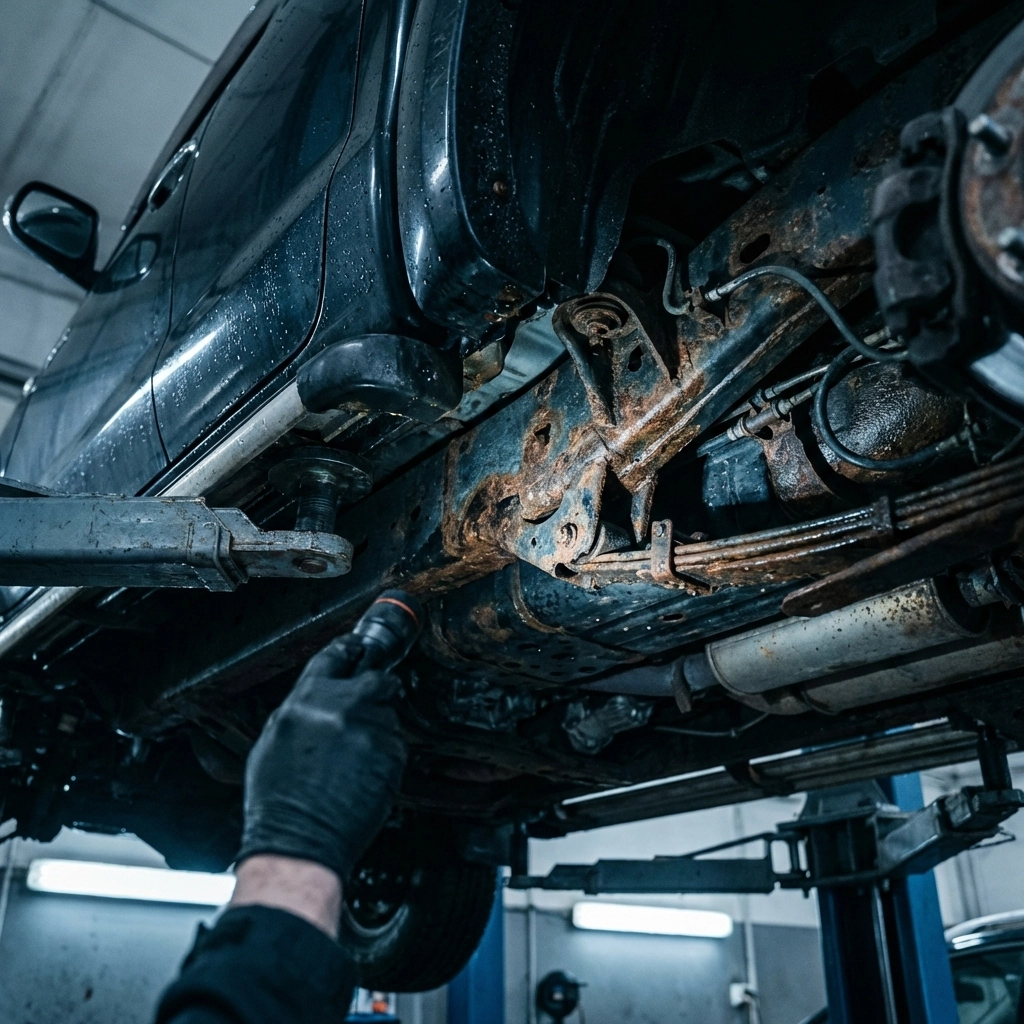
One of the primary factors contributing to rust on the Hilux and Land Cruiser lies in the chassis design itself. These vehicles feature drainage holes in the chassis rails that are intended to allow water to escape. In theory, this sounds practical. In reality, these openings can allow water, road salt, mud, and debris to enter the chassis and become trapped in low spots.
Once moisture lodges inside the chassis cavities, it creates the perfect environment for corrosion to develop from the inside out. This is particularly problematic because internal rust is hidden from view. By the time it becomes visible externally, significant structural damage may have already occurred.
The box-section chassis design, while providing exceptional strength and rigidity for off-road use, creates enclosed spaces where moisture accumulates and remains trapped for extended periods. Without proper internal cavity protection, these areas become rust hotspots.
Factory Undercoating Limitations
Toyota applies protective coatings to their vehicles during manufacture, but evidence suggests these coatings may not be sufficient for UK conditions. Reports from owners and specialists indicate that:
The black undercoating applied at the factory can deteriorate or detach relatively quickly
Protective treatments may vary depending on the destination market
Vehicles can spend extended periods exposed to the elements at factories or during shipping before reaching customers
The factory protection is designed to meet baseline requirements, but it is not engineered to withstand the aggressive combination of road salt, moisture, and temperature fluctuations that characterise British winters. What works adequately in dry climates often proves insufficient here.
The UK Climate Factor
The United Kingdom presents one of the most challenging environments for vehicle preservation. Consider what your Hilux or Land Cruiser faces:
Road salt: Local councils spread approximately two million tonnes of salt on UK roads each winter. This salt accelerates corrosion dramatically.
Moisture: The UK receives rainfall throughout the year, and humidity levels remain consistently high.
Temperature cycling: Freezing temperatures followed by thaws create expansion and contraction that can crack protective coatings.
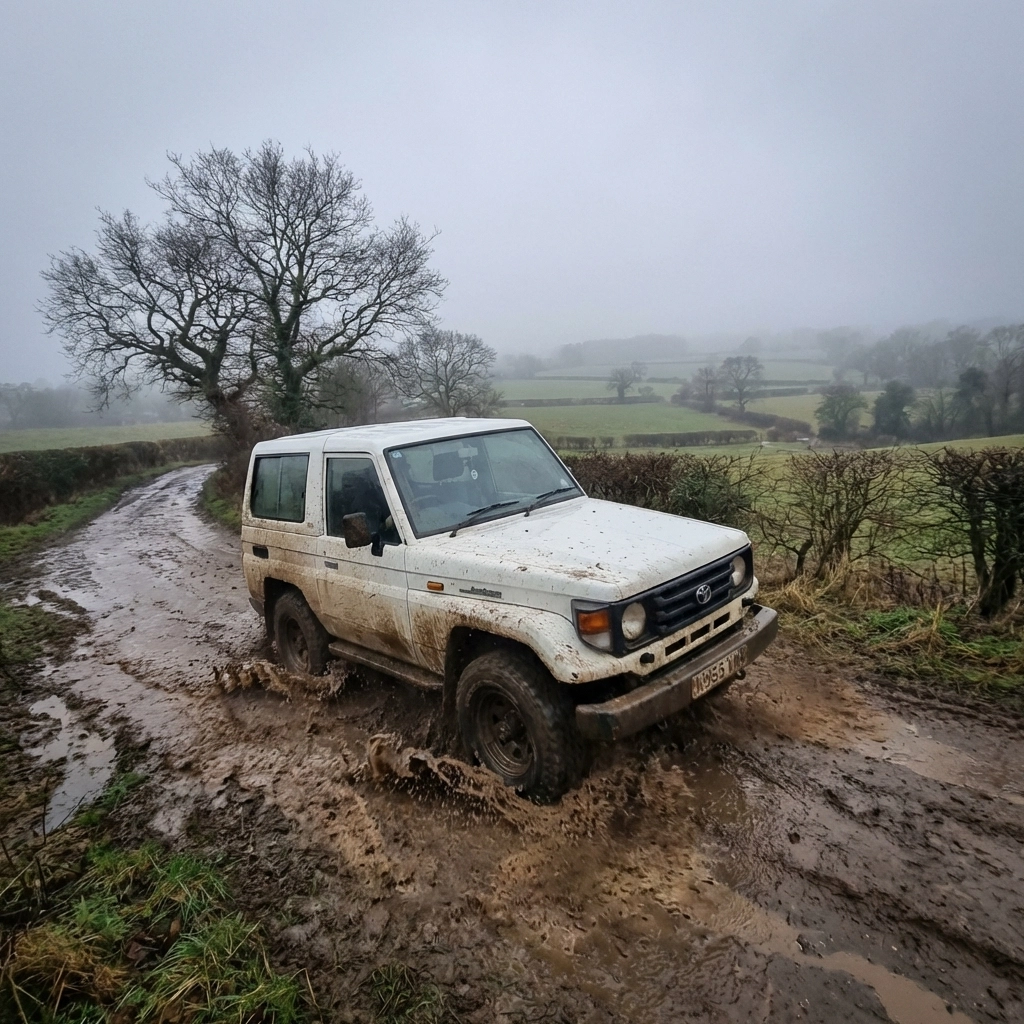
Mud and debris: Off-road use: precisely what these vehicles are built for: exposes them to moisture-retaining mud that clings to the underside.
These conditions work in combination. Salt spray from winter roads coats the undercarriage, moisture keeps it activated, and any gaps in protective coatings allow corrosion to take hold.
Why Off-Road Vehicles Suffer More
Ironically, the very qualities that make the Hilux and Land Cruiser exceptional off-road performers also increase their rust vulnerability. Owners who use these vehicles as intended: traversing muddy tracks, fording streams, and navigating challenging terrain: subject them to conditions that accelerate corrosion.
Mud packed into chassis cavities retains moisture for weeks. Water ingress through drainage holes becomes more frequent. Stone chips from rough tracks compromise protective coatings. Without comprehensive rustproofing treatment, these vehicles face an uphill battle against corrosion.
This is similar to the challenges faced by other capable 4x4s. If you have read our article on why Defenders rust so badly, you will recognise many parallels. Vehicles designed for demanding use require protection that matches their intended purpose.
The Hidden Cost of Neglect
Allowing rust to develop unchecked on a Hilux or Land Cruiser carries serious consequences:
Structural integrity: Chassis rust compromises the vehicle's safety and load-bearing capacity
MOT failures: Significant corrosion to structural components will result in MOT failure
Repair costs: Welding and chassis repairs can run into thousands of pounds
Resale value: A rusty underside dramatically reduces what buyers will pay
Given that these vehicles command premium prices: and hold their value well when properly maintained: protecting them from rust represents a sound investment.
How to Protect Your Toyota from Rust
Regular Inspection
Make it a habit to inspect your vehicle's underside regularly, particularly after winter and following off-road excursions. Look for:
Bubbling or flaking in existing coatings
Orange or brown discolouration indicating surface rust
Soft or flaky metal suggesting more advanced corrosion
Early detection allows for intervention before minor issues become major problems.
Thorough Cleaning
Removing mud, salt, and debris from the undercarriage is essential. A thorough undercarriage clean: ideally steam cleaning: removes corrosive deposits and allows protective treatments to bond properly. This is why preparation is a critical step in any professional rustproofing process.
For guidance on proper preparation, our article on how to prepare a car before rustproofing provides detailed information.
Professional Rustproofing Treatment
The most effective protection for your Hilux or Land Cruiser is a comprehensive professional rustproofing treatment. This involves:
Thorough inspection to identify any existing corrosion
Complete undercarriage cleaning to remove all contaminants
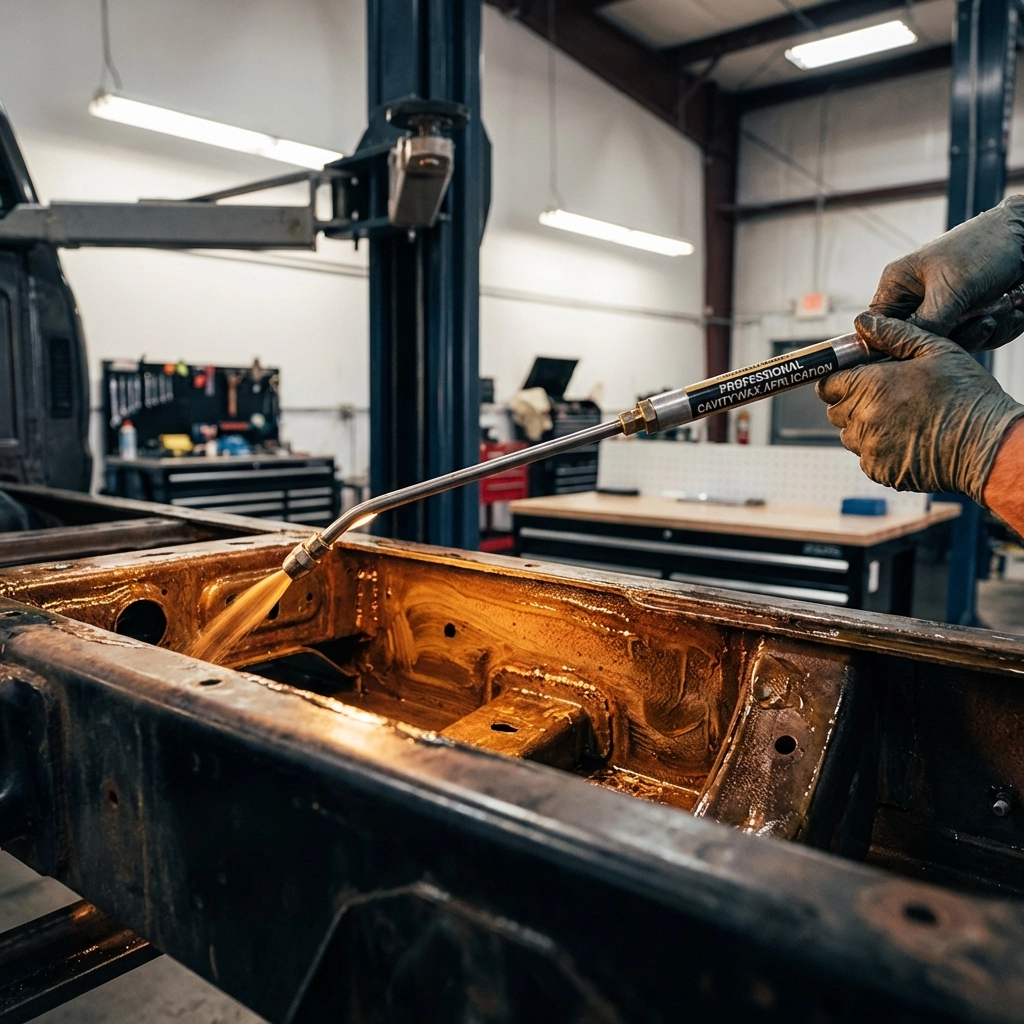
Application of cavity wax to protect internal chassis sections
Underbody treatment with premium products such as Dinitrol
Cavity wax is particularly important for these vehicles. It penetrates into the box-section chassis, seams, and enclosed spaces where moisture accumulates. To understand more about this essential component, read our guide on what is cavity wax and why do you need it.
For off-road vehicles specifically, selecting the appropriate products and application methods is crucial. Our article on the best rustproofing for off-road vehicles explores this topic in depth.
Acting Before It Is Too Late
If your Hilux or Land Cruiser already shows signs of corrosion, the situation is not necessarily hopeless. Surface rust can often be treated, and protective coatings applied to prevent further deterioration. However, acting promptly is essential: rust spreads faster than most owners realise.
Professional assessment can determine the extent of any existing corrosion and recommend the appropriate course of action. In many cases, treating minor rust and applying comprehensive protection is far more cost-effective than waiting until structural repairs become necessary.
For vehicles with existing rust, our article on whether you can rustproof a car with rust already present addresses this common concern.
The Bottom Line
Toyota Hilux and Land Cruisers rust badly not because they are poorly made, but because their design features and the conditions they face in the UK create particular vulnerabilities. Factory protection, while adequate for some markets, often proves insufficient against British winters and enthusiastic off-road use.
The solution lies in proactive, professional rustproofing that addresses both the exposed underside and the critical internal cavities where hidden corrosion develops. With proper protection, these exceptional vehicles can deliver decades of reliable service: maintaining both their structural integrity and their considerable resale value.
If you own a Hilux, Land Cruiser, or any other vehicle you wish to protect from rust, Rustec provides comprehensive rustproofing treatments using the highest-quality Dinitrol products. Our meticulous process ensures every vulnerable area receives proper protection, backed by our Rustec Guarantee.
Don't wait until rust becomes visible. By then, the damage is already underway. Contact Rustec today to discuss how we can protect your vehicle for a lifetime.

Comments