
Why do cars rust faster in the UK than other countries?
meta_title: Why Do Cars Rust Faster in the UK? | Rustec Professional Rustproofing meta_description: The UK climate is a "salt-water fish tank" for vehicles. Discover why road salt, high humidity, and coastal air cause UK cars to rust faster than almost anywhere else. slug: why-do-cars-rust-faster-in-the-uk
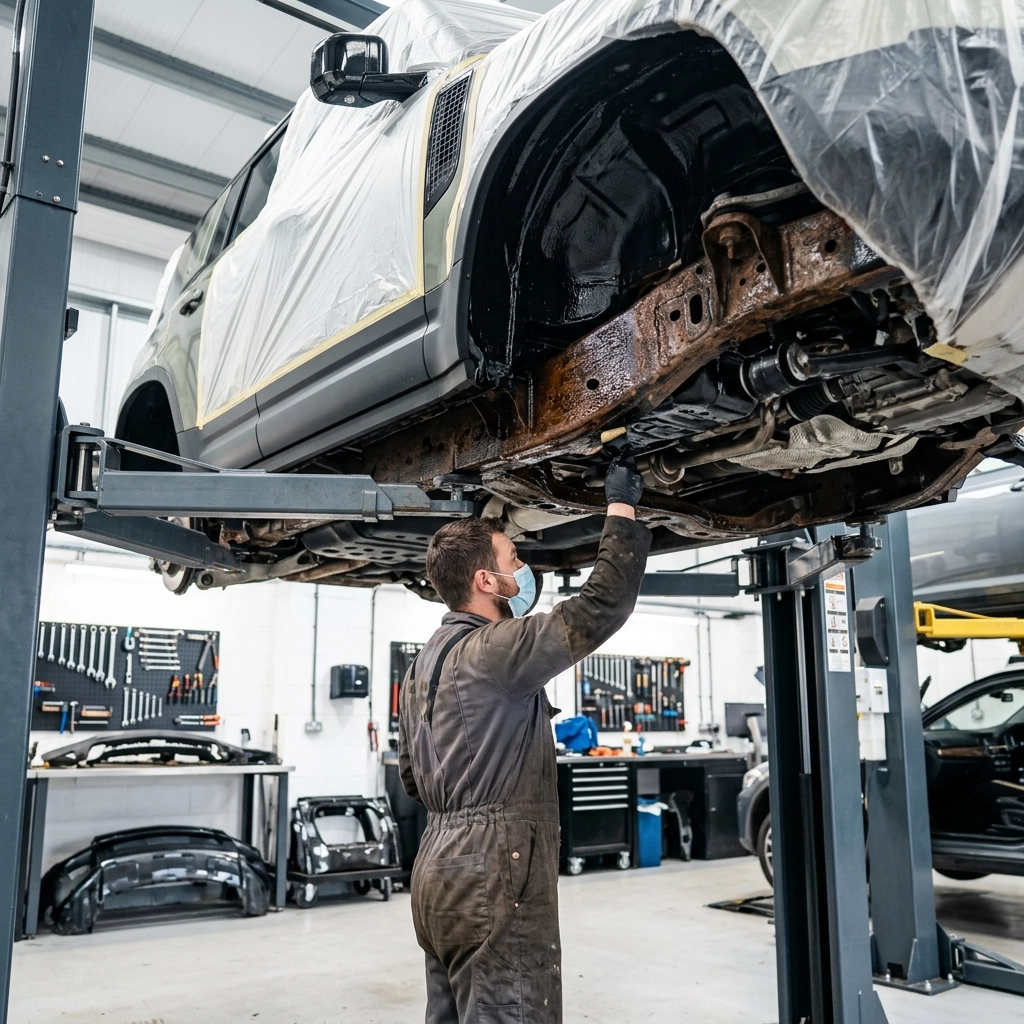
If you have ever looked at a second-hand car from the high deserts of Arizona or the dry plains of Spain, you’ll notice they look brand new underneath. In contrast, a five-year-old car in the UK can often look like it has been dragged off the bottom of the ocean.
Cars rust faster in the UK primarily because of a "perfect storm" of high humidity, frequent rainfall, and the aggressive use of road salt (sodium chloride) during the winter months. This combination creates a constant electrolytic reaction that dissolves unprotected steel. While many modern manufacturers claim their vehicles are "galvanised," the reality of the British climate is that factory protection is rarely enough to survive a decade of UK road use without significant structural decay.
In this guide, we break down the chemistry of why our island is so hostile to metal and why "doing nothing" is the most expensive maintenance decision a UK vehicle owner can make.
The Short Answer: Why the UK is a Rust Hotspot
The UK is geographically unique. We are an island nation with a temperate, maritime climate. This means we have high moisture levels year-round. When you add thousands of tonnes of rock salt to our roads every winter, you aren't just driving on tarmac, you are driving through a chemical soup designed to eat iron and steel.
The main culprits are:
Persistent Humidity: Our air is rarely dry, meaning moisture stays trapped in chassis crevices.
Road Salt (The "Soup"): Salt lowers the freezing point of water but also acts as a powerful electrolyte for corrosion.
Temperature Fluctuations: Constant freezing and thawing cycles open up microscopic cracks in factory coatings.
Coastal Air: Even inland, salt-laden air travels significant distances across the UK.
If you want a deeper breakdown of what actually works in this environment, see our guide to the most effective rustproofing method for UK conditions.
Visual Mental Model: Living in a Salt-Water Fish Tank
To understand what is happening to your vehicle’s underbody, imagine your car isn't parked on a driveway, but is instead suspended inside a salt-water fish tank.
In a fish tank, the water is saturated with salt and the environment is permanently damp. The salt never truly "goes away"; it just moves around in the water. This is exactly what happens during a British winter. The "road salt soup" splashed up by your tyres gets into every box section, sill, and bolt hole. Because the UK is so humid, that salty residue stays damp for weeks or months at a time, continuously eating away at the metal.
Proper rustproofing isn't just a spray-on coating; it’s like sealing the fish tank so the salt can never touch the glass, or in this case, your chassis.
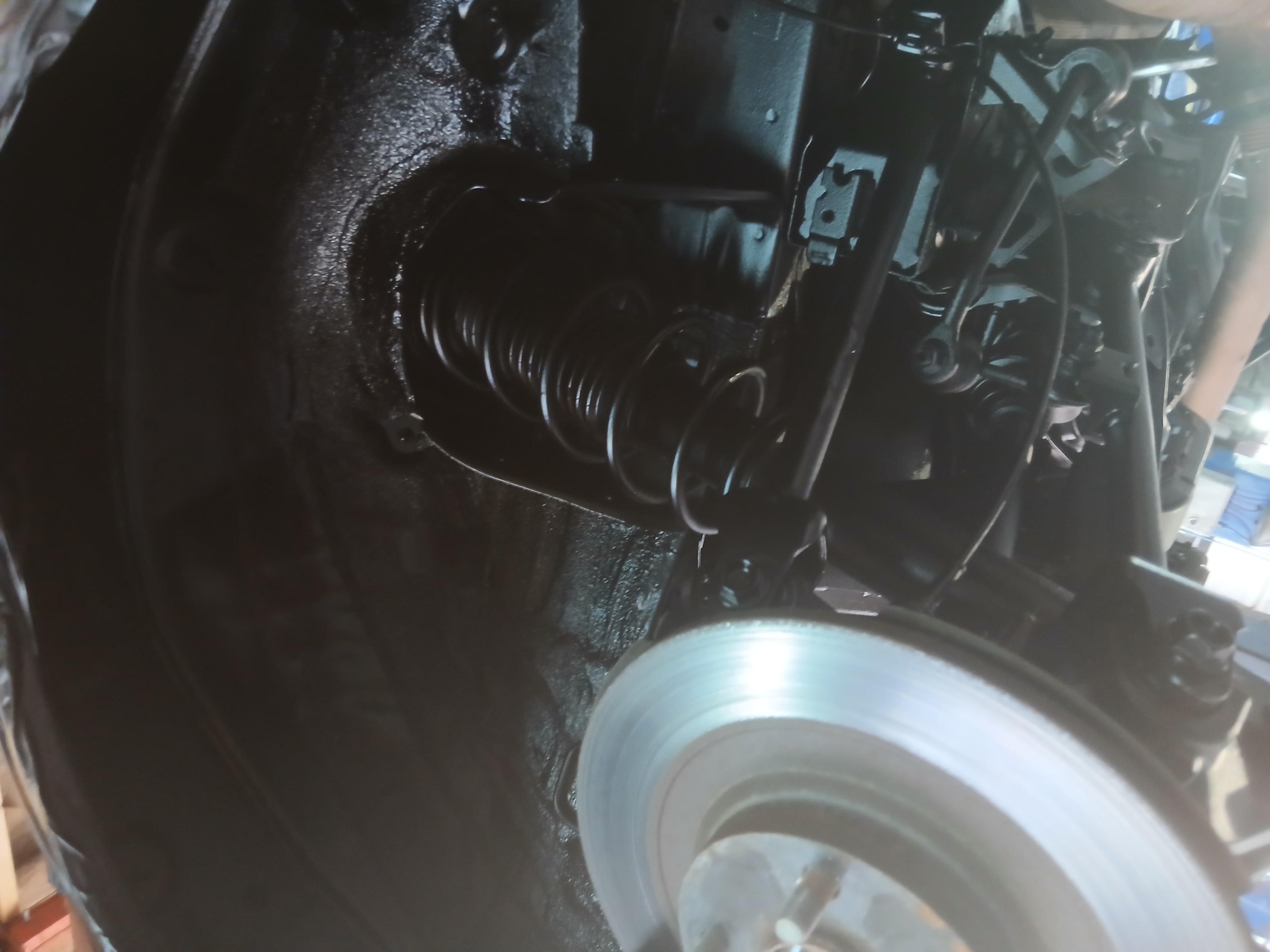
The "Road Salt Soup" Effect
In many colder countries, such as parts of Canada or Scandinavia, the temperature stays well below freezing for months. In these "deep freeze" conditions, dry salt is less reactive, and many regions use sand or gravel for traction instead.
In the UK, our temperatures hover around the "dew point", frequently jumping between 0°C and 5°C. This means the ice melts into a briny slush. This "soup" is highly liquid and incredibly invasive. It is forced into the tightest gaps of your vehicle's underside by the pressure of your tyres. Once it’s in there, the salt attracts even more moisture from the air (it is hygroscopic), ensuring the corrosion process continues even on a sunny day in April.
Why Factory Protection Fails in the UK
A common misconception is that modern cars are "rust-proofed from the factory." While it is true that manufacturers use galvanised steel and e-coat primers, these are global products designed for a global market. A car built in Japan or Germany is designed to meet an "average" climate.
The UK is not an average climate; it is an extreme one for corrosion.
The 12-Month Mistake
Many manufacturers apply a thin, translucent wax to the underbody at the port of entry. This is often a "transit wax" intended to protect the car during its journey on a cargo ship. It is not a permanent solution. Within 12 to 24 months of driving on gritted UK motorways, this thin layer is sandblasted away by road debris, leaving the bare metal vulnerable.
Furthermore, factory robots often miss the "hidden" areas, the insides of chassis rails, the tops of fuel tanks, and the areas behind plastic wheel arch liners. These liners are a particular problem in the UK; they trap mud and salt against the metal, creating a "poultice" that stays wet and rots the wings from the inside out. This is also why early corrosion should not be dismissed as cosmetic; if you are unsure what visible rust means, read is surface rust on a car something to worry about?
For those wondering if the investment in extra protection is worth it, we’ve covered the financial breakdown in our post: Is professional rustproofing worth the cost in the UK?
Humidity: The Invisible Catalyst
Rust (iron oxide) requires three things: iron, water, and oxygen. In a dry climate, the water disappears, stopping the reaction. In the UK, our relative humidity is often above 80%. This means that even if it isn't raining, there is enough moisture in the air to keep the corrosion cycle alive.
When you park a wet, salty car in a garage that lacks high-end ventilation, you are actually accelerating the rust. The lack of airflow prevents the chassis from drying out, while the slightly warmer garage temperature speeds up the chemical reaction. This is why "dry stored" cars in the UK often have more chassis rot than those kept outside in the wind.
Regional Differences: North vs South
While the entire UK is a high-risk zone, there are variations.
Scotland and Northern England: These areas see significantly more snow and ice, meaning councils apply grit for 5-6 months of the year. Cars from these regions are notoriously more prone to structural failure.
Coastal Towns: If you live within 10 miles of the coast, your vehicle is being pelted by salt spray every time the wind blows.
Southern England: While slightly milder, the humidity levels remain high, and the infrequent but heavy use of salt can be even more damaging because owners are less likely to wash their underbodies regularly.
Regardless of where you are, using the most effective rustproofing method for UK conditions is the only way to ensure long-term survival.
The True Cost of Doing Nothing
In the UK, rust is the primary reason why perfectly good engines and interiors end up in the scrap heap.
MOT Failure: Structural rust within 30cm of a mounting point (like suspension or seatbelts) is an immediate MOT failure. Once the metal is "holed," the repair costs often exceed the value of the vehicle.
Resale Value: Savvy buyers, especially in the 4x4 and classic car markets, will always look at the underside first. A rusty chassis can easily mean a £2,000 to £5,000 potential resale loss, particularly on newer, low-mileage, premium, 4x4, or enthusiast-owned vehicles.
Safety: Rust compromises the "crumple zones" of a vehicle. In an accident, a corroded chassis will not perform the way the engineers intended, putting you and your family at risk.
Understanding the difference between rustproofing and undersealing is vital here. Many "cheap" underseals actually hide the rust, allowing it to eat the car from the inside out while looking "black and shiny" on the surface.
When Professional Help Makes Sense
At Rustec, we don't just "spray over" the problem. We understand the British climate, which is why we adhere to the Rustec Elite Standard, a 72-hour process. In simple terms: 01: thorough undercarriage steam clean, 02: controlled drying, 03: meticulous masking, 04: cavity wax injection into hidden sections, 05: professional application of long life Dinitrol® protection using highest-quality products. For UK vehicles, this preparation-led approach matters more than a quick coating alone.
Generic garages might offer a "quick spray" while the car is in for a service. A poor rustproofing job can be worse than doing nothing, as it traps moisture and accelerates corrosion. A professional treatment should involve cavity waxes that creep into the hidden box sections where UK rust actually starts.
If you are curious about the timeline for this level of protection, you can read more on how long professional rustproofing actually lasts. It also helps to understand rustproofing vs undersealing and the real difference, because process quality matters far more than a quick black coating.
Final Takeaway
The UK is objectively one of the hardest places in the world to keep a car rust-free. The combination of our "salt-water fish tank" atmosphere and the "road salt soup" on our winter roads means that factory protection is a ticking time bomb.
By the time you see rust on the wheel arches, the chassis is likely already significantly compromised. Think of corrosion like an iceberg: the visible rust is the small part above the surface, while the more serious decay is often hidden inside seams, cavities, and chassis sections. Proactive, professional protection is the only way to opt-out of the UK's natural "recycling" process for vehicles.
Frequently Asked Questions
Does washing my car's underbody at a jet wash help? It helps remove loose salt, but it can't reach the inside of the chassis rails or sills where the real damage happens. In some cases, high-pressure water can actually force salt deeper into crevices.
Is it too late to rustproof an older UK car? No. While it is best to treat a car when it's new, professional treatments can involve "rust converters" and "creeping waxes" that chemically neutralise surface rust and stop it from spreading.
Why don't UK councils use something other than salt? Salt is cheap and effective at melting ice quickly. While some "eco-friendly" alternatives exist, they are significantly more expensive, meaning salt will remain the standard for the foreseeable future.
Does a galvanised chassis mean I don't need rustproofing? Galvanisation is a sacrificial layer of zinc. In the UK's high-salt environment, that zinc layer is "sacrificed" much faster than in other countries. Once the zinc is gone, the steel underneath will rot rapidly. In UK conditions, corrosion is not a question of if — but when.
Should I rustproof my car if it’s on a lease? If you plan to hand the car back in 3 years, you might not care. However, if you plan to buy the car at the end of the lease or keep it for the long term, protecting it early is much cheaper than fixing it later.
If you want to protect your vehicle properly — not just cover it up — the best time to act is before corrosion progresses. You can book a free inspection or request a quote here.

Comments