
Rustproofing vs undersealing: what’s the real difference?
Meta Title: Rustproofing vs Undersealing: What’s the Real Difference? Meta Description: Discover why professional rustproofing is superior to standard undersealing. Learn about the "underseal trap," the importance of cavity wax, and how to protect your vehicle's chassis properly. URL Slug: /rustproofing-vs-undersealing-difference
The primary difference between rustproofing and undersealing is the depth of protection and the materials used. Undersealing typically refers to applying a thick, often bitumen-based coating to the visible underside of a vehicle to prevent stone chips and surface abrasion. Rustproofing is a comprehensive, multi-stage process that involves treating both the external chassis and the internal, hidden cavities with specialized penetrating waxes. In the UK, professional rustproofing is the only way to ensure long-term structural integrity, whereas basic undersealing can often do more harm than good by trapping moisture against the metal. A poor rustproofing job can be worse than doing nothing, as it traps moisture and accelerates corrosion.
The Visual Mental Model: Raincoat vs. Dry Suit
To understand the difference, imagine facing a storm.
Undersealing is like wearing a cheap raincoat. It covers the outside and keeps the initial splash off. However, if the coat gets a small tear, or if moisture gets underneath the hem, it stays there. You end up damp, cold, and the water has nowhere to go. On a car, a basic underseal often cracks, allowing salt water to seep behind it, where it rots the metal in secret.
Rustproofing is like wearing a professional dry suit. It is specifically engineered to seal out every drop of water. It doesn't just sit on the surface; it seals the vulnerable entry points, the seams, and the internal areas. Even if you are submerged in the harsh, salty environment of a UK winter, the core remains dry and protected.
At Rustec, we don't just "underseal" cars. We provide a professional rustproofing service that treats your vehicle from the inside out, ensuring that moisture has no place to hide.
The "Underseal Trap": Why Bitumen is a Risk
Many vehicle owners look for "undersealing" thinking it is a one-stop solution. Historically, this involved thick, black bitumen-based products. While these are cheap and provide a high-build layer that looks impressive initially, they are fundamentally flawed for modern vehicle preservation.
Bitumen is non-self-healing. As your chassis flexes during driving or gets hit by road debris, the brittle bitumen layer develops microscopic cracks. UK road salt and moisture enter these cracks via capillary action. Because the bitumen is thick and waterproof, the moisture cannot evaporate. It becomes trapped directly against the steel.
This creates what we call "The Underseal Trap." Your car might look perfectly black and protected from the outside, but underneath that layer, the chassis is rapidly delaminating. Often, owners only realize there is a problem when the vehicle fails an MOT because a screwdriver can be pushed straight through the "protected" metal. If you are already at the stage where you can see flaking metal, you should read our guide on how to remove rust from your car's underside before applying any coating. If you are unsure whether early corrosion is cosmetic or more serious, our article on whether surface rust on a car is something to worry about explains what to look for.
Professional Rustproofing: A Multi-Layered Approach
Professional rustproofing, as performed at Rustec, uses sophisticated materials like Dinitrol® that behave very differently from old-fashioned underseal.
01: Internal Cavity Protection
Rust rarely starts in the middle of a flat floor pan; it starts inside the sills, the chassis rails, and the door bottoms. These are hollow "cavities" where condensation forms. Undersealing ignores these areas completely. This is the iceberg problem: the rust you can see is often only a small part of what is developing inside box sections and seams. Rustproofing uses thin, high-penetration waxes (like Dinitrol ML) that "creep" into every weld and seam to displace moisture and stop oxygen from reaching the metal.
02: External Protection with Self-Healing Waxes
Unlike bitumen, the external waxes we use are designed to remain slightly flexible. If a stone hits the coating, the wax "self-heals" by slowly creeping back over the nick. This maintains a continuous, airtight seal. One of the most effective products for this is Dinitrol 4941, which provides a robust, hard-waxy film that withstands the harshest road conditions.
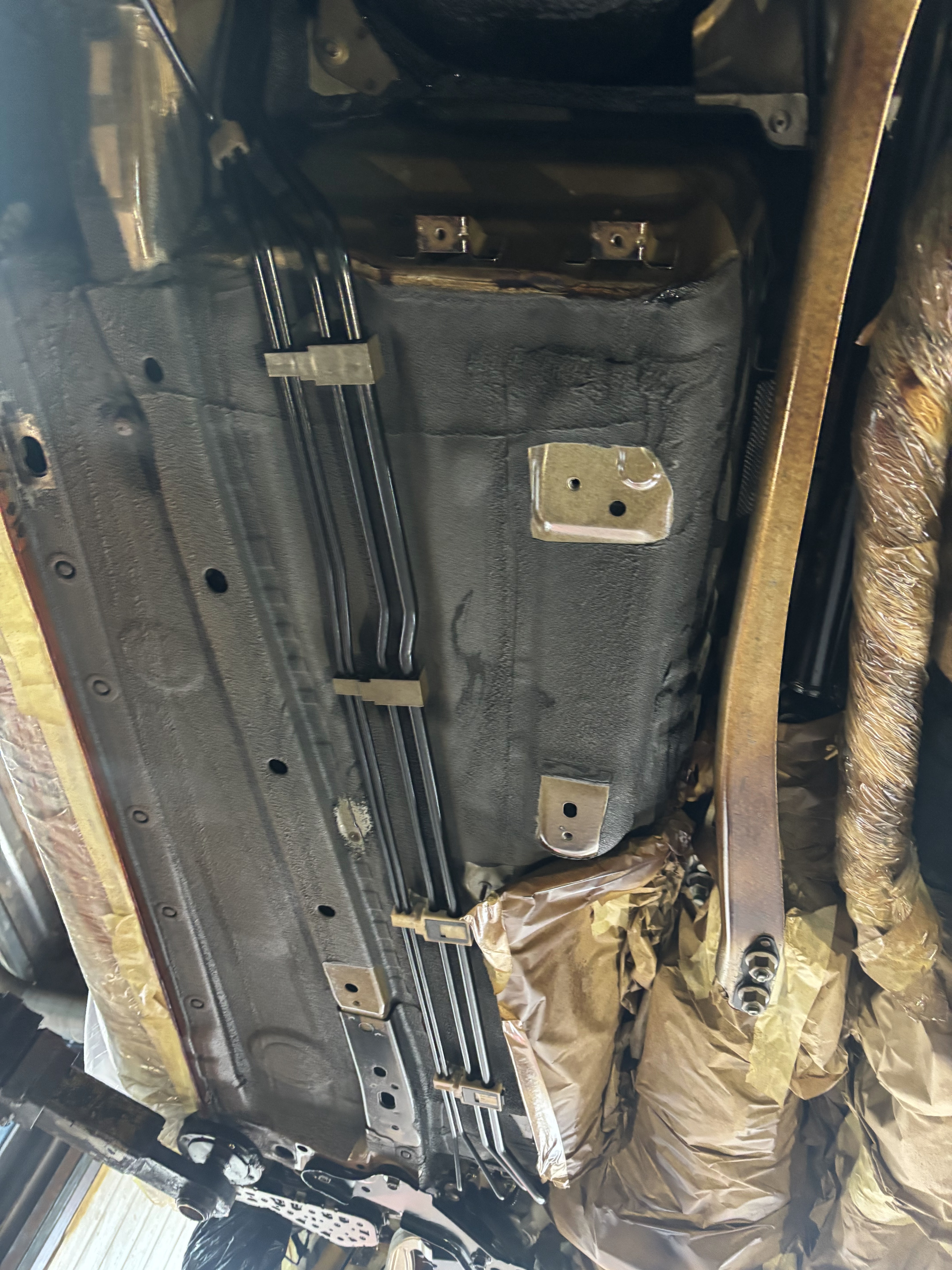
Comparing the Two: At a Glance
Feature | Basic Undersealing | Professional Rustproofing (Rustec) |
Primary Material | Bitumen or Rubberised paint | Technical Penetrating Waxes (Dinitrol) |
Cavity Treatment | None | Full injection of sills, rails, and pillars |
Surface Prep | Often sprayed over dirt/rust | Steam clean, dry, and rust conversion |
Moisture Action | Can trap moisture if cracked | Displaces moisture and seals metal |
Visuals | Opaque (hides problems) | Available in clear or black waxy finishes |
Longevity | Short-term (cracks easily) | Multi-year protection with self-healing |
Why Preparation is 90% of the Battle
The reason "cheap" undersealing is so dangerous is the lack of preparation. Many garages will simply hoist a car and spray a black coating over whatever is there. This is essentially painting over a problem. If there is existing surface rust, dirt, or moisture, the underseal seals it in. In UK conditions, corrosion is not a question of if — but when.
Our process is meticulous. We begin with a thorough undercarriage steam clean and a multi-day drying process. We then inspect the chassis. If we find existing corrosion, we treat it with professional-grade rust converters that turn iron oxide into a stable, inert layer. Only then do we apply the protection. Our Rustec Elite Standard is a 72-hour process built around proper preparation: cleaning, drying, cavity wax injection, meticulous masking, and professional-grade application of long life Dinitrol® protection. If you want a broader overview of the most effective rustproofing for UK conditions, that guide explains why process quality matters more than a quick coating. For those worried about structural issues, understanding why your MOT failed due to rust can help you decide if a vehicle is still a candidate for treatment.

UK Conditions: Why "Standard" Isn't Enough
The UK climate is uniquely aggressive toward car chassis. We have high humidity, consistent rainfall, and a massive amount of road salt applied every winter. This salt is hygroscopic, meaning it attracts and holds moisture against the metal. If you want to understand the wider causes, our guide on why cars rust faster in the UK breaks down the role of salt, moisture, and trapped debris.
A standard underseal might suffice in a dry climate like Arizona, but in Wiltshire or the wider UK, it is insufficient. You need a system that actively fights the chemical process of oxidation. When considering what’s the best rustproofing spray for these conditions, it invariably comes down to the quality of the wax and its ability to penetrate tight gaps.
Elite Positioning: The Rustec Standard
At Rustec, we pride ourselves on a level of meticulousness that goes far beyond a quick spray.
Meticulous Masking: We wrap exhausts, brake discs, and sensors to ensure the treatment only goes where it is needed.
Full Documentation: We provide photo documentation of the process so you can see the state of your chassis before and after.
Resale Value: A vehicle with a documented professional rustproofing treatment is worth significantly more on the second-hand market, especially for 4x4s, classic cars, and motorhomes. Preventing corrosion early can help you avoid an estimated £2,000 to £5,000 in potential resale loss once visible rust, advisories, or structural concerns start to affect buyer confidence.
Choosing the right specialist: If you are comparing providers, our guide on how to choose the best rustproofing service near you explains what to look for in preparation standards, cavity treatment, and overall process quality.
FAQ: Frequently Asked Questions
Is rustproofing more expensive than undersealing? Yes, initially. Professional rustproofing requires more labour, better materials, and days of drying time. However, it is far cheaper than the welding repairs required when a cheap underseal fails and hides structural rot. As a simple UK example, a quick low-cost coating may save a few hundred pounds upfront, but structural welding and corrosion repairs can easily reach £1,000 to £3,000.
Can you rustproof a car that already has surface rust? Absolutely, provided the rust is surface-level and not structural. Our process involves converting that surface rust into a protected layer before sealing it. If the metal is thinning or holed, welding is required first.
How often does it need to be reapplied? While a basic underseal might need "touching up" annually (often just hiding new rust), a high-quality Dinitrol treatment typically lasts 3-5 years before requiring a minor top-up in high-impact areas like wheel arches.
Is undersealing enough for a new car? Usually not on its own. Factory protection is often minimal, especially inside cavities and seams. On a newer vehicle, early professional treatment is often the lowest-cost point to act because there is less contamination, less corrosion to address, and less risk of future resale loss.
Conclusion: Don't Settle for a Surface Fix
If you care about the longevity of your vehicle, the choice between rustproofing and undersealing is clear. Don't fall into the trap of a cheap, black bitumen coating that hides the destruction of your chassis. Invest in a professional, waxy treatment that protects the internal cavities and provides a self-healing barrier against the UK's harsh roads.
Your vehicle is likely one of your biggest investments. Ensuring its structural integrity is not just about aesthetics; it's about safety and future value. Early action is always the lowest-cost option; delaying usually means corrosion spreads further, repair costs rise quickly, and resale value drops.
If you want to protect your vehicle properly — not just cover it up — the best time to act is before corrosion progresses. You can book a free inspection or request a quote here.
Comments