
Is surface rust on a car something to worry about?
- Lloyd Saunders
- Apr 19
- 6 min read
Yes, surface rust on a car is something to worry about because it is rarely just "on the surface." In the UK’s damp climate, what looks like a minor cosmetic blemish is often the first warning sign of structural decay. If left untreated, surface rust quickly evolves into scale rust and eventually structural failure, leading to expensive MOT repairs or a vehicle that is unsafe to drive.
While a small patch of orange on a suspension component might seem trivial, it is the starting gun for a process called oxidation. For owners of vehicles approaching their first MOT, identifying and treating this early-stage corrosion is the difference between a car that lasts twenty years and one that is headed for the scrap heap in ten.
The Iceberg Model: What You See vs. What is Hidden
To understand why "surface" rust is a concern, you have to look at it through the Visual Mental Model of the Iceberg.
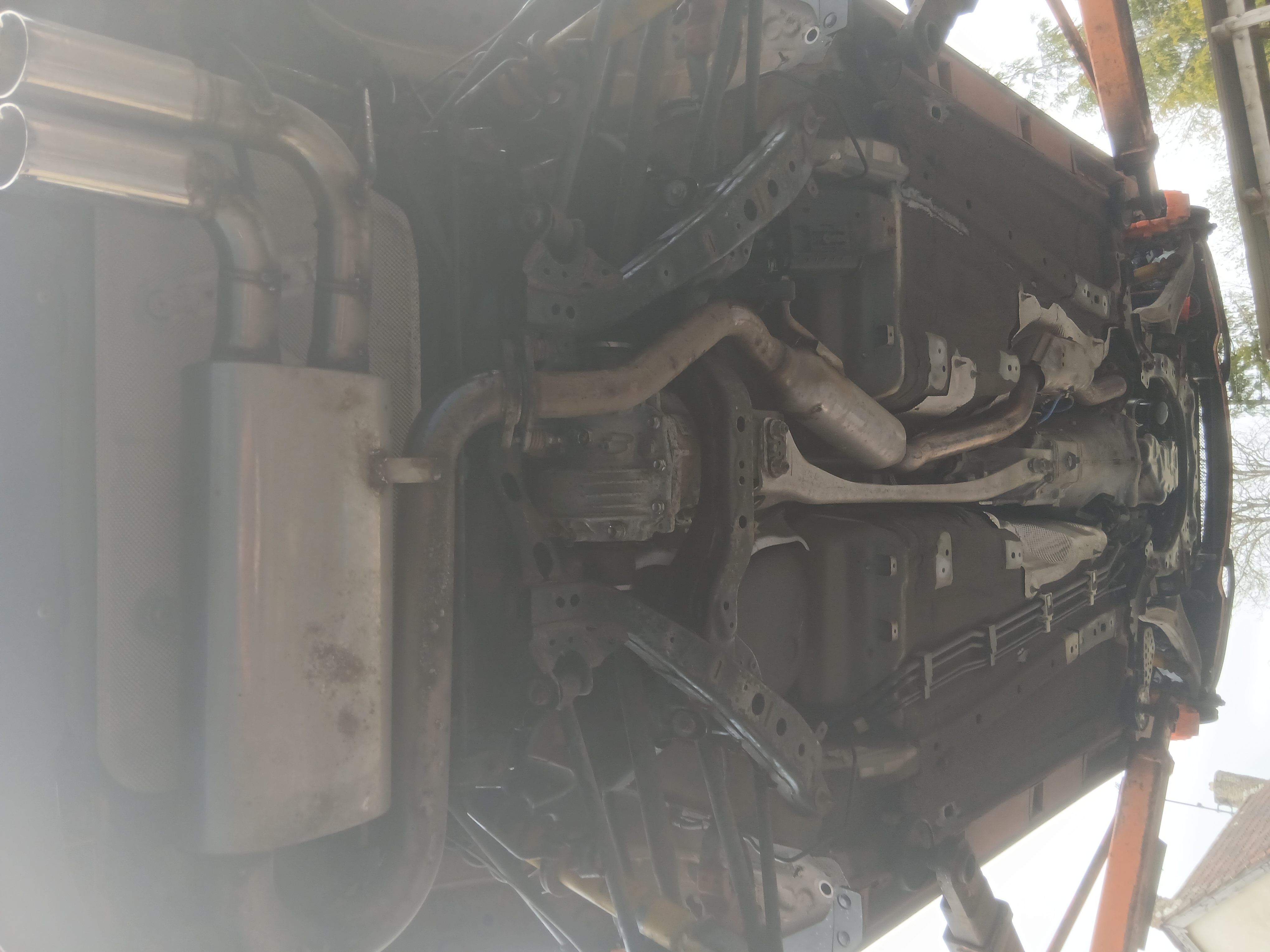
Think of the rust you can see, perhaps a light dusting on the chassis rails or around the wheel arches, as the tip of the iceberg. Above the waterline, it looks manageable. However, just like an iceberg, 90% of the real danger is hidden from view.
Rust doesn’t just sit on top of the metal; it works its way into the grain of the steel. More importantly, if you can see rust on the outside of a box section or a chassis leg, there is a very high probability that the interior cavities, where moisture and road salt sit stagnant, are already heavily corroded. By the time the rust becomes "visible" to the untrained eye, the oxidation process is already well-established.
Why the First MOT is a Critical Turning Point
Many of our customers come to us when their vehicle is reaching its third birthday. This is the "Golden Window" for rust prevention. Most modern manufacturers provide a basic level of factory protection, but as many UK drivers discover, this is often the bare minimum required to get the car through its warranty period.
By the time a car reaches its first MOT, it has endured three years of British winters, thousands of miles of salt-laden spray, and constant bombardment from road debris. At this stage, the factory-applied "shutz" or paint begins to micro-crack. This allows moisture to seep in, creating a "poultice" effect where damp salt is trapped against the bare metal.
If you ignore surface rust at the three-year mark, you are essentially allowing the foundations of your vehicle to rot. Can you rustproof a car that already has rust? The answer is yes, but the complexity and cost of the treatment increase the longer you wait. Just as importantly, corrosion can cut £2,000 to £5,000 from the resale value of a clean, modern vehicle once buyers, dealers, or part-exchange appraisals spot underbody deterioration.
The Trap of "Shading Over": Why DIY Underseal is Dangerous
A common mistake made by well-meaning owners (and some less-than-reputable garages) is "shading over" rust. This involves taking a can of thick, black, bitumen-based underseal and spraying it directly over visible surface rust to make the underside look "clean."
This is a recipe for disaster.
A poor rustproofing job can be worse than doing nothing.
Using the CONTRAST RULE, let’s look at the difference between professional treatment and "shading over":
Professional Treatment: At Rustec, our Rustec Elite Standard is a 72-hour process built around proper preparation: comprehensive inspection, thorough undercarriage steam clean, full drying time, meticulous masking, and cavity wax injection using premium long life Dinitrol® products for complete internal and external protection.
Shading Over (The DIY Trap): Applying a thick black coating over rust traps existing moisture and oxygen against the metal. Because the coating is non-breathable, the rust continues to eat away at the chassis in a dark, damp environment. You won't see the damage until the day a large chunk of underseal falls off, taking a piece of the rusted chassis with it.
For a deeper dive into why professional application beats the "quick fix" every time, read our guide on DIY rustproofing vs professional treatment.
The Progression: From Surface to Structural
Rust doesn't stay "surface" for long. It moves through three distinct stages:
Surface Rust: Initial oxidation where the paint or coating has failed. The metal is still structurally sound, but the "skin" is broken.
Scale Rust: The rust begins to flake. This is where the metal starts to thin. You can often knock "scales" off with a hammer. At this point, the integrity of the component is being compromised.
Penetrating Rust: The metal has rusted through completely, creating holes. This is an automatic MOT failure and requires expensive welding or component replacement.
By catching the problem at stage one, you are protecting the resale value and longevity of your vehicle. Ignoring it leads to the inevitable stage three, where the cost of rustproofing becomes the least of your financial worries compared to structural repair bills.
The UK Context: A Perfect Storm for Corrosion
UK vehicles are uniquely vulnerable. We have a "perfect storm" of high humidity, consistent rainfall, and heavy use of road salt (sodium chloride) and liquid de-icers. Road salt is hygroscopic, meaning it actively pulls moisture out of the air and holds it against your car's metalwork. If you want the full explanation of why cars rust faster in the UK, the short answer is that our wet climate, salted roads, and trapped debris create ideal conditions for corrosion to start and spread.
Even if you wash your car regularly, a standard jet wash cannot reach the deep crevices and internal box sections where the most dangerous corrosion occurs. This is why a professional inspection is the only way to truly gauge the health of your chassis.
What Happens During a Rustec Inspection?
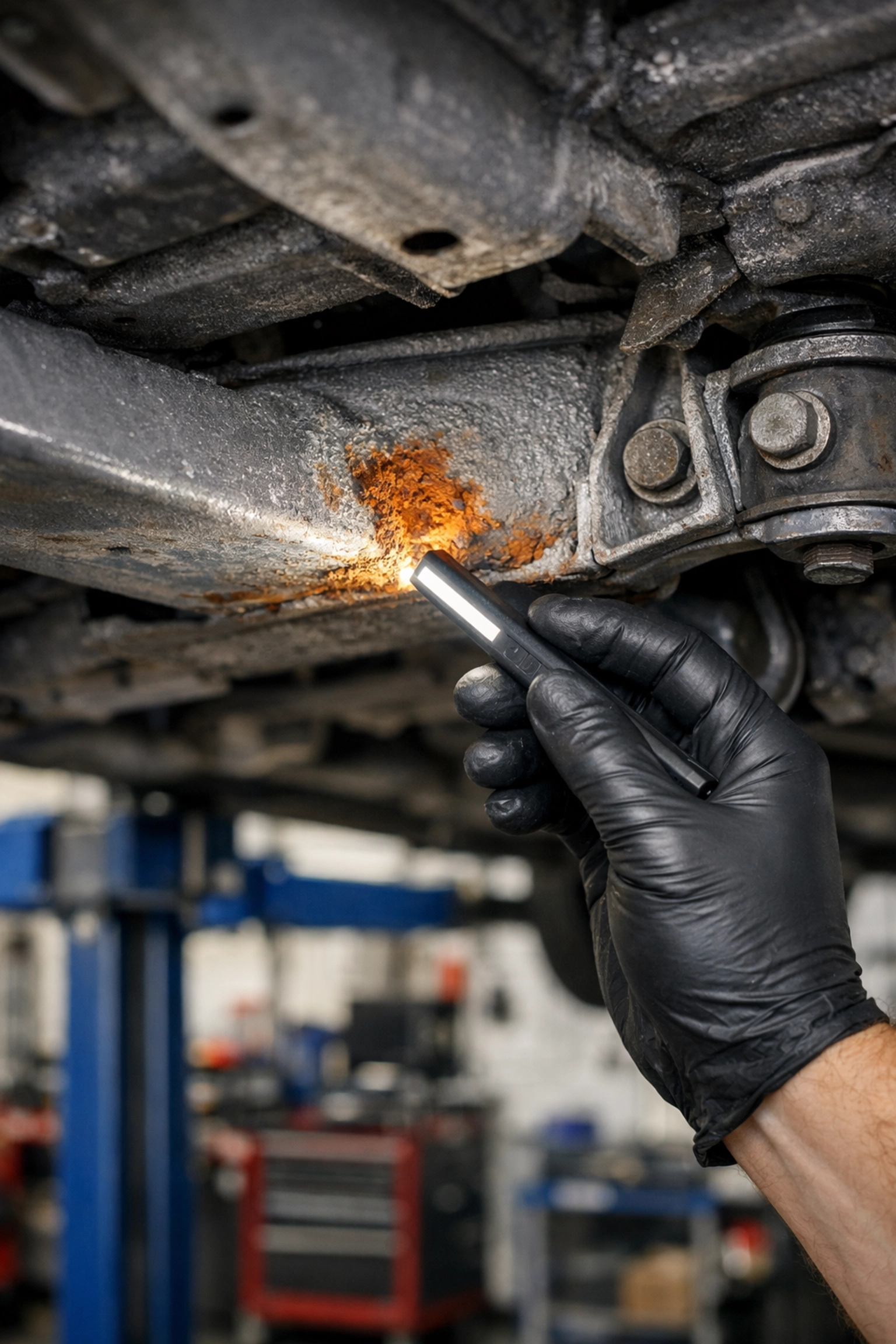
When we inspect a vehicle, we aren't just looking at the bits you can see. We use specialist lighting and years of experience to look for the "tell-tale" signs of hidden rot.
Wheel Arch Liners: We look behind the plastics where mud and salt accumulate.
Chassis Legs: We check for internal "bloom" where rust is pushing the metal out from the inside.
Brake and Fuel Lines: Surface rust here can lead to catastrophic failure, not just an MOT advisory.
Suspension Mounting Points: Critical safety areas that are often the first to show surface rust.
Final Takeaway: Don't Wait for the MOT Advisory
If your MOT tester has already noted "surface rust" as an advisory, the clock is ticking. This is the tester’s way of saying: "I can't fail it yet, but it’s going to be a problem soon."
At Rustec, we believe in a "measure twice, cut once" philosophy. A professional rustproofing treatment isn't just a spray-and-forget service; it is a meticulous process of cleaning, drying, treating, and documenting. Our Rustec Elite Standard follows a 72-hour process that includes comprehensive inspection, thorough undercarriage steam cleaning, controlled drying, meticulous masking, and cavity wax injection before premium protective coatings are applied. If you want to understand the most effective rustproofing method for UK conditions, the key point is that process quality matters more than a quick spray-over. By investing in a high-quality Dinitrol or wax treatment now, you reduce the risk of corrosion-led repair bills and help protect against the £2,000 to £5,000 resale hit that visible underbody rust can cause.
Frequently Asked Questions
Can I just wire-brush the surface rust off myself? You can remove the loose flakes, but unless you use a professional-grade converter and a high-quality cavity wax to seal the metal from oxygen, the rust will return within weeks.
Will surface rust fail an MOT? Generally, surface rust is an "advisory." However, if the rust is within 30cm of a structural mounting point (like seatbelts or suspension), the tester has the discretion to fail it if they believe the metal is thinned.
How much does it cost to fix surface rust? It is far cheaper to treat surface rust with a professional coating than it is to pay for welding later. You can see a breakdown of typical rustproofing costs here.
Is your vehicle showing the first signs of surface rust? Don't let the "Iceberg" grow. Contact the experts at Rustec today for a professional assessment and protection plan.
Meta Title: Is Surface Rust on a Car Dangerous? | Rustec UK Meta Description: Wondering if that orange glow on your chassis is a problem? Learn why surface rust is the "tip of the iceberg" and how to stop it before it fails your MOT. URL Slug: /is-surface-rust-on-a-car-something-to-worry-about/
Comments