
How do I choose the best rustproofing service near me?
To choose the best rustproofing service near you, you must look beyond your immediate postcode and evaluate the workshop’s technical standards. The "best" service is defined by a 72-hour process, meticulous surface preparation, and the use of professional-grade cavity waxes. If a provider promises a "same-day" turnaround or fails to provide photo documentation of the prep work, they are likely just hiding rust rather than preventing it.
In this guide, we will break down the red flags to avoid, why your vehicle’s long-term health is worth a few extra miles of travel, and the specific standards that separate a professional treatment from a temporary "black spray" job.
Why "Near Me" Is the Wrong Way to Search for Rustproofing
When most people search for a service, they want convenience. If you need a tire changed or an MOT, staying local makes sense. However, professional rustproofing is a high-value, long-term investment in your vehicle’s structural integrity.
Think of it this way: Choosing a rustproofing service is like choosing a specialist surgeon or a high-end house painter. You wouldn’t choose a surgeon just because they are five minutes down the road; you’d choose the one with the best results and the most thorough procedure.
The Visual Mental Model: The House Paint Analogy
Proper rustproofing is exactly like painting a house. If you slap a fresh coat of premium paint over peeling, damp wood, the paint will flake off within six months, and the wood underneath will continue to rot. The actual "painting" is only 10% of the job. The other 90% is the sanding, cleaning, drying, and priming.
In the automotive world, the "paint" is the underseal (like Dinitrol 4941), and the "prep" is the steam cleaning, drying, and rust conversion. If a local garage skips the prep and just sprays the coating, they are effectively "painting over the rot."
The "Red Flag" Checklist: How to Spot an Inferior Service
Before you book any service, ask these specific questions. If the answer to any of these is "No" (or if they seem vague), it is a major red flag.
1. Do they offer a 3–8 hour turnaround?
This is the biggest red flag in the industry. It is physically impossible to clean a chassis, allow it to dry completely, convert existing surface rust, mask up sensitive components, and apply multiple stages of wax in a single afternoon. A professional treatment should take 2–3 days. At Rustec, that means a 72-hour process of thorough undercarriage steam cleaning, full drying, meticulous masking, cavity wax injection, and professional-grade underbody protection. A poor rustproofing job can be worse than doing nothing, because anything faster usually means they are spraying over moisture and dirt. If you want a broader benchmark for process quality, our guide to the most effective rustproofing for UK conditions explains why preparation and coverage matter more than a quick spray-over.
2. Is masking included in the quote?
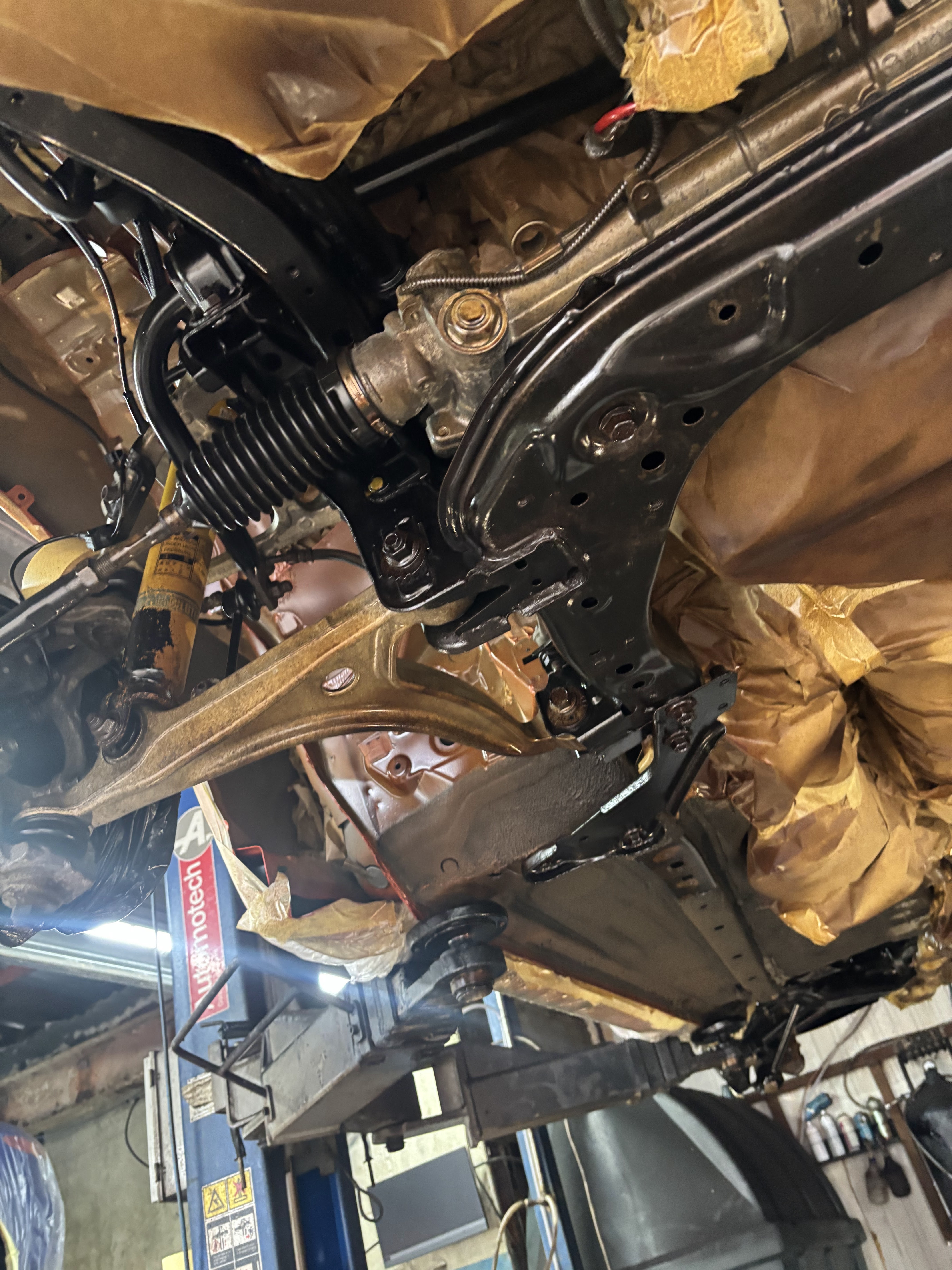
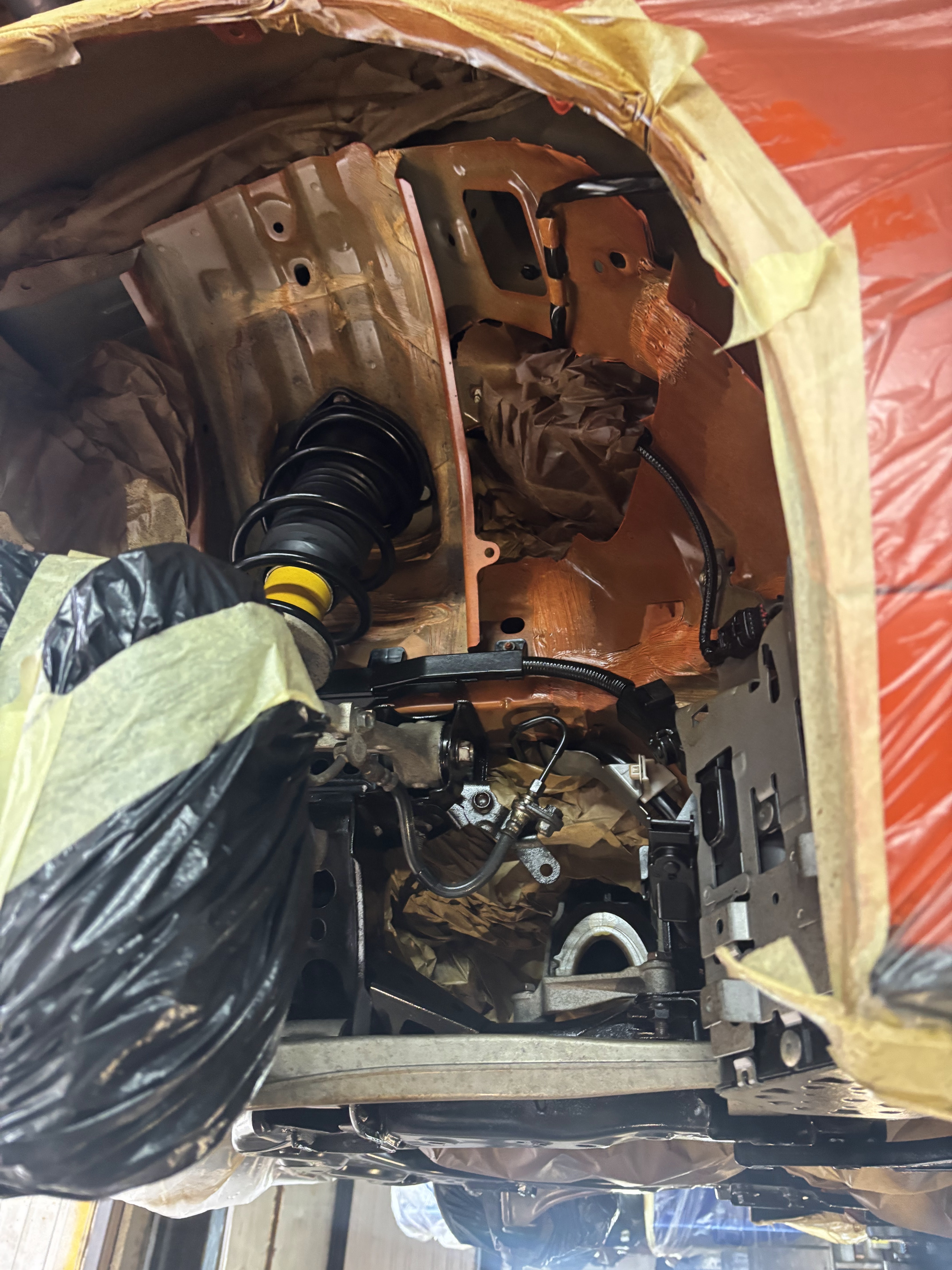
Many "cheap" services simply spray everything under the car black. This includes your brake discs, exhaust sensors, rubber bushings, and electrical connectors. Not only is this messy, but it can also cause MOT failures and mechanical issues. A professional service will meticulously mask off these components before any coating is applied.
3. Do they use cavity wax?
Rust doesn’t just happen on the outside of the chassis; it starts from the inside out. If a service provider only sprays the visible underside and ignores the sills, box sections, and chassis rails with a specialized cavity wax (like Dinitrol ML), your car is still rotting from the inside. This is the same inside-out corrosion problem covered in our article on why cars rust faster in the UK, where road salt, trapped moisture, and hidden seams accelerate the damage.
4. Do they provide photo or video documentation?
You cannot see what has been done once the car is back on the ground. A reputable workshop will document the "before," the "prep" (cleaning and rust conversion), and the "after." If they refuse to show you the work, you should refuse to pay.
The Location Strategy: Why Distance Doesn’t Matter
If you live in the UK, you are never more than a few hours away from a top-tier specialist. If you plan to keep your vehicle for the next 5–10 years, driving two hours to a specialist workshop like Rustec is a minor inconvenience for a decade of protection.
The 5-Year Investment Logic
If a local, low-quality spray job costs £400 and fails in 12 months, your cost is £400 per year plus the ongoing depreciation of a rusting vehicle. If a professional, high-standard treatment costs more but lasts 5–10 years with minor maintenance, the "cost per year" drops significantly.
Furthermore, a professionally documented treatment raises the resale value of your vehicle. On desirable used vehicles, visible underbody corrosion or poor previous treatment can easily contribute to a £2,000 to £5,000 potential resale loss. Buyers are often happy to pay a premium for a Land Rover, MX-5, or Transporter that has a certified Rustec treatment booklet.
Elite Positioning: What a 10/10 Workshop Looks Like
When you walk into a professional rustproofing facility, it should look like a laboratory, not a scrap yard. At Rustec, we maintain elite standards because we know that the smallest speck of trapped road salt can ruin the entire treatment.
Step 01: The Deep Clean & Strip Down
We don’t just "hose it off." We perform a thorough undercarriage steam clean to remove all road salt, grease, and debris. We also remove plastic arch liners and undertrays. If a service doesn't remove these, they are missing the most vulnerable rust traps. You can read more about why this matters in our guide: Do modern cars still need rust protection?
Step 02: Drying & Inspection
The chassis must be 100% dry. We use industrial heaters and air movers to ensure no moisture is trapped under the coating. During this phase, we inspect the chassis for structural concerns. If the rust is too far gone, we will tell you honestly rather than just spraying over it. This drying stage is a critical part of our 72-hour process, not an optional extra. If you are unsure whether visible corrosion is minor or a sign of a bigger issue, see our guide on whether surface rust on a car is something to worry about.
Step 03: Meticulous Masking
We protect your brakes, exhaust, and moving parts. This is the difference between a "job" and a "service." It takes time, but it ensures your vehicle remains mechanically sound and MOT-compliant.
Step 04: Multi-Stage Protection
We apply a dedicated rust converter to any existing surface oxidation, followed by internal cavity waxes, and finally, the heavy-duty underbody wax. This layered approach is the only way to combat the aggressive road salt used on UK roads, and it is why a proper 72-hour process delivers a far higher standard than a quick spray-over service.
Comparison: DIY vs. Local Garage vs. Specialist Specialist
Feature | DIY Approach | Local "All-Rounder" Garage | Rustec Specialist |
Equipment | Driveway/Jack stands | Standard 2-post lift | Specialist hoists & high-pressure sprayers |
Cleaning | Garden hose | Power wash | Industrial steam clean & degrease |
Drying | Overnight air dry | Usually ignored | Forced industrial drying |
Products | Consumer-grade aerosols | Whatever is on the shelf | Professional Dinitrol® systems |
Masking | Minimal | Rare | Comprehensive |
Lifespan | 6–12 months | 1–2 years | 5–10 years (with maintenance) |
If you are debating between different products, you might find our comparison of Dinitrol vs Waxoyl or Lanoguard vs Dinitrol helpful in understanding why we choose the high-solid waxes we do.
UK Specifics: The "Salt Trap" Factor
In the UK, our climate is unique. We have high humidity and a heavy reliance on road salt (sodium chloride) and liquid de-icers (calcium chloride). These chemicals are hygroscopic, meaning they pull moisture out of the air and hold it against your chassis.
If you choose a "near me" service that doesn't include a professional steam clean, they are likely sealing that salt against your metal. This creates a battery-like chemical reaction that accelerates rust faster than if you had done nothing at all. This is why the process of rustproofing is far more important than the brand of the tin being sprayed. It is also why it helps to understand the difference between rustproofing and undersealing, because proper protection needs cleaning, drying, cavity treatment, and the right external coating rather than a simple cosmetic layer.
Final Takeaway: Don't Compromise for Convenience
Choosing the best rustproofing service near you actually means finding the nearest specialist who adheres to professional standards. Distance is a one-time cost; a rusted chassis is a permanent loss.
Before booking, ensure the workshop:
Uses a multi-day process.
Includes internal cavity wax.
Meticulously masks mechanical components.
Provides photo documentation of the prep work.
At Rustec, we pride ourselves on being the UK’s authority on chassis preservation. We treat every vehicle, from classic campers to brand-new 4x4s, with the same meticulous attention to detail.
Frequently Asked Questions
How long does a professional treatment take? At Rustec, our standard professional treatment takes approximately 72 hours. This allows for deep cleaning, full drying, meticulous masking, cavity wax injection, rust conversion, and multi-stage wax application.
Will a professional treatment affect my MOT? No. In fact, it helps. By preventing structural corrosion, you are much less likely to suffer from an MOT failure due to "excessive corrosion near a mounting point." Because we mask off all moving parts and sensors, the treatment is clean and professional.
Should I rustproof a brand-new car? Yes. Modern cars often have very thin factory protection to save weight and cost. Applying a professional treatment early in the vehicle's life is the most effective way to ensure it stays in showroom condition. You can read more about EV rustproofing here.
How much does it cost? Pricing depends on the size and condition of the vehicle. For an accurate estimate tailored to your car, van, or 4x4, please use our quote tool.
Ready to protect your vehicle for the long term? If you want to protect your vehicle properly — not just cover it up — the best time to act is before corrosion progresses. You can book a free inspection or request a quote here.
Enquire by filling out the quick quote box here and our team will be in touch to discuss the best protection plan for your vehicle.

Comments