
What pressure sprayer is best for DIY rustproofing?
Selecting the right pressure sprayer for DIY rustproofing can mean the difference between comprehensive protection and wasted product. While many vehicle owners attempt rustproofing with standard paint sprayers or bedliner guns, achieving professional-quality results requires specialized equipment designed specifically for the unique properties of rustproofing materials.
The viscosity and application requirements of modern rustproofing products like Dinitrol, Lanoguard, and Waxoyl demand precise atomization and controlled delivery. Using inappropriate equipment not only compromises coverage quality but can result in significant material waste and inadequate protection in critical areas where rust typically begins.
Understanding Specialized Rustproofing Equipment
Why Standard Sprayers Fall Short
Conventional paint sprayers and bedliner application guns are engineered for different material properties and application requirements. Rustproofing oils and cavity waxes possess higher viscosity levels that require specific atomization characteristics to achieve proper penetration and coverage. Standard bedliner-style spray guns can cause application issues with heavier rustproofing products, resulting in uneven coverage and poor penetration into seams and joints.
Essential Equipment Categories
Professional rustproofing requires two distinct spraying systems: undercarriage application equipment for comprehensive underbody coverage, and cavity spraying tools for internal body panels, chassis rails, and hard-to-reach areas. Each system operates under different pressure requirements and uses specialized nozzles designed for specific rustproofing materials.
Optimal Pressure Settings for DIY Applications
Recommended Operating Pressure
The ideal operating pressure for DIY rustproofing falls between 80-100 PSI, though this range may require adjustment depending on your specific rustproofing fluid's thickness and ambient temperature conditions. Most experienced DIY practitioners report optimal results at approximately 80 PSI with properly equipped air compressor systems.
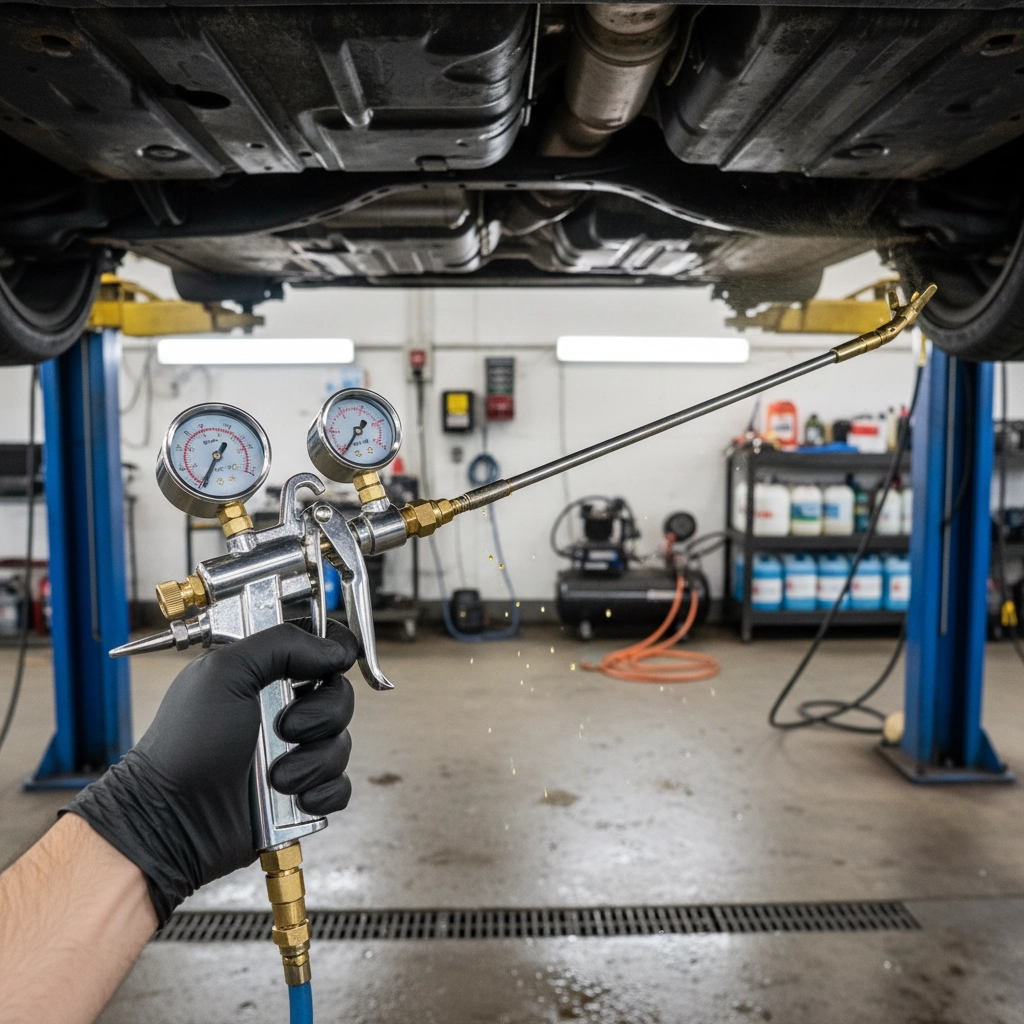
Operating pressure of 4-6 bar (approximately 80 PSI) consistently delivers excellent results for cavity wax and undercoating applications. However, excessive air pressure creates problems rather than solutions: when pressure exceeds optimal levels, material atomizes excessively and lingers in the air rather than adhering to vehicle surfaces, resulting in significant product waste and poor coverage.
Temperature and Viscosity Considerations
Cold weather applications may require slightly higher pressures to maintain proper material flow, while warmer conditions often allow for reduced pressure settings. Monitor your spray pattern continuously during application: proper atomization should create a controlled fan pattern without excessive overspray or material drift.
Professional-Grade Equipment Options
Entry-Level Professional Choice: Lemmer PRO-Tek Spray Gun
The Lemmer PRO-Tek spray gun represents an excellent entry-level option for serious DIY enthusiasts, offering professional functionality at accessible pricing. This system provides the specialized atomization characteristics required for quality rustproofing application while maintaining user-friendly operation for home workshop environments.
Mid-Range Professional Solution: Lemmer RP-460-HD Rustproofing DLX Kit
Priced at approximately £350, the Lemmer RP-460-HD Rustproofing DLX Kit features heavy-wall construction with a 125 PSI maximum pressure rating, delivering superior atomization and faster material delivery compared to entry-level alternatives. This comprehensive system includes a hockey stick wand for cavity access and a round nozzle for direct application, making it ideal for thorough vehicle treatment.
The RP-460-HD's heavy-wall container construction resists pressure-related deformation while providing consistent material flow throughout extended application sessions. Better atomization characteristics ensure more efficient material usage and superior coverage quality.
Pressure Pot Systems for Consistent Performance
Pressure pot systems offer excellent value for DIY applications, providing steady material flow and consistent pressure delivery. The Lemmer L011-080 (2.25 gallon) and L011-084 (5 gallon) pressure pot systems resist tipping during operation and work effectively with standard rustproofing coatings.
These systems excel in workshop environments where multiple vehicles require treatment or when working with thicker materials that demand consistent pressure delivery. The larger 5-gallon capacity suits fleet applications or commercial workshops handling regular rustproofing work.
Alternative Equipment Solutions
Budget-Conscious Options
The Wiltec undercoating spray gun has demonstrated reliable performance for cavity wax applications when paired with appropriate compressor systems. Operating effectively at 80 PSI with 360-degree spray attachments, this option provides accessible entry into quality DIY rustproofing.
Graco Professional Undercoating Systems
Graco manufactures specialized undercoating spray pumps engineered for durability and corrosion resistance in demanding rustproofing applications. These systems excel in high-volume applications and commercial environments where consistent daily use demands robust construction.
Air Compressor Requirements and Specifications
Minimum Compressor Specifications
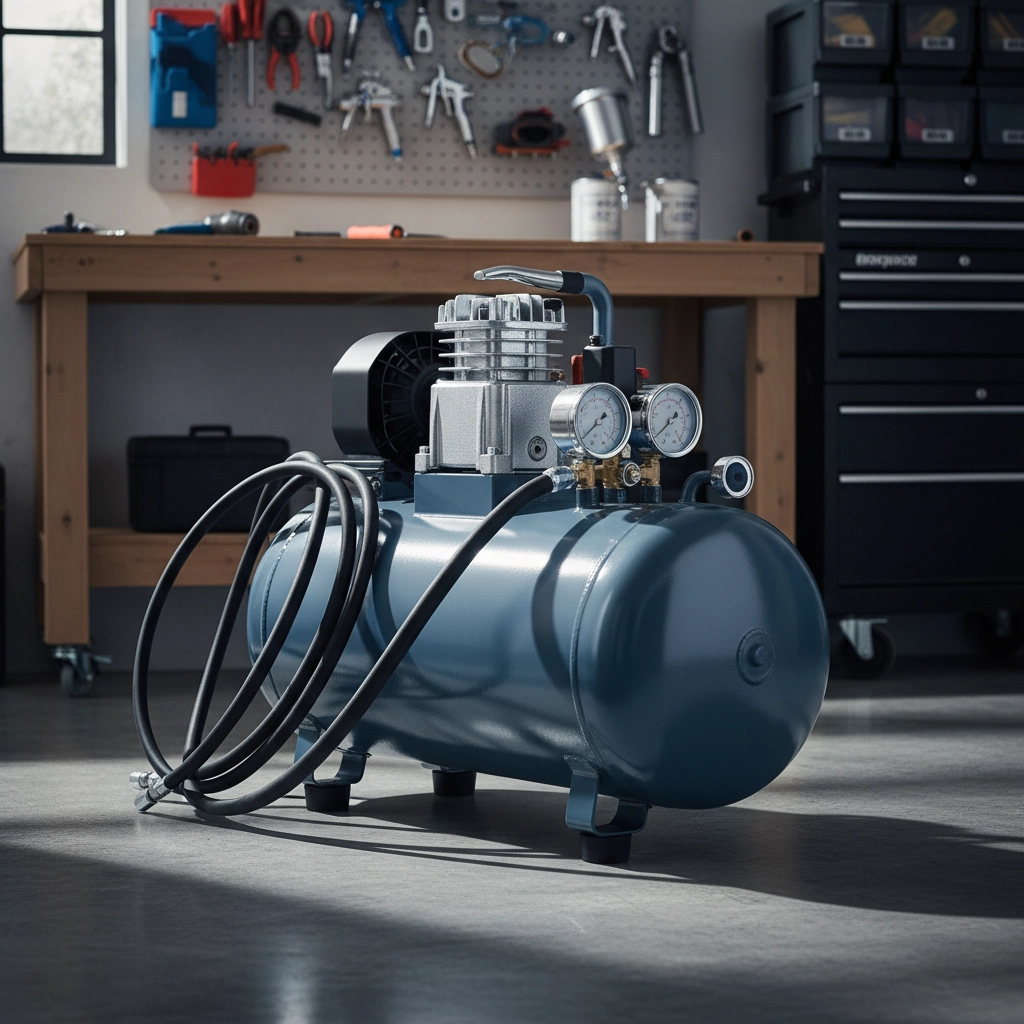
Any compressor featuring a 3+ gallon tank capacity will adequately support rustproofing applications, provided it maintains consistent pressure delivery at required operating levels. Your system requires minimum 50 PSI capacity, though 80-100 PSI capability ensures optimal performance across varying material types and ambient conditions.
Compressor Sizing Considerations
A 10-gallon compressor provides excellent performance for most DIY rustproofing applications without requiring pressure settings above 80 PSI under reasonable temperature conditions. Larger tank capacity reduces cycling frequency and maintains more consistent pressure delivery during extended application sessions.
Critical Features for Effective Application
Long Wand Requirements
Professional-quality rustproofing demands access to body cavities, chassis rails, and underbody areas that standard spray guns cannot reach effectively. Look for spray guns featuring 24-30 inch wands that enable efficient treatment of hard-to-access areas where rust typically initiates.
360-Degree Spray Capability
Cavity guns with 360-degree spray capability provide thorough coverage inside chassis cavities, wheel arches, and internal body panels. This feature proves particularly valuable when treating commercial vehicles, 4x4s, and vehicles with complex underbody geometry.
Specialized Nozzle Options
Quality rustproofing equipment includes multiple nozzle options designed for specific applications. Round nozzles excel for direct application and targeted treatment areas, while fan nozzles provide efficient coverage for large underbody surfaces. Adjustable nozzles allow fine-tuning spray patterns to match specific application requirements.
Professional Application vs DIY Considerations
Expertise and Experience Factors
While quality equipment enables excellent DIY results, professional rustproofing services bring specialized expertise in product selection, application techniques, and comprehensive coverage strategies. Professional technicians understand optimal application thickness, cure times, and environmental factors that influence long-term protection effectiveness.
Time and Convenience Considerations
DIY rustproofing requires significant time investment for proper preparation, application, and cleanup. Professional services provide comprehensive treatment with minimal disruption to vehicle availability while ensuring thorough coverage using commercial-grade equipment and proven application methodologies.
Long-Term Protection Assurance
Professional rustproofing services often include warranty protection and maintenance programs that ensure continued effectiveness over extended periods. DIY applications, while cost-effective initially, require ongoing maintenance and reapplication scheduling that professional services can manage more effectively.
Material Compatibility and Application Techniques
Product-Specific Requirements
Different rustproofing materials require specific equipment configurations for optimal application. Dinitrol products often perform best with pressure pot systems, while Lanoguard may work effectively with standard spray guns when properly configured. Always verify equipment compatibility with your chosen rustproofing material before beginning application.
Application Sequence and Coverage Strategy
Effective rustproofing follows systematic application sequences that ensure comprehensive coverage without overapplication in accessible areas. Begin with cavity treatments using long wand equipment, followed by underbody application with appropriate fan nozzles. Maintain consistent overlap patterns and verify coverage in critical areas such as wheel wells, suspension components, and chassis joints.
The investment in quality pressure spraying equipment pays dividends in protection effectiveness and material efficiency. While professional rustproofing services provide comprehensive solutions with warranty backing, informed DIY enthusiasts equipped with appropriate tools can achieve excellent results through careful preparation and methodical application techniques.
For vehicle owners seeking professional rustproofing services with comprehensive warranty protection, Rustec's expert technicians utilize commercial-grade equipment and proven application methodologies to ensure optimal protection for your vehicle investment.
Comments