
The Reality of Cheap Rustproofing: Why Low-Cost Treatments Often Fail
Cheap rustproofing treatments fail because they typically bypass essential surface preparation and internal cavity injection. A low-cost "spray-and-go" service usually applies a coating over existing dirt, moisture, and surface rust, which traps corrosive elements against the chassis and accelerates structural failure. For effective protection in the UK, a treatment must involve deep cleaning, a dedicated drying period, and full internal cavity saturation. Doing nothing leads to financial loss. The biggest mistake is waiting until rust becomes visible.
The Hidden Danger of the "Quick Spray"
When it comes to vehicle maintenance, the allure of a "bargain" is often the first step toward a much more expensive repair bill.
In the world of underbody protection, the market is flooded with low-cost options, often marketed as "undersealing" or "chassis blacking", that can be completed in a few hours for a couple of hundred pounds.
The reality is that these services are rarely "treatments" at all. They are cosmetic masks.
By spraying a thick, bitumen-based or cheap wax coating directly onto an unprepared chassis, these services ignore the fundamental science of corrosion. A poor rustproofing job can be worse than doing nothing, as it traps moisture and accelerates corrosion.
Once a coating is applied over a damp or dirty surface, the moisture has nowhere to go. It sits in direct contact with the steel, protected from the air (which might otherwise help it evaporate), and begins to eat away at the metal in a concentrated, high-humidity environment.
Visual Mental Model: The Wet Shirt Analogy
Think of cheap rustproofing like putting a heavy waterproof jacket over a soaking wet shirt. On the outside, you look dry and protected from the rain. However, the wet shirt underneath cannot dry out. The moisture is trapped against your skin, causing discomfort and eventual damage to the fabric.
Proper rustproofing is the opposite: it requires taking the wet shirt off, drying the skin completely, and then applying a breathable, high-performance barrier.
If you skip the drying and cleaning phase, the "protection" you’ve paid for is actually the very thing that will destroy your vehicle’s structural integrity.
The UK Context: A High-Salt, High-Humidity Trap
In the UK, we face a unique combination of environmental factors that make cheap treatments particularly dangerous.
Our winters involve heavy use of road salt (sodium chloride) and, increasingly, liquid brine. These salts are hygroscopic, meaning they naturally attract and hold moisture.
When a cheap service sprays over these salts without a professional-grade de-greasing and steam-cleaning process, they are effectively "sealing in" a chemical reaction. In UK conditions, corrosion is not a question of if — but when.
Without the 72-hour process required to properly clean, dry, and treat a vehicle, the salt remains active beneath the new layer of black goop, silently rotting your chassis rails and suspension mounts.

Buyer Psychology: The Regret of the "Bargain"
Many vehicle owners opt for cheap treatments to "tick a box" or satisfy an MOT advisory.
However, the psychological trap of the low-cost option is the false sense of security it provides. You drive away thinking your vehicle is safe, only to find three years later that your chassis is "pocking" from the inside out.
The regret trigger happens during the next MOT or when you try to sell the vehicle.
A buyer seeing a fresh, thick, sticky coating on an old van often views it as a "red flag", a sign that the owner is trying to hide structural rot.
By choosing a low-cost, non-transparent treatment, you aren't just wasting money; you are actively devaluing your asset.
The Financial Consequence of Delaying Quality
Welding and Structural Repairs: If a cheap treatment fails and rust takes hold, welding repairs on a chassis or subframe typically cost between £1,000 and £4,000.
Resale Value Loss: A vehicle with documented, professional rustproofing maintains its value. A vehicle with visible, untreated corrosion or a "dodgy" cheap underseal can see a £2,000 to £5,000 loss in resale value, especially for high-value 4x4s, campervans, and classic cars.

Rustec Elite Standard vs. Cheap Underseal Services
To understand why professional treatment costs more, you must look at the process. A "quick" service takes 2 to 4 hours. The Rustec Elite Standard is a 72-hour meticulous process.
Feature | Cheap "Quick" Service | Rustec Elite Standard |
Preparation | None or basic pressure wash | Deep steam clean & de-greasing |
Drying Time | None (sprayed while damp) | 24h+ industrial drying phase |
Masking | Minimal or none | Full masking of brakes, exhaust & sensors |
Cavity Work | None | Full internal injection of all box sections |
Longevity | 6–12 months | Multi-year durable protection |
Transparency | Covers everything in black | Transparent/amber options available |
Risk | High (traps moisture) | Zero (neutralises and protects) |
The "Iceberg" Model of Corrosion
Most owners only worry about the rust they can see. This is the "tip of the iceberg."
The most dangerous corrosion is happening inside the chassis rails, sills, and pillars. Cheap treatments almost never include "cavity wax injection", the process of using long wands to spray protective wax inside the hollow metal sections.
If you only treat the outside, the vehicle continues to rot from the inside out.
By the time the rust bubbles through to the surface, the structural damage is already done. This is why how long does rustproofing last in the UK depends entirely on the quality of the internal work.
WHEN TO ACT
The biggest mistake is waiting until rust becomes visible.
Once rust is visible, the process becomes a rescue job rather than prevention.
0–3 years: Act early while the underbody is still clean and factory protection has not yet been compromised. This is the lowest-cost stage to protect a vehicle properly.
3–5 years: This is the ideal treatment window for most UK vehicles. Light oxidation is usually manageable, and proper preparation plus cavity treatment can stop escalation before it becomes expensive.
5–8 years: Risk rises sharply here. Corrosion may already be advancing inside seams, box sections and chassis rails. Book an inspection before any coating decision is made.
8+ years: Expect existing corrosion, previous poor repairs, or failed coatings. At this point you need assessment first, not blind spraying, especially if you are already comparing surface rust and structural rust differences.
Doing nothing leads to financial loss.
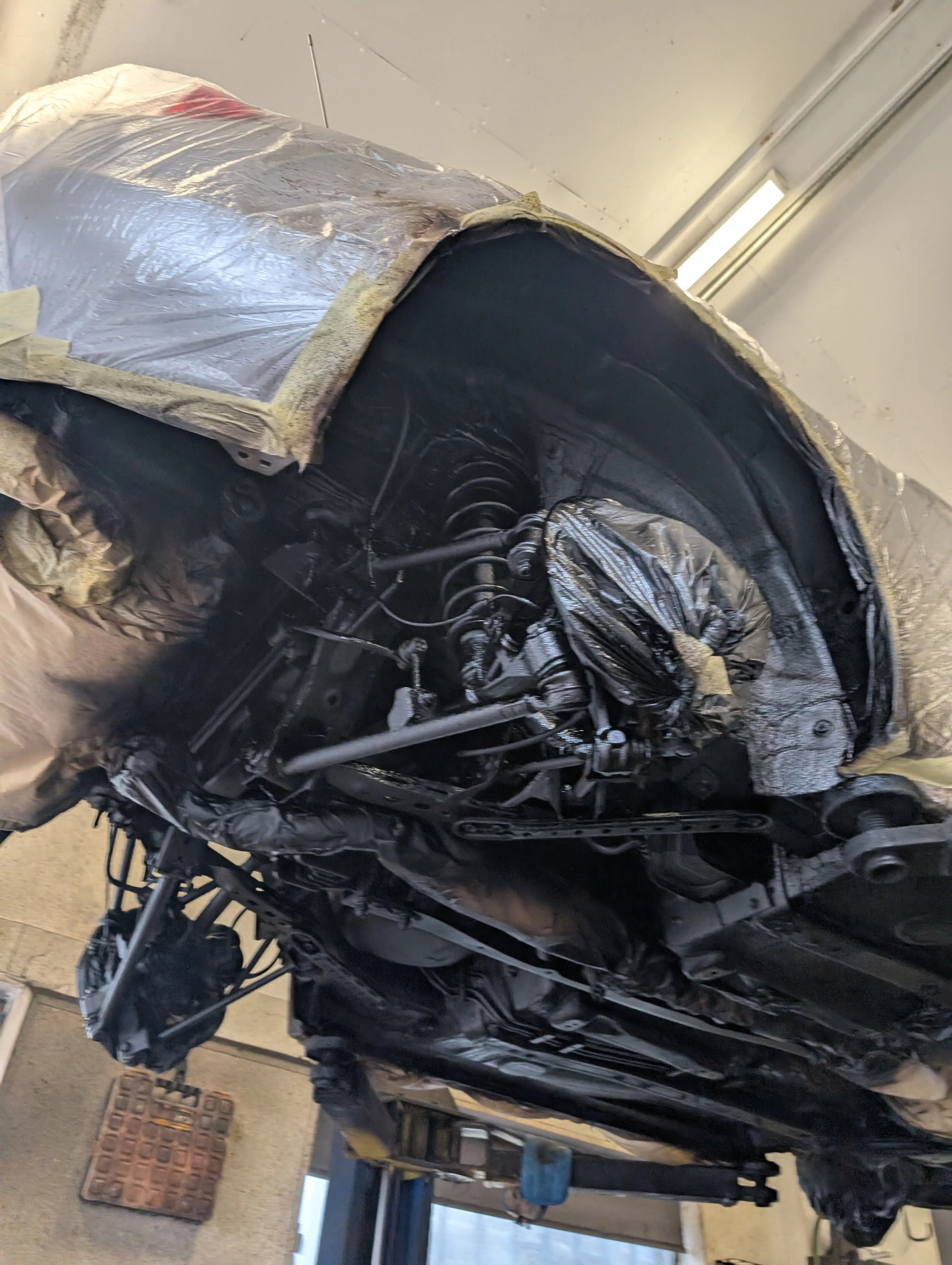
The Rustec 72-Hour Elite Process
We do not offer "express" services because they do not work. Our reputation is built on a methodical, multi-day standard:
Deep Cleaning: We remove all plastic under-trays and arch liners, then perform a high-pressure steam clean to remove years of road salt and debris.
Extended Drying: Using industrial air movers, we ensure the chassis is bone-dry. We never spray over moisture.
Meticulous Masking: We protect your brakes, exhaust, engine components, and electrical sensors. We do not "overspray" everything in sight.
Cavity Injection: We inject high-penetration waxes into every box section, sill, and door pillar.
Underbody Coating: We apply a durable, heavy-duty barrier (like Dinitrol or professional-grade waxes) to the exposed metal surfaces.
Whether you are wondering should I rustproof my car myself or pay a pro or choosing a professional, the difference always comes down to the hours spent on preparation.
FAQ: Common Questions About Cheap Treatments
Can I just spray Lanoguard or Waxoyl over the rust myself? While DIY products have their uses, applying them over dirt and salt is ineffective. Professional Lanoguard vs Waxoyl comparisons show that without deep cleaning and internal cavity work, the protection is only skin-deep and will need frequent reapplication.
Will a cheap underseal hide rust from an MOT tester? Often, yes: and that is the problem. Hiding rust doesn't stop it. Many testers are now wary of vehicles with fresh, thick black coatings, as they can obscure structural defects. A professional, transparent treatment is far more respected during an MOT.
Why does it take 72 hours? You cannot rush science. To properly de-grease a vehicle, let it dry naturally and mechanically, and then allow the various layers of wax and underseal to "tack off" and bond, you need three days. Anything faster is a compromise.
Take Action Before the Damage is Permanent
The UK climate is unforgiving.
Every winter that passes without professional protection is a year of structural degradation for your vehicle. Don't fall for the trap of a "cheap" fix that will eventually cost you thousands in welding or lost resale value.
If you want to protect your vehicle properly — not just cover it up — the best time to act is before corrosion progresses. You can book a free inspection or request a quote here.
In UK conditions, corrosion is not a question of if — but when. Delaying protection leads to structural failure and £4,000+ repair bills. Book your inspection now.
Comments