
Should I rustproof my car myself or pay a pro?
Rust is one of the most persistent threats to vehicles in the UK. Between road salt, coastal air, and our famously wet weather, corrosion can take hold faster than many owners realise. If you've decided that rustproofing is the right move for your vehicle, the next question becomes clear: should you tackle it yourself, or invest in professional treatment?
This decision ultimately comes down to your budget, available time, skill level, and how critical thorough rust protection is for your particular vehicle. Both approaches have their merits, and neither is universally "right" for everyone. This guide will help you weigh up the key factors so you can make an informed choice.
What Does DIY Rustproofing Actually Involve?
Before deciding whether to go the DIY route, it's essential to understand what the process requires. Rustproofing isn't simply a matter of spraying product onto your vehicle's underside and calling it done.
A proper DIY rustproofing job typically involves:
Lifting the vehicle safely using appropriate jacks and axle stands
Thoroughly cleaning the entire undercarriage to remove dirt, debris, and existing corrosion
Allowing the chassis to dry completely
Masking sensitive components such as brake discs, exhaust systems, and sensors
Applying cavity wax to enclosed box sections, sills, and door cavities
Coating exposed underbody areas with appropriate underseal or protective film
Allowing adequate curing time before driving
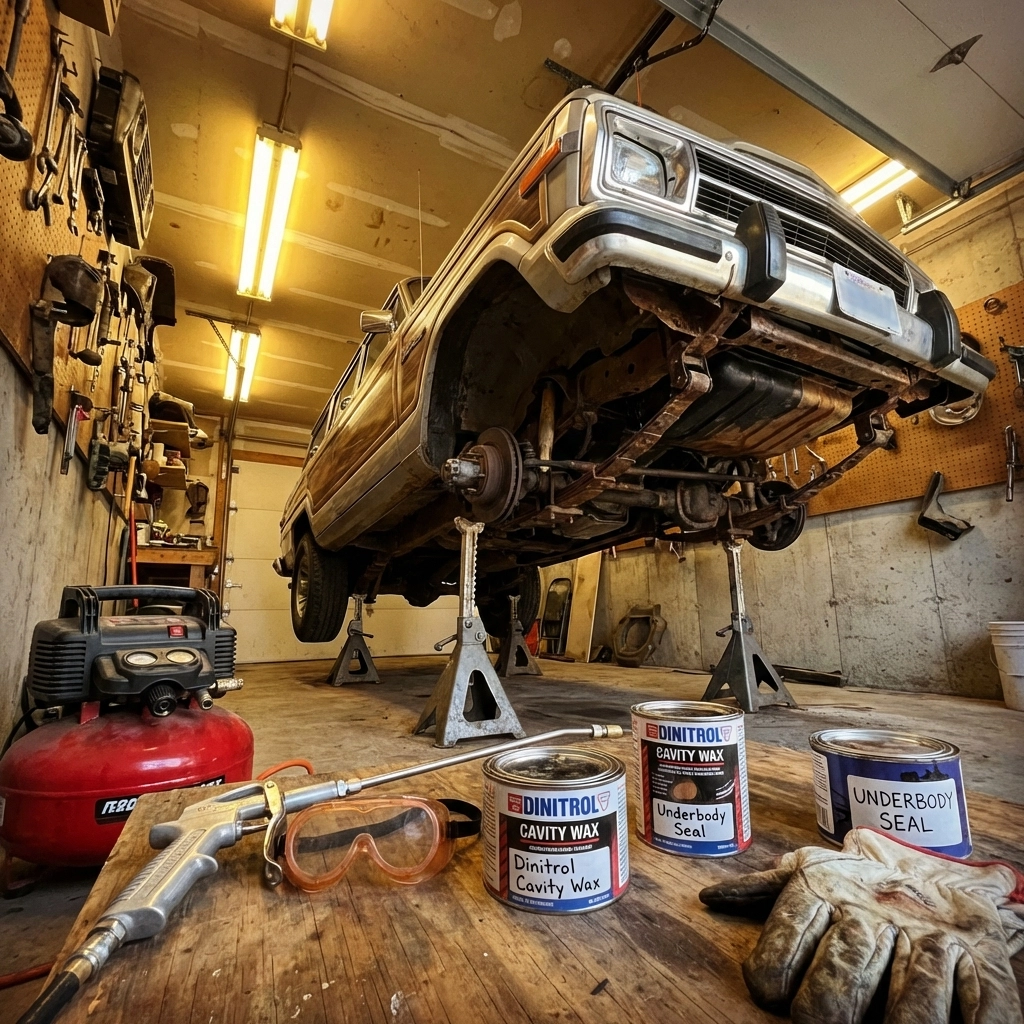
Equipment you'll need includes:
A pressurised spray gun with appropriate wand attachments for cavity access
An air compressor (or suitable hand-pump sprayer)
Rustproofing products (cavity wax, underbody coating)
Safety equipment including goggles, gloves, and protective clothing
Cleaning supplies and degreaser
Masking tape and protective sheeting
The most significant upfront cost for DIY is typically the spray equipment. A quality pressurised sprayer and compressor setup can represent a considerable investment, though this cost is spread across multiple applications if you plan to maintain your vehicle over time.
What Does Professional Rustproofing Include?
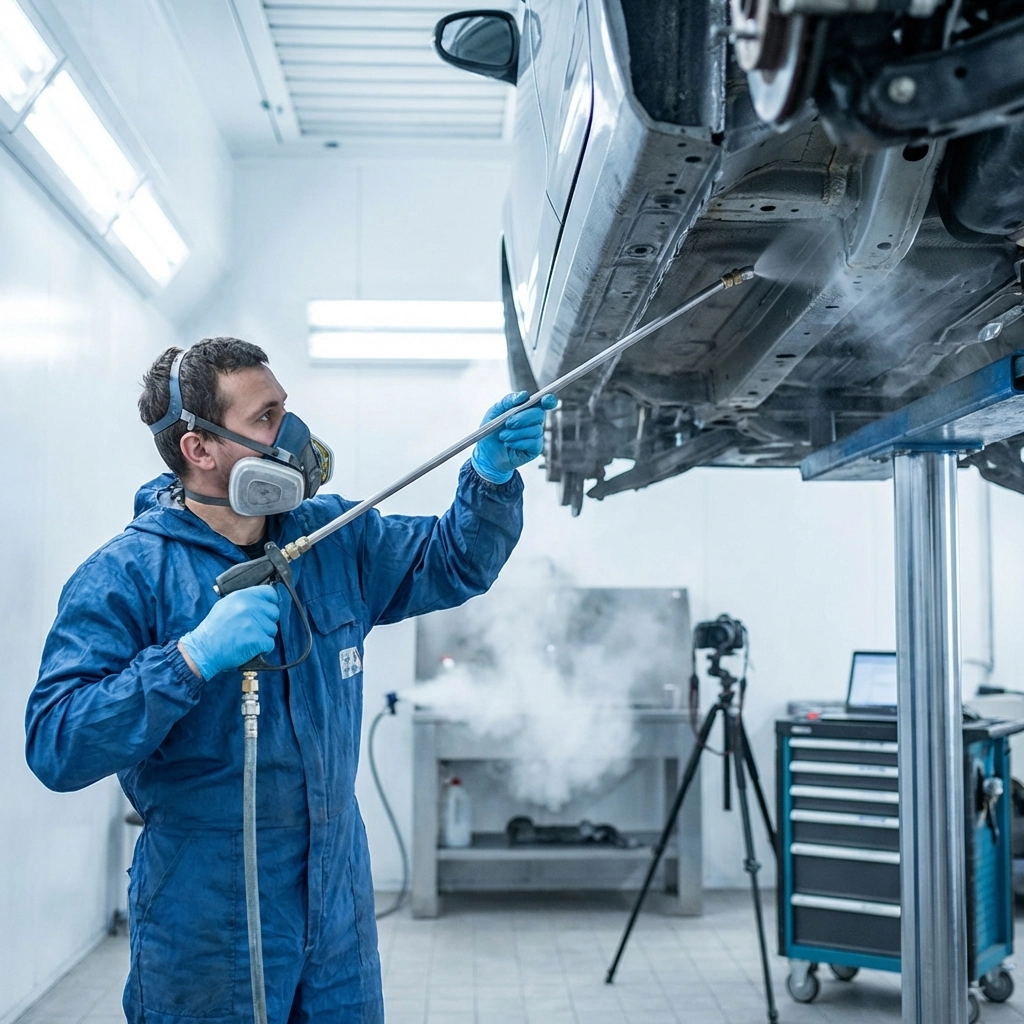
Professional rustproofing services follow a methodical, multi-stage process designed to deliver comprehensive protection. At Rustec, our approach exemplifies what thorough professional treatment looks like.
A professional service typically includes:
Comprehensive inspection : Identifying existing corrosion, vulnerable areas, and any damage requiring attention
Full undercarriage steam clean : Removing all contaminants to ensure optimal product adhesion
Meticulous masking : Protecting brake components, sensors, and exhaust systems
Cavity wax application : Treating all enclosed sections including sills, box sections, and door frames using specialist equipment
Underbody coating : Applying premium protective products to all exposed chassis areas
Photo documentation : Providing visual records of work completed
Quality inspection : Ensuring complete coverage before vehicle handover
Professional services also typically include warranty coverage, protecting your investment against future rust damage. This peace of mind is something DIY simply cannot replicate.
Key Factors to Consider
Budget
DIY appears cheaper on the surface. Products alone might cost between £50–£150 depending on your vehicle size and chosen brands. However, factor in equipment costs (potentially £100–£300+ for quality spray gear), and the initial outlay increases significantly.
Professional treatment typically ranges from £300–£800+ depending on vehicle size, condition, and treatment level. While the upfront cost is higher, you're paying for expertise, specialist equipment, premium products, and warranty protection.
The real question: Is your time worth the saving? A professional job completed in a day might take you an entire weekend: or longer if you're learning as you go.
Time and Convenience
DIY rustproofing is time-intensive. Expect to spend a full day minimum on a thorough job, and that's assuming you already have the equipment and knowledge. Factor in research time, product sourcing, and the learning curve if you're new to the process.
Professional services handle everything. Drop your vehicle off, and collect it fully protected. Many specialists, including Rustec, offer courtesy car services to minimise inconvenience.
Coverage Quality
This is perhaps the most critical consideration. Effective rustproofing depends entirely on thorough coverage, particularly in hard-to-reach areas like box sections, inner sills, and concealed chassis cavities.
Professional technicians have:
Specialist equipment designed to reach every cavity
Training and experience identifying vulnerable areas
Quality control processes ensuring complete coverage
Understanding of different vehicle architectures
DIY applications frequently miss critical areas simply because they're difficult to access without proper tools and knowledge. Inadequate coverage doesn't just reduce effectiveness: it can create a false sense of security while rust continues developing in untreated zones.
Product Quality and Application
Professional services typically use commercial-grade products applied at correct pressures and temperatures for optimal penetration and adhesion. Products like Dinitrol require specific application techniques to achieve their full protective potential.
DIY products available to consumers are often formulated differently, and application without proper equipment may compromise performance. Oil-based sprays, for instance, can drip for up to three days after application, potentially staining driveways and garage floors.
Warranty Protection
Professional rustproofing services typically include warranty coverage: a significant benefit that DIY cannot match. Should rust develop in treated areas, professional providers will address the issue at no additional cost.
This protection provides genuine peace of mind, particularly for newer vehicles or those you intend to keep long-term.
When DIY Makes Sense
DIY rustproofing can be a reasonable choice if you:
Have a tight budget and existing equipment
Possess mechanical experience and enjoy hands-on maintenance
Are treating a lower-value vehicle where professional costs seem disproportionate
Want to perform maintenance top-ups between professional treatments
Have adequate workspace and time to complete the job properly
For owners who enjoy working on their vehicles, DIY rustproofing can be satisfying: provided you're realistic about the limitations and committed to thorough application.
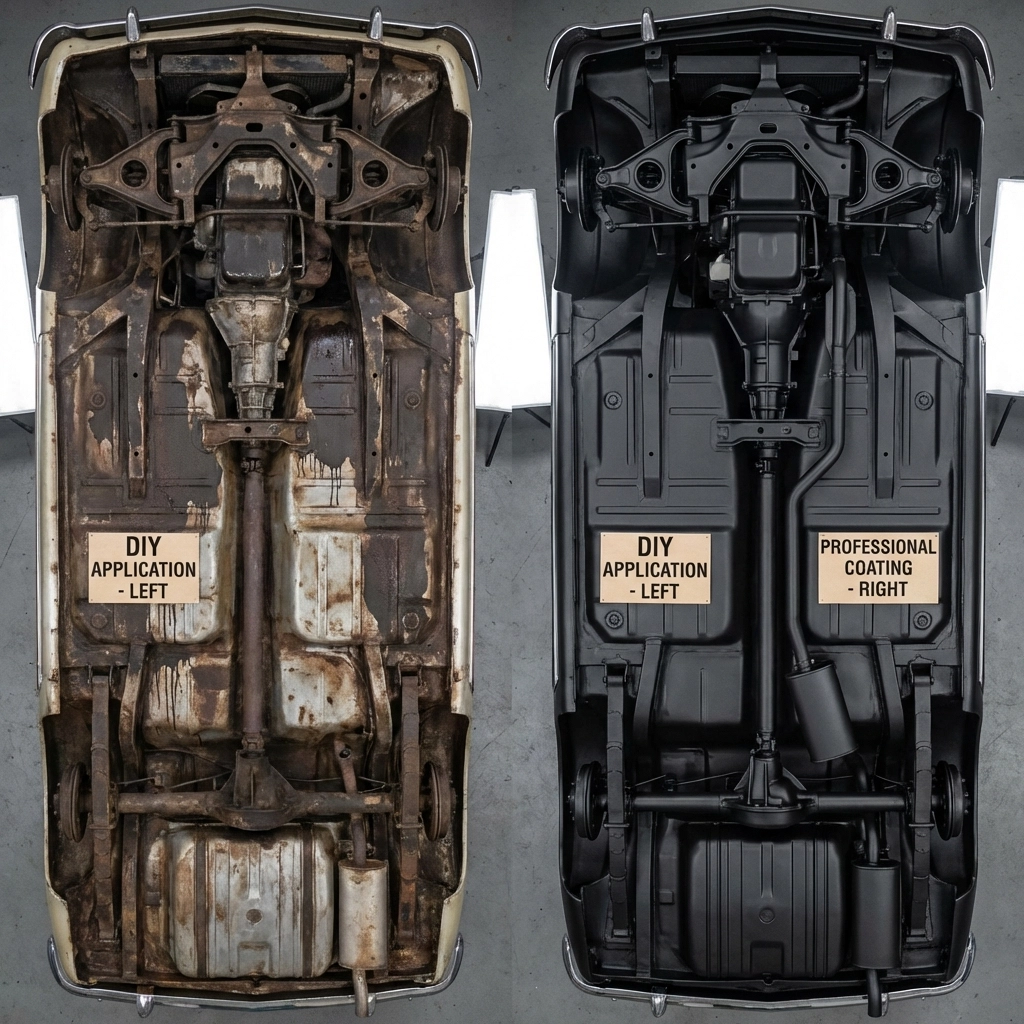
When Professional Treatment Is the Better Investment
Professional rustproofing is strongly recommended if you:
Own a newer vehicle and want to preserve its condition and value
Have a rust-prone vehicle such as a Land Rover, Toyota Hilux, or commercial van
Lack specialist equipment or spray experience
Want warranty protection against future corrosion
Value convenience and guaranteed results
Are protecting a classic car or vehicle with significant personal or financial value
For 4x4 vehicles, campervans, and commercial vehicles that face demanding conditions, professional treatment offers the thoroughness and reliability that DIY struggles to match.
The Middle Ground: Professional Treatment with DIY Maintenance
One practical approach combines both methods. Have your vehicle professionally treated for comprehensive initial coverage, then perform targeted DIY top-ups between visits.
This strategy delivers:
Thorough baseline protection from professional application
Warranty coverage on the initial treatment
Cost savings on ongoing maintenance
Continued protection in high-wear areas
Some vehicle owners opt for professional treatment every two to three years, with DIY attention to vulnerable areas like brake lines and wheel arches in between. This balanced approach maximises protection while managing costs over time.
Making Your Decision
The choice between DIY and professional rustproofing isn't simply about cost: it's about value, effectiveness, and peace of mind.
If you're protecting a vehicle you intend to keep for years, preserving a classic car, or safeguarding a commercial asset, professional treatment represents a sound investment. The thoroughness, warranty protection, and proven results justify the premium.
If budget constraints are significant and you're prepared to invest the time and effort required for proper application, DIY can provide worthwhile protection: provided you're realistic about the learning curve and potential limitations.
Whatever route you choose, taking action to protect your vehicle from rust is always the right decision. UK conditions are unforgiving, and corrosion doesn't wait.
Considering professional rustproofing?Rustec offers comprehensive Dinitrol treatments with full warranty coverage, complimentary top-up services, and the expertise to keep your vehicle rust-free for years to come. Enquire today to discover the best protection for your vehicle.
Comments