
Salt Is Sitting Inside Your Car: Why Rinsing the Underside Isn't Enough
Meta Title: Salt Is Sitting Inside Your Car: Why Rinsing Isn't Enough | Rustec Meta Description: Think a jet wash removes road salt? Think again. Salt gets trapped inside your chassis and sills, causing inside-out rot. Learn why surface rinsing fails. URL Slug: salt-trapped-inside-car-chassis-rust
The Direct Answer: Why Rinsing Fails
Rinsing the underside of your vehicle with a hose or jet wash only removes surface-level salt and grit. It does nothing to address the salt that has already entered the internal cavities of your vehicle.
UK road salt dissolves into brine and is pulled into chassis rails, sills, door bottoms, and box sections. Once inside, it stays trapped, absorbs moisture from the humid UK air, and corrodes the metal from the inside out.
By the time you see rust on the exterior, the structural integrity of the internal steel is often already compromised. Doing nothing leads to financial loss. The biggest mistake is waiting until rust becomes visible.
Visual Mental Model: The "Wet Wool Sock in a Boot"
Imagine wearing a thick woollen sock inside a waterproof leather boot. If you step into a deep puddle of saltwater, the water can seep over the top and soak the sock. You can spend all day polishing and scrubbing the outside of the leather boot until it shines, but the sock inside remains cold, wet, and salty.
Your car’s chassis is the boot, and the internal box sections are the sock. Spraying water at the outside of the chassis (the leather) does not dry the "sock" inside. In fact, it often adds more moisture to the salt already trapped there, keeping the corrosion process active for longer.
The Invisible Threat: Inside-Out Corrosion
Most vehicle owners suffer from the "Iceberg Illusion." They look at their car's paintwork or the visible flat sections of the floor pans and assume the vehicle is healthy. However, the most dangerous corrosion in the UK happens where you cannot see it.
During the winter months, local councils spread millions of tonnes of rock salt. When this mixes with rain, it creates a corrosive "soup." This liquid doesn't just sit on the surface; it is atomised by your tyres and forced into every drain hole, seam, and cavity.
Trapped in the Box Sections
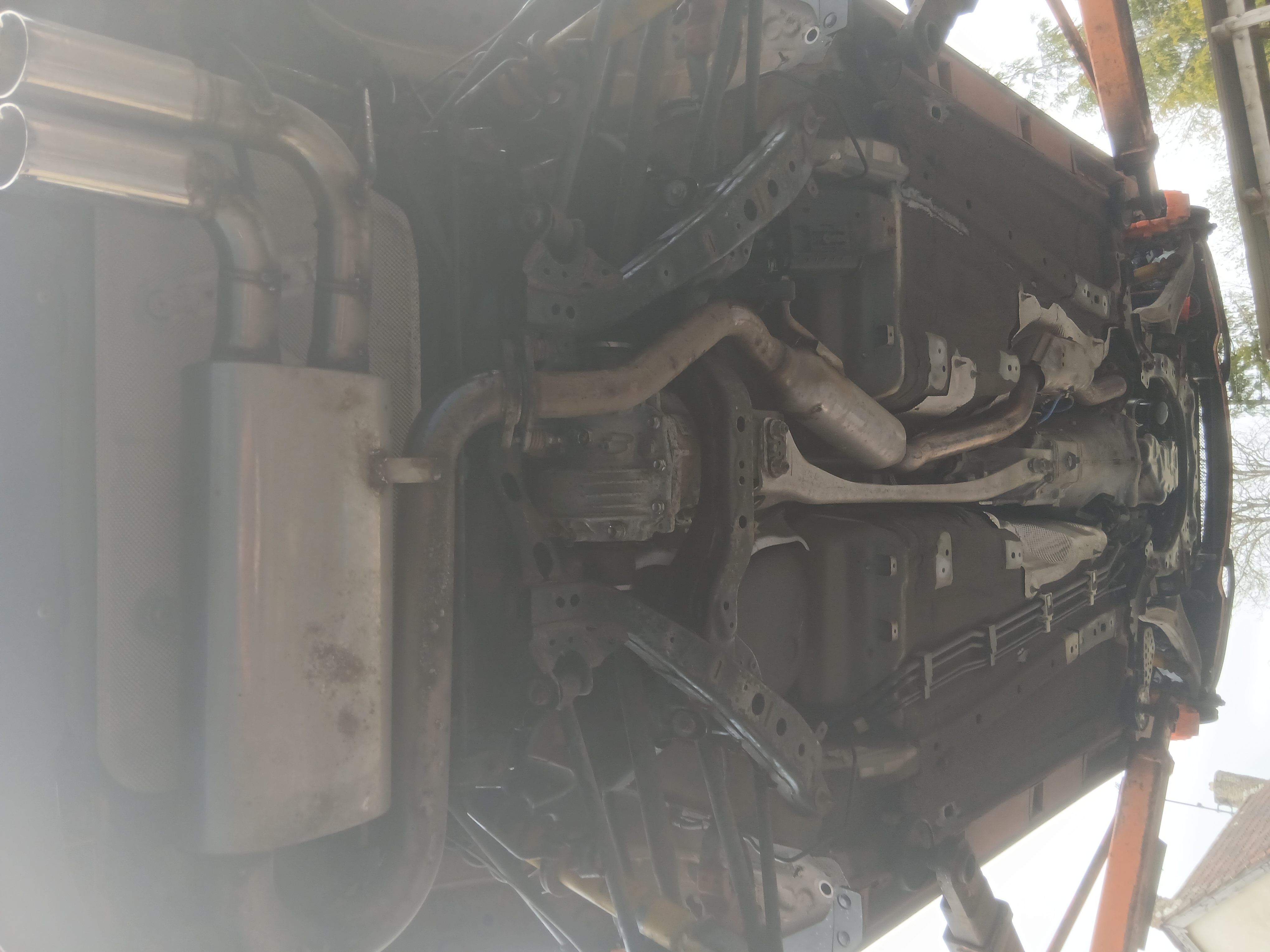
Modern vehicles are full of "box sections": hollow steel structures designed for strength and weight reduction. These include:
Chassis Rails: The backbone of your vehicle.
Sills: The structural members running under the doors.
Cross-members: Providing lateral rigidity.
A, B, and C Pillars: Essential for crash safety.
Once salt enters these sections, there is zero airflow to dry them out. The salt is hygroscopic, meaning it actively pulls moisture out of the air. Even on a dry summer day, the salt sitting inside your sills is drawing in humidity to continue the oxidation process. In UK conditions, corrosion is not a question of if : but when.
UK Context: Why Our Climate Is a Catalyst for Rot
The UK presents a "perfect storm" for automotive corrosion. Unlike colder climates (like Sweden or Canada) where the air is dry and frozen, the UK experiences a damp, "cycling" winter. We hover between 0°C and 10°C, meaning the roads are constantly wet, and the salt is always in a liquid, reactive state.
When you take your car to a local car wash and opt for the "underbody rinse," you are often doing more harm than good. These high-pressure jets can actually force salt deeper into the seams. Furthermore, many automated car washes recycle their water; while they filter out the grit, they often cannot filter out the dissolved salt. You are essentially sandblasting your car with a hot brine.
Financial Consequence: The Price of Neglect
Waiting until the MOT tester points out "excessive corrosion within a prescribed area" is the most expensive way to own a car. Once the internal structure of a chassis rail or sill is compromised, the only legal fix is structural welding.
Welding Repairs: Small patches might cost £300, but major structural work on sills or chassis legs typically ranges from £1,000 to £3,000.
Resale Value: A vehicle with visible "advisories" for rust on its MOT history can lose £2,000 to £5,000 in trade-in value compared to a clean, protected example.
Safety: Corroded box sections lose their "crumple zone" effectiveness, putting you and your family at risk during an impact.
By spending a fraction of these costs on a professional Elite Standard treatment, you lock in the vehicle's value and structural safety.
WHEN TO ACT
The biggest mistake is waiting until rust becomes visible. By the time bubbles appear in your wheel arches or orange streaks show on your subframe, corrosion is already established inside seams and cavities.
0–3 years
This is the earliest and cleanest intervention point. Factory protection is limited, and treating a newer vehicle stops salt and moisture getting established in the first place.
3–5 years
This is the ideal treatment window for most UK vehicles. Light internal corrosion often starts by this stage, but the structure is usually still in the best condition for long-term protection.
5–8 years
This is still worth doing, but the process becomes more corrective. More preparation is required because contamination, surface rust, and hidden moisture are more likely.
8+ years
This is inspection-first territory. A proper assessment matters because some vehicles remain solid enough to preserve, while others already need repair work before rustproofing makes sense.

The Rustec Elite Standard vs. Quick "Spray-Overs"
If you are looking for a "quick underseal" while you wait, you are looking for the wrong service. A poor rustproofing job can be worse than doing nothing, as it traps moisture and accelerates corrosion.
Many "budget" garages will simply spray a thick black bitumen or "underseal" directly over the dirt and salt on your car. This creates a waterproof skin that hides the rot, allowing the salt to eat through the metal underneath unseen.
The Rustec 72-Hour Elite Process
At Rustec, we don't just "spray" vehicles; we preserve them. Our process is a methodical, multi-day operation:
Deep Clean & Decontamination: We remove every trace of UK road salt and mud using specialist high-pressure cleaners.
Extended Drying Phase: The vehicle is dried thoroughly using industrial air movers. We do not apply products to damp metal.
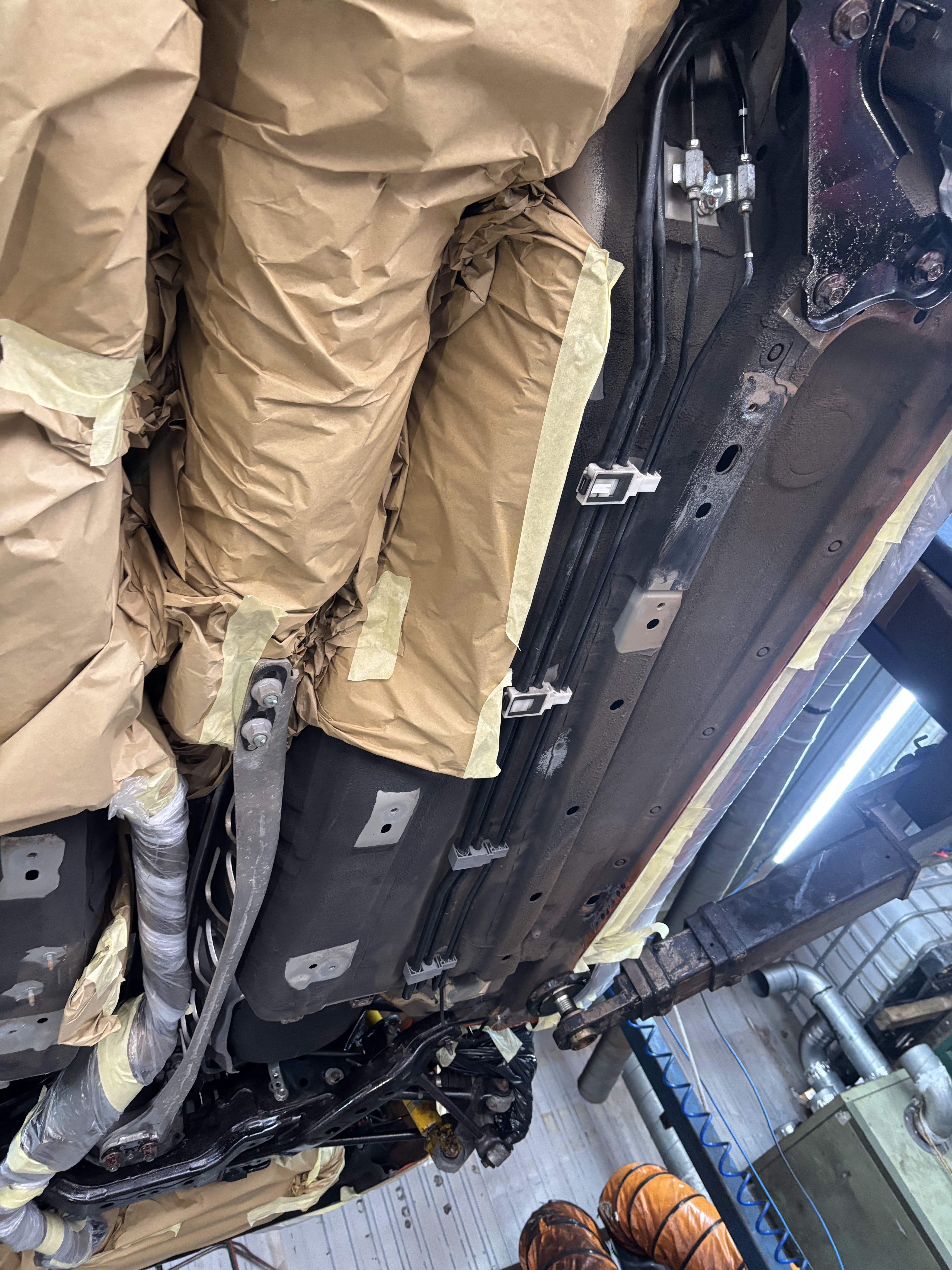
Comprehensive Masking: We mask off brakes, exhaust systems, and electrical sensors. We do not take shortcuts.
Internal Cavity Injection: Using 360-degree probes, we inject high-penetration waxes (like Dinitrol ML) into every box section, sill, and rail. This is the only way to neutralise the salt "inside the sock."
External Shield Application: We apply a durable, self-healing underbody wax to the exterior surfaces to provide a physical barrier against future salt.
Whether you are looking for rust proofing in Swansea or protection in Newport, our standard remains the same. We take 72 hours because that is what is required to do the job correctly.
Buyer Psychology: Regret Minimisation
Ask any owner of a 10-year-old Land Rover or classic Japanese import what their biggest regret is. It is almost never the money they spent on maintenance; it is the £3,000 they didn't spend five years ago to prevent the chassis from rotting through.
Corrosion is an exponential problem. It starts slowly and then accelerates rapidly as the metal becomes more porous.
By acting early, you are not spending money: you are saving thousands in future repairs and protecting the thousands you have already invested in your vehicle. Before you decide, compare how long rustproofing lasts in the UK, review whether rustproofing is worth the cost, and read our material comparison on Dinitrol vs Lanoguard.
FAQ: Your Questions Answered
Can't I just use a pressure washer at home?
No. Home pressure washers cannot reach the internal cavities where the real damage happens. Furthermore, without a lift, you cannot see the areas where salt accumulates, such as the top of the fuel tank or behind the plastic arch liners.
How often should I have the internal cavities treated?
With the Rustec Elite Standard using premium waxes, internal cavities generally remain protected for 3 to 5 years. However, we recommend an annual inspection to check for physical damage from road debris or speed bumps that might have breached the outer coating.
Is it worth rustproofing an older car?
Absolutely. If the vehicle is structurally sound, we can stop the rot in its tracks. It is far cheaper to preserve an older vehicle you enjoy than to buy a new one in today’s market. We provide specialist services at locations like Rustec Wrexham for a variety of older and specialist vehicles.
Final Summary
Rinsing your car is a cosmetic exercise; it is not a preservation strategy. Salt is currently sitting in the dark, damp crevices of your vehicle's chassis, slowly turning steel back into iron oxide.
The only way to stop this is to clean the metal properly, dry it thoroughly, and seal the internal cavities with professional-grade waxes. Doing nothing leads to financial loss.
In UK conditions, corrosion is not a question of if — but when. Delaying protection leads to structural failure and £4,000+ repair bills. Book your inspection now.
Comments