
The First 5 Years Matter Most: Why Early Rustproofing is the Best Investment
Meta Title: Why the First 5 Years are Critical for Vehicle Rustproofing | Rustec Meta Description: The first 5 years of a vehicle's life are the "golden window" for rustproofing. Learn how to protect your £5,000 resale value and avoid structural MOT failures. URL Slug: /early-vehicle-rust-proofing-investment
Direct Answer: Why the 2–5 Year Window is Critical
For any vehicle operating in the UK, the most effective and cost-efficient time to apply professional rustproofing is within the first 2 to 5 years of its life. During this "golden window," the factory-applied coatings are beginning to degrade, but structural corrosion has not yet taken hold.
Acting early allows for a clean, preventative application that preserves the original metal. The biggest mistake is waiting until rust becomes visible. By that point, corrosion is already established within the chassis and cavities, making it significantly harder and more expensive to control.
Doing nothing leads to financial loss.
The Illusion of Factory Protection
Most vehicle owners assume that because a car is relatively new, it is "protected." This is a dangerous misconception. Modern manufacturers apply minimal underbody protection: often just a thin layer of paint or a partial PVC coating: designed to last long enough to clear the initial warranty period. These coatings are not designed for the aggressive environmental stressors found in the UK.
Within the first three years, road debris, stones, and salt spray begin to "pepper" the underside of the vehicle. These micro-impacts create breaches in the factory finish. Because modern steel is thin to save weight, once moisture reaches the bare metal, oxidation begins immediately. In UK conditions, corrosion is not a question of if : but when.
Visual Mental Model: The Dental Cavity Analogy
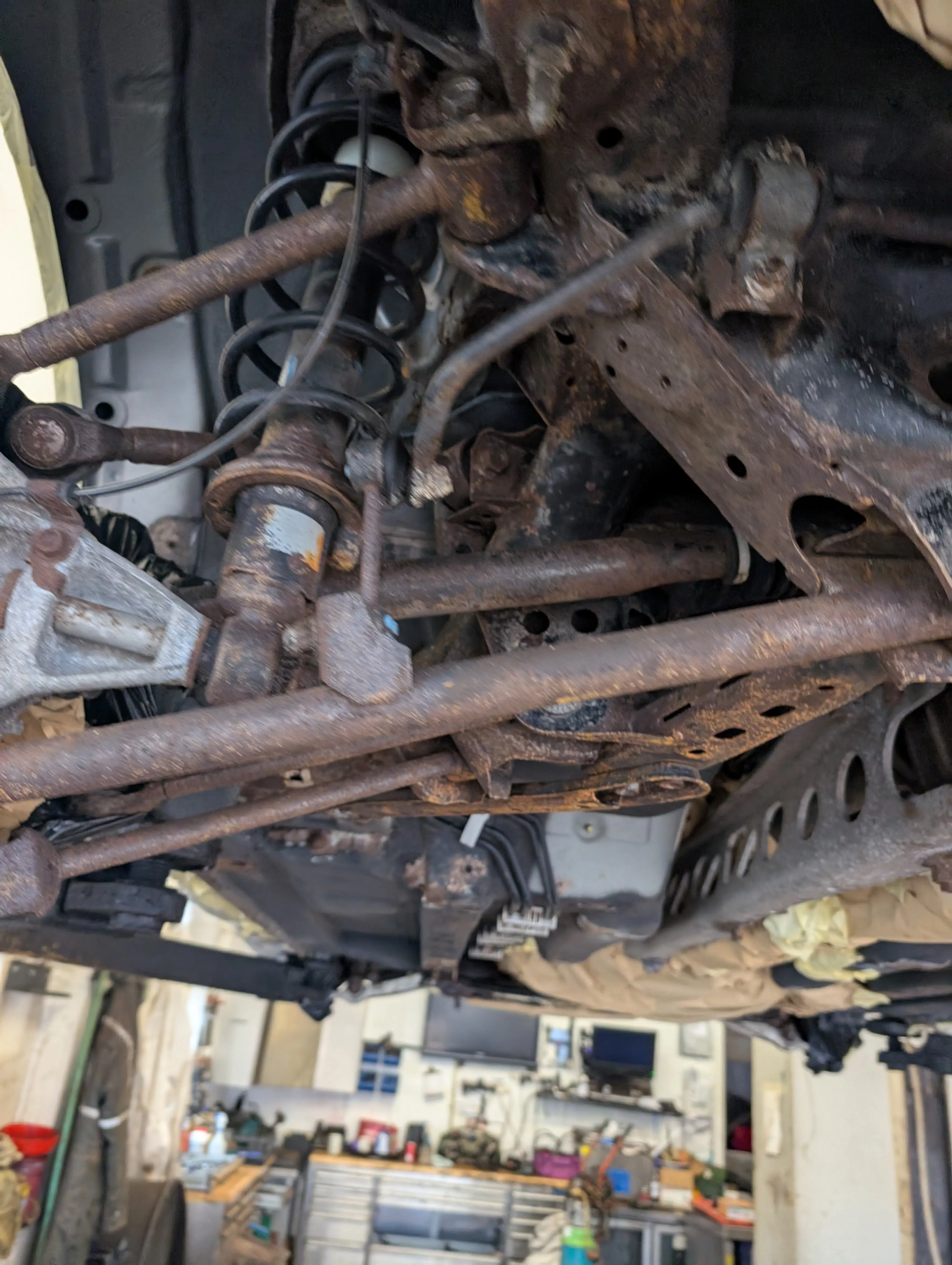
Think of vehicle rustproofing like dental hygiene. Brushing and professional cleaning (early rustproofing) are preventative measures that keep the tooth (your chassis) intact. If you wait until you have a visible hole and severe pain (visible rust and MOT failure), a simple cleaning is no longer an option. You are now looking at a root canal or an extraction (welding and structural repairs). It is always cheaper and less painful to protect a healthy structure than it is to attempt to "save" a decaying one.
The Financial Consequence of Delay
Delaying rustproofing is not a cost-saving measure; it is a massive financial liability. Doing nothing leads to financial loss.
The costs manifest in two primary ways:
Resale Value Impact: A vehicle with a clean, documented history of professional rustproofing can command a £2,000 to £5,000 premium over a "crusty" equivalent in the used market.
Buyers, especially for 4x4s, vans, and classic cars, are increasingly savvy about checking the underside. If a buyer sees orange scaling on the chassis, they will either walk away or demand a heavy discount.
Repair and Welding Costs: Once corrosion turns structural, you are at the mercy of the MOT tester. Structural welding to suspension mounts, sills, or chassis rails typically starts at £1,000 and can easily spiral to £4,000+ for complex body-on-frame vehicles.
By investing in professional protection during the 2–5 year window, you effectively freeze the condition of the vehicle, ensuring that these costs never materialise.
The UK Context: A Perfect Storm for Steel
The UK presents a unique challenge for vehicle longevity. We have a temperate maritime climate, meaning high humidity year-round. This moisture sits in the "V-sections" and box cavities of your vehicle, never fully drying out.
Combine this with the 2 million tonnes of rock salt spread on UK roads every winter, and you have a highly corrosive electrolyte constantly attacking your chassis.
Furthermore, many UK roads are poorly maintained, leading to increased physical abrasion of the underbody. If you live near the coast or in rural areas where mud and salt sit in the wheel arches, the rate of decay accelerates exponentially.
This is why rustproofing in Swansea and vehicle rust protection in Neath matter far more than many owners realise.
The "Iceberg" Model of Corrosion
Visible rust is merely the tip of the iceberg. The most destructive corrosion happens from the inside out. Box sections, sills, and chassis rails trap condensation and salt.
By the time you see a bubble of rust appearing on the exterior paintwork, the metal underneath is likely paper-thin. The biggest mistake is waiting until rust becomes visible.
Early rustproofing focuses heavily on cavity wax injection. By flooding these hidden areas with high-creep waxes during the first 5 years, you displace oxygen and moisture before the "iceberg" ever has a chance to form.
Rustec Elite Standard vs. Quick-Spray Alternatives
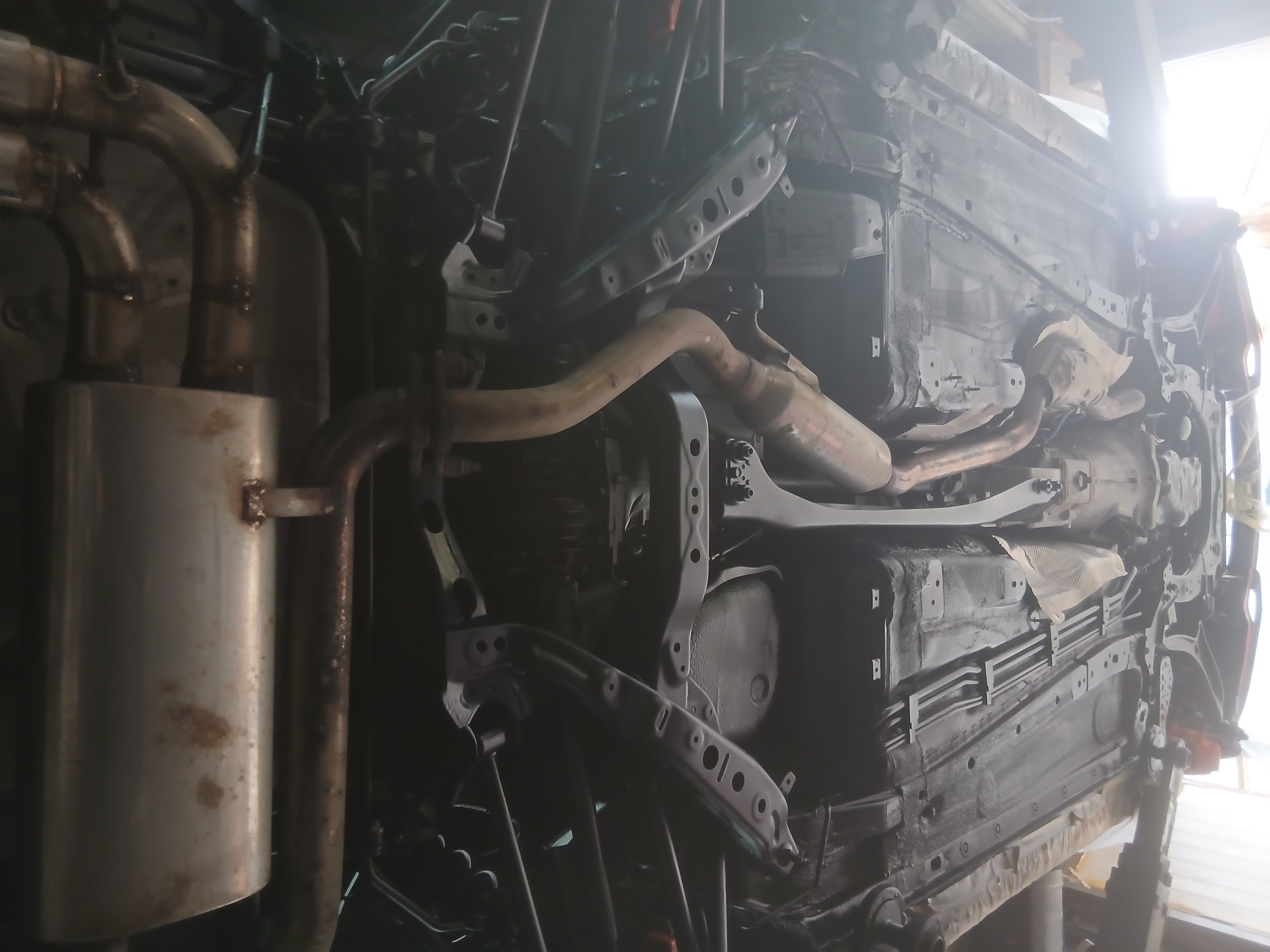
There is a significant difference between a professional treatment and a "cheap" underseal. A poor rustproofing job can be worse than doing nothing, as it traps moisture and accelerates corrosion. If you spray a thick, bitumen-based coating over a damp or dirty chassis, you are effectively "shrink-wrapping" the rust, allowing it to eat the metal unseen.
The Rustec Elite Standard is a meticulous 72-hour process designed for longevity:
Preparation: Deep cleaning of the underbody to remove all salt, grease, and loose debris.
Drying: Utilising commercial-grade air movers to ensure the substrate is perfectly dry.
Masking: Protecting brakes, exhaust systems, and electrical sensors.
Cavity Injection: Deep-reach fogging of all internal box sections and sills.
External Coating: Application of professional-grade materials (like Dinitrol) that remain flexible and self-healing.
This level of detail is impossible to achieve in a "while-you-wait" service. To understand why process matters more than just the brand of wax, read our comparison on Lanoguard vs Waxoyl for UK rustproofing.
Buyer Psychology: Minimising Regret
We see it every week: an owner brings in a 7-year-old vehicle they love, only to be told it needs £2,000 of welding before we can even think about rustproofing.
The look of regret is always the same. They meant to do it three years ago but waited. Doing nothing leads to financial loss.
When you act in the 2–5 year window, you are buying peace of mind. You are ensuring that you will never have to face the "scrap or save" dilemma at the MOT station.
You are protecting your largest depreciating asset and ensuring it remains a liquid asset when the time comes to sell.

WHEN TO ACT
0–3 Years
This is the earliest prevention window. Factory protection is still intact in most areas, but salt, moisture and stone impact have already started to compromise weak points.
Treating a vehicle at this stage preserves clean metal and gives the coating the best possible foundation.
3–5 Years
This is the ideal rustproofing window for most UK vehicles. Factory coatings are ageing, but structural corrosion is usually still preventable with a proper professional process.
If you want the strongest balance of cost, protection and future resale value, act here.
5–7 Years
Risk increases sharply in this range. Hidden corrosion is often already forming inside seams, box sections and chassis rails, even if the underside still looks acceptable at a glance.
Professional treatment can still add value, but the margin for error is smaller and prep becomes more critical.
7+ Years
At this stage, many vehicles are no longer in pure prevention mode. You are often managing existing corrosion rather than preserving clean original metal.
Inspection comes first. If welding is already required, costs can escalate fast.
FAQ
Q: My car is only 2 years old, surely it's too early? A: It is never too early. In fact, year 1 or 2 is the ideal time because the metal is pristine. This allows for the best possible adhesion and ensures that no salt is trapped behind the coating.
Q: Is it worth rustproofing a car I only plan to keep for 3 years? A: Yes, for the resale value alone. A car with a transferrable rustproofing certificate is much easier to sell privately and will justify a higher asking price.
Q: Can I just do it myself with a tin of underseal? A: DIY attempts often fail because of poor preparation and lack of access to cavities. If you don't have a lift and high-pressure injection equipment, you are only doing half the job: and potentially trapping moisture in the process.
Final Summary
The first 5 years represent your only opportunity to protect your vehicle's chassis while it is still in "new" condition. Beyond this window, you are no longer preventing rust; you are managing it.
By choosing a professional Rustec Elite Standard treatment, you are making a calculated financial decision to preserve £5,000 in resale value and eliminate the risk of structural MOT failure.
Don't wait for the orange to appear. The biggest mistake is waiting until rust becomes visible.
In UK conditions, corrosion is not a question of if — but when. Delaying protection leads to structural failure and £4,000+ repair bills. Book your inspection now.
Comments