
Rust Is a Long-Term Problem: Why Early Prevention Is Key
Meta Title: Rust Is a Long-Term Problem: Why Early Prevention Is Key | Rustec Meta Description: Rust is an inevitability for UK vehicles. Discover why early rust proofing for your car is the only way to avoid structural failure and high repair costs. URL Slug: rust-long-term-problem-prevention-key
Direct Answer: Why Early Prevention is Non-Negotiable
Rust is a progressive, long-term threat that compromises a vehicle's structural integrity long before it becomes visible to the naked eye. In the UK, early prevention is the only effective strategy because factory-applied coatings are generally insufficient for local conditions. By the time an owner notices bubbling paint or surface corrosion, the underlying metal has often already suffered irreversible thinning. Early intervention via professional rust proofing car services is essential to prevent structural MOT failure, maintain vehicle safety, and avoid the massive financial loss associated with bodywork repairs and diminished resale value.
The Visual Mental Model: The Termite Effect
Think of rust as termites in a wooden house. You don't see them behind the drywall, and the house looks perfectly stable from the outside. However, they are silently eating away at the structural beams. By the time you notice a sagging floor or a crack in the wall, the damage is already structural and expensive to fix. Vehicle rustproofing services near me are essentially the "termite treatment" for your chassis, stopping the decay before the foundation of your investment is compromised.
Ownership Identity: How Long-Term Owners Think
People who keep their vehicles long-term think differently. They understand that protecting the chassis early is far cheaper than repairing structural damage later. These owners view their vehicle as an asset to be preserved rather than a disposable commodity.
The owners who preserve their vehicles properly are almost always the ones who avoid expensive surprises down the line. They recognise that the underside of the vehicle is its most vulnerable component, exposed to every environmental hazard the road can throw at it. For these owners, the best rustproofing method for UK vehicles is not an optional luxury; it is a fundamental part of responsible vehicle maintenance.
UK-Specific Context: An Inevitable Threat
The British climate is a perfect storm for metal oxidation. Between high humidity, frequent rainfall, and the heavy use of road salt during winter months, your vehicle’s underbody is under constant chemical attack. Road salt (sodium chloride) acts as an electrolyte, dramatically accelerating the electrochemical process of corrosion.
In UK conditions, corrosion is not a possibility , it is an inevitability without proper protection. Whether you live on the coast or in the heart of the city, moisture and salt will find their way into every box section, sill, and chassis rail. Doing nothing leads to financial loss.

The Financial Consequence of Delay
Waiting to treat your vehicle is a high-risk financial gamble that most owners eventually lose. The disparity between the cost of prevention and the cost of repair is staggering.
Professional Rust Protection: Typically ranges from £500 to £1,200 depending on vehicle size and condition. This is a one-time investment that can last for years.
Structural Welding & Repairs: If a vehicle fails its MOT due to corrosion, repair costs usually start at £1,000 and can easily exceed £4,000 for complex chassis or subframe work.
Resale Value Loss: A vehicle with a clean, protected underbody is a rare find in the UK used market. Conversely, visible rust can result in a resale value loss of £2,000 to £5,000, as savvy buyers and dealers will steer clear of "rot boxes."
Understanding the cost of rustproofing in the UK is about more than the upfront price; it is about the thousands of pounds saved in avoided depreciation and repair bills.
When to Act: The Critical Window
The biggest mistake is waiting until rust becomes visible. If you can see it, it is already too late for "prevention", you are now in the realm of "remediation."
0–3 Years (The Golden Window): This is the ideal time to apply protection. The chassis is still clean, and the wax or oil can bond perfectly to the factory finish, sealing out oxygen and moisture forever.
3–5 Years (The Ideal Window): Some surface seasoning may have started, but a professional cleaning process can still restore the surface for a long-lasting treatment.
5+ Years (Urgent): If your vehicle has never been treated, it is highly likely that corrosion has already begun in the hidden cavities. Treatment is now a matter of salvage.
Visible Rust (Advanced): If you see orange flakes or bubbling, the situation is time-critical. You must act now to stop the spread before the metal becomes thin enough to fail an MOT.
Competitor Contrast: Speed vs. Preservation
When searching for vehicle rustproofing services near me, you will encounter a wide range of price points and turnaround times. It is vital to understand that not all services are equal.
Most quick rustproofing services focus on appearance and speed. They might spray a black bitumen-based "underseal" over existing dirt or moisture in just a few hours. This is a dangerous practice. A poor rustproofing job can be worse than doing nothing, as it traps moisture and accelerates corrosion.
At Rustec, we focus on preparation, internal protection, and long-term structural preservation. That difference is why some treatments last months , and others protect vehicles for years. We believe that process matters more than product.
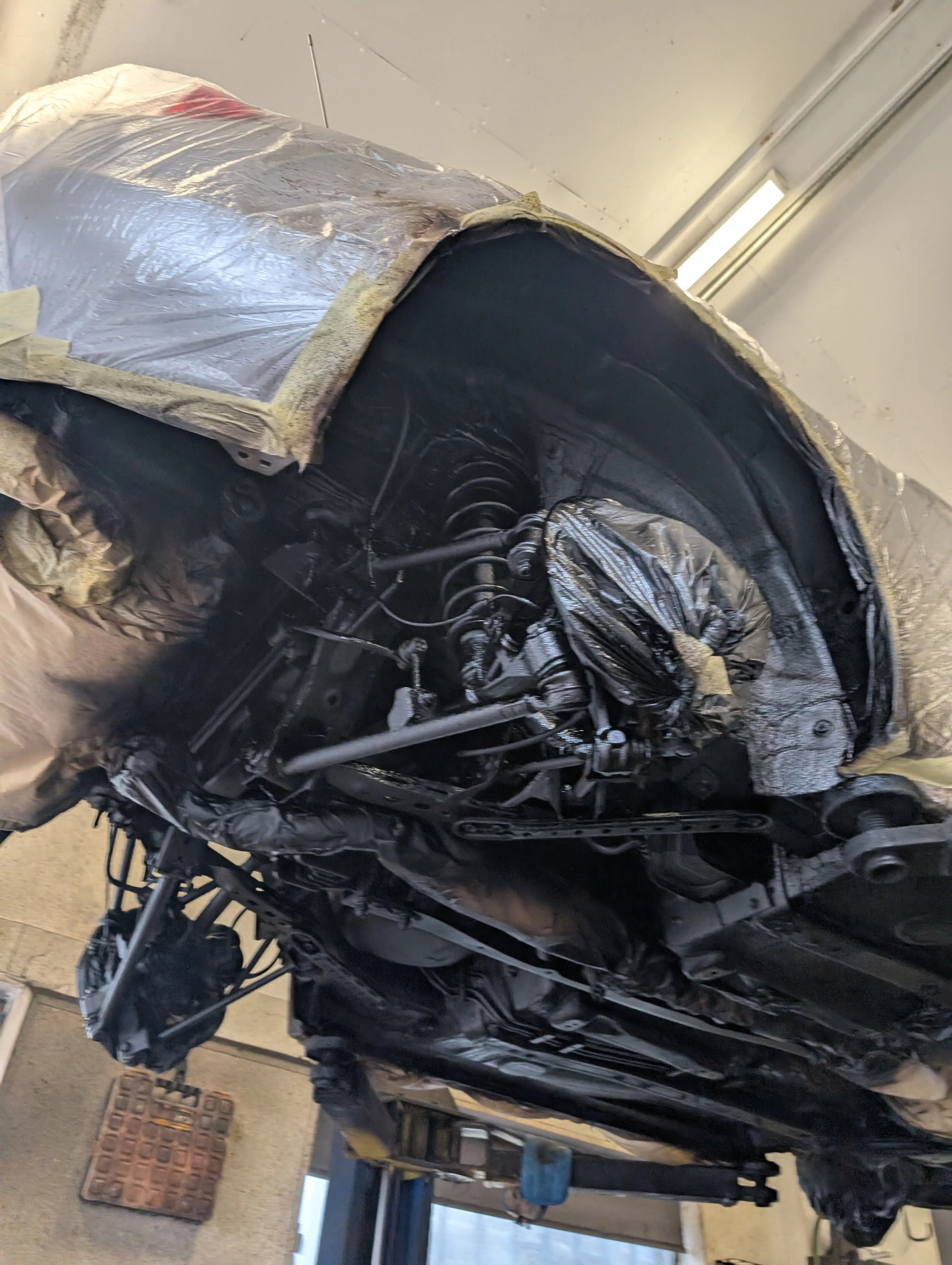
The Rustec Elite 72-Hour Standard
We do not cut corners. To ensure the highest level of protection, we follow a meticulous 72-hour process that ensures the treatment actually works.
Deep Cleaning: We remove all road grime, salt, and loose debris using specialised high-pressure equipment.
Extended Drying: A vehicle must be bone-dry before any coating is applied. We use industrial dehumidifiers and air movers to ensure no moisture is trapped.
Precision Masking: We mask off brakes, exhaust systems, sensors, and wiring looms. We protect the vehicle's bodywork to ensure a clean, professional finish.
Internal Cavity Injection: Rust starts from the inside out. We inject high-penetration waxes into the sills, doors, and chassis rails where you can't see.
External Underbody Coating: A durable, self-healing barrier is applied to all exposed metal surfaces to defend against stone chips and salt.
This level of detail is why our customers want to know how long rustproofing lasts in the UK, as our Elite Standard provides a level of durability that quick-spray alternatives simply cannot match.
Buyer Psychology: Minimising Regret
We often hear the same phrase from customers who bring us older vehicles: "I wish I did this sooner."
The regret of seeing a cherished vehicle slowly disintegrate is a heavy burden. Many owners assume that because their car passed its last MOT, it is "fine." This is a false sense of security. An MOT is a minimum safety standard, not a health check for the longevity of your metalwork. By the time you are asking can rust cause MOT failure, you are already facing the stress of potential structural failure and the loss of your transport. Acting now eliminates that future anxiety.

FAQ: High-Intent Buyer Questions
Does rustproofing increase resale value?
Absolutely. Does rustproofing increase resale value? Yes, by a significant margin. A documented professional rustproofing treatment serves as proof to a buyer that the vehicle has been meticulously maintained. In the UK market, a rust-free chassis is a major selling point and often commands a premium price.
How long does rustproofing last?
When performed to the Rustec Elite Standard, the treatment can last 5 to 10 years, depending on mileage and usage. However, we recommend a brief annual inspection to check for any mechanical damage or stone chips that may have compromised the barrier.
Can rust cause MOT failure?
Yes. Corrosion within 30cm of a load-bearing mounting point (such as seatbelts, suspension, or steering) is an automatic fail. If the metal is "excessively corroded" (holed or thinned), the vehicle is legally unroadworthy. Can rust cause MOT failure? It is one of the leading causes of older vehicles being scrapped in the UK.
Rust doesn’t wait until it becomes visible.
By the time most owners notice a problem, the damage underneath has already started costing them money.
Waiting feels cheaper in the short term : but it nearly always becomes more expensive later.
👉 Book your inspection now and protect your vehicle before corrosion takes hold.
Related Rustec Posts:
Comments