
Can underbody rust be repaired without welding?
Discovering rust on your vehicle's underside can be concerning: particularly when you start researching repair options and find yourself faced with the prospect of expensive welding work. The good news? Underbody rust can often be repaired without welding, depending on the severity and location of the corrosion.
In this comprehensive guide, we explore the various methods available for non-welding rust repairs, when these approaches are appropriate, and: crucially: when professional intervention becomes essential to preserve your vehicle's structural integrity.
Understanding the difference: Surface rust vs structural damage
Before considering any repair method, it is vital to understand what type of rust you are dealing with. This distinction determines whether a non-welding repair is a viable long-term solution or merely a temporary fix.
Surface rust appears as discolouration and light flaking on the metal's outer layer. At this stage, the metal retains its structural strength, and non-welding repairs can be highly effective when executed correctly.
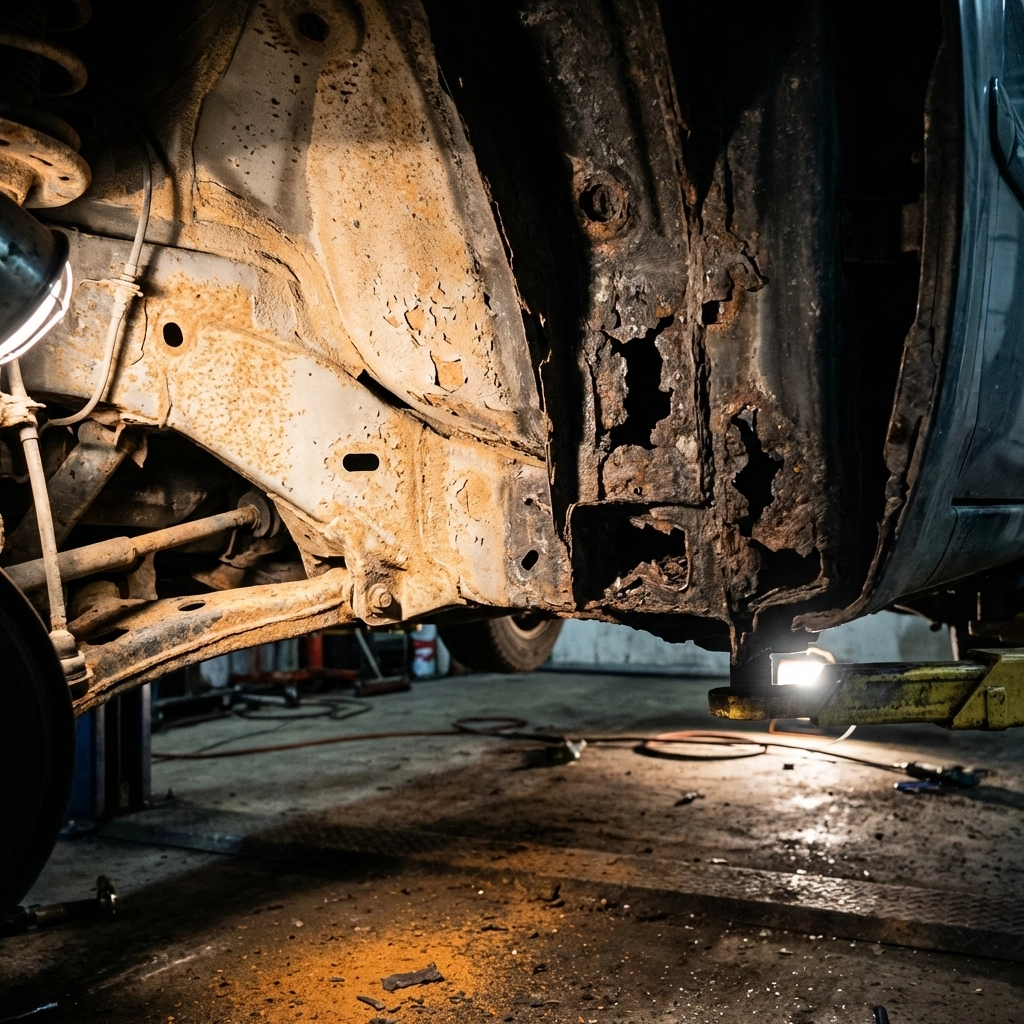
Structural rust, on the other hand, has penetrated deep into the metal, causing significant material loss, holes, or compromised load-bearing capacity. Chassis rails, subframes, and suspension mounting points that have reached this stage typically require professional welding repairs to restore safety and roadworthiness.
Non-welding repair methods that work
For non-structural underbody areas where rust has not caused significant metal loss, several proven repair techniques exist. Each method has its advantages, and the best choice depends on the extent of damage and your long-term goals for the vehicle.
1. The POR-15 and fibreglass method
One of the most reliable approaches for repairing underbody rust without welding involves using specialist rust-encapsulating paint combined with fibreglass reinforcement.
The process involves:
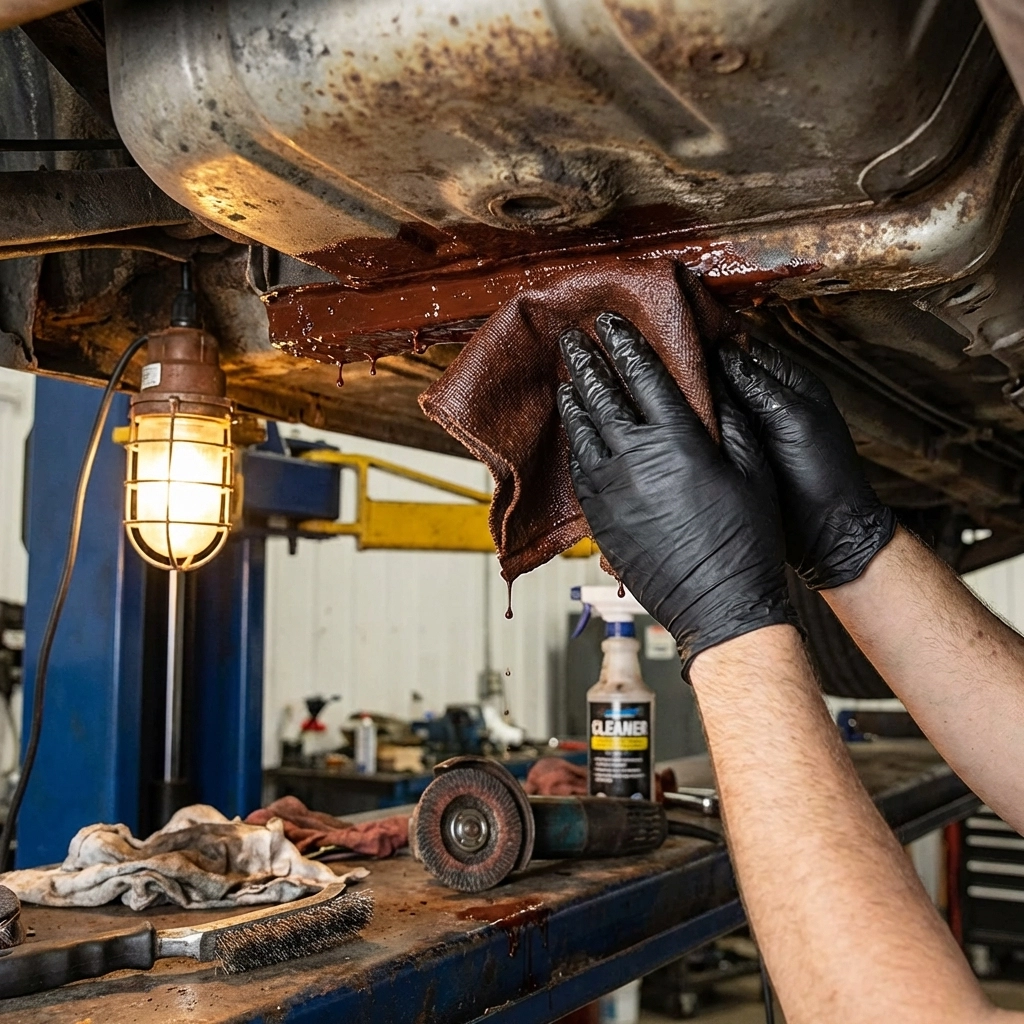
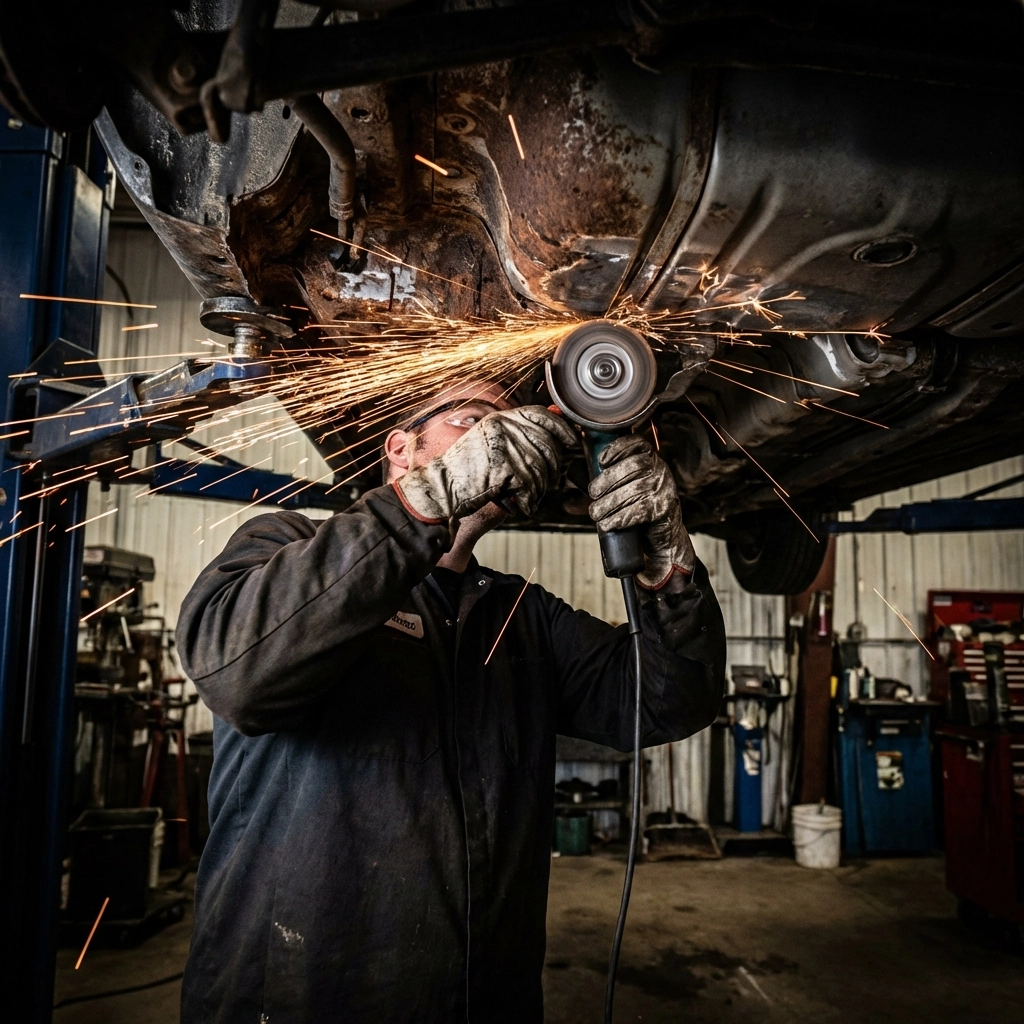
Removing all loose rust and flaking material using a wire brush or grinder
Cleaning the exposed metal thoroughly with a wax and grease remover
Applying an initial coat of rust-encapsulating paint (such as POR-15)
Laying fibreglass cloth over the damaged area while the paint is still wet
Saturating the fibreglass with additional rust-encapsulating paint
Finishing with a rubberised undercoating once cured
This method works because the specialist paint chemically bonds with any remaining rust, preventing further oxidation, whilst the fibreglass provides structural reinforcement. The rubberised topcoat then seals everything from moisture and road debris.
2. Body filler and mesh repairs
For smaller holes and localised damage, body filler combined with reinforcing mesh offers another welding-free solution.
This approach requires:
Grinding away all visible rust until clean metal is exposed
Positioning body repair mesh behind the hole to provide a backing surface
Applying body filler in layers, building up the surface gradually
Sanding smooth once fully cured
Priming and applying protective underseal
This technique is particularly practical for underbody repairs where cosmetic perfection is less critical than on visible panels. The hidden nature of underbody work means a well-executed filler repair can provide years of protection.
3. Two-part epoxy panel adhesives
Modern two-part epoxy adhesives offer a flexible, permanent bonding solution that can effectively repair certain types of underbody damage. These products bond metals together whilst accommodating the natural flexing of automotive panels: an important consideration given the stresses vehicles experience on UK roads.
The critical importance of thorough preparation
Regardless of which non-welding method you choose, thorough rust removal is absolutely essential for a lasting repair. This cannot be overstated.
All orange rust must be completely removed: including on the backside of the panel where accessible. Applying any repair product over active rust simply traps moisture and corrosion beneath the surface, allowing deterioration to continue unseen.
Proper preparation includes:
Mechanical rust removal using wire brushes, grinding discs, or needle scalers
Chemical treatment with rust converters or phosphoric acid-based products
Thorough cleaning to remove all grease, oil, and contaminants
Complete drying before applying any repair materials
Skipping or rushing these steps will undermine even the highest-quality repair products.
When non-welding repairs are appropriate
Non-welding underbody repairs are most suitable for:
Surface corrosion that has not penetrated through the metal
Non-structural panels such as floor pans (in non-load-bearing areas), inner wheel arches, and undertray surfaces
Cosmetic damage where the primary concern is preventing further spread
Budget-conscious maintenance where the vehicle's value does not justify extensive welding work
Preventative repairs catching rust early before it becomes structural
These methods work particularly well as part of an ongoing maintenance strategy, addressing minor corrosion before it develops into serious problems.
When welding becomes necessary
It is equally important to recognise situations where non-welding repairs are not appropriate. Attempting DIY fixes on structural components can compromise vehicle safety and may result in MOT failure.
Welding is typically required when:
Rust has caused holes or significant metal loss in chassis rails
Subframe or suspension mounting points are affected
Seatbelt or child seat anchor points show corrosion
Load-bearing structural members are compromised
Rust has penetrated through box sections or double-skinned areas
In these cases, professional assessment and repair by a qualified welder is the only safe option.
The value of professional rustproofing after repairs
Whether you undertake a non-welding repair yourself or have welding work completed professionally, protecting the repaired area with quality rustproofing is essential to prevent recurrence.
Freshly repaired metal is particularly vulnerable to corrosion. Bare steel can begin forming surface rust within hours in humid UK conditions. A comprehensive rustproofing treatment seals the repair and surrounding areas, providing long-term protection against moisture, road salt, and debris.
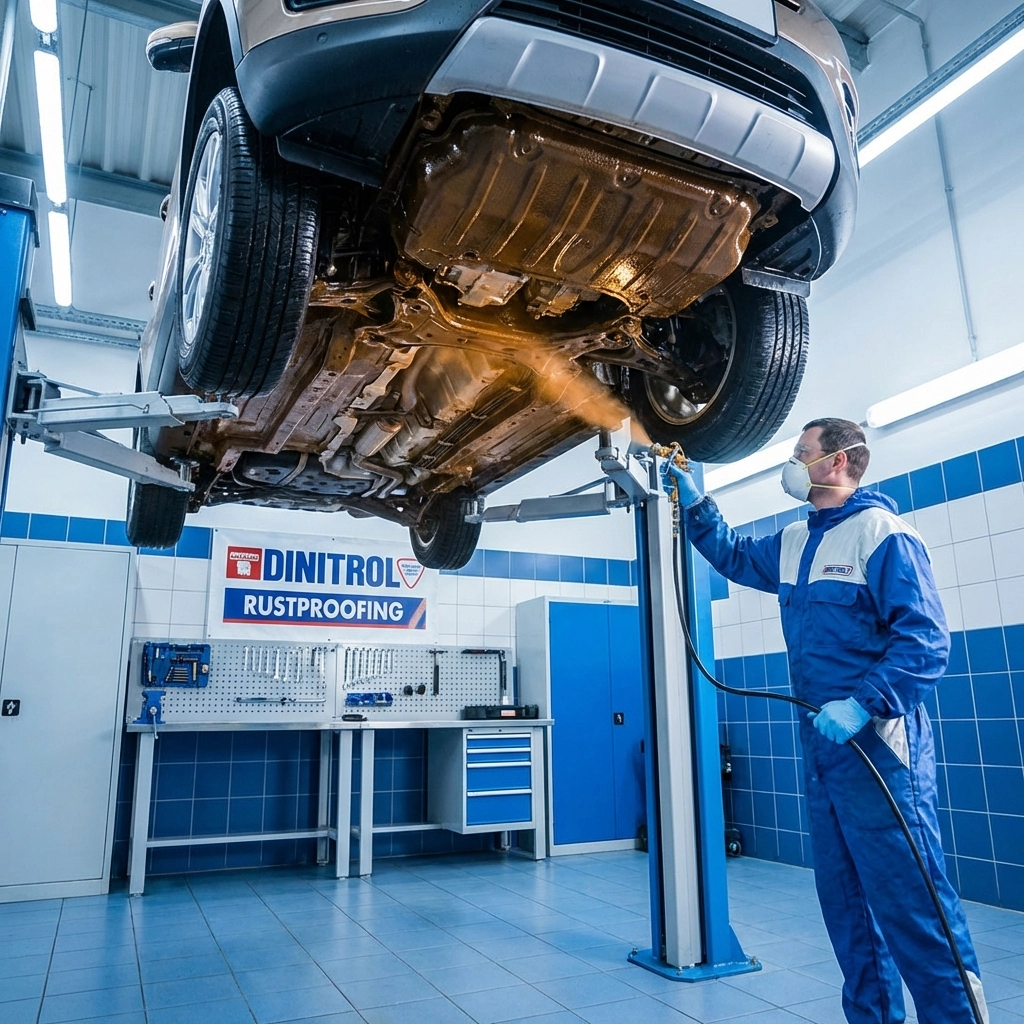
Professional rustproofing treatments using premium products like Dinitrol offer significant advantages over DIY alternatives:
Complete coverage of hidden cavities and box sections
Cavity wax protection for internal surfaces inaccessible to home enthusiasts
Guaranteed longevity backed by warranty
Expert application ensuring all vulnerable areas receive protection
Prevention: The most cost-effective approach
Whilst non-welding repairs offer viable solutions for existing rust damage, prevention remains the most cost-effective strategy for protecting your vehicle.
Regular rustproofing treatments create a barrier between your vehicle's metal components and the corrosive elements they encounter daily on UK roads. Road salt, moisture, mud, and debris all contribute to accelerated corrosion: particularly on underbody surfaces that receive constant exposure.
A comprehensive rustproofing treatment addresses not just exposed underseal areas but also the hidden cavities, box sections, and internal surfaces where moisture accumulates and rust begins unseen.
Taking the next step
If you have discovered underbody rust on your vehicle and are unsure whether non-welding repairs are appropriate, professional assessment provides clarity and peace of mind.
At Rustec, our comprehensive inspection process identifies all areas of concern: both visible and hidden: allowing you to make informed decisions about the most appropriate course of action for your vehicle.
For vehicles where rust is present but not yet structural, our premium Dinitrol treatments can halt corrosion in its tracks and provide lifetime protection against future damage. For those requiring repair work first, we can advise on the correct sequence of welding, preparation, and rustproofing to achieve the best long-term results.
Your vehicle represents a significant investment. Whether you are protecting a daily driver, preserving a classic, or maintaining a commercial fleet, understanding your options for rust repair and prevention ensures you can make the right choices for your circumstances.
Comments