
Why do cars rust so quickly in the UK?
If you've ever wondered why your car seems to develop rust faster than vehicles in other countries, you're not alone. The UK presents a perfect storm of environmental conditions that accelerate vehicle corrosion at an alarming rate. Understanding these factors is crucial for protecting your investment and maintaining your vehicle's structural integrity.
Cars rust approximately twice as fast in the UK compared to many other European countries, with some industrial areas seeing corrosion rates that would shock most vehicle owners. The combination of climate, road treatments, and environmental pollutants creates conditions where rust formation becomes virtually inevitable without proper protection.
The UK's Maritime Climate Creates Persistent Moisture
The primary culprit behind rapid rust formation in the UK is persistent moisture exposure. Surrounded by sea on all sides, Britain experiences high average humidity levels year-round with precious few periods where vehicles can dry out completely.
England alone receives approximately 133 days of precipitation annually, with Scotland and Wales experiencing significantly more rainfall. This constant exposure to water, combined with relatively mild winters that don't halt the oxidation process, means that the chemical reaction forming rust can proceed virtually year-round.
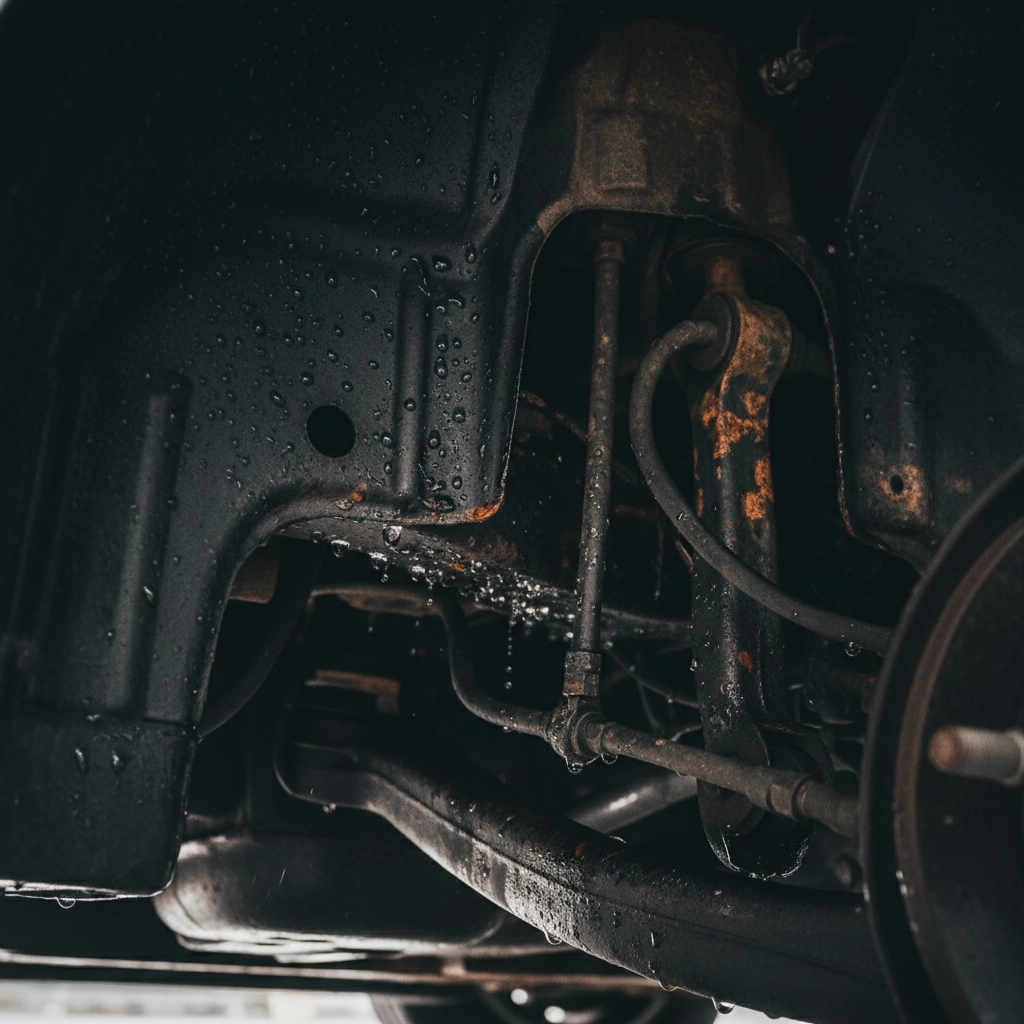
Water accumulates in vulnerable areas such as wheel wells, exhaust systems, suspension components, and frame rails under doors. When these areas aren't properly dried, rust develops rapidly. The UK's maritime climate ensures that even on "dry" days, humidity levels remain high enough to support ongoing corrosion processes.
Unlike continental climates with distinct dry seasons, British vehicles rarely experience the prolonged dry periods that would naturally halt rust formation. This consistent moisture exposure means that any small breach in protective coatings quickly becomes a gateway for extensive corrosion damage.
Winter Road Salt Accelerates Corrosion
During winter months, UK roads are treated with a highly corrosive cocktail of sodium chloride, calcium chloride, and brine solutions. The UK's proactive approach of pre-treating roads before snow or ice forms means these chemicals are often applied even when precipitation doesn't materialize.
This results in dry salt particles becoming airborne and reaching protected areas of vehicles that would normally remain untouched. The salt doesn't simply stay on road surfaces – it becomes embedded in wheel wells, suspension components, and underbody areas where it continues its corrosive work long after winter ends.

Unlike warmer climates where frequent washing can remove these contaminants, the UK's limited opportunities to properly clean vehicles during cold conditions means these corrosive substances remain in contact with vehicle metals for extended periods. The combination of salt and moisture creates an electrochemical reaction that dramatically accelerates metal degradation.
The scale of the problem is staggering: a single winter's exposure to untreated salt can cause more rust damage than several years of normal driving in salt-free conditions. This is why professional rustproofing becomes essential before your vehicle's first winter on UK roads.
Industrial Air Pollution Compounds the Problem
While coastal areas might seem most vulnerable to rust, industrial urban centres actually experience the fastest corrosion rates. Cities like Birmingham, Manchester, and industrial areas of Scotland see vehicles deteriorate at alarming speeds due to airborne pollutants.
Aberdeen, with its oil-based economy, records a corrosion rate of 2.5 picometres per year – twice the speed of other Scottish coastal cities. Industrial pollutants such as sulfur dioxide and nitrogen oxides significantly accelerate the rusting process by combining with water to form acids.
These industrial contaminants create acid rain that lowers the pH of moisture on vehicle surfaces, making it more corrosive. The combination of industrial pollution and the UK's high humidity creates an particularly aggressive environment for vehicle metals.

Even vehicles parked in seemingly clean suburban areas aren't immune – industrial pollutants can travel considerable distances and settle on vehicle surfaces, where they continue their destructive work whenever moisture is present.
Freeze-Thaw Cycles Cause Physical Damage
The UK's climate generates particularly destructive freeze-thaw cycles that physically damage vehicle protection systems. When water freezes in cracks or porous rust areas, it expands approximately 9%, exerting tremendous physical force that widens existing damage.
As temperatures rise, newly expanded cracks collect more moisture, which penetrates deeper before the next freeze. This cycle compromises protective coatings and sealants, creating entry points for accelerated corrosion.
Unlike regions with consistently cold temperatures where water stays frozen, or warm areas where it never freezes, the UK's variable winter temperatures create repeated freeze-thaw cycles that progressively worsen existing vulnerabilities.
Inadequate Drainage and Design Issues
Many UK vehicle designs and parking situations compound these environmental challenges. Vehicles parked on streets often lack proper drainage, allowing water and contaminants to pool around vulnerable areas.
Modern vehicle designs, while aerodynamically efficient, often include hidden cavities and complex underbody structures that trap moisture and debris. Without proper cavity wax treatment, these areas become rust factories that spread corrosion throughout the vehicle structure.

The drainage problem is particularly severe in urban areas where blocked drains and poor road maintenance create standing water that vehicles must navigate daily. This contaminated water carries salt, grit, and industrial pollutants directly onto vehicle undersides.
Why Factory Protection Isn't Enough
Manufacturers design vehicles for global markets, not specifically for UK conditions. Factory rust protection typically consists of basic primer coats and minimal underbody treatments that simply cannot withstand the aggressive UK environment.
Most new cars sold in the UK require additional protection within the first year to prevent significant rust damage. Factory warranties specifically exclude corrosion damage caused by environmental factors – precisely the conditions that UK vehicles face daily.
The reality is that factory protection is designed to get vehicles through warranty periods, not to provide lifetime protection against the UK's uniquely corrosive environment. Without additional professional treatment, even premium vehicles begin showing rust within 2-3 years.
The True Cost of UK Rust Damage
Rust doesn't just affect appearance – it compromises structural integrity and vehicle safety. MOT failures due to corrosion are increasingly common, with repair costs often exceeding the vehicle's value. Vehicles that develop significant underbody rust become essentially worthless, regardless of mechanical condition.
The average cost of rust-related MOT failures ranges from £500 to £3,000, with many vehicles being declared beyond economical repair. Compare this to the cost of professional rustproofing, which provides decades of protection for a fraction of repair costs.
Professional rustproofing isn't an expense – it's an investment that preserves vehicle value, ensures safety, and eliminates the stress of unexpected MOT failures. The question isn't whether your vehicle will rust in UK conditions, but how quickly and how severely.
Protect Your Vehicle Today
Don't wait for rust to appear before taking action. Once corrosion begins, it's far more expensive to treat and impossible to completely reverse. Professional rustproofing provides comprehensive protection against all the environmental factors that make UK roads so destructive to vehicles.
At Rustec, we understand exactly why UK conditions are so challenging for vehicles. Our lifetime rustproofing treatments use premium Dinitrol and Lanoguard products specifically chosen for their proven performance in harsh UK environments. We don't just apply products – we provide complete underbody protection systems designed to withstand everything from road salt to industrial pollution.
Ready to protect your investment? Our expert technicians provide thorough inspection and application services that ensure your vehicle stays rust-free regardless of UK conditions. With our comprehensive treatment packages and lifetime aftercare, you'll never worry about rust damage again.
Book your professional rustproofing consultation today and discover why thousands of UK vehicle owners trust Rustec to protect their investments. Don't let another winter pass without proper protection – your vehicle's future depends on the action you take now.
Comments