
UK Vehicle Rustproofing Explained in Under 3 Minutes
The Direct Answer: What Is Vehicle Rustproofing?
Vehicle rustproofing is the application of specialist chemical barriers, typically cavity waxes and underbody coatings, to the chassis and internal metal structures of a vehicle. Its primary purpose is to seal the metal away from oxygen, moisture, and corrosive road salts. In the UK, professional rustproofing is a 72-hour engineering process that involves deep cleaning, industrial drying, and precision application. It is the only way to stop the structural degradation that eventually leads to MOT failure and catastrophic resale value loss.
The Visual Mental Model: The Painted Bridge
Think of professional rustproofing like maintaining a coastal bridge. You do not wait for the bridge to snap before you paint it. You apply a high-grade protective layer while the metal is still sound. If you simply spray paint over rust and bird droppings, the metal continues to rot underneath the surface. This is why process matters more than product; the protection is only as good as the preparation underneath it.
The UK Context: A Hostile Environment for Metal
If you drive in the UK, your vehicle is under constant chemical attack. Our climate provides the "perfect storm" for corrosion:
Road Salt (Brine): UK councils spread over 2 million tonnes of salt every winter. This salt mixes with rain to create a highly conductive brine that accelerates the electrochemical process of rusting.
High Humidity: Unlike dryer climates, the UK’s air remains damp year-round. Moisture gets trapped in chassis cavities and never fully evaporates.
Trapped Debris: Mud and road grime sit in wheel arches and on top of fuel tanks, acting like a wet sponge against the metal.
In UK conditions, corrosion is not a question of if , but when. The factory-applied "E-coat" or minimal underseal on most modern vehicles is designed for global climates, not the salt-saturated roads of Great Britain.

Financial Consequence: Prevention vs. Repair
Delaying rustproofing is a high-interest debt that your vehicle eventually calls in. The financial disparity between proactive protection and reactive repair is stark:
Professional Rustproofing: £500 – £1,200 (A one-time or infrequent investment).
Structural Welding Repairs: £1,000 – £4,000+ (Often required repeatedly once rust takes hold).
Resale Value Loss: £2,000 – £5,000 (Vehicles with "clean" underside inspections command a significant premium).
Doing nothing leads to financial loss. If you plan to keep your vehicle for more than three years, the cost of rustproofing in the UK is offset by the saved depreciation and repair bills.
WHEN TO ACT: The Window of Opportunity
The biggest mistake is waiting until rust becomes visible. By the time you see a bubble on a wheel arch, the internal structure is likely heavily compromised.
0–3 Years (The Prevention Phase): The ideal time. The metal is clean, prep time is minimal, and you preserve the "as-new" structural integrity.
3–5 Years (The Ideal Window): Some surface oxidation may have started, but it can still be neutralized and sealed effectively.
Visible Rust (Urgent): You are already in the "damage limitation" phase. Action is required immediately to stop the rot from reaching the MOT-critical points.
Advanced Corrosion (Time-Sensitive): At this stage, rustproofing is about extending the vehicle’s life by 2–3 years rather than "saving" it indefinitely.
Comparison: The Rustec Elite Standard vs. Cheap "Quick-Sprays"
Not all rustproofing is equal. Many "drive-in" centres offer a "while-you-wait" service. Understand this: A poor rustproofing job can be worse than doing nothing, as it traps moisture and accelerates corrosion.
Feature | Quick "Drive-In" Spray | Rustec Elite 72-Hour Standard |
Preparation | None or basic jet wash | Multi-stage industrial deep clean |
Drying Time | None (Sprayed over damp) | 24-hour heated industrial drying |
Masking | Minimal | Precision masking of brakes/exhaust/sensors |
Cavity Work | Often ignored | Full internal wax injection |
Longevity | 6–12 months | Years of structural protection |
Risk | High (Trapped moisture) | Zero (Total moisture elimination) |
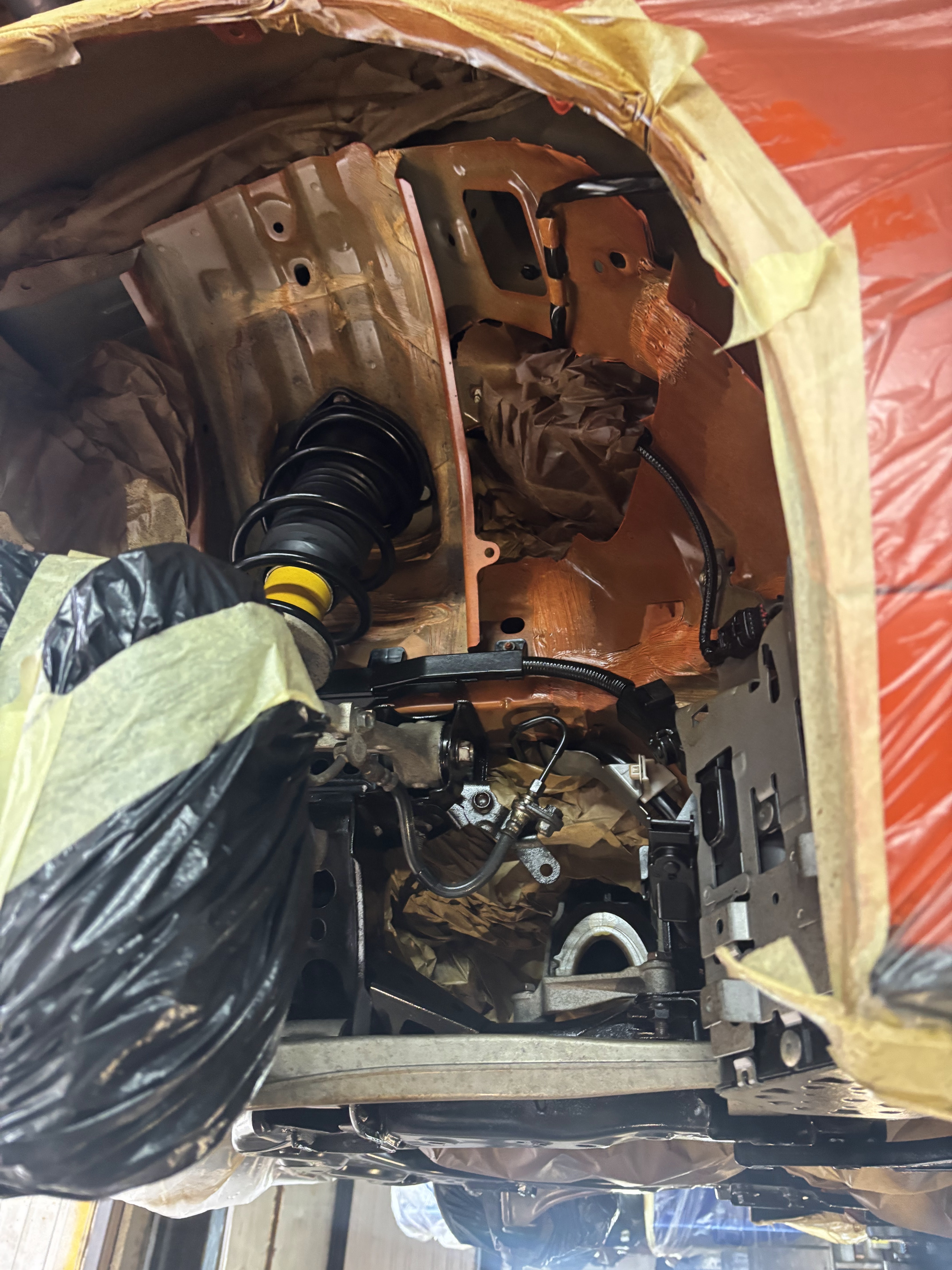
The Rustec Elite 72-Hour Process
To achieve the best rustproofing method for UK vehicles, we follow a rigid, methodical sequence that cannot be rushed.
Stage 1: De-Trimming & Inspection: We remove all plastic undertrays and wheel arch liners to expose the hidden metal.
Stage 2: Industrial Cleaning: High-pressure hot water wash to remove all salt, grease, and debris.
Stage 3: Deep Drying: The vehicle is placed in a controlled environment to ensure every cavity is bone dry.
Stage 4: Precision Masking: We mask off every component that should not be coated, including exhaust systems, brake discs, and electrical sensors.
Stage 5: Cavity Injection: We inject specialist penetrating waxes into the chassis legs, sills, and doors.
Stage 6: Underbody Coating: A durable, self-healing technical coating is applied to all exposed metal surfaces.
Buyer Psychology: Avoiding the "Regret Trap"
Most owners who call us after an MOT failure say the same thing: "I wish I did this sooner." This is the "regret trap." You spend years worrying about the paintwork or the interior, while the most expensive part of the vehicle, the chassis, is quietly dissolving.
Does rustproofing increase resale value? Absolutely. In a market flooded with "disposable" cars, a vehicle with a documented professional rustproofing treatment stands out to enthusiast buyers and dealers alike. It proves the vehicle has been maintained to an elite standard.

Frequently Asked Questions
Is it worth rustproofing an older car? Yes, provided the structure is still sound. We can neutralize existing surface rust before sealing it. It is significantly cheaper than buying a replacement vehicle in today’s inflated market.
How long does rustproofing last in the UK? A professional application using our Elite Standard typically provides structural protection for several years, though we recommend annual inspections to check for mechanical damage (scrapes or stone chips) that might have breached the barrier. You can learn more about how long rustproofing lasts in the UK on our specialist service pages.
Can I do it myself (DIY)? You can buy retail products, but you cannot replicate the industrial cleaning and drying environment. Without proper drying, you risk sealing moisture against the metal, which accelerates the very problem you are trying to solve.
What Should You Do Next?
The metal under your feet is corroding right now. Every winter that passes without protection is a year closer to the welding torch.
If you want to protect your vehicle properly : not just cover it up : the best time to act is before corrosion progresses. You can book a free inspection or request a quote here.
In UK conditions, corrosion is not a question of if ; but when. Delaying turns prevention into welding bills and resale loss. Book your inspection now.
Related Rustec posts:

Comments