
Protecting Your Investment: Why Chassis Preservation is Key to Resale Value
Direct Answer: Does Chassis Protection Increase Resale Value?
Yes. Professional chassis preservation helps protect resale value by reducing the risk of visible and structural corrosion underneath the vehicle. In the UK used market, underbody rust can reduce value by £2,000 to £5,000 on late-model SUVs, 4x4s, and vans.
Doing nothing leads to financial loss. The biggest mistake is waiting until rust becomes visible.
In UK conditions, corrosion is not a question of if — but when. Without intervention, damp weather, road salt, and trapped moisture drive hidden inside-out corrosion long before most owners notice it.
The Financial Consequence: The £5,000 Hidden Cost
Most vehicle owners focus on paintwork and interior condition when considering resale value. However, savvy buyers and professional traders look straight at the chassis. A vehicle that looks immaculate on top but shows advanced scaling or "structural" rust underneath is often flagged as a high-risk purchase or an outright MOT failure.
If you ignore underbody protection, you face two distinct financial hits:
Direct Repair Costs: Once rust becomes structural, welding and component replacement can cost £1,000 to £4,000.
Resale Devaluation: Even if the vehicle still passes an MOT, visible corrosion signals poor maintenance and gives buyers leverage to cut thousands from your asking price.
Doing nothing leads to financial loss.
Acting early transforms these potential losses into a controlled preventative spend. The hidden cost of ignoring vehicle rust is far higher than the price of a professional treatment.
Visual Mental Model: The Automotive Termite
To understand why chassis protection is asset management rather than just "maintenance," think of rust like termites in a timber-framed house.
You can paint the exterior walls, polish the windows, and keep the garden tidy, but if termites are eating the structural beams behind the plasterboard, the house is slowly losing its structural integrity and its market value. By the time you see a hole in the floorboard, the damage is already extensive.
Rust behaves exactly the same way. It starts in the box sections and cavities where you can't see it. By the time it appears on the outer sills or wheel arches, the "automotive termites" have already compromised the foundation of your vehicle.

The UK Context: A Hostile Environment for Steel
The UK has one of the most corrosive environments in Europe for vehicles. High humidity, steady rainfall, and winter road salt create ideal conditions for steel corrosion.
When salt mixes with water, it forms an electrolyte that speeds up rust on exposed or poorly protected metal. For many modern vehicles, factory protection is limited and easily chipped by road debris.
That is why many owners ask if factory rust protection is enough. In most cases, it is not enough for long-term UK use.
WHEN TO ACT
The biggest mistake is waiting until rust becomes visible. Once corrosion is visible on the outside, it is usually more advanced inside seams, cavities, and box sections.
0–3 Years
This is the earliest and cleanest protection window. Treat the vehicle here to preserve fresh metal before road salt, moisture, and debris start the corrosion cycle.
3–5 Years
This is the ideal window for most UK vehicles. Underbody rust is common in the first 3 years, and this stage is where prevention still makes financial sense before corrosion becomes established.
5–8 Years
At this point, hidden corrosion is often already active. Treatment still matters, but preparation becomes more involved and the risk of repair costs rises sharply.
8+ Years
This is a salvage-and-slow-down stage, not an optimal starting point. You are no longer just protecting value; you are trying to contain an existing structural problem.
Waiting for an MOT tester to mention corrosion is waiting too long. By then, resale value has already dropped and repair costs can escalate fast.
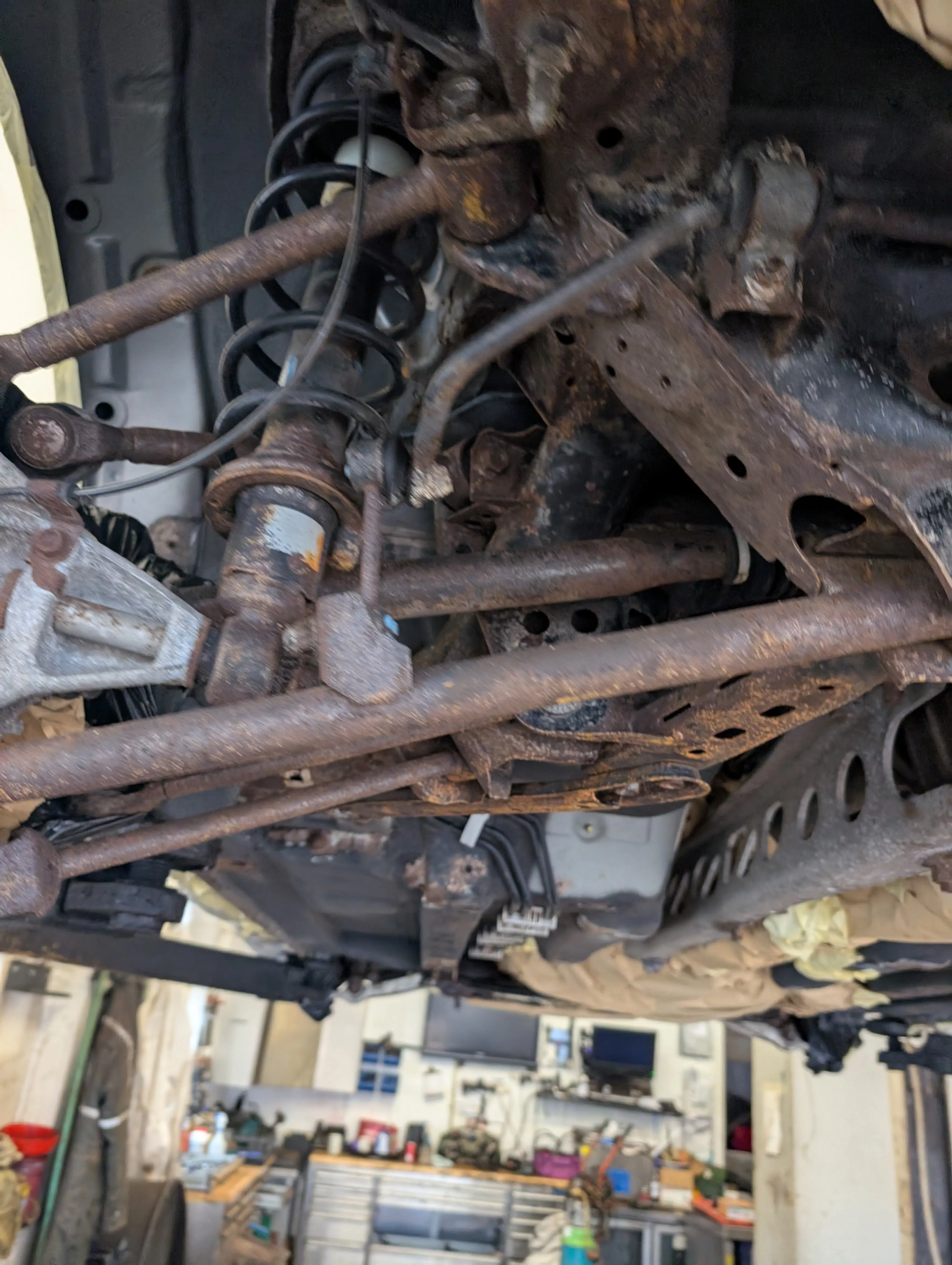
The Trap: Why a "Cheap" Underseal Can Destroy Value
It is tempting to look for the quickest, cheapest "black spray" service available. However, in the world of chassis preservation, you get exactly what you pay for.
A poor rustproofing job can be worse than doing nothing, as it traps moisture and accelerates corrosion.
If a service provider offers to "underseal" your car in a few hours for a couple of hundred pounds, they are likely spraying a thick, bitumen-based coating over existing dirt, moisture, and road salt. This creates a "seal" that looks good from a distance but allows rust to fester underneath in a high-moisture environment. This is often referred to as "the black death" in the trade, as it hides structural failure until the vehicle literally fails an MOT or a component snaps.
The Rustec Elite Standard: A 72-Hour Process
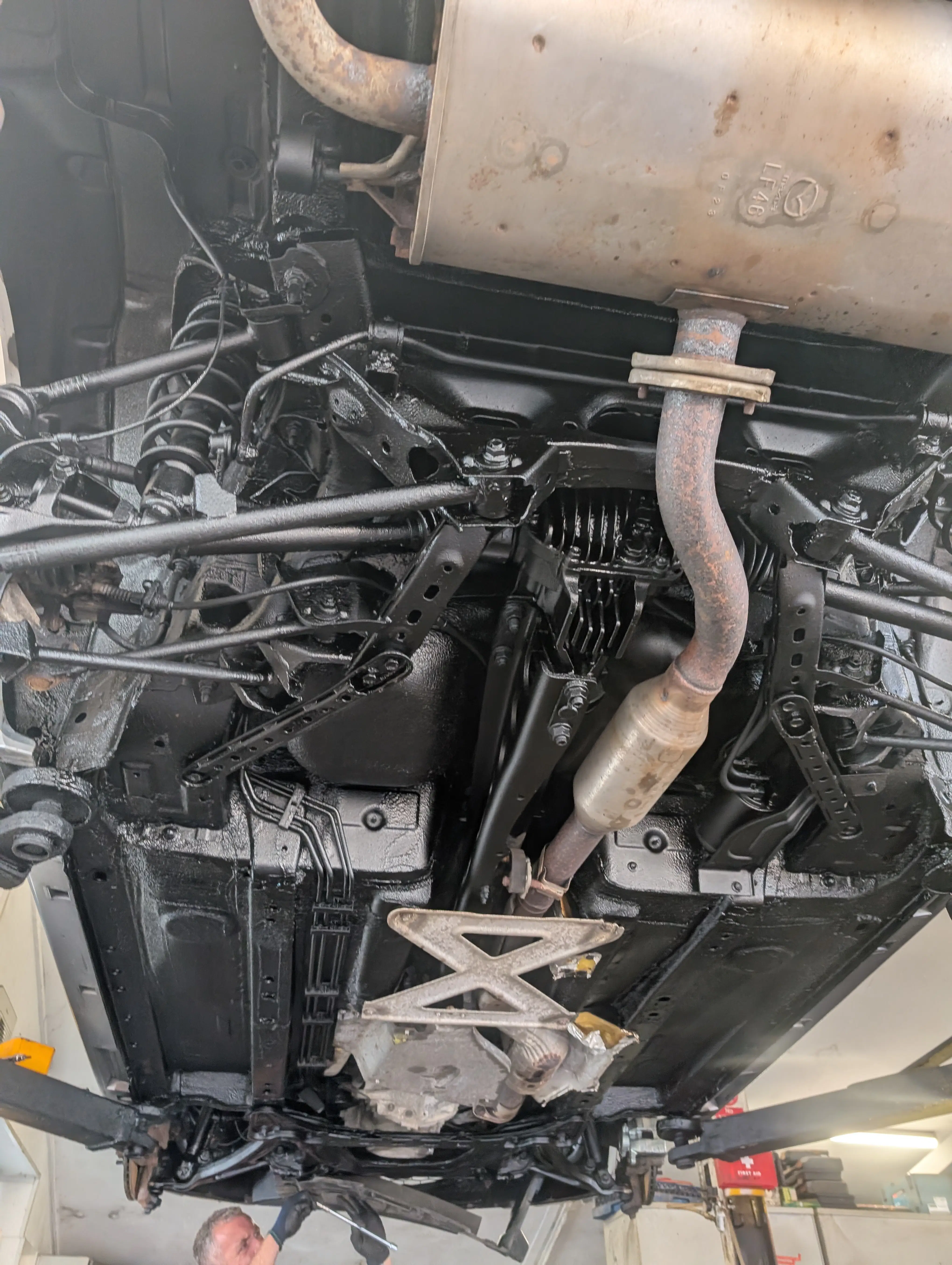
At Rustec, we do not perform quick sprays. We follow a meticulous, multi-day protocol designed to ensure the treatment lasts and actually protects the steel.
Deep Cleaning & De-greasing: We remove road grime, salt, and loose debris using high-pressure cleaning and specialist products.
Extended Drying Phase: We dry cavities and box sections thoroughly. Spraying over moisture is one of the main reasons cheap jobs fail.
Meticulous Masking: We mask brakes, exhaust components, sensors, and bodywork properly. Clean application standards matter.
Cavity Wax Injection: We treat the inside first. Specialised wands inject wax into sills, doors, and chassis rails.
External Underbody Coating: We apply professional-grade black Dinitrol coatings that remain flexible and are designed for long-term protection.
This 72-hour standard is why Rustec is positioned as the elite choice for vehicle preservation in the UK.
Buyer Psychology: Regret Minimisation
When you come to sell your vehicle, the presence of a Rustec treatment certificate serves as a strong psychological trigger for the buyer. It shows that the owner acted early, maintained the vehicle properly, and protected the asset instead of ignoring it.
Buyers fear unknown costs. A rusty chassis suggests future welding, MOT advisories, and expensive repairs. A professionally protected chassis reduces that fear and supports stronger resale confidence.
Frequently Asked Questions
1. Does rustproofing affect my vehicle's warranty?
Generally, no. Professional rustproofing is considered preventative maintenance. However, we always recommend checking your specific manufacturer's terms. Most owners find that the benefits of preventing real-world corrosion far outweigh any hypothetical warranty concerns, especially as manufacturers rarely cover "perforation" unless it originates from a manufacturing defect.
2. How long does a professional treatment last?
A Rustec Elite Standard treatment typically provides robust protection for 3 to 5 years before a minor top-up or inspection is required, depending on your mileage and usage (e.g., off-roading or coastal driving).
3. Can you rustproof a car that already has surface rust?
Yes, but the preparation process is more intensive. We must mechanically remove loose scale and treat the area with high-quality rust converters before the final protective layers are applied.
4. Is it worth rustproofing a leased car?
If you plan to hand the car back at the end of a 3-year term, you might think it isn't your problem. However, many lease agreements have strict "fair wear and tear" policies. Excessive corrosion can lead to hefty reconditioning charges upon return. If you intend to purchase the vehicle at the end of the lease (PCP), rustproofing is essential.
If you want to protect your vehicle properly — not just cover it up — the best time to act is before corrosion progresses. You can book a free inspection or request a quote here.
In UK conditions, corrosion is not a question of if — but when. Delaying protection leads to structural failure and £4,000+ repair bills. Book your inspection now.
Comments