
Is Your Modern SUV A Ticking Time Bomb? The Truth About Underbody Maintenance
The Direct Answer: Is Your SUV At Risk?
Yes. Modern SUVs are structurally vulnerable because manufacturers prioritise weight reduction and production costs over long-term underbody durability. Most owners assume their vehicle's "tough" exterior reflects its chassis strength. The reality is that brand-new SUVs often leave the factory with negligible protection on subframes, suspension mounts, and inner cavity sections. In the UK, road salt and moisture turn these unprotected areas into sites for rapid, hidden oxidation. Without a professional rust proofing car treatment, your SUV is on a countdown to structural failure and massive resale value loss.
The Visual Mental Model: The Premium Boot Analogy
Think of your modern SUV as a high-end, premium leather hiking boot. From the side, it looks invincible, waterproof, stylish, and built for the elements. However, the manufacturer has fitted it with a cardboard sole. You can walk across a dry showroom floor and it looks perfect, but the moment you step into the wet, salted slush of a UK winter, the foundation begins to dissolve. You cannot see the damage while wearing the boot, but eventually, the sole will separate entirely. A professional underbody treatment is the only way to replace that "cardboard" with a permanent, resilient barrier.
Ownership Identity: The Long-Term Protector
Elite vehicle owners understand that a car is an asset that requires structural preservation. While average owners focus on ceramic coatings and interior detailing, the informed owner looks beneath the surface. You didn’t buy an SUV to scrap it in seven years due to a rotten subframe. You bought it for reliability and utility. Protecting the chassis early is the hallmark of an owner who understands that preserving a vehicle's skeleton is the only way to avoid expensive surprises later.

The UK-Specific Context: Inevitability vs. Possibility
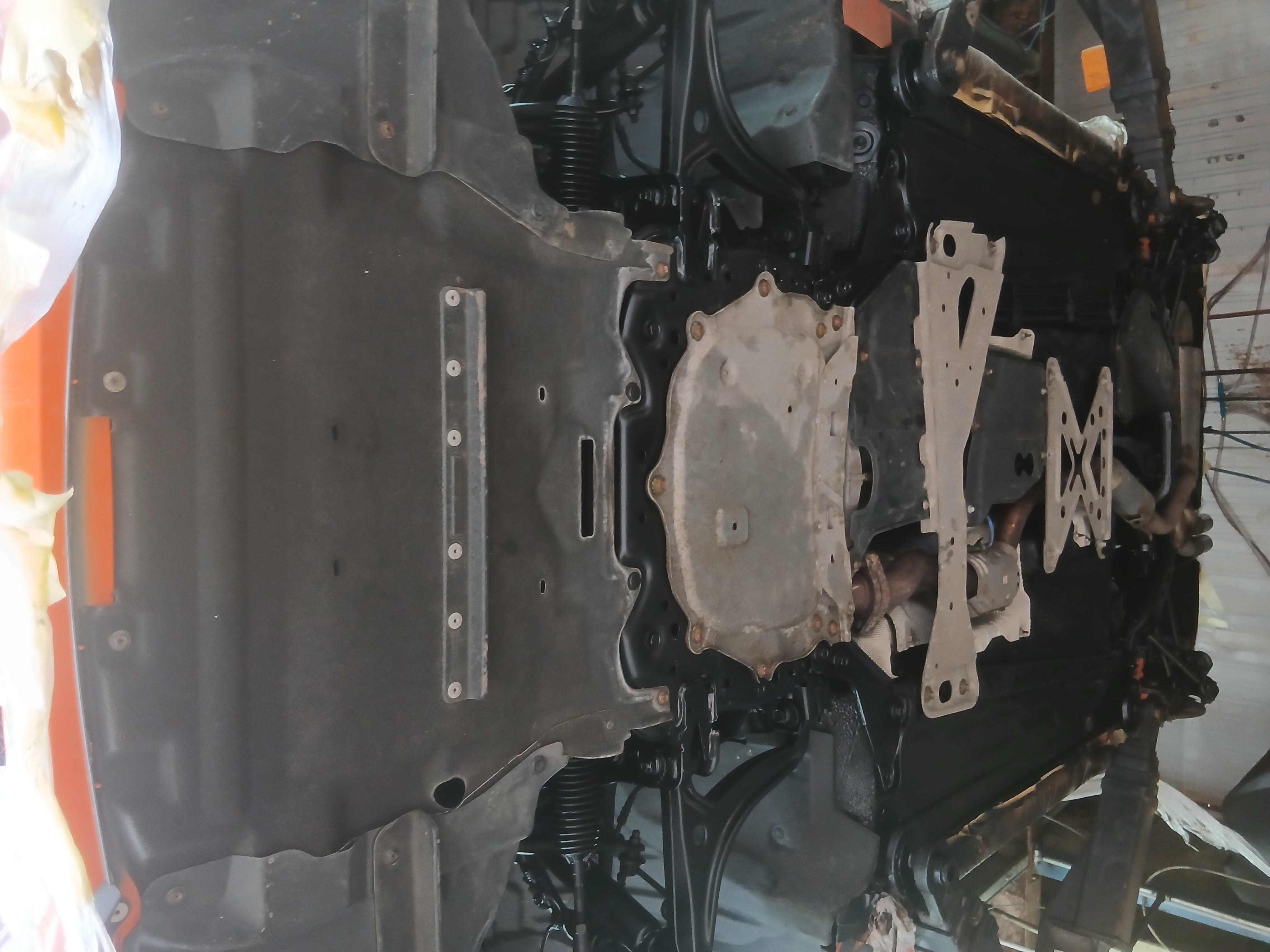
The UK climate is uniquely hostile to automotive steel. Our high humidity combined with aggressive winter salting creates a constant electrolytic reaction on your vehicle's undercarriage. In UK conditions, corrosion is not a possibility , it is an inevitability without proper protection. Plastic undertrays, found on almost every modern SUV like the Nissan X-Trail or Land Rover Discovery, actually accelerate the problem. They trap salt-laden moisture against the metal, creating a "micro-greenhouse" for rust. The biggest mistake is waiting until rust becomes visible on the bodywork; by then, the structural components are already compromised.
Financial Consequence: The Real Cost of Delay
Waiting for an MOT advisor to mention "corrosion" is a strategy that leads to financial ruin. Consider the following UK price ranges for prevention versus repair:
Professional Rustproofing: £500 – £1,200 (One-time investment for long-term protection).
Subframe Replacement/Welding: £1,000 – £4,000+ (Common on 7-10 year old SUVs).
Resale Value Loss: £2,000 – £5,000 (Buyers and dealers will walk away from a "scabby" underbody).
Doing nothing leads to financial loss. A small investment today prevents a catastrophic bill tomorrow. Furthermore, can rust cause MOT failure? Absolutely. Once corrosion is deemed "structural" or within 30cm of a mounting point, your vehicle is legally unroadworthy. can rust cause MOT failure is a question often asked too late by owners who ignored the early signs.
WHEN TO ACT: The Window of Opportunity
0–3 Years (Prevention): The gold standard. Treating a vehicle in this window is the best rustproofing method for UK vehicles because you are sealing in "factory fresh" metal.
3–5 Years (Ideal): Most SUVs will have surface bloom. This must be treated before it penetrates the grain of the steel.
5+ Years (Urgent): If you haven't treated your SUV yet, it is already corroding. You are now in the damage limitation phase.
Visible Rust (Critical): If you can see rust on the sills or arches, the internal box sections are likely significantly worse.
Comparison: Rustec vs. Quick-Service Alternatives
Most "while-you-wait" services are a waste of money. They focus on speed and appearance, often spraying over dirt or moisture. A poor rustproofing job can be worse than doing nothing, as it traps moisture and accelerates corrosion.
Feature | Cheap "Flash" Service | Rustec Elite 72-Hour Standard |
Duration | 4–6 Hours | 72 Hours (Minimum) |
Preparation | Surface pressure wash | Deep clean, heater-dried, degreased |
Masking | Minimal | Full masking of brakes, engine, exhaust |
Cavities | Ignored or superficial | Deep-reach internal wax injection |
Materials | Bitumen or thin oil | Professional-grade Dinitrol/Wax systems |

The Rustec Process: The Elite 72-Hour Standard
We do not "spray and pray." Our process is methodical and exhaustive because process matters more than product.
Preparation & Cleaning: We remove all plastic undertrays and arch liners. The underbody is power-washed and decontaminated.
Extended Drying: The vehicle remains in our workshop under industrial heaters. Applying protection to damp metal is a recipe for failure.
Precision Masking: We mask the entire bodywork, brakes, engine bay, and exhaust system. This ensures a clean, professional finish.
Cavity Wax Injection: Using specialised wands, we inject high-penetration wax into chassis rails, sills, and pillars. This stops rust from the inside out.
Underbody Coating: A durable, high-build protective layer is applied to all exposed metal surfaces, creating an airtight, salt-proof seal.
Buyer Psychology: Minimising Future Regret
The most common phrase we hear from new customers is: "I wish I did this three years ago." Don't be the owner who discovers a £2,500 repair bill during a routine service. Modern SUVs are expensive assets; leaving their most vulnerable part exposed to the UK climate is a gamble where the house always wins. By acting now, you are securing your vehicle's future and ensuring you never have to deal with the frustration of a "rotten" car. You are buying peace of mind for the cost of rustproofing in the UK, which is a fraction of the cost of repair.
FAQ
How long does rustproofing last in the UK? A professional treatment typically provides robust protection for 3–5 years, depending on mileage and usage. However, how long rustproofing lasts in the UK depends entirely on the initial preparation quality.
Is it worth it for a car on finance? Yes. You are responsible for the vehicle's condition at the end of the term. Excessive corrosion can lead to huge "fair wear and tear" penalties.
Can you treat a car that already has some rust? Yes, provided the steel is structurally sound. We use rust converters to stabilise the surface before sealing it. However, early action is always superior to reactive treatment.

Related Rustec posts
Rust doesn’t wait until it becomes visible. By the time most owners notice a problem, the damage underneath has already started costing them money. Waiting feels cheaper in the short term , but it nearly always becomes more expensive later.
👉 Book your inspection now and protect your vehicle before corrosion takes hold. If you're unsure of your vehicle's underbody condition and can't make it for a free inspection, please email photos of your undercarriage to info@rustec.co.uk and one of our technicians will guide you.
Comments