
Do new cars really need rustproofing?
Meta Title: Do New Cars Need Rustproofing? | Why Factory Protection Fails in the UK Meta Description: Wondering if your new car needs extra rust protection? Discover why factory underseal often isn't enough for UK road salt and how professional rustproofing preserves your investment. URL Slug: /do-new-cars-need-rustproofing
Yes, new cars absolutely benefit from professional rustproofing, particularly in the UK. While modern vehicles are manufactured with better corrosion resistance than those of thirty years ago, factory protection is often minimal and designed to meet global standards rather than the specific, harsh challenges of British winters. Road salt, high humidity, and trapped debris can begin compromising a new vehicle’s chassis within its first year on the road.
In this guide, we will explore why factory protection often falls short, how the UK climate accelerates vehicle decay, and why treating a car while it is still "fresh" is the most cost-effective way to ensure its longevity and resale value.
The Short Answer: Why "New" Doesn't Mean "Protected"
The common misconception is that a brand-new vehicle is a fortress against the elements. While manufacturers do use galvanized steel and e-coat primers, these are primarily designed to prevent the body panels from showing visible rust during the standard warranty period.
However, the undercarriage, the area most exposed to road salt and moisture, is frequently left with large areas of bare or thinly painted metal. For a vehicle living in the UK, where road gritting is a standard winter practice, this "factory-fresh" state is a ticking clock. Professional rustproofing at the start of a vehicle's life creates a sacrificial barrier that keeps the structural chassis in showroom condition for decades, rather than just years.
The Reality of Factory Rust Protection
It is often assumed that if rustproofing were necessary, the manufacturer would have done it properly at the factory. To understand why they don't, you have to look at mass production and global markets.
1. Global Manufacturing Standards
Cars are built to be sold globally. A car destined for the dry, arid climate of Arizona is built to the same basic specification as one destined for the damp, salty coast of Cornwall. Manufacturers cannot justify the high cost of a comprehensive, "UK-spec" underbody treatment on every vehicle when a large percentage of their fleet will never see a snowflake or a grain of road salt.
2. Cost and Weight Savings
In the highly competitive automotive industry, every penny and every gram counts. Applying a thick, high-quality bitumen or wax-based underseal to every car adds significant material cost and increases the vehicle's weight, which negatively impacts fuel economy and emissions ratings. Consequently, factory protection is usually limited to "high-impact" areas, leaving box sections, sills, and many chassis components vulnerable.
3. The Robotic Application Gap
Most factory underseal is applied by robots on a fast-moving assembly line. These robots often miss complex geometries, internal cavities, and the "shadow" areas behind suspension components. This leaves small "holidays" or gaps in the coating where moisture can settle.
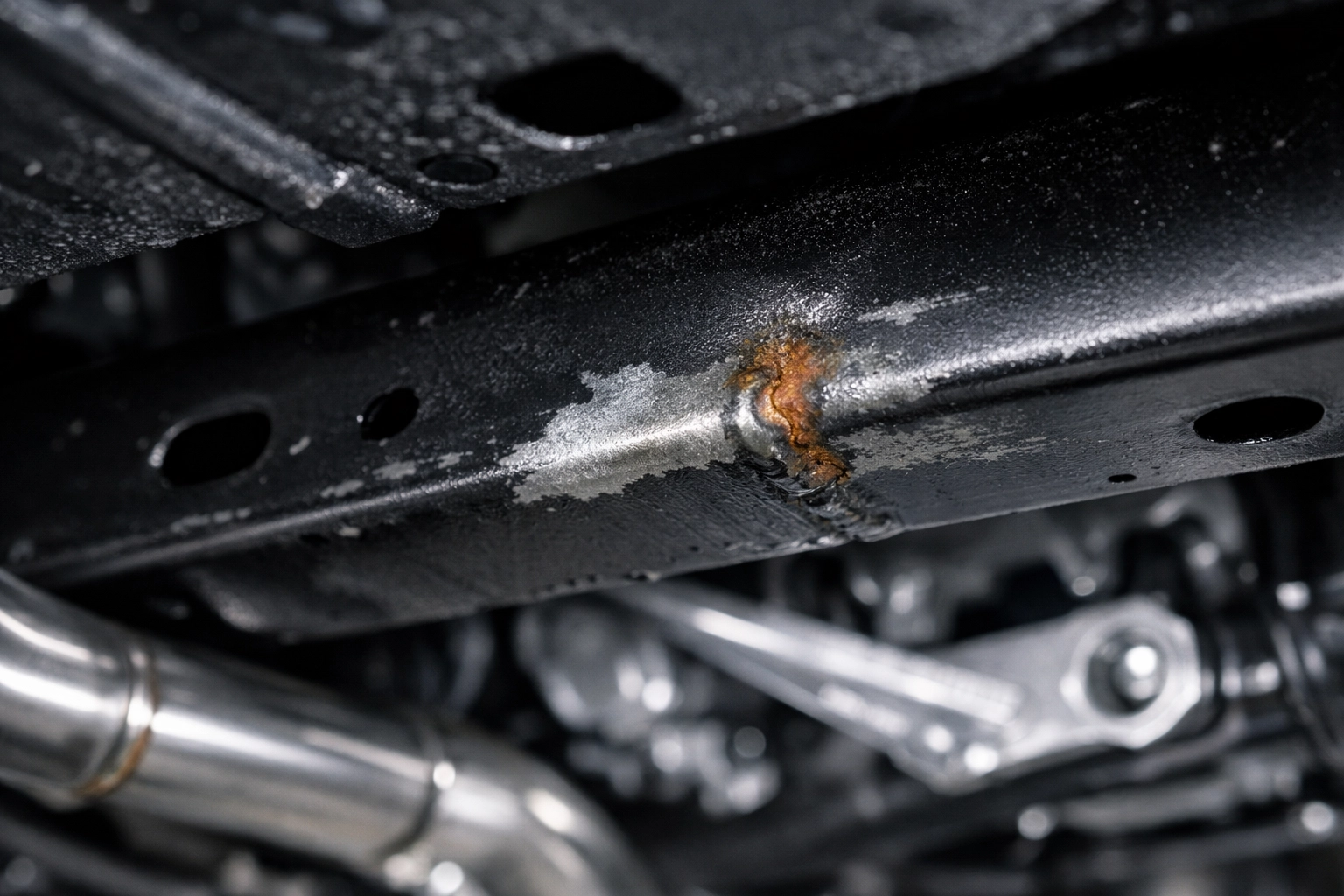
Caption: A close-up of a new vehicle chassis showing areas of exposed metal and minimal factory coating.
Why UK Roads are Specifically Dangerous for New Cars
The UK environment is one of the most aggressive in the world for automotive corrosion. There are three primary factors that make additional protection a necessity for UK owners:
Road Salt (Sodium Chloride): Between October and April, UK councils spread over 2 million tonnes of salt on the roads. Salt is hygroscopic, meaning it attracts moisture and holds it against the metal, significantly accelerating the chemical reaction that creates iron oxide (rust).
High Humidity: Unlike colder, drier climates (like Scandinavia or Canada), the UK remains damp and humid throughout the winter. This prevents the undercarriage from ever fully drying out, providing a constant breeding ground for corrosion.
Trapped Debris: UK roads are often narrow and prone to mud and leaf litter. This debris collects in wheel arches and on top of chassis rails, creating a "sponge" that holds salty water against the metal even during dry spells.
If you are concerned about how these factors are already affecting your vehicle, you may want to read our guide on how to tell if your car has rust underneath.
The Hidden Danger: Cavities and Box Sections
Visible surface rust is one thing, but the real danger to a new car’s structural integrity is "inside-out" corrosion. Modern vehicle frames are full of hollow box sections, pillars, and sills designed for crash safety and rigidity.
Moisture and condensation find their way into these cavities with ease, but they have very little ventilation to dry out. A professional treatment doesn't just cover the outside; it involves injecting specialized cavity waxes (like Dinitrol ML) into these hidden areas. Without this, your vehicle could be rotting from the inside where you can't see it, even if the exterior paint looks perfect.
Does Rustproofing Void Your New Car Warranty?
This is the most common question we receive from new car owners. The short answer is: No, but with a caveat.
Under UK law (specifically the Block Exemption regulations), a manufacturer cannot void your entire vehicle warranty simply because you had it professionally rustproofed. However, if a specific part fails because of the rustproofing (for example, if a drain hole was blocked by an amateur application), that specific repair might not be covered.
This is why professional application is vital. At Rustec, we meticulously mask off sensitive components like brake discs, sensors, and exhaust systems to ensure the vehicle remains fully compliant with manufacturer standards. We provide an Official Treatment Service Booklet and photo documentation to prove the work was carried out to the highest professional standard.
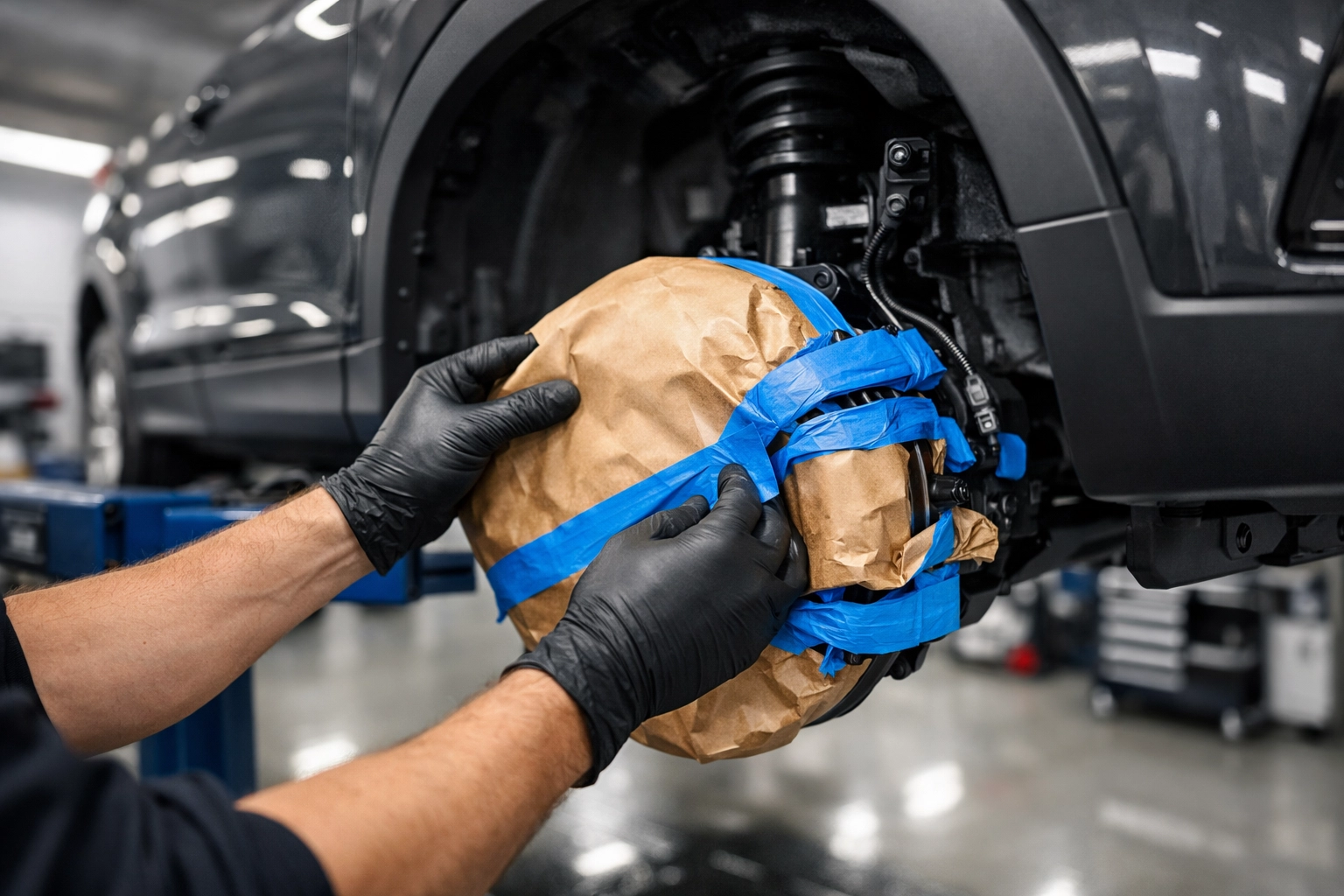
Caption: The Rustec team meticulously masking a vehicle to protect sensitive components before treatment.
The Financial Argument: Resale Value vs. Initial Cost
For many owners, a new car is a major investment. Rustproofing should be viewed as an insurance policy for that investment.
When it comes time to sell or trade in your vehicle, a "clean" undercarriage is a massive selling point. In the 4x4, van, and classic car markets specifically, a documented professional rustproofing treatment can add thousands to the resale value. Buyers are becoming increasingly "rust-aware," and a vehicle that has been protected by Rustec since its first year of ownership stands head and shoulders above the competition.
If you are weighing up the investment, it helps to understand how much professional rustproofing costs in the UK compared to the potential loss in resale value from structural corrosion.
The Rustec Difference: Our New Vehicle Process
We don't just "spray over" a new car. Our process for new vehicles is designed to be cleaner and more precise than any other service available:
Comprehensive Inspection: Even new cars can have transport damage or early signs of surface "bloom." We inspect the entire underbody before we begin.
Full Undercarriage Steam Clean: We remove all road film and factory residues to ensure a perfect bond.
Precision Masking: We mask all mechanical, electrical, and exhaust components.
Cavity Injection: Using high-pressure lances, we flood the internal box sections with Dinitrol ML.
Chassis Coating: We apply a durable, flexible underbody wax that remains self-healing and won't crack or peel.
Rustec Guarantee: Every vehicle leaves with a digital photo pack and our signature guarantee of quality.
Summary: The Best Time to Rustproof is Now
The "Golden Window" for rustproofing is when a vehicle is under 12 months old. At this stage, the metal is clean, the chassis is free of deep-seated contaminants, and the protective barrier will be 100% effective.
While you can certainly rustproof a car that already has rust, the preparation is more intensive and the results, while excellent, will never be as perfect as a vehicle treated from new.
Final Takeaway
Rustproofing is not just for old Land Rovers or classic minis. If you have purchased a new car, van, or motorhome and you intend to keep it for more than three years in the UK, additional protection is an essential maintenance step. It preserves the structural integrity, ensures future MOT passes, and maintains the maximum possible resale value.
Ready to protect your new investment? Rustec offers specialist treatment packages for all vehicle types at our professional workshops. Whether you are in Swindon, Newport, or Leeds, our team is here to help keep your vehicle rust-free for a lifetime.
[Enquire by filling out the quick quote box below]
Related Questions / FAQ
Is rust still a problem on modern vehicles? Yes. While body panels are better protected, the suspension components, subframes, and brake lines on modern cars are still made of steel that will corrode quickly when exposed to UK road salt.
What is the best rustproofing method for UK roads? For most modern vehicles, a wax-based system like Dinitrol is superior to traditional bitumen underseals because it remains flexible, self-heals, and does not trap moisture against the metal. You can read our comparison of Dinitrol vs Lanoguard for more detail.
How long does rustproofing last? A professional Dinitrol treatment typically lasts 3–5 years before requiring a minor top-up, depending on mileage and usage. We provide a complimentary top-up service as part of our premium packages.
Can I do it myself? While DIY kits exist, they lack the high-pressure equipment needed for deep cavity injection and the professional-grade steam cleaning required for proper adhesion. A poor DIY job can actually trap moisture and accelerate rust.

Comments