
Dinitrol vs Lanoguard: which is better for long-term protection?
For vehicle owners looking for long-term protection against corrosion, Dinitrol is the superior choice, offering a durability of three years or more compared to Lanoguard’s twelve-month lifespan. While Lanoguard is an excellent, eco-friendly option for those happy to perform annual top-ups, Dinitrol’s grease-based formulation and self-healing properties make it the definitive professional standard for lasting chassis preservation in the UK.
In this guide, we break down the chemical differences, the maintenance requirements, and the real-world performance of both products on UK roads to help you decide which is right for your vehicle.
Dinitrol vs Lanoguard: The Key Differences at a Glance
Before diving into the technical details, it is helpful to see how these two heavyweights of the rustproofing world compare across the most important categories for UK drivers.
Feature | Dinitrol (Grease/Wax) | Lanoguard (Lanolin-based) |
Primary Protection Type | Heavy-duty physical barrier | Oily, water-repellent film |
Durability | 3–5+ years | 12 months maximum |
Self-Healing? | Yes | No |
Application Complexity | High (Professional equipment needed) | Low (DIY friendly) |
Mess/Residue | Thick, waxy, and dark | Clearer, oily, and low-odour |
Cost over 5 Years | Lower (Infrequent application) | Higher (Requires 5 applications) |
Best For | Long-term ownership, high mileage | Seasonal protection, DIY enthusiasts |
The Science of Protection: Grease vs. Lanolin
The fundamental difference between Dinitrol and Lanoguard lies in their chemical makeup.
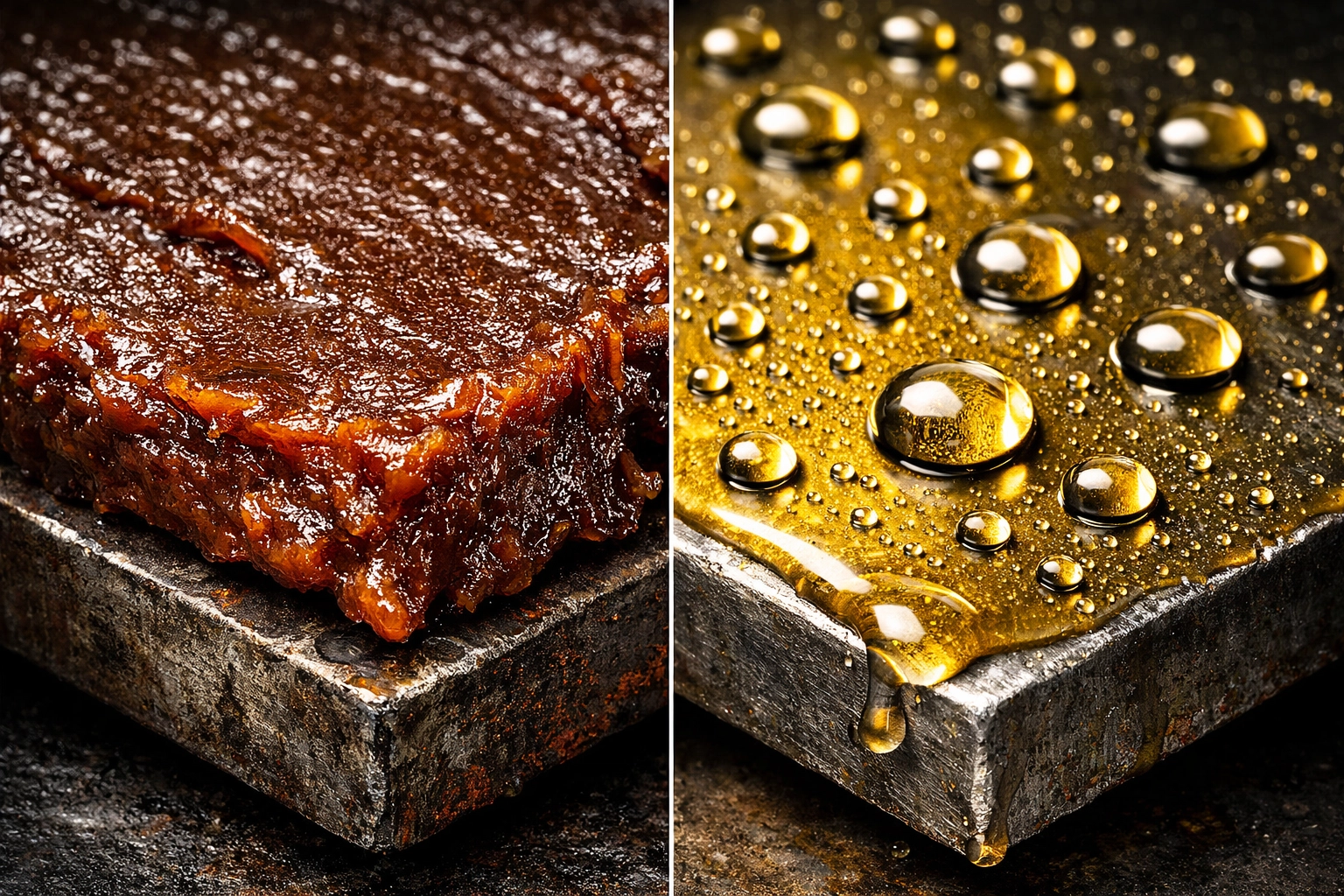
Dinitrol uses a sophisticated combination of high-grade waxes and greases. When applied, it forms a robust, resilient skin that is highly resistant to mechanical abrasion, the kind caused by road grit, stones, and high-pressure spray from wet motorways. Because it is a "harder" product than a simple oil, it stays where it is put for years at a time.
Lanoguard, on the other hand, is derived from Lanolin (sheep’s wool grease). It is a natural, non-toxic product that is incredibly good at displacing water and salt. However, because it remains a relatively thin, oily film, it is "sacrificial." This means it naturally wears away over time through exposure to the elements. While it is highly effective at stopping oxygen and moisture from reaching the metal, it lacks the physical staying power of a Dinitrol coating.
Why Longevity Matters on UK Roads
UK roads present a unique challenge for any rustproofing product. We have a damp climate, high humidity, and a massive amount of road salt applied during the winter months.
For a product to be considered "long-term," it must survive the "wash-off" effect. This is where the constant spray from tyres eventually erodes the protective coating.
Dinitrol’s Longevity: Because Dinitrol sets into a firm (but flexible) wax, it is incredibly difficult to wash off. Even after three or four UK winters, the core protection usually remains intact. This is why we often refer to it as "Life Long" protection when combined with our Rustec Guarantee.
Lanoguard’s Longevity: Lanoguard is designed to be reapplied annually. If you miss a year, your vehicle is likely to be left vulnerable. For many drivers, the hassle and cost of professional rustproofing every single year makes Lanoguard a less efficient choice for long-term peace of mind.
The "Self-Healing" Factor
One of the most critical advantages of Dinitrol is its ability to "self-heal." UK roads are covered in debris. If a stone flicked up by a tyre chips your rustproofing, you have a tiny exposed area of bare metal.
Dinitrol is designed to remain "active." If a small scratch or chip occurs, the surrounding grease and wax will naturally migrate or "creep" back over the hole, resealing the barrier. Lanoguard does not have this same structural integrity; once the film is broken or worn thin, the protection in that specific spot is gone until the next application.
Professional Application vs. DIY Convenience
There is no denying that Lanoguard is easier to apply. It is non-hazardous and requires very little preparation. However, "easy" does not always equate to "effective" when we are talking about decades of protection.
At Rustec, we specialise in professional Dinitrol applications because the process is far more thorough. A professional treatment involves:
A thorough undercarriage steam clean to remove every trace of salt.
Meticulous masking of brakes, exhaust, and sensors.
Cavity injection using specialist Dinitrol ML to reach the inside of sills and chassis rails.
A heavy-duty underseal using Dinitrol 4941 or similar for external protection.
While you can spray Lanoguard on your driveway in an afternoon, it cannot match the depth of protection offered by a multi-stage professional Dinitrol treatment at one of our locations, such as Rustec Swindon or Rustec Leeds.

Which Product is Right for Your Vehicle?
Choose Dinitrol if:
You intend to keep your vehicle for 3 years or more.
You want the highest level of protection against heavy UK road salt.
You prefer a "set and forget" approach with only occasional inspections.
You own a classic car, a high-value 4x4, or a motorhome that represents a significant investment.
You want to increase the resale value of your vehicle with a documented, professional service.
Choose Lanoguard if:
You enjoy working on your car and are happy to crawl under it every 12 months.
You are on a very tight initial budget and only need protection for one winter at a time.
The vehicle is used only in fair weather and stored in a dry garage.
You are specifically looking for a clear, non-greasy finish (though Dinitrol also offers clear options).
The Rustec Verdict: Why We Use Dinitrol
At Rustec, our reputation is built on quality and longevity. We want our customers to leave our workshops knowing their "pride and joy" is safe for years, not just months.
Lanoguard is a respectable product for the DIY market, but for professional-grade automotive services, Dinitrol remains the gold standard. Its superior adhesion, self-healing properties, and proven track record in the harshest environments make it the only logical choice for long-term protection.
When you book a treatment with us, whether at Rustec Newport or Rustec Canterbury, you aren't just getting a spray-over; you are getting a comprehensive chassis preservation service using the highest-quality products available.
Frequently Asked Questions
Does Dinitrol smell more than Lanoguard?
Dinitrol does have a "waxy" scent for the first 48–72 hours after application as the solvents evaporate. Lanoguard has a very mild sheep-like scent. Once cured, both products are virtually odourless.
Can I apply Dinitrol over existing Lanoguard?
It is not recommended. Dinitrol needs a clean, stable surface to bond to. Lanolin-based products are oily and will prevent Dinitrol from adhering properly. If your car has been treated with Lanoguard, it must be thoroughly steam cleaned and degreased before a professional Dinitrol treatment can begin.
Is Dinitrol safe for rubber bushes and electrical connectors?
Yes, when applied correctly. Modern Dinitrol products are designed to be safe for automotive components. However, part of our professional service includes meticulously masking up sensitive areas to ensure the product only goes where it belongs.
How often should I have Dinitrol inspected?
We recommend a quick visual inspection every 12–24 months. While the product lasts 3–5 years, it is always wise to check for mechanical damage (such as heavy "off-roading" scrapes) and perform minor top-ups if necessary. We offer a complimentary top-up service as part of our premium packages.
Protect Your Investment Today
Don't leave your vehicle’s future to chance. While annual sprays have their place, nothing beats the long-term security of a professional Dinitrol treatment.
If you are ready to give your vehicle the "Life Long" protection it deserves, we invite you to enquire about our services. From our Rustec Leicester workshop to our site in Rustec Basingstoke, our experts are ready to help.
Enquire by filling out the quick quote box below to see which package is right for your car, van, or 4x4.
Meta Title: Dinitrol vs Lanoguard: Which is Better for Long-Term Protection? Meta Description: Comparing Dinitrol and Lanoguard for UK vehicle rustproofing. Learn why Dinitrol is the superior choice for long-term durability, self-healing, and chassis protection. URL Slug: /dinitrol-vs-lanoguard-long-term-protection-comparison
Comments