
3-Year MOT Mark Matters: Why Your New Car Isn't Actually Safe From Rust
Direct Answer: Is Your 3-Year-Old Car Rust-Free?
Most car owners believe that a vehicle hitting its first MOT at the three-year mark is "too new" to have rust. This is a dangerous misconception. In the UK, factory-applied underbody protection is designed for assembly line speed, not long-term survival in our climate. By the time a car reaches its first MOT, the thin layer of factory "e-coat" and wax has already begun to degrade. Micro-abrasions from road grit, combined with hygroscopic salt brine, mean that structural corrosion is often already established in box sections and seams before the first MOT certificate is even printed. The 3-year mark is not the time to start thinking about rust; it is the final window to prevent irreversible damage.
The Visual Mental Model: The Leaking Umbrella
Think of your car's factory protection like a cheap, disposable umbrella. When it’s brand new and the sun is shining, it looks perfect. But as soon as the heavy UK rain (and road salt) hits, you realise the fabric is porous and the spokes are flimsy. You don’t wait until you are soaked to the bone before buying a proper raincoat. Proper rustproofing is your vehicle’s heavy-duty Gore-Tex layer. Waiting until you see rust on the wings is like waiting until your house is flooding to fix a single slipped tile.
Ownership Identity: The Difference Between a Driver and an Owner
There is a fundamental difference between someone who simply drives a car and a true owner who understands asset preservation. A driver sees a three-year-old car as "new" and assumes the manufacturer has done enough. An informed owner knows that manufacturers build cars to survive the warranty period, not the decade.
If you intend to keep your vehicle for five years or more, you must move beyond the "driver" mindset. Elite owners protect the chassis early to avoid the "rust-tax", the thousands of pounds lost to structural welding and depreciated resale value. Preserving your vehicle early isn't just maintenance; it’s a strategic financial decision to avoid expensive surprises later.
UK-Specific Context: Why Our Roads are Lethal to Steel
In the UK, we face a "perfect storm" for automotive corrosion. Our humidity rarely drops below 70%, meaning metal stays damp for longer. More importantly, the UK uses over 2 million tonnes of salt on its roads every winter. Modern "liquid brine" is even more aggressive than traditional rock salt; it atomises into a mist that penetrates deep into your vehicle's box sections and stays there, drawing moisture out of the air year-round.
In UK conditions, corrosion is not a possibility , it is an inevitability without proper protection. If you are driving a three-year-old vehicle that hasn't been professionally treated, the process has already started.

Financial Consequence: The Real Cost of Delay
Many owners hesitate at the cost of rustproofing in the UK, viewing it as an optional luxury. This is a mathematical error. "Doing nothing leads to financial loss."
Compare the investment of prevention against the reality of repair:
Professional Rustproofing: £500 – £1,200 (Once every 5+ years)
Structural Welding Repairs: £1,000 – £4,000+ (Often required just to pass an MOT once rot sets in)
Resale Value Loss: £2,000 – £5,000 (A rusty subframe is the fastest way to kill a private sale or trade-in value)
When you look at the numbers, rustproofing is the highest-ROI maintenance task you can perform. Does rustproofing increase resale value? Absolutely. A documented Rustec Elite treatment is a "clean bill of health" that proves to a future buyer that the vehicle has been fastidiously maintained.
WHEN TO ACT: The Critical Windows of Protection
The biggest mistake is waiting until rust becomes visible. Use this timeline to assess your risk:
0–3 Years (The Prevention Window): This is the gold standard. Treating a car before it has seen multiple UK winters ensures the metal is pristine. This is where you get the longest lifespan from the treatment.
3–5 Years (The Ideal Window): Most vehicles at the 3-year MOT mark are in this category. Surface corrosion is likely starting on suspension components. Treatment is essential now to "stop the clock."
5–8 Years (The Urgent Window): Corrosion is likely visible on subframes and bolt heads. You are nearing the point where can rust cause MOT failure becomes a genuine concern.
8+ Years (The Time-Sensitive Window): Treatment is still possible, but extensive manual descaling is required. Delaying any further is a gamble with the vehicle's structural integrity.
Comparison: Rustec Elite Standard vs. High-Street "Quick Sprays"
Do not confuse a professional 72-hour process with a "while-you-wait" spray job. Most quick services focus on speed and appearance, masking problems rather than solving them.
Feature | Cheap/Quick Service | Rustec Elite Standard (72-Hour) |
Duration | 2–4 Hours | 72 Hours (Minimum) |
Preparation | Surface wipe-down | Deep steam cleaning & heated drying |
Masking | Minimal or none | Full bodywork, brakes, & exhaust masking |
Cavity Work | Often ignored | High-pressure internal injection |
Durability | Months | Years |
Risk | High (Traps moisture) | Zero (Total preservation) |
A poor rustproofing job can be worse than doing nothing, as it traps moisture and accelerates corrosion. If a shop tells you they can "do it in an afternoon," they are not protecting your car; they are painting over the problem.

The Rustec Elite 72-Hour Standard: Process Matters More Than Product
We don't just "apply a coating." We execute a methodical, multi-day engineering process. Process matters more than product.
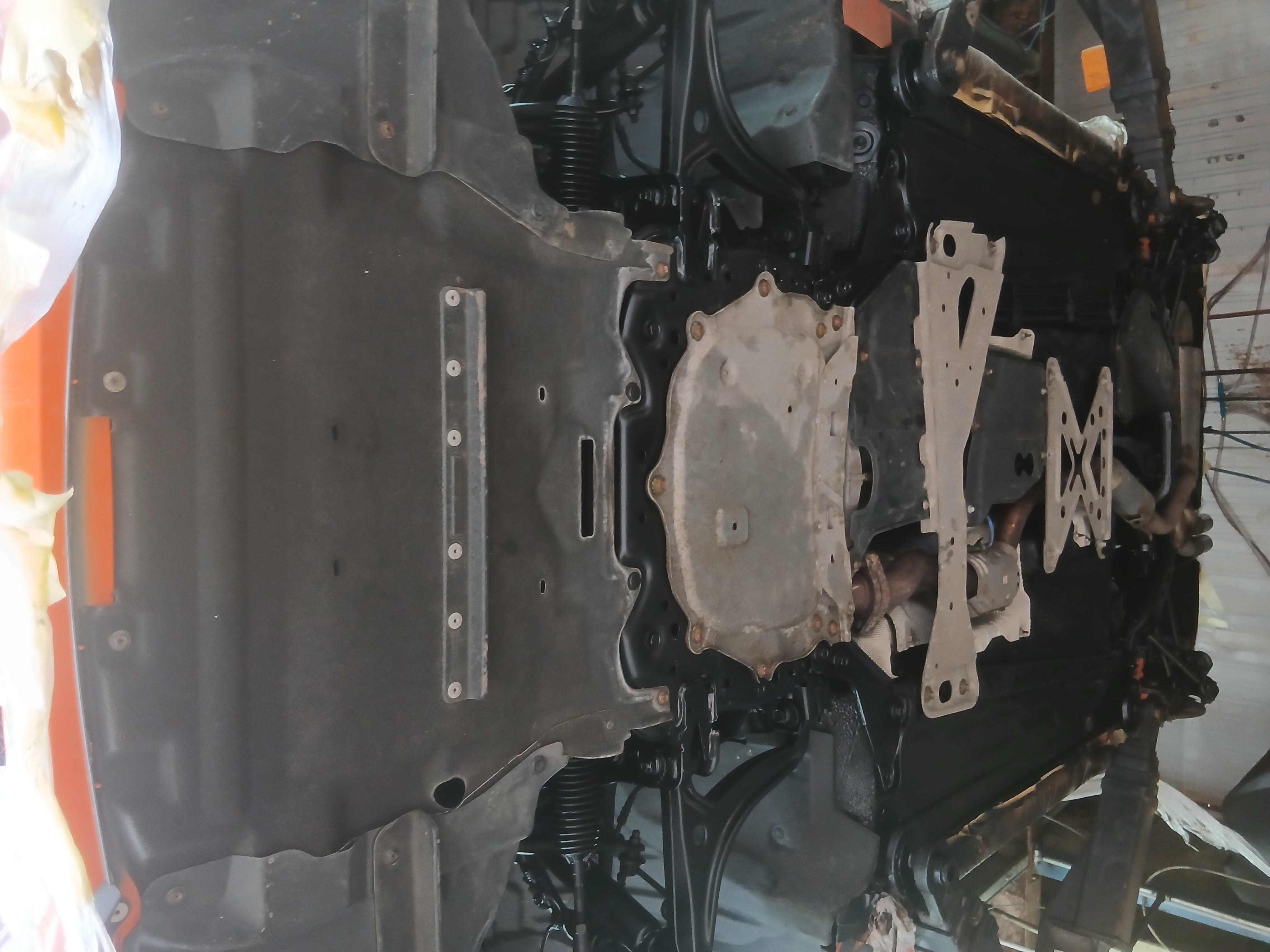
Stage 1: Deep Decontamination: We remove all under-trays and wheel arch liners to expose the hidden steel. We then use high-pressure steam to remove salt and road film.
Stage 2: Technical Drying: We use industrial air movers to ensure every seam and cavity is bone-dry. Applying wax to damp metal is a recipe for disaster.
Stage 3: Precision Masking: We meticulously mask the bodywork, exhaust, brakes, and electrical sensors.
Stage 4: Cavity Wax Injection: We use specialised probes to inject high-penetration wax into the chassis rails, sills, and pillars. This protects your car from the inside out.
Stage 5: Underbody Coating: A durable, self-healing barrier is applied to the floor pans and chassis. Whether you choose a Dinitrol treatment or a Lanoguard treatment, the application is flawless.
Buyer Psychology: Avoiding the "I Wish I Did This Sooner" Regret
Every week, we see owners bring in five or six-year-old cars only to be told they need descaling or minor repairs before we can coat them. The look on their faces is always the same: regret. They thought they had time. They thought the 3-year MOT mark was just a formality.
Don't be the person looking at a £2,000 welding bill in three years' time, wishing you'd spent a fraction of that today. Protecting your vehicle is about peace of mind. It’s about knowing that while the salt-spreaders are out in January, your chassis is impenetrable.
Frequently Asked Questions
Will my car fail its MOT if it has rust?
Yes. If corrosion is within 30cm of a structural mounting point (like suspension or seatbelt anchors) or if the metal has thinned significantly, it is an automatic failure. Pre-emptive treatment is the only way to ensure you never face this issue.
How long does rustproofing last in the UK?
A professional Rustec Elite treatment typically lasts 5 years before a top-up is recommended, depending on mileage and usage. How long rustproofing lasts in the UK depends entirely on the quality of the initial preparation.
Is it worth rustproofing a 3-year-old car?
It is the best time to do it. You are catching the vehicle before the factory protection has completely failed, meaning you are preserving "near-new" metal rather than trying to save rusted steel.
What is the best rustproofing method for UK vehicles?
The best rustproofing method for UK vehicles is a combination of thorough mechanical cleaning, internal cavity wax injection, and a robust external underbody coating.
Related Rustec Posts
Rust doesn’t wait until it becomes visible. By the time most owners notice a problem, the damage underneath has already started costing them money. Waiting feels cheaper in the short term , but it nearly always becomes more expensive later. 👉 Book your inspection now and protect your vehicle before corrosion takes hold. If you're unsure of your vehicle's underbody condition and can't make it for a free inspection, please email photos of your undercarriage to info@rustec.co.uk and one of our technicians will guide you.

Comments