
What is the most effective rustproofing method for UK conditions?
Meta Title: What is the most effective rustproofing method for UK conditions? Meta Description: Discover the most effective rustproofing method for UK roads. From professional Dinitrol® systems to the 72-hour standard, see why prep is everything for new cars. URL Slug: /most-effective-rustproofing-uk-conditions
For drivers in the UK, the most effective rustproofing method is a professional, multi-stage Dinitrol® treatment system that prioritises deep cleaning and cavity injection. While DIY sprays and "while-you-wait" services offer a temporary shield, they often fail to address the unique combination of high humidity, road salt, and abrasive grit found on British roads. For new or low-mileage vehicles, the "Elite" standard involves a 72-hour process of decontamination, drying, and precision application to ensure the protective barrier actually bonds to the metal.
In this guide, we’ll break down why the "how" matters just as much as the "what," and why your new car might be more vulnerable than you think.
The "House Painting" Rule: Why Prep is Everything
To understand why some rustproofing fails while others last for years, you need to think about painting a house.
If you were to slap a premium coat of paint onto a wall that was covered in green moss, loose dirt, and damp patches, what would happen? Within a few months, that expensive paint would bubble up and peel off, taking the dirt with it. You wouldn’t blame the paint; you’d blame the person who didn't bother to prep the surface.
Rustproofing is exactly the same. The most expensive wax in the world is useless if it’s sprayed over a thin film of UK road salt or trapped moisture. At Rustec, we live by the rule that the coating is only as good as the surface beneath it. This is why a "quick spray" at a local garage often does more harm than good, it simply seals the moisture and salt against the metal, accelerating the very rot you’re trying to prevent. A poor rustproofing job can be worse than doing nothing.
Why the UK is the "Final Boss" for Chassis Corrosion
We love the UK, but our climate is a nightmare for cars. We have a "perfect storm" of conditions:
High Humidity: Our air is constantly damp, meaning metal never truly stays dry.
Road Salt: Between November and March, councils dump thousands of tonnes of salt on the roads. This salt is hygroscopic, meaning it pulls moisture out of the air and holds it against your chassis.
Narrow, Gritty Lanes: Debris from our roads constantly pelts the underbody, creating micro-chips in the factory protection.
If you’ve recently picked up a new vehicle, don't be fooled by the "factory protection." Most manufacturers do the bare minimum, a bit of galvanisation and a splash of wax in the easy-to-reach areas. For long-term ownership, especially if you want to maintain your vehicle's resale value, you need a system designed for the "Final Boss" of climates.
The 72-Hour Elite Standard vs. While-You-Wait Shortcuts
If someone tells you they can rustproof your car while you go grab a coffee and a sandwich, run.
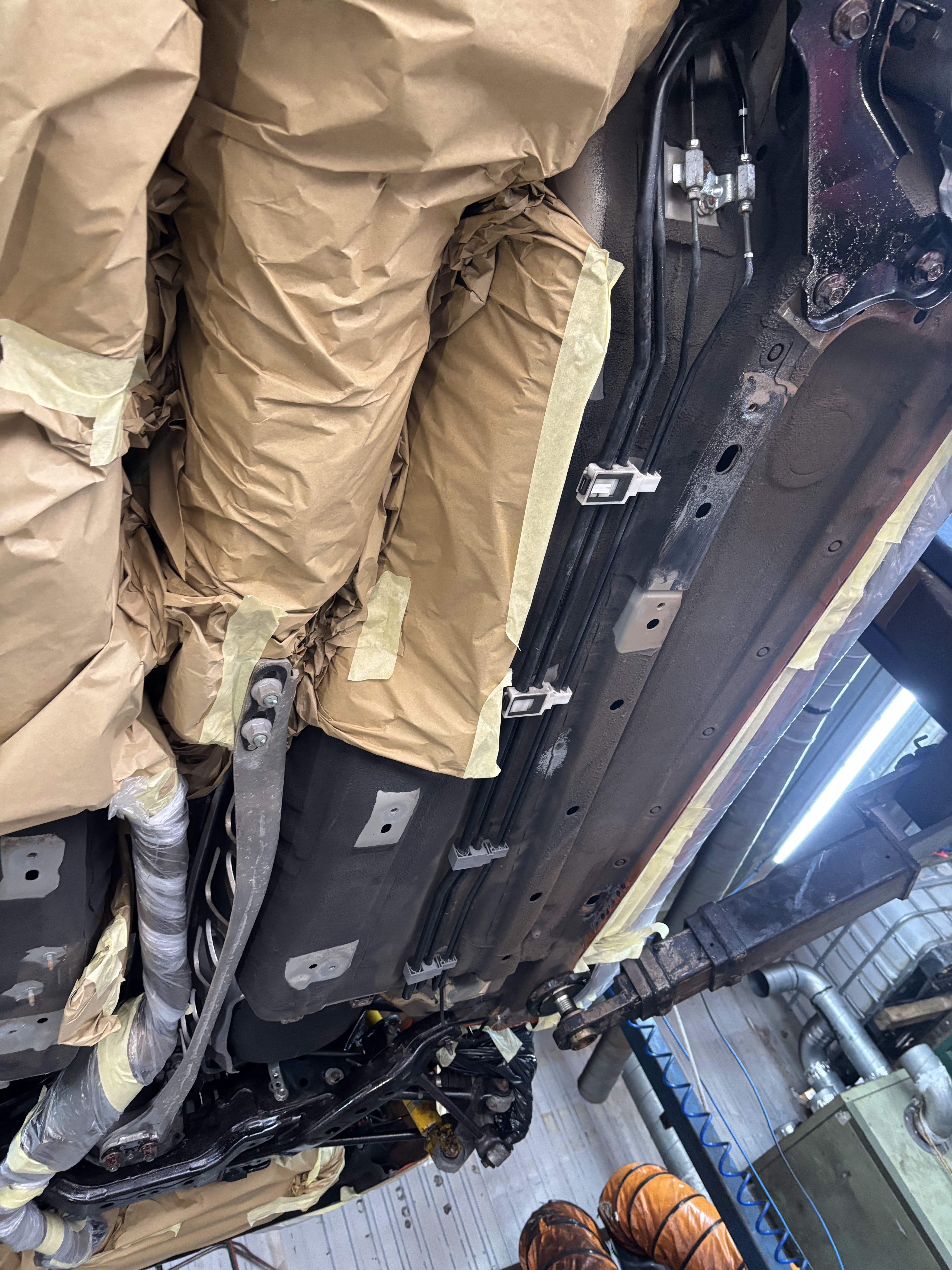
A truly effective treatment cannot be done in two hours. At Rustec, our "Elite" positioning is based on a meticulous 72-hour deep-treatment process. Why 72 hours? Because physics doesn't take shortcuts. This extended process allows proper cleaning, full drying, cavity wax injection, meticulous masking, and precise application using professional-grade materials so the protection can bond as intended rather than sitting over contamination or moisture.
01: The Deep Clean & Decontamination
We start with a thorough undercarriage steam clean. We aren't just rinsing off mud; we’re removing the invisible salt crystals and oils that prevent coatings from bonding.
02: The Drying Phase (The Critical Step)
This is where most shops fail. You cannot spray wax onto a damp chassis. We use industrial heaters and air movers to ensure every nook, cranny, and internal cavity is bone dry. This often takes 24 hours on its own.
03: Meticulous Masking
We don't just "aim and fire." We mask up exhaust systems, brake discs, and sensitive electrical sensors.

04: Two-Stage Dinitrol® Application
First, we inject Dinitrol® ML into the cavities (sills, doors, chassis rails). It’s a thin, high-penetration oil that finds rust and stops it in its tracks. Then, we apply Dinitrol® 4941 to the exposed underbody. This creates a robust, "self-healing" waxy film that shrugs off road salt and stone chips.
Is it Worth the Cost for New Cars?
Many new car owners ask if they should wait until they see rust to act. The answer is a firm no. Rustproofing is a preventative measure, not just a cure. Applying a professional system to a low-mileage vehicle is like putting a screen protector on a brand-new phone, it keeps the original surface mint.
If you're wondering about the financial side of things, it's worth reading our breakdown on whether professional rustproofing is worth the cost. Spoilers: when you compare the cost of a treatment to the cost of welding a floor pan or a potential £2,000 to £5,000 resale loss, the math is pretty simple.
Choosing the Right Product: Why We Use Dinitrol®
In the world of rustproofing, names like Waxoyl and Lanoguard pop up a lot. While they have their place, we've found that for the harsh, abrasive conditions of the UK, the Dinitrol® professional range offers the best balance of durability and protection.
Unlike some oil-based products that can wash off after a heavy winter, Dinitrol® sets into a firm but flexible wax. It doesn't drip on your driveway, and it doesn't wash away the first time you hit a puddle on the M4. If you want to see how it stacks up against other popular options, check out our comparison of Lanoguard vs Dinitrol.
Does this apply to Electric Vehicles?
Actually, yes, perhaps even more so. EVs are heavy, and their battery frames are often located right where road salt likes to collect. Because EVs are designed to stay on the road for a long time, ensuring the structural integrity of the frame is vital. We’ve developed specific protocols for EV rustproofing to ensure we protect the chassis without interfering with high-voltage cooling systems or sensors.
What Happens if I Already Have Surface Rust?
If your car isn't "box fresh" and already has some orange dusting on the components, don't panic. The Dinitrol® system is specifically designed to handle this. The ML cavity wax is a "rust killer" that penetrates through the oxidisation to reach the healthy metal beneath, cutting off the oxygen and moisture that rust needs to grow.
If you are still deciding whether light corrosion is urgent, it is worth reading is surface rust on a car something to worry about alongside our guide to the process of treating existing rust. The key is catching it before it becomes structural.
The Takeaway: Don't Settle for "Good Enough"
The most effective rustproofing method isn't a "magic spray", it’s a rigorous process. If you want your vehicle to survive a decade of British winters, you need:
A clean, dry surface (The House Painting Rule).
High-quality, professional-grade products like Dinitrol®.
Internal cavity protection, not just an external "black goop" spray.
A specialist who follows a 72-hour process to do the job right, including cleaning, drying, cavity injection, masking, and careful application, rather than 2 hours to do it fast.
If you’re ready to give your car the "Elite" treatment it deserves, we’re here to help. Whether you're in Swindon, Leicester, or Leeds, our workshops are equipped to handle everything from daily drivers to luxury EVs.
Ready to protect your pride and joy? Click here to get a quote and book your professional rustproofing treatment today.
Frequently Asked Questions
How often does professional rustproofing need to be reapplied? When done to the Rustec standard using Dinitrol®, you should expect the main underbody protection to last 5–7 years, though we recommend a quick annual inspection to check for any mechanical damage or scrapes from high-centering.
Will rustproofing affect my manufacturer's warranty? In the vast majority of cases, no. Rustproofing is considered a maintenance service. In fact, many dealers and enthusiasts recommend it as a way to preserve the vehicle's long-term health. However, we always suggest checking your specific terms if you're concerned.
Can I do this myself at home? You can certainly buy DIY kits, but without a heavy-duty lift, industrial steam cleaners, and professional-grade drying equipment, it is incredibly difficult to achieve the same level of bond and coverage. Remember: if you trap moisture under your DIY wax, you're actually paying to make your car rust faster. You can read more about the risks of DIY rustproofing here.
Comments