
What is chassis corrosion and should I worry?
Your vehicle's chassis is its backbone: the structural foundation that supports the engine, suspension, steering, and ultimately, everyone inside. When corrosion attacks this critical component, the consequences extend far beyond cosmetic concerns. Understanding chassis corrosion, how it develops, and why it poses such a significant threat to your vehicle's safety is essential knowledge for every car owner in the UK.
What Exactly is Chassis Corrosion?
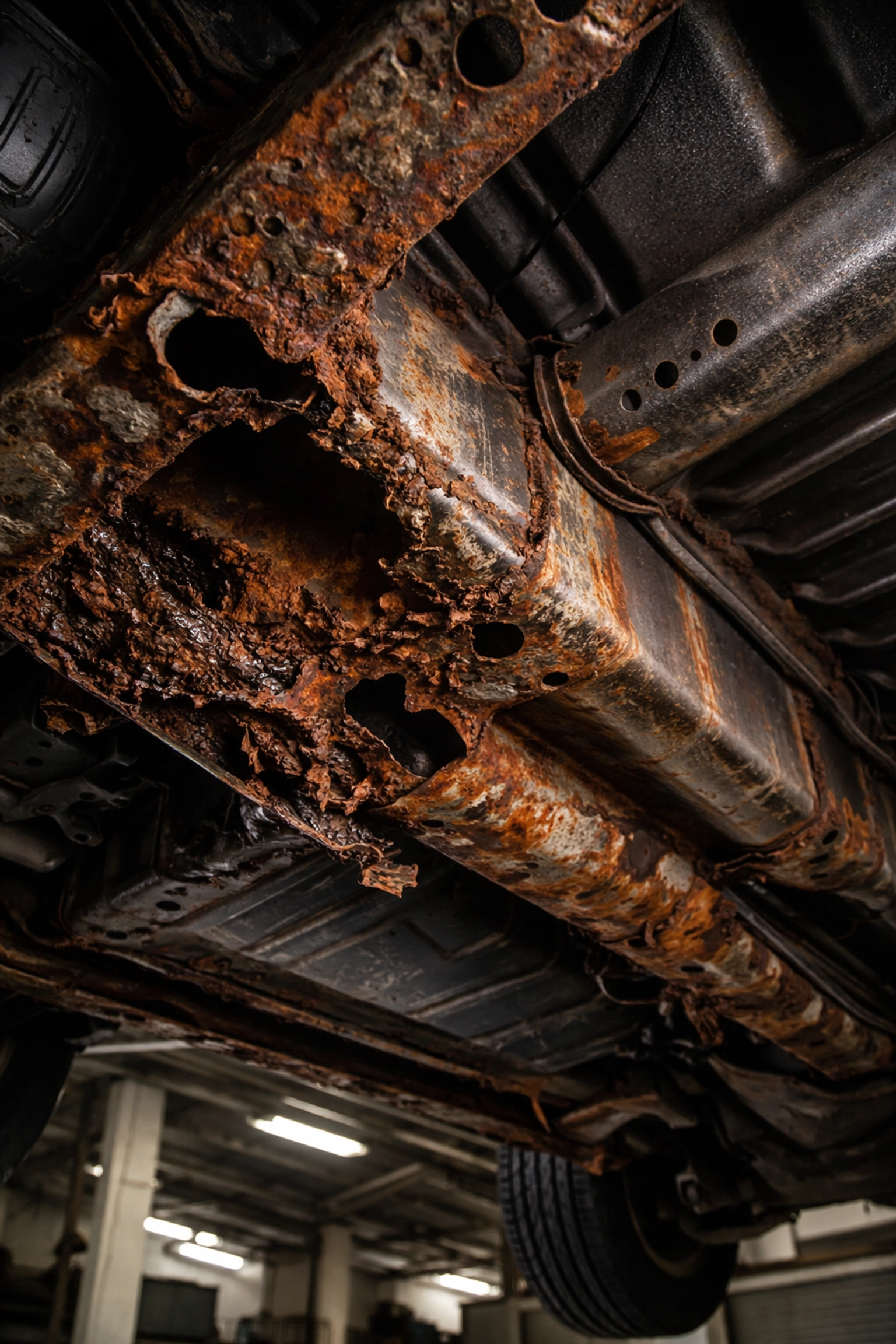
Chassis corrosion is the gradual rusting and deterioration of your vehicle's metal framework caused by oxidation. This chemical reaction occurs when the iron in steel components is exposed to moisture and oxygen over time. The result is rust: that familiar reddish-brown compound that weakens metal and compromises structural integrity.
The chassis isn't just another part of your car; it's the skeletal structure that everything else attaches to. Your suspension mounts, steering components, subframe, and safety systems all rely on a solid, intact chassis to function correctly. When corrosion takes hold, it doesn't simply affect appearance: it undermines the very foundation your vehicle depends upon.
Unlike surface rust on body panels, chassis corrosion often goes unnoticed until it becomes severe. The underside of your vehicle is out of sight, meaning damage can progress significantly before you become aware of the problem.
How Does Chassis Corrosion Develop?
The corrosion process begins simply: when moisture contacts bare metal surfaces, a chemical reaction is triggered between iron, oxygen, and water. This reaction produces iron oxide: rust. While this process occurs naturally, several factors dramatically accelerate it:
Road Salt and De-icing Chemicals UK roads are treated with salt and chemical de-icers throughout winter months. These substances are highly corrosive and cling to your vehicle's undercarriage, creating an aggressive environment that attacks exposed metal surfaces relentlessly.
Moisture and Humidity The UK climate provides near-constant moisture exposure. Rain, puddles, morning dew, and general humidity all contribute to the conditions that promote rust formation. Vehicles that are stored outside or regularly driven in wet conditions face heightened risk.
Environmental Contaminants Road grime, mud, debris, and pollutants accumulate on the chassis over time. These substances trap moisture against metal surfaces and often contain corrosive elements that accelerate deterioration.
Damaged Protective Coatings Factory-applied coatings and paint provide an initial barrier against corrosion. However, stone chips, scratches, and general wear create vulnerable points where moisture can reach bare metal. Once corrosion begins at these weak spots, it spreads beneath surrounding coatings.
The Three Stages of Chassis Corrosion
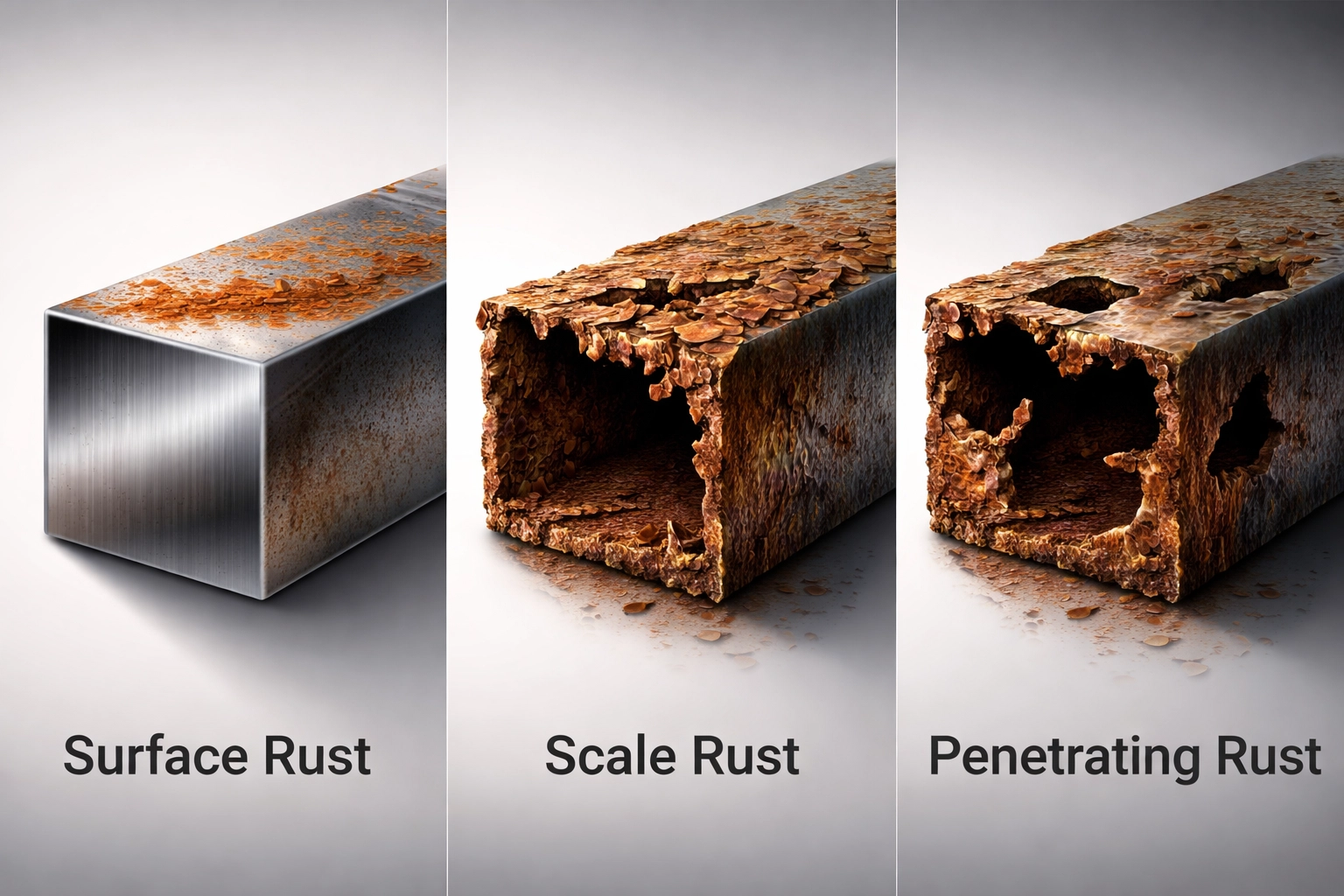
Corrosion typically progresses through three distinct stages, each more serious than the last:
Stage One: Surface Rust
This initial stage affects only the top layer of metal where protective coatings have been compromised. Surface rust appears as discolouration and minor roughness on exposed areas. At this stage, the damage is largely cosmetic and relatively easy to address with proper treatment.
Stage Two: Scale Rust
Left untreated, surface rust develops into scale rust. The corrosion begins penetrating deeper into the metal, causing flaking and pitting. The affected areas become rough and uneven as layers of corroded metal separate. Structural weakening begins at this stage, though the component may still appear mostly intact.
Stage Three: Penetrating Rust
The most severe form of corrosion, penetrating rust cuts completely through metal components. Holes form, structural members weaken dramatically, and internal systems become vulnerable to damage. At this stage, repair often requires cutting out affected sections and welding in new metal: if the damage hasn't progressed beyond viable repair.
Why You Should Absolutely Worry About Chassis Corrosion
The implications of chassis corrosion extend far beyond requiring expensive repairs. This is fundamentally a safety issue that demands serious attention.
Compromised Structural Integrity
Your chassis is designed to absorb and distribute impact forces during collisions. A corroded chassis cannot perform this critical function effectively. Weakened mounting points may fail under stress, and the overall structure may crumple in ways the vehicle's safety systems weren't designed to handle.
Research from European insurance studies has found that a rusted chassis increases occupants' risk of fatal accidents by 20%. This statistic alone should give every vehicle owner pause for thought.
Suspension and Steering Instability
Even moderate chassis corrosion causes problems with suspension geometry and steering response. As mounting points weaken and corrode, components shift and move in ways they shouldn't. You may notice:
Unusual handling characteristics
Clunking or knocking sounds from the suspension
Imprecise steering response
Uneven tyre wear
Vibrations through the steering wheel or floor
These symptoms indicate that your vehicle's handling and safety are already compromised.
Brake System Vulnerability
Brake lines, mounts, and components are attached to the chassis. Corrosion can damage brake lines, weaken mounting brackets, and create dangerous conditions where braking performance is unpredictable or severely reduced.
Component Failures
Beyond the chassis itself, penetrating corrosion can damage surrounding systems including fuel lines, electrical wiring, and exhaust components. These secondary failures create additional safety risks and repair costs.
Chassis Corrosion and Your MOT
The annual MOT test specifically examines your vehicle's structural condition, and severe chassis corrosion is an automatic MOT failure classified as a dangerous defect.
MOT testers inspect the chassis, subframe, and structural components for corrosion damage. They'll look for:
Excessive rust that has weakened structural integrity
Corrosion near mounting points for suspension, steering, and braking components
Holes or perforation in structural members
Evidence that corrosion has compromised safety-critical areas
A vehicle that fails its MOT due to structural corrosion often faces expensive repair bills: or may even be deemed uneconomical to repair. Many owners discover their vehicle has significant chassis corrosion only when it fails its MOT, by which point the damage may be severe.
Prevention is significantly more cost-effective than repair. Addressing chassis protection before corrosion takes hold saves money, maintains your vehicle's value, and: most importantly: keeps you and your passengers safe.
Who is Most at Risk?
While all vehicles in the UK face corrosion risks, certain situations increase vulnerability:
Vehicles in coastal areas where salt air accelerates corrosion
Cars stored outside without protection from the elements
High-mileage vehicles exposed to more road salt and debris
Older vehicles where factory coatings have deteriorated
4x4s and off-road vehicles that encounter water, mud, and rough terrain
Commercial vehicles and vans subjected to heavy use and infrequent cleaning
Even brand-new vehicles aren't immune. Factory-applied protection provides only a baseline defence, and the aggressive conditions of UK roads can overwhelm these coatings within just a few years.
Protecting Your Chassis from Corrosion
The most effective approach to chassis corrosion is comprehensive professional rustproofing. A thorough treatment from specialists like Rustec provides multi-layered protection that guards your chassis against the conditions that cause corrosion.
Professional rustproofing typically includes:
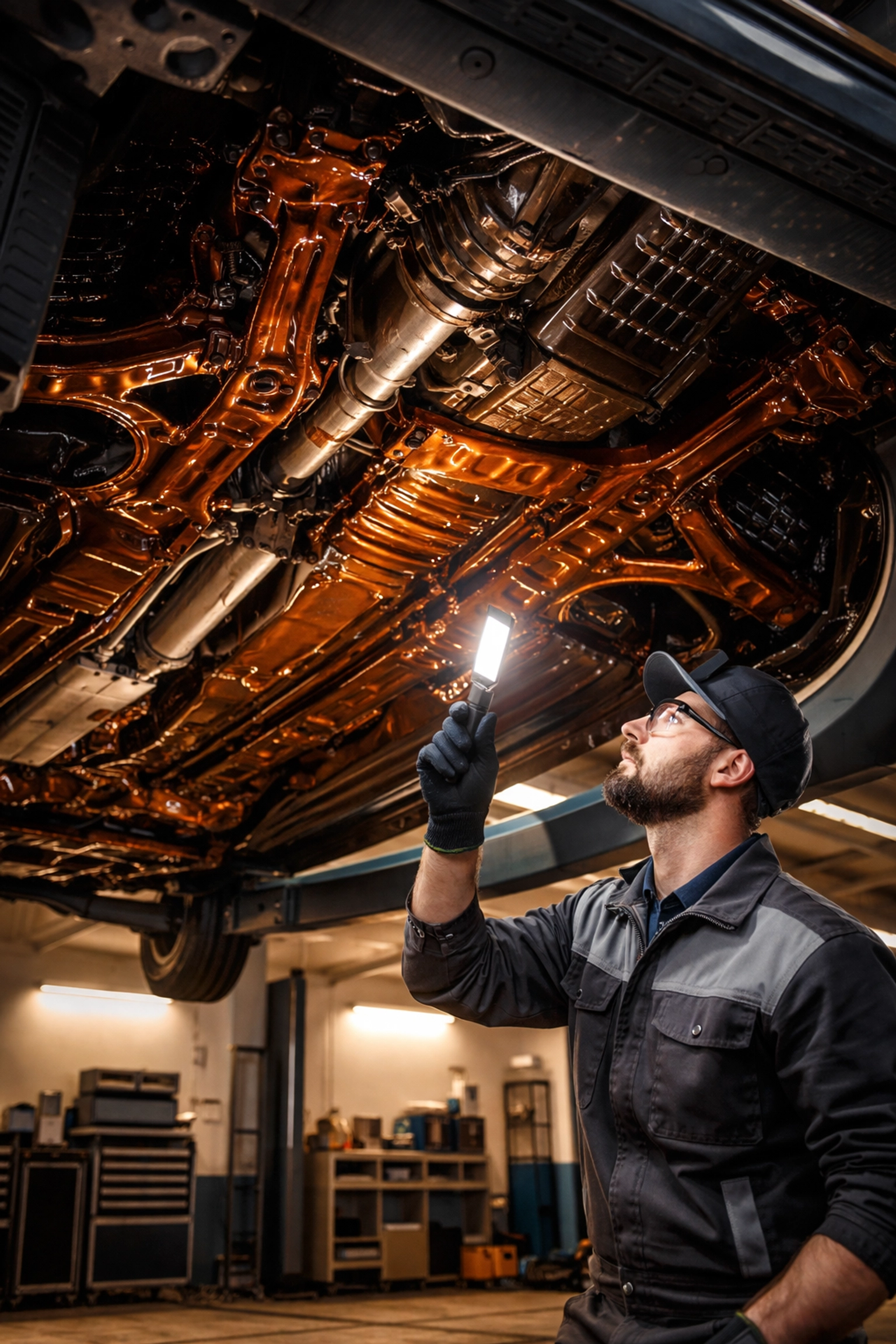
Complete undercarriage inspection to identify existing damage or vulnerable areas
Thorough cleaning to remove existing contaminants, mud, and debris
Application of cavity wax to protect enclosed box sections and internal spaces
Underbody sealant treatment creating a durable barrier against moisture, salt, and debris
Treatment of all vulnerable areas including wheel arches, sills, and chassis rails
Quality rustproofing treatments using products like Dinitrol provide long-lasting protection that maintains your vehicle's structural integrity and safety for years to come.
Take Action Before It's Too Late
Chassis corrosion is a serious issue that develops silently beneath your vehicle. By the time visible symptoms appear, significant damage may already have occurred. The question isn't whether UK driving conditions will attack your chassis: it's whether your vehicle has adequate protection to resist.
If you haven't had your vehicle's underside inspected recently, now is the time. A professional assessment can identify early-stage corrosion before it becomes dangerous, and comprehensive rustproofing treatment can protect against future damage.
Your vehicle's chassis is too important to ignore. Protect it properly, and you'll enjoy safer motoring, better resale value, and peace of mind knowing your vehicle's structural integrity remains intact.
For expert chassis protection and professional rustproofing services, get in touch with Rustec to discuss how we can help safeguard your vehicle against corrosion.
Comments