
What Happens If You Ignore Rust: From Surface Spot to Structural Failure
Ignoring rust on a vehicle is a decision that leads to inevitable structural degradation. In the UK, where road salt, high humidity, and frequent rainfall create a constant corrosive environment, a small orange blemish on a chassis component is rarely just a cosmetic issue. It is the visible tip of an "iceberg" of oxidation that spreads through box sections, sills, and chassis rails. Left untreated, surface corrosion transitions into pitting, then perforation, and finally structural failure that renders a vehicle unsafe and an automatic MOT failure.
In this guide, we examine the precise progression of metal decay, the financial implications of delaying treatment, and why professional intervention is required to stop the "invisible" spread of rust.
The Short Answer: Why You Can’t Afford to Wait
Once oxidation begins, it does not stop on its own. In UK conditions, corrosion is not a question of if , but when. What starts as a "surface spot" typically indicates that the factory protection has already failed. If ignored, the rust will penetrate the thickness of the steel, compromising the vehicle's "crumple zones" and suspension mounting points. The cost of prevention is a fraction of the cost of structural welding or the thousands of pounds lost in resale value.
The "Iceberg" Model of Corrosion
To understand vehicle rust, you must view it through the Iceberg Model. The rust you see on the outside, perhaps a small bubble on a wheel arch or a dusting of orange on a subframe, represents only about 10% of the total oxidation occurring.
The most dangerous corrosion happens from the inside out. Moisture and salt become trapped inside box sections and chassis rails where air circulation is poor. By the time rust is visible on the exterior surface of a structural component, the metal has often already been significantly thinned from the inside. This is why a simple "spray-over" job is insufficient; without treating the internal cavities, the structural decay continues unabated.
Visual Mental Model: The Dental Cavity
Think of vehicle rust like a tooth cavity. A tiny dark speck on the enamel might look harmless, but underneath, the decay is hollowing out the structure. By the time the tooth breaks or causes pain, the damage is extensive. Rustproofing is the equivalent of clinical hygiene and sealing; it stops the decay before it reaches the "root" of your vehicle's structural integrity.
The Four Stages of Rust Progression
01: Surface Corrosion (The Warning Stage)
Surface rust occurs when the paint or factory wax is breached by a stone chip or abrasion. At this stage, the metal is still structurally sound, but the oxidation process has established a foothold. While many owners dismiss this as "just a bit of flake," it is the point of no return for factory coatings.
02: Scale and Pitting (The Penetration Stage)
If the surface rust is not chemically treated and sealed, it begins to "pit." This is where the corrosion creates localized cavities in the metal. The surface becomes rough and "scaly." At this point, the tensile strength of the steel begins to decrease. Cleaning this requires more than just a brush; it requires the clinical precision of the Rustec Elite Standard to ensure all contaminants are removed before sealing.
03: Perforation (The MOT Failure Stage)
Perforation is the point where the rust has eaten completely through the metal, creating holes. If this occurs within 30cm of a "prescribed area" (such as a seatbelt mounting, suspension component, or braking system attachment), the vehicle will fail its MOT.
04: Structural Failure (The Safety Risk)
In the final stage, the component can no longer support the loads it was designed for. A rusted-through chassis rail can snap under the stress of a pothole, and a corroded floor pan offers zero protection in the event of an accident. At this stage, the vehicle is often a "write-off" because the cost of restorative welding exceeds the car's market value.
The Financial Reality: Prevention vs. Cure
The economic argument for early rustproofing is undeniable. Many owners delay treatment to "save money," but the exponential increase in repair costs makes this a poor financial strategy.
Professional Prevention: A comprehensive Rustec rust proofing service in Bridgend or Swansea typically costs between £500 and £900, depending on the vehicle size.
Structural Repairs: Once welding is required to pass an MOT, costs quickly escalate to £1,000–£3,000.
Depreciation: A vehicle with a "clean" underside and a documented treatment history can command a £2,000–£5,000 premium on the used market compared to a neglected, "crusty" equivalent.
A poor rustproofing job can be worse than doing nothing, as it traps moisture and accelerates corrosion. This is why we avoid the "quick fix" approach.
The Rustec Elite Standard: A 72-Hour Clinical Process
At Rustec, we do not believe in "covering up" problems. Our process is designed to be the ultimate barrier against the UK climate. We follow a strict 72-hour protocol to ensure the highest-quality bond between the protective coating and your chassis.
Comprehensive Inspection & Strip Down: We remove all undertrays and wheel arch liners to expose every hidden corner.
Thorough Undercarriage Steam Clean: Using high-pressure hot water to remove salts, grease, and winter road grime.
Extended Drying Phase: The vehicle is dried thoroughly using industrial heaters. Applying protection to a damp chassis is a recipe for disaster.
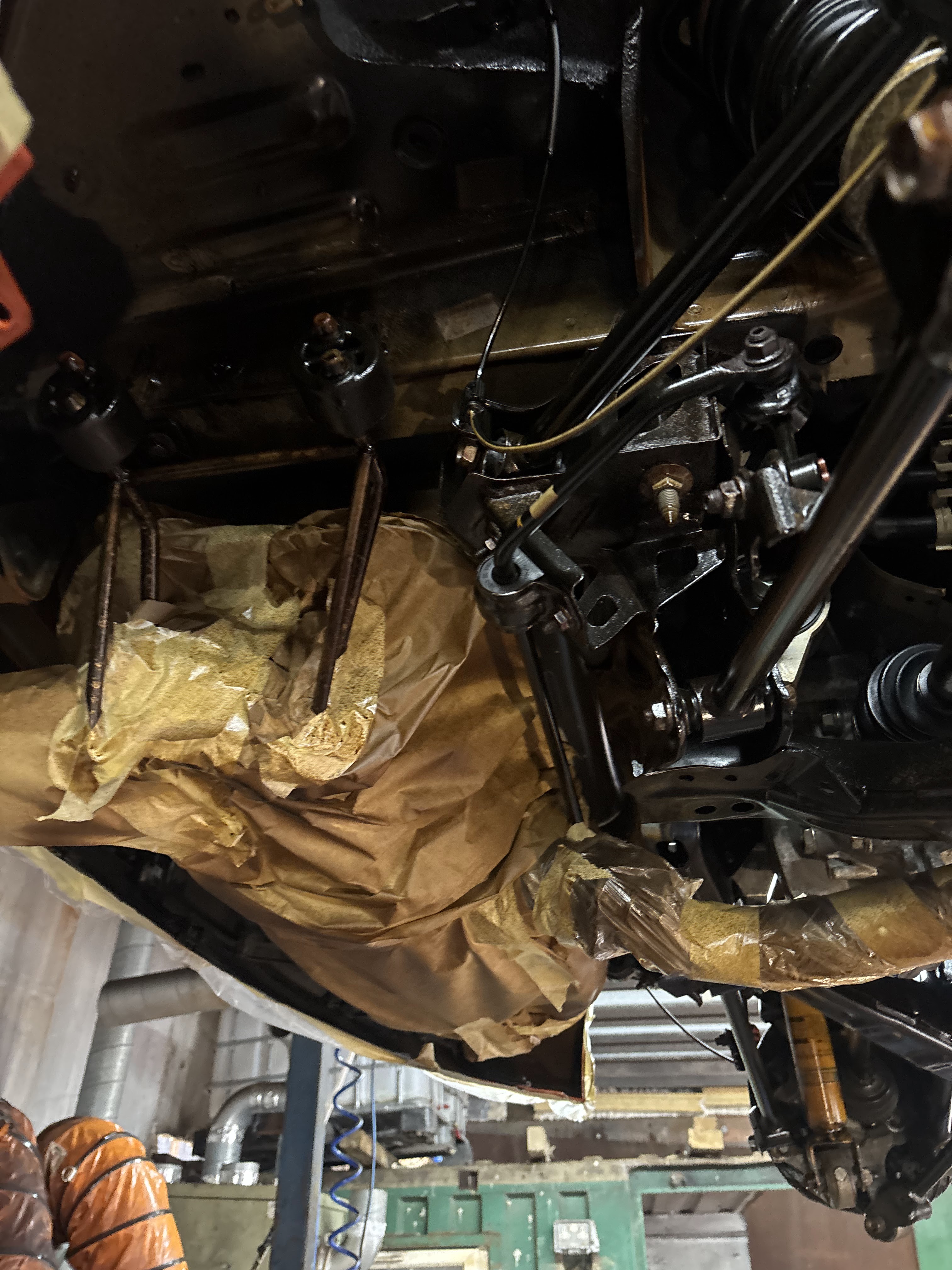
Meticulous Masking: We wrap brakes, exhaust systems, and electrical connectors in plastic and tape. Our workshop maintains a clinical standard; we don't believe in "gloopy" overspray.
Cavity Wax Injection: We use specialized long-life Dinitrol® waxes, injected into every box section and rail to stop the "iceberg" effect.
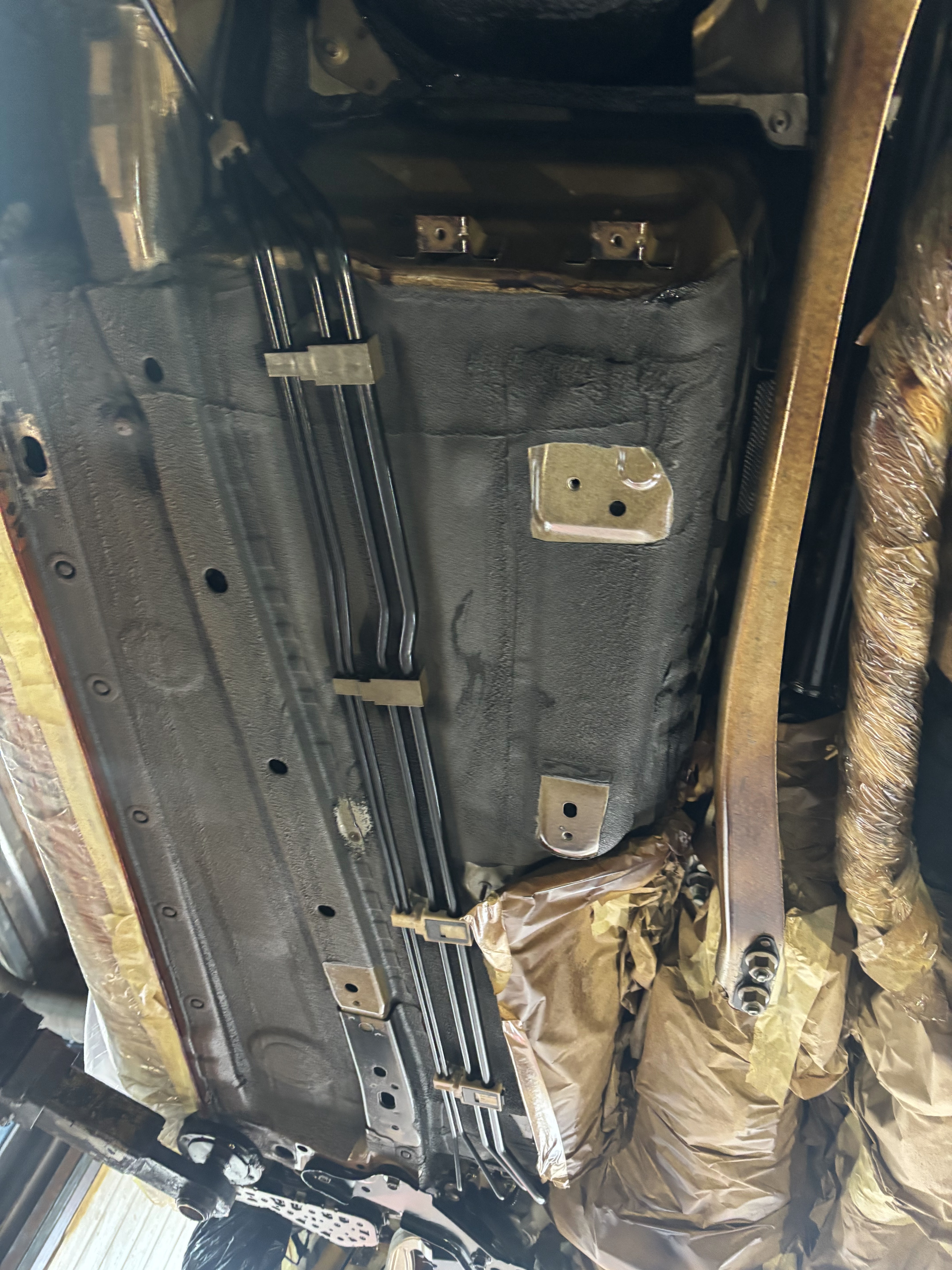
Underbody Coating: A premium, self-healing underseal is applied to all exposed metal surfaces.
Photo Documentation: You receive a full report of the work, which helps maintain the resale value of your vehicle.
Why Factory Protection Isn't Enough
Most modern vehicles leave the factory with a very thin layer of "transit wax" or basic paint. Manufacturers build cars for a global market, and they often don't account for the aggressive salt-spreading practices used on UK roads during winter. For a car owner in Wrexham or Wakefield, the factory protection is often depleted within the first three years of ownership.
FAQs: Understanding the Risks of Delay
Does rustproofing affect my manufacturer warranty? Generally, no. Rustproofing is a preventative maintenance service. However, we always recommend checking your specific terms. For most, the benefit of preventing structural rot far outweighs the risk of a manufacturer's "anti-perforation" warranty, which usually only pays out once a hole has already appeared, by which time the damage is done.
Can you rustproof a car that already has some rust? Yes, provided the rust is still at the "surface" or "scale" stage. We use high-performance converters and penetrative waxes that saturate existing oxidation and cut off the oxygen supply, effectively "freezing" the corrosion in place. If the rust is structural, we will advise on repairs before treatment.
Is it worth rustproofing a lease car? If you plan to hand the car back after 3 years, perhaps not. However, if you have a "balloon payment" at the end and intend to keep the vehicle for 10 years, or if you are responsible for "excess wear and tear" charges, protecting the chassis is a wise investment.
How long does the treatment last? Our premium Dinitrol® treatments are designed for longevity. We typically recommend a complimentary top-up service check every 2-3 years to ensure the coating remains intact after contact with road debris.
Final Takeaway: Early Action is Lowest Cost
Corrosion is a biological certainty for unprotected steel in the UK. The transition from a harmless-looking orange spot to a structural MOT failure can happen in as little as two or three winters. By investing in the Rustec Elite Standard early, you are not just buying a coating; you are securing the safety, longevity, and financial value of your vehicle.
Whether you are located in Luton, Oxford, or Worcester, our team is ready to provide a clinical, expert solution to keep your pride and joy on the road for a lifetime.
If you want to protect your vehicle properly : not just cover it up : the best time to act is before corrosion progresses. You can book a free inspection or request a quote here.

Comments