
Factory Protection Isn't Enough: Why Modern Cars Still Rust
The short answer is yes: modern cars still rust, often much sooner than owners expect. While manufacturing technology has advanced, factory corrosion protection is typically a "bare minimum" application designed to last just long enough to see the vehicle through its initial warranty period. In the harsh, salt-laden environment of the UK, this minimal protection is quickly bypassed by moisture and road debris, leading to structural decay that can remain hidden for years.
In this guide, we will explore why factory standards often fall short, the specific vulnerabilities of modern vehicle construction, and how the Rustec Elite Standard provides the comprehensive shield your vehicle actually needs for a lifetime of use.
The Myth of "Fully Protected" Modern Vehicles
Many car buyers assume that because a vehicle is new, it is impervious to the elements. This is a dangerous misconception. While most modern cars feature some level of galvanisation (a thin layer of zinc) and basic seam sealers, these are commercial compromises rather than absolute solutions.
Manufacturers are under immense pressure to reduce production costs and vehicle weight. Consequently, underbody protection is one of the first areas to see "optimisation", which is often just a polite term for cost-cutting. In many cases, large sections of the floor pan are left as bare painted metal, shielded only by plastic "undertrays." While these trays improve aerodynamics and reduce road noise, they actually accelerate corrosion by trapping wet mud and salt against the chassis, creating a micro-climate of constant humidity.
In UK conditions, corrosion is not a question of if , but when.
The "Iceberg" Model of Hidden Rust
Corrosion in modern vehicles follows an "iceberg" pattern. What you see on the surface, small bubbles on a wheel arch or a light orange tint on a bolt, is usually only 10% of the problem. The remaining 90% of the damage occurs inside the box sections, chassis rails, and sills.
Modern cars are built using complex, multi-layered steel pressings. These create numerous internal cavities that are rarely treated effectively at the factory. Moisture enters these sections through drainage holes or panel gaps, but it cannot easily escape. Without a high-wicking cavity wax to displace this moisture, the vehicle begins to rot from the inside out. By the time rust is visible on the exterior, the structural integrity of the panel is often already compromised.
Why the UK Climate is Uniquely Aggressive
The UK presents a "perfect storm" for vehicle decay. We have a temperate, high-humidity climate combined with a heavy reliance on road salt (sodium chloride) and, increasingly, liquid brine.
Salt and Brine: Salt lowers the freezing point of water but acts as a powerful electrolyte, accelerating the chemical reaction that turns steel into iron oxide (rust).
Humidity: Even on days when it isn't raining, our high humidity prevents the underbody from ever fully drying out, especially if dirt is trapped behind plastic liners.
The 3-Year Window: Most factory-applied waxes begin to dry out and crack within 36 months. Once the coating loses its flexibility, water enters the cracks, becomes trapped against the metal, and begins the oxidation process.
The Financial Reality: Prevention vs. Repair
Investing in professional rustproofing is a matter of financial logic. A high-end treatment for a modern car or 4x4 typically costs between £500 and £900, depending on the vehicle size and condition. Contrast this with the costs of negligence:
Welding Repairs: Once a vehicle fails an MOT on structural corrosion, professional welding repairs to sills or suspension mounts typically cost between £1,500 and £3,000.
Resale Value: A vehicle with a clean, documented rustproofing history can command a premium of £2,000 to £5,000 over a "crusty" equivalent, especially in the 4x4, van, and classic markets.
Depreciation: Rust is the single fastest way to accelerate a vehicle’s journey to the scrap heap, effectively wiping out the asset value of the car.
The Rustec Elite Standard: A 72-Hour Precision Process
At Rustec, we don't just "spray over" the problem. We believe that a poor rustproofing job can be worse than doing nothing, as it traps moisture and accelerates corrosion. This is why we developed the Rustec Elite Standard, a meticulous 72-hour process that treats your vehicle with clinical precision.
01: Deep Cleansing & Strip Down
We begin by removing all plastic undertrays, wheel arch liners, and heat shields. The undercarriage then undergoes a thorough steam clean to remove all traces of salt, grease, and road grime. This is the only way to ensure the protective coatings bond directly to the substrate.
02: Controlled Drying
A coating applied to a damp surface is destined to fail. We use industrial dehumidifiers and air movers to ensure the chassis and all internal cavities are bone-dry before any product is applied.
03: Clinical Masking
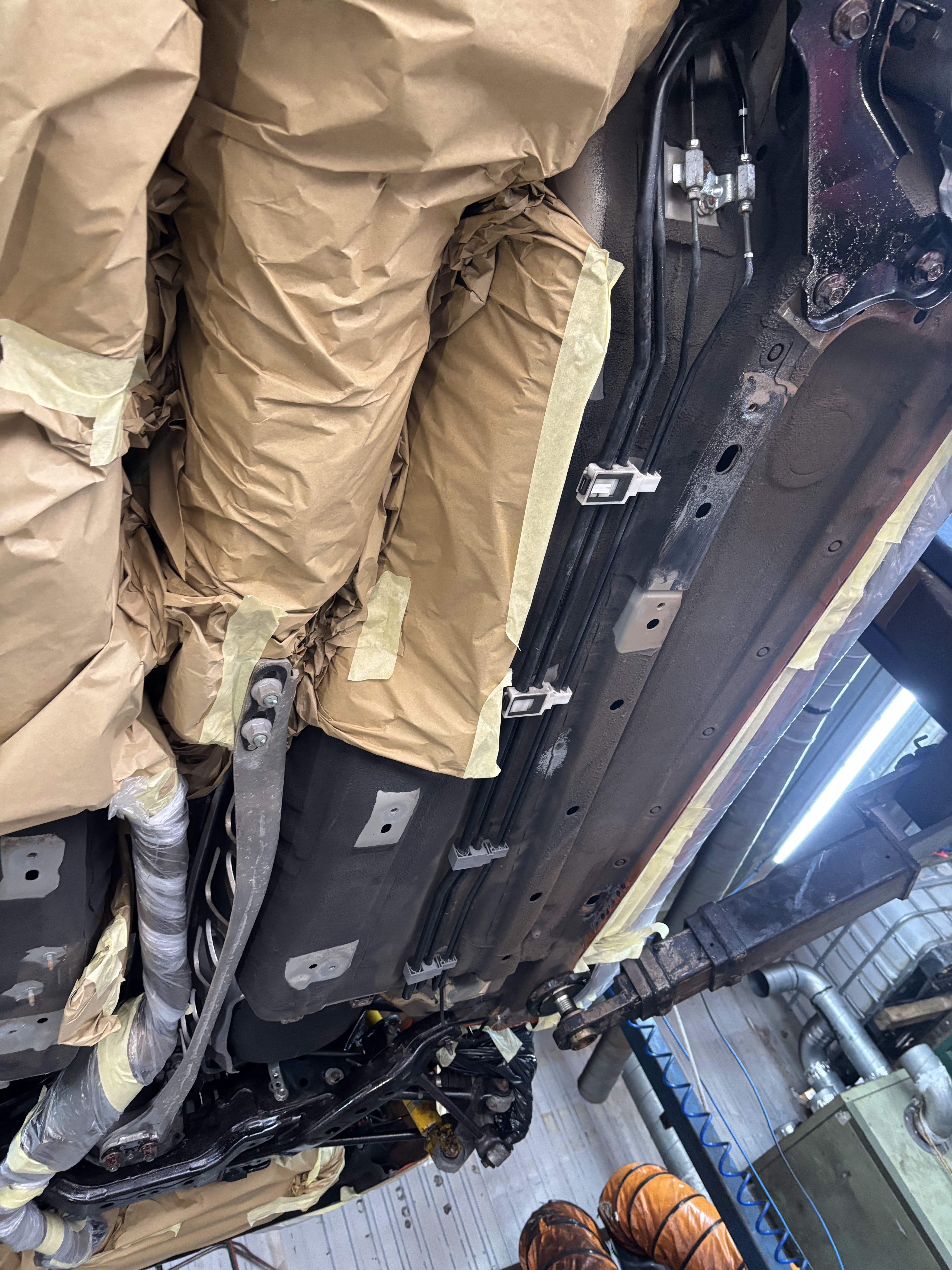
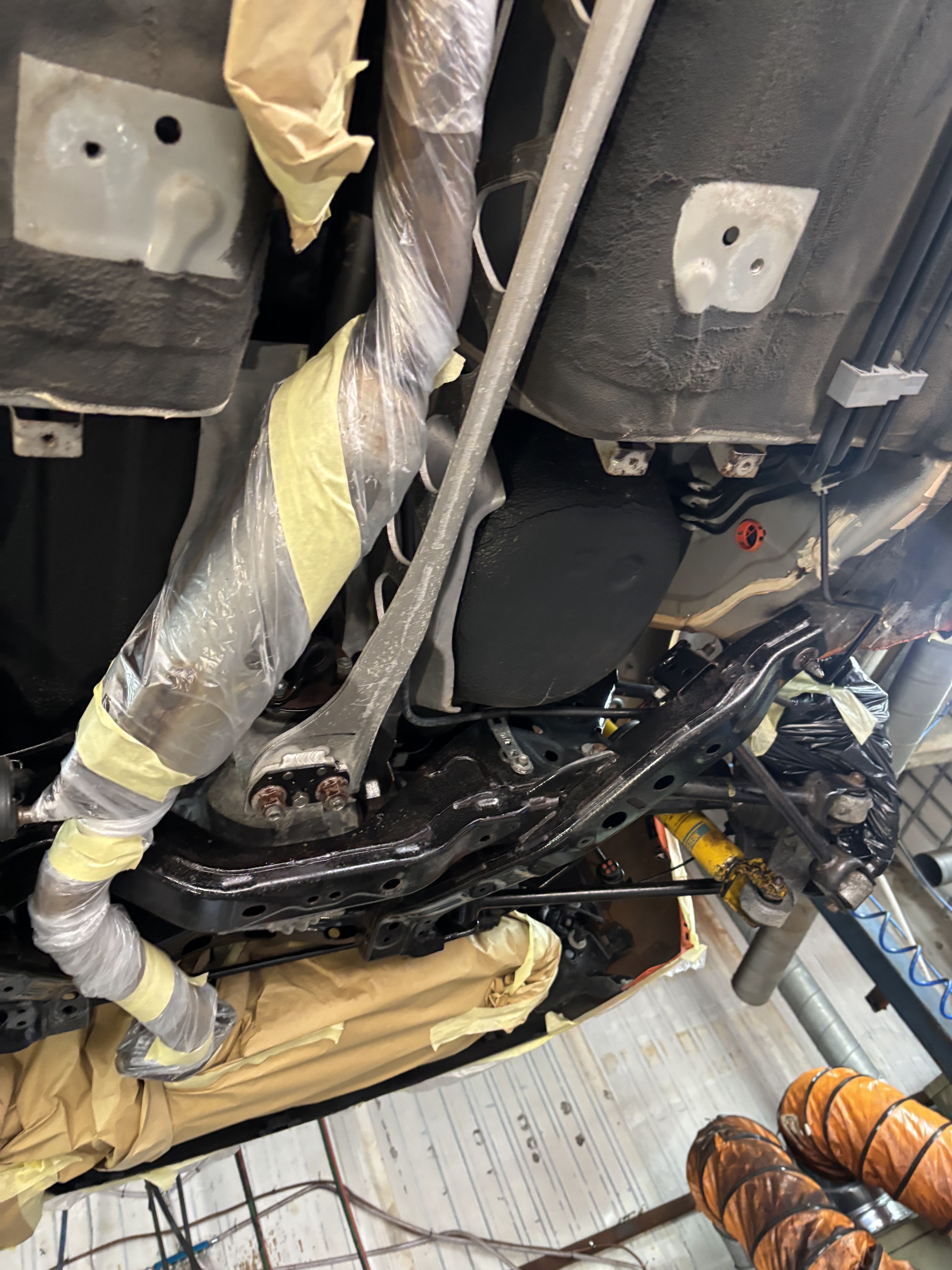
This is where our workshop differs from the standard garage. We treat your vehicle like a patient in surgery. Every component that should not be coated, exhaust systems, brake discs, sensors, wiring looms, and moving suspension parts, is meticulously masked using high-grade tape, paper, and plastic sheeting.
04: Cavity Wax Injection
Using specialized long-reach probes, we inject long-life Dinitrol® cavity wax into every box section, sill, and door pillar. This product is designed with a "high-creep" formula that wicks into the tightest seams, displacing any remaining oxygen and sealing the metal from within.
05: Premium Underbody Coating
Finally, we apply a robust, flexible underbody coating. Unlike the "gloopy black sludge" used by lower-tier providers, our products remain active and self-healing. If a stone chips the surface, the wax "creeps" back over the wound to maintain the seal.
Comparison: Factory Protection vs. Rustec Elite Standard
Feature | Factory Protection | Rustec Elite Standard |
Preparation | Minimal (assembly line) | 72-hour deep clean & dry |
Masking | None | Clinical masking of all sensitive parts |
Cavity Coverage | Limited/Inconsistent | 360° injection with high-creep wax |
Product Grade | Commercial Grade | Premium Dinitrol® / Specialist Wax |
Longevity | 2–3 Years (UK climate) | Long-term with complimentary top-ups |
Documentation | None | Full photo log & Service Booklet |
Visual Mental Model:Factory protection is like a phone screen protector that only covers the middle of the glass, it leaves the most vulnerable edges exposed to the first drop. Rustec Elite is like a rugged, wrap-around case that seals every port and edge against the environment.
Visible Precision: What to Expect
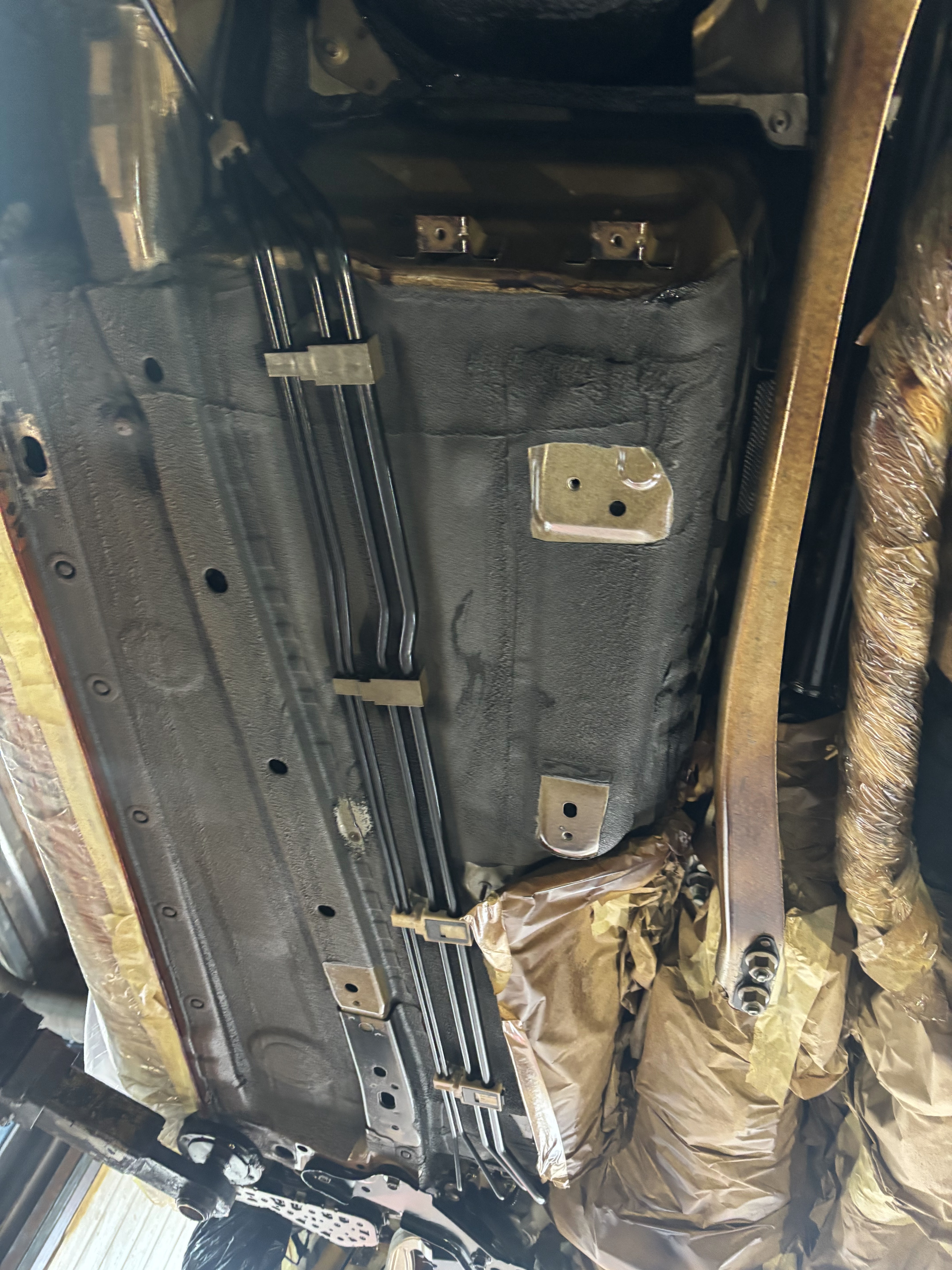
When you collect your vehicle from one of our specialist centers, such as rustproofing in Newport or professional rust proofing in Swansea, you will see the difference immediately. The application is uniform, the masking lines are sharp, and there is zero overspray on your paintwork or mechanical components.
Frequently Asked Questions
Does rustproofing void my manufacturer's warranty? Generally, no. Most manufacturer warranties cover "perforation from the inside out" due to manufacturing defects. Professional rustproofing is a maintenance service, similar to servicing your engine. However, we always recommend checking your specific terms. Most owners find that the added protection far outweighs the limited utility of a factory corrosion warranty that is notoriously difficult to claim against.
Is it worth doing if my car is already a few years old? Absolutely. While the "Golden Window" is in the first 3 years, our process includes a comprehensive inspection to identify and treat existing surface rust before the main coating is applied. Stopping corrosion now is always cheaper than repairing it later.
How often should the treatment be reapplied? Our premium Dinitrol® treatments are designed for longevity. We provide an official treatment service booklet and recommend a complimentary top-up inspection every 12–24 months to ensure the "wear zones" (like wheel arches) remain fully protected.
Can I do this myself with a pressure can? DIY applications often lack the pressure required for deep cavity penetration and the facilities for a proper deep clean. More importantly, without professional masking, it is easy to accidentally coat sensors or clog drainage holes, which can actually cause more harm than good.
Protect Your Investment Today
Modern vehicles are a significant financial commitment. Leaving their survival up to the bare-minimum standards of a factory assembly line is a risk that rarely pays off in the British climate. By choosing a professional, precision-engineered solution, you ensure your pride and joy remains structurally sound and valuable for years to come.
If you want to protect your vehicle properly : not just cover it up : the best time to act is before corrosion progresses. You can book a free inspection or request a quote here.
Comments