
The Biggest Rustproofing Mistake: Prioritising Price Over Process
The biggest rustproofing mistake a vehicle owner can make is choosing a service based on price rather than the application process. While a "cheap" underseal might seem like a bargain, it often involves spraying thick coatings over existing dirt, moisture, and active corrosion. A poor rustproofing job can be worse than doing nothing, as it traps moisture and accelerates corrosion. In the UK’s damp, salt-heavy climate, protecting your vehicle is essential, but cutting corners on the process inevitably leads to structural failure and expensive repair bills.
In this guide, we examine why the "process" is the only thing that actually stops rust, the financial reality of cheap treatments versus professional standards, and why the Rustec Elite Standard is designed to provide long-term protection rather than a temporary cosmetic fix.
The "Price Over Process" Trap
When searching for car rust proofing, it is tempting to go with the lowest quote. You might see "underseal" services advertised for £200 or £300, often promising a "same-day turnaround." To a vehicle owner, this sounds efficient. To a corrosion specialist, it is a red flag.
The product itself, whether it is a high-end Dinitrol® wax or a budget bitumen spray, is only about 20% of the equation. The remaining 80% is the process. If a vehicle is not deep-cleaned, meticulously dried, and stripped of its under-trays, the coating is simply being applied to a layer of road grime and salt. This creates a "seal" that traps oxygen and moisture against the metal.
Instead of preventing rust, this "cheap" approach creates a greenhouse effect for corrosion. The metal continues to rot underneath a black, sticky mask, hidden from view until a hole appears or the vehicle fails its MOT.

The Visual Mental Model: The Foundation of a House
Proper car rustproofing is exactly like painting a house: the preparation matters as much as the coating. If you paint over peeling, damp wood, the new paint will look great for a week, then bubble and flake off as the wood rots underneath. At Rustec, we treat your chassis like a high-end architectural project, the "paint" (the wax) only goes on once the "surface" (the metal) is clinically clean, dry, and prepared.
The Iceberg Model of Hidden Rust
Most vehicle owners only worry about the rust they can see, the orange tint on a suspension arm or a bubble on a wheel arch. However, corrosion is like an iceberg; the vast majority of the damage happens where you cannot see it.
Structural rust usually starts from the inside out. Box sections, sills, and chassis rails are hollow. Moisture and road salt enter these cavities and sit there, eating away at the metal from the internal face. A cheap "spray-over" job only addresses the external surfaces, leaving the internal structure to rot. This is why a comprehensive process must include internal cavity wax injection using specialized wands, a step often skipped by budget providers to save time and material costs.
Financial Justification: Prevention vs. Structural Repair
Is professional car rustproofing expensive? Not when compared to the cost of failure.
In the UK, once a vehicle requires structural welding for an MOT, the costs escalate rapidly. Patching a sill or a chassis rail correctly involves significant labour, fabrication, and fire-safety precautions.
Item | Professional Prevention (Rustec) | Reactive Repair (Welding/Replacements) |
Average Cost | £500 – £900 (One-off) | £1,500 – £4,000+ (Recurring) |
Vehicle Value | Maintains/Increases resale value | Drastically reduces resale value |
Safety | Maintains structural integrity | Compromises factory crash safety |
Time Out of Use | 3 Days (Scheduled) | Weeks (Unexpected) |
As we discussed in our previous post on the cost of waiting for rust to appear, delaying treatment or opting for a substandard "quick fix" almost always results in a net financial loss for the owner. In UK conditions, corrosion is not a question of if , but when.
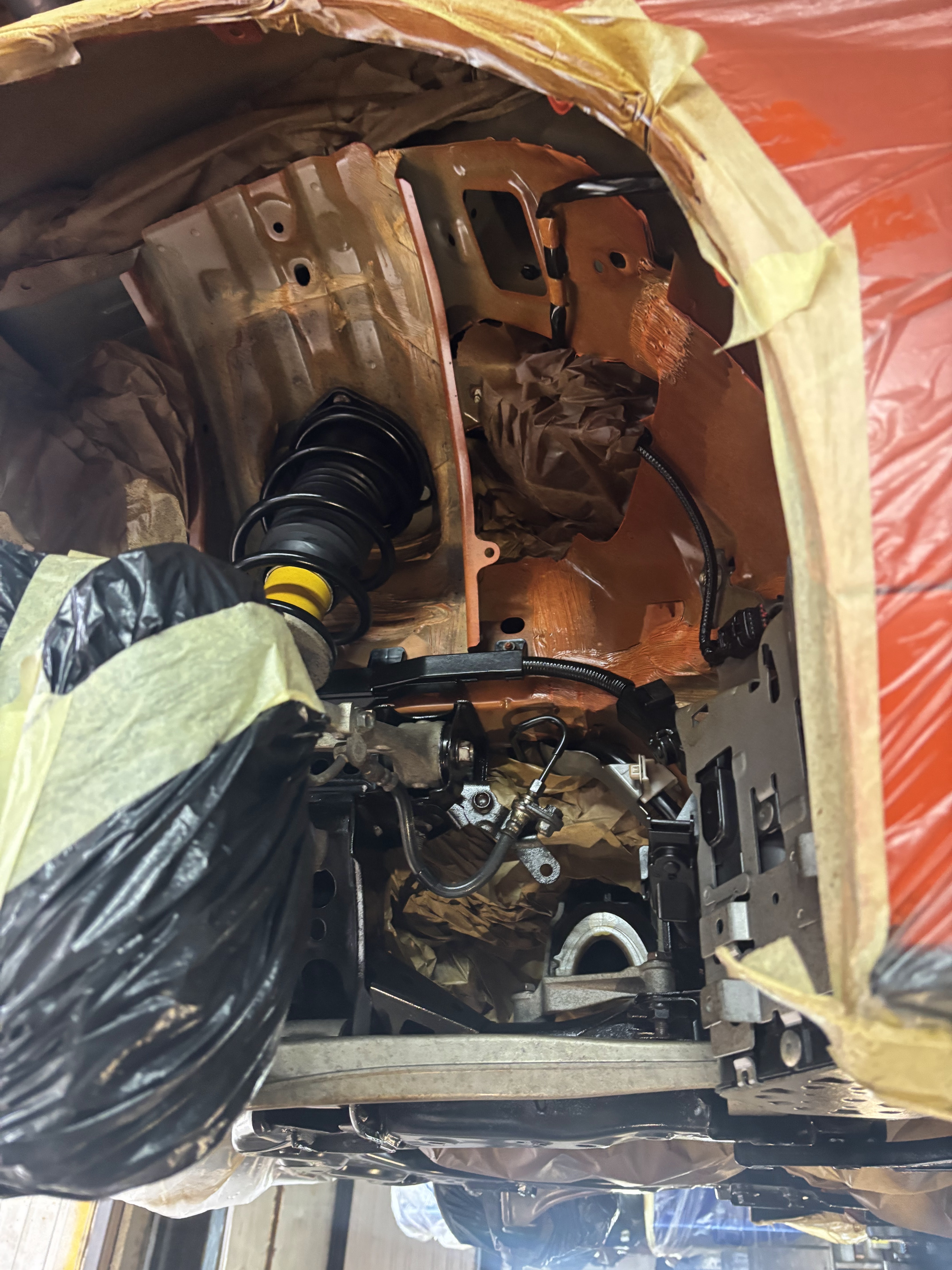
The Rustec Elite Standard: A 72-Hour Clinical Process
We do not offer "express" services because a proper treatment cannot be done in a few hours. To ensure the highest levels of protection, we adhere to the Rustec Elite Standard, a meticulous 72-hour process:
01: Deep Clean & Strip Down: We remove all plastic under-trays, wheel arch liners, and heat shields. The undercarriage is subjected to a high-pressure steam clean to remove all salt and traffic film.
02: Controlled Drying: The vehicle is placed in a humidity-controlled environment with industrial heaters and air movers. Applying wax to a damp chassis is the fastest way to trap moisture.
03: Precision Masking: We meticulously mask up brakes, exhaust systems, sensors, and the engine/gearbox. A professional job should never have "overspray" on moving parts.
04: Cavity Injection: We use high-pressure probes to inject Dinitrol® cavity waxes into every hollow section of the chassis.
05: Underbody Coating: A durable, high-build underbody wax is applied to all exposed metal surfaces.
06: Documentation & Reassembly: We provide photo documentation of the process, proving the work was done to the highest standard, before reassembling the trim.
This process ensures that we are not just "covering up" rust, but proactively stopping it. You can learn more about how this compares to budget services in our article on professional vs. cheap rustproofing.
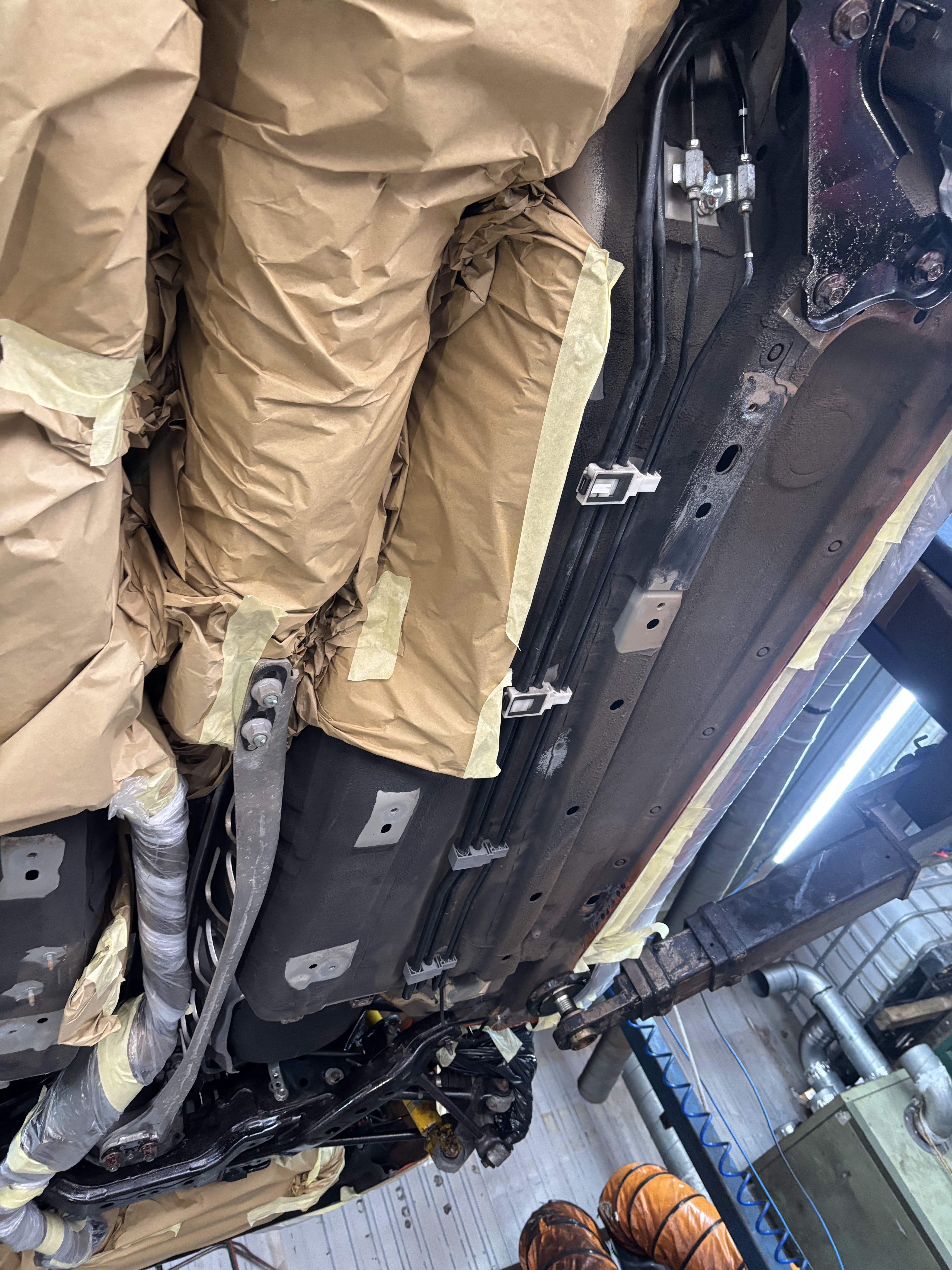
Buyer Intent Comparison: What Are You Paying For?
If you are comparing quotes, use this table to ensure you are comparing like-for-like services.
Feature | Budget "Drive-in" Service | Rustec Elite Standard |
Time Taken | 2–6 Hours | 72 Hours |
Prep Work | None / Surface wipe | Full strip & steam clean |
Drying Time | None (Applied to wet metal) | 12–24 hours in heated bay |
Cavity Wax | Often skipped | Comprehensive injection |
Masking | Minimal (Overspray common) | Clinical precision masking |
Longevity | 6–12 Months | Multi-year protection |
Why "Catching it Early" is Cheaper
The best time to rustproof a vehicle is when it is new or in good condition. If you catch rust early, the process is straightforward and the results are near-permanent. If you wait until the metal is flaky and thin, the "process" becomes much more complex and expensive, often requiring chemical rust converters or mechanical descaling before the wax can even be applied.

FAQ: Understanding the Process
1. Why can’t I just use a spray can of underseal myself?
You can, but DIY applications rarely involve the deep cleaning and drying necessary for a bond. Most DIYers spray over existing road salt, which then eats the metal from behind the coating. Without a lift and high-pressure cavity wands, you also cannot reach the areas where rust actually starts.
2. How long does a professional rustproofing process last?
A Rustec Elite treatment typically provides robust protection for 3–5 years, depending on mileage and usage. We recommend a complimentary inspection every 12 months to ensure the "barrier" remains intact, especially if you use the vehicle off-road or in heavy winter salt.
3. Will rustproofing affect my MOT?
Yes: positively. A clean, well-maintained underbody is far more likely to pass an MOT. However, if you use a "cheap" bitumen-based underseal to hide existing rot, an MOT tester may flag this as "suspicious" and probe the area further. Transparency and high-quality wax (which remains translucent or semi-solid) are always better for MOT compliance.
4. Is it worth rustproofing an older car?
Absolutely. While new cars are the best candidates, older cars can be saved if the structural integrity is still there. The key is the process: we must remove the loose corrosion before sealing it. If the car is too far gone, we will be honest with you: there is no point in sealing a vehicle that requires a welder, not a wax.
Final Takeaway: Value Over Cost
The biggest rustproofing mistake is thinking you are saving money by choosing the cheapest quote. In reality, you are often paying someone to accelerate the death of your vehicle by trapping moisture against its most vital components.
Professional rustproofing is an investment in the longevity and safety of your vehicle. It is the difference between a car that lasts 20 years and one that is scrapped after 8 due to "excessive corrosion near a structural mounting point."
If you want to protect your vehicle properly : not just cover it up : the best time to act is before corrosion progresses. You can book a free inspection or request a quote here.
Comments