
Should I repair rust before rustproofing?
If you've noticed rust forming on your vehicle and you're considering rustproofing as a long-term solution, you've likely asked yourself this crucial question: should I repair the rust first, or can I simply apply a protective coating over it?
The short answer is yes: rust should be addressed before applying any rustproofing treatment. However, "repair" can mean different things depending on the severity of corrosion, and understanding your options will help you make the right decision for your vehicle.
In this comprehensive guide, we'll walk you through exactly why treating existing rust before rustproofing is essential, the different methods available, and how to ensure your vehicle receives the protection it deserves.
Why You Can't Simply Coat Over Rust
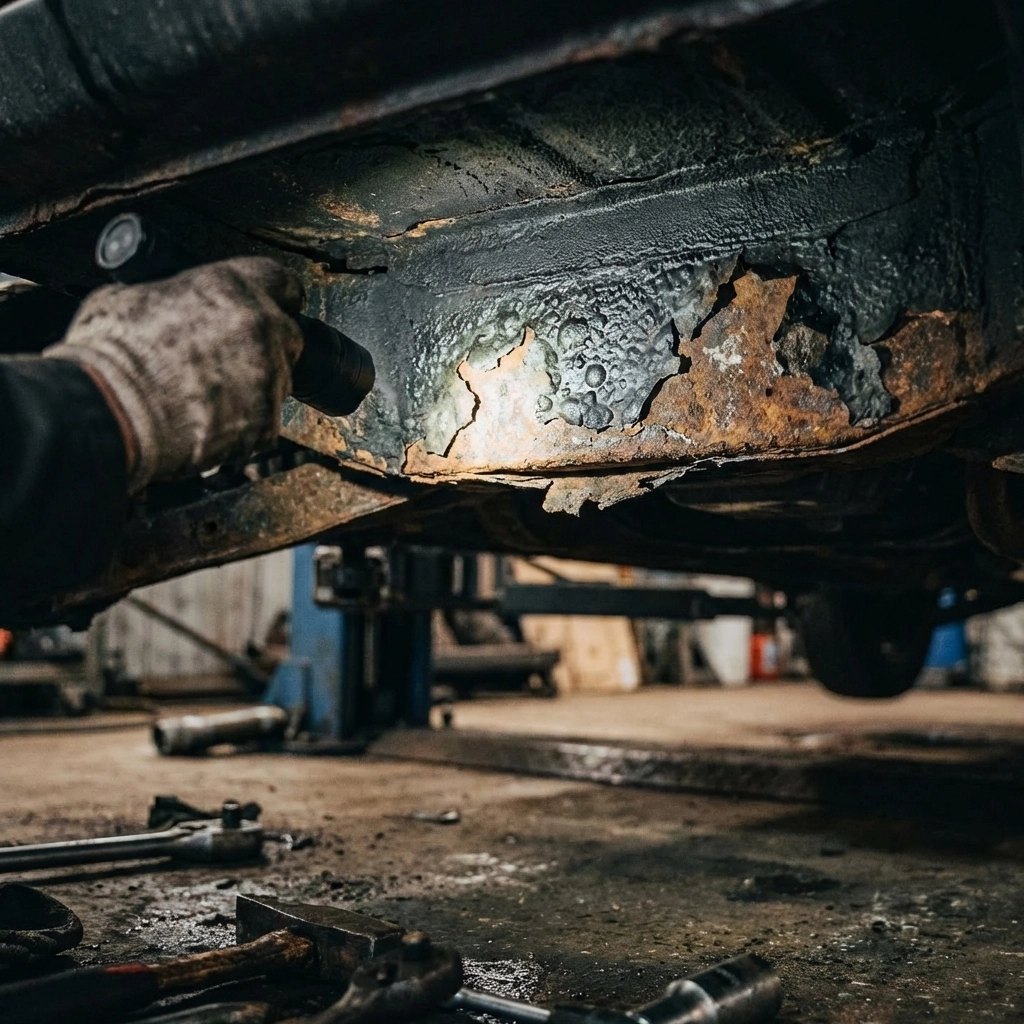
It's tempting to think that applying a thick layer of protective underseal or cavity wax over existing rust will simply seal it away and stop the problem. Unfortunately, corrosion doesn't work that way.
Rust is an active chemical process. When iron or steel is exposed to oxygen and moisture, oxidation occurs. This process doesn't stop just because you've covered it with a protective layer. In fact, sealing over untreated rust can make matters worse for several reasons:
Trapped moisture accelerates corrosion beneath the coating
Poor adhesion means the protective layer will eventually flake, bubble, or delaminate
Hidden rust continues to spread underneath, potentially causing structural damage before you notice
Wasted investment as the rustproofing fails prematurely
Professional-grade rustproofing products like Dinitrol are designed to bond with clean metal surfaces. When applied over active rust without proper preparation, even the highest-quality products cannot perform as intended. The coating may appear fine initially, but within months, you'll likely see it beginning to fail: peeling away and exposing the worsening corrosion beneath.
Understanding the Two Main Approaches to Rust Treatment
Before rustproofing can be applied effectively, existing rust must be dealt with using one of two primary methods. The right choice depends on the severity of the corrosion and your specific circumstances.
1. Physical Rust Removal
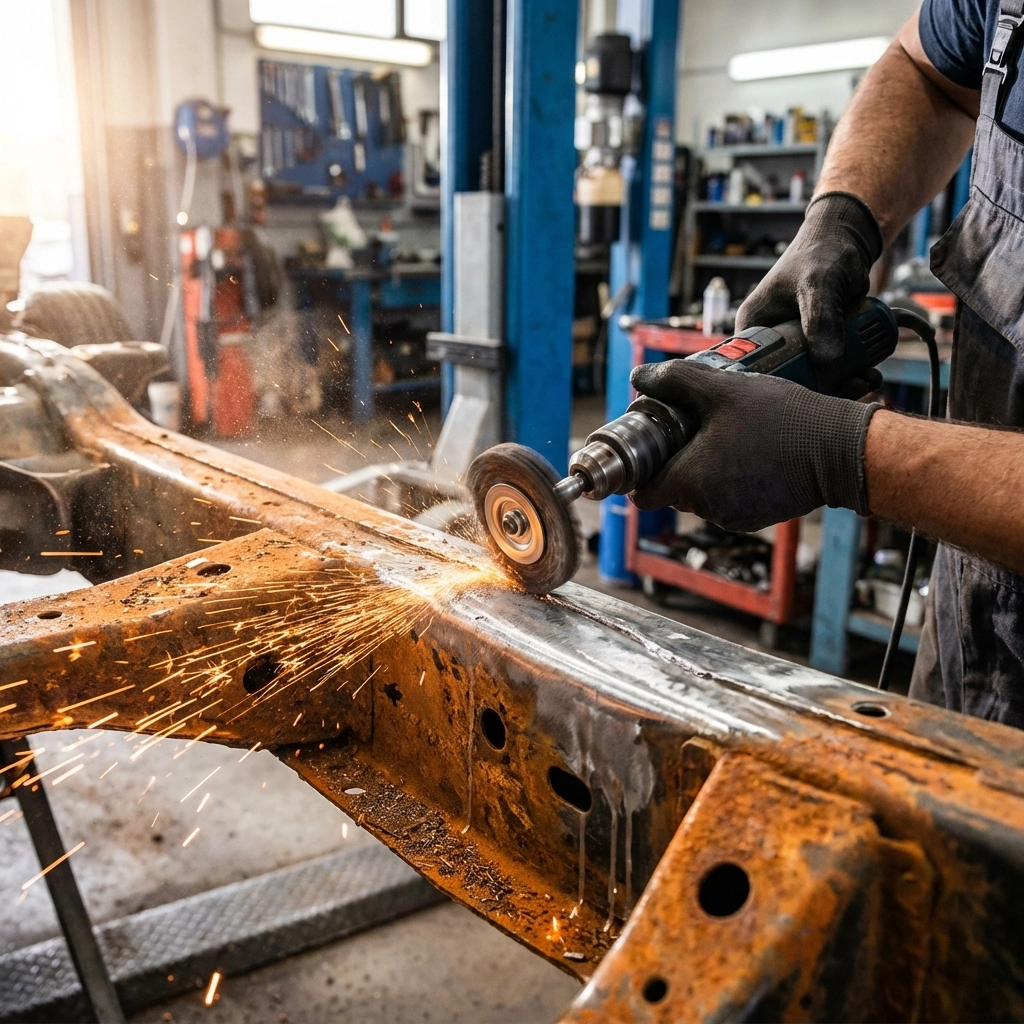
This is the most thorough and effective approach. Physical rust removal involves mechanically stripping away all corrosion until you reach clean, bare metal. Common tools and methods include:
Wire wheels and brushes (manual or drill-mounted)
Angle grinders with flap discs or sanding attachments
Sandblasting or media blasting for larger areas
Hand sanding for detailed or delicate sections
Advantages of physical removal:
Provides the best possible surface for primer and rustproofing adhesion
Completely eliminates the rust, stopping the oxidation process entirely
Allows for proper inspection of the metal's condition
Creates a long-lasting foundation for protective coatings
This method is particularly recommended for moderate to severe rust, especially in structural areas where integrity is paramount. Once the bare metal is exposed, a rust-inhibiting primer should be applied promptly to prevent flash rust from forming before the final protective coatings are added.
2. Rust Conversion and Neutralisation
For lighter surface rust or situations where complete removal isn't practical, rust converters offer an alternative solution. These products: typically containing phosphoric acid or tannic acid: chemically react with iron oxide (rust) and convert it into a more stable compound that can be painted or coated over.
How rust converters work:
The chemical bonds with the rust, neutralising the oxidation process
It creates a darkened, stable surface suitable for priming and coating
The treated area becomes paintable and provides improved adhesion for protective products
When rust conversion is appropriate:
Light surface rust that hasn't penetrated deeply
Areas where mechanical removal is difficult to access
As a supplementary treatment after initial rust removal
It's important to note that rust conversion is generally considered less effective than complete physical removal. While it can be a practical solution for minor surface corrosion, it should not be relied upon for significant rust problems or structural concerns.
The Correct Order of Operations
Whether you're tackling rust repair yourself or having it done professionally, following the correct sequence is essential for lasting results. Here's the methodical process that delivers the best outcomes:
Step 1: Thorough Inspection
Before any work begins, a comprehensive inspection identifies all areas of concern. This includes obvious rust spots as well as hidden corrosion in cavities, seams, and hard-to-see locations. At Rustec, we provide detailed photo documentation so you can see exactly what we've found and what needs addressing.
Step 2: Cleaning and Preparation
The vehicle's undercarriage must be thoroughly cleaned. A proper steam clean removes road grime, salt deposits, mud, and loose debris that would otherwise compromise the treatment. This step also helps reveal rust that may have been hidden beneath dirt accumulation.
Step 3: Rust Treatment
Depending on severity:
For significant rust: Mechanical removal down to bare metal using appropriate tools
For surface rust: Application of rust converter/neutraliser, allowed to cure fully
For structural rust: Professional assessment to determine if welding repairs are required before proceeding
Step 4: Priming
Once rust has been removed or neutralised, a rust-inhibiting primer is applied to all treated areas. This creates a protective barrier and provides an ideal surface for the final rustproofing products to bond with.
Step 5: Professional Rustproofing Application
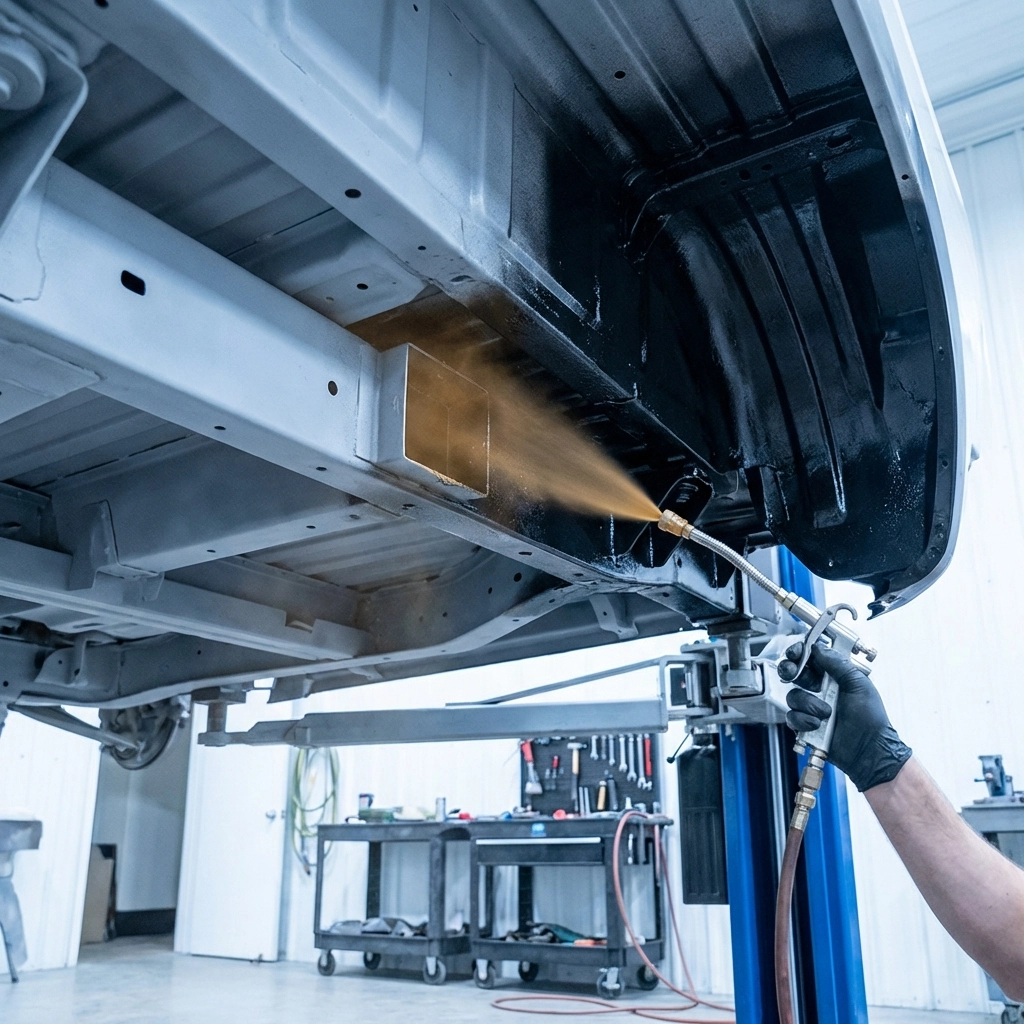
With the surface properly prepared, premium rustproofing products can now be applied. A comprehensive treatment typically includes:
Underbody protection using products like Dinitrol 4941
Cavity wax injection to protect box sections, sills, and chassis rails
Seam sealing for vulnerable joints and edges
When Welding Is Required First
In cases of severe corrosion where the metal has become structurally compromised: holes, significant thinning, or perforation: welding repairs must be completed before any rustproofing treatment.
The correct sequence when welding is needed:
Remove all rust from the affected area
Cut out and replace damaged metal sections
Apply weld-through primer to mating surfaces
Complete welding repairs
Grind and finish weld areas
Apply rust-inhibiting primer
Proceed with full rustproofing treatment
Attempting to rustproof over structurally compromised metal is not only ineffective: it can be dangerous. Weakened chassis components, suspension mounting points, and subframes require proper repair before protection can be meaningful.
DIY Rust Repair vs Professional Treatment
For minor surface rust on accessible areas, a competent DIY approach can be effective. However, there are significant advantages to professional treatment:
Professional treatment offers:
Access to specialist equipment and high-grade products
Experience identifying hidden rust that DIY inspection might miss
Proper surface preparation in hard-to-reach cavities and box sections
Application expertise ensuring correct product coverage and thickness
Warranty-backed peace of mind
Consider professional help when:
Rust is present in structural areas
Corrosion has spread to multiple locations
You're unsure about the severity of the problem
Your vehicle requires cavity wax injection
You want comprehensive, lasting protection
At Rustec, our technicians are trained to assess each vehicle individually, recommending the appropriate level of rust treatment before applying our premium Dinitrol rustproofing system. This ensures you receive a treatment that actually works: not just a cosmetic cover-up that fails within months.
Protecting Your Investment for the Long Term
Addressing rust before rustproofing isn't just about proper procedure: it's about protecting your investment and ensuring your vehicle remains safe, reliable, and valuable for years to come.
A vehicle that receives thorough rust treatment followed by professional-grade rustproofing will:
Maintain structural integrity for safer driving
Retain higher resale value compared to rust-affected equivalents
Require less expensive repairs over its lifetime
Provide peace of mind knowing corrosion is under control
If you're unsure about the condition of your vehicle or whether existing rust needs repair before treatment, we recommend booking a comprehensive inspection. Our team will provide honest, transparent advice on exactly what's needed to protect your vehicle effectively.
Ready to give your vehicle the protection it deserves? Visit Rustec to learn more about our comprehensive rustproofing services and book your consultation today. Whether you're dealing with existing rust or looking to prevent future corrosion, we're here to help you keep your vehicle in optimal condition for a lifetime.

Comments