
Is rainwater enough to cause rust on a car?
Many vehicle owners assume that rust is primarily caused by winter road salt or coastal air. However, the reality may surprise you: rainwater alone is sufficient to cause rust on your car. Understanding how this happens, and what you can do to protect your vehicle, is essential for maintaining its longevity, structural integrity, and resale value.
In this comprehensive guide, we explore the science behind rust formation, explain how rainwater creates the perfect conditions for corrosion, and outline the professional solutions available to safeguard your vehicle for years to come.
Understanding Rust: The Science Behind Corrosion
Rust is the common term for iron oxide, a compound that forms when iron or steel reacts with oxygen in the presence of moisture. This chemical reaction, known as oxidation, is a natural process that occurs whenever these three elements combine.
Your vehicle contains numerous steel and iron components, particularly in the chassis, subframe, suspension parts, and undercarriage. These areas are constantly exposed to the elements, including rainwater, making them prime candidates for corrosion if left unprotected.
The basic formula is straightforward:
Iron + Oxygen + Water = Iron Oxide (Rust)
Once this process begins, it does not stop on its own. Rust spreads progressively, eating away at metal surfaces and compromising the structural integrity of affected components. What starts as minor surface corrosion can develop into serious structural damage if left untreated.
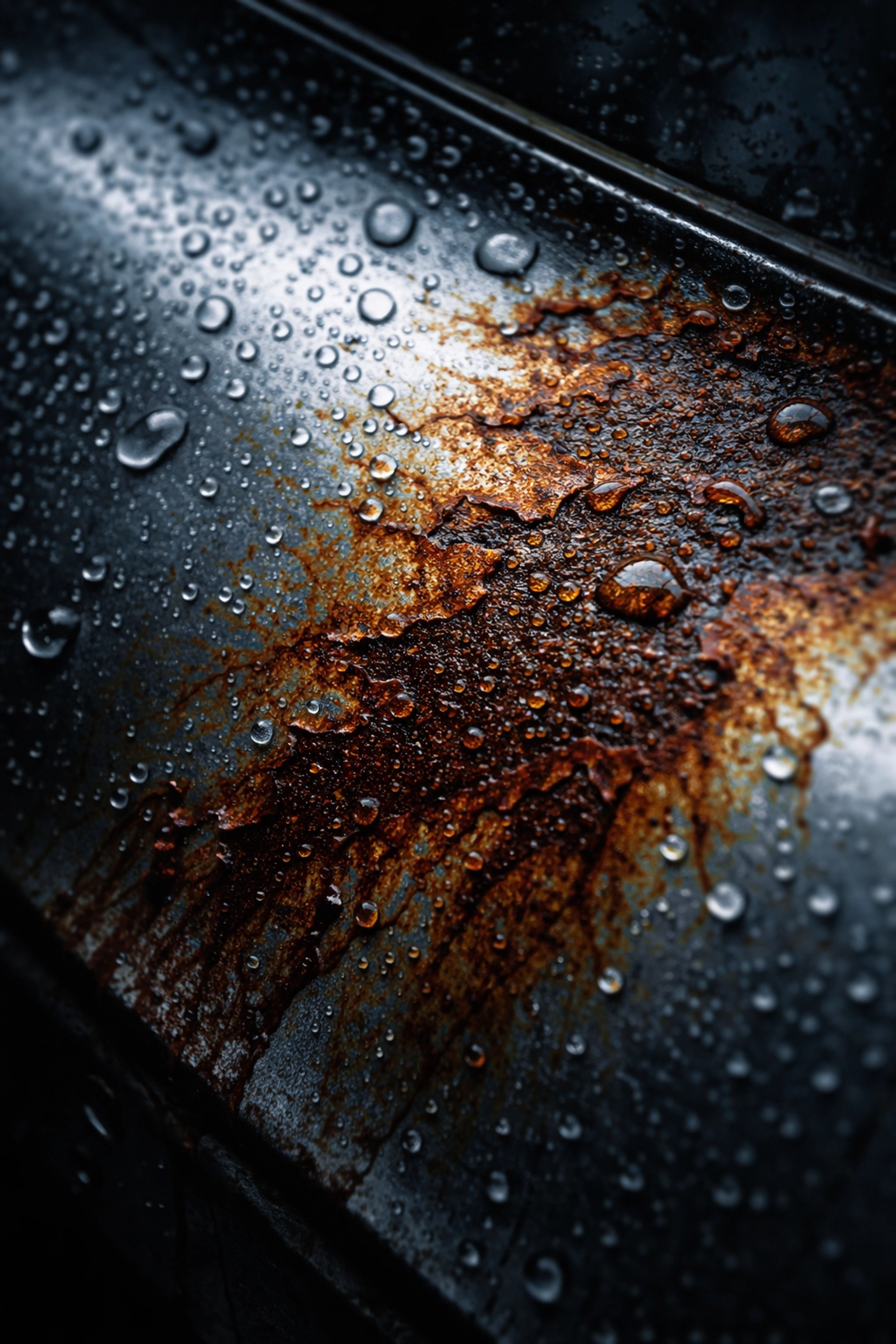
How Rainwater Creates the Perfect Environment for Rust
Rainwater provides the essential moisture component required for oxidation to occur. When rain falls on your vehicle, it doesn't simply roll off and evaporate. Instead, it:
Saturates steel components in your vehicle's undercarriage
Seeps into small crevices, joints, and seams where it becomes trapped
Collects in box sections and cavities inside doors, sills, and chassis rails
Creates prolonged contact between water and bare metal surfaces
Even after the rain stops, moisture can remain trapped in these hidden areas for extended periods. This prolonged exposure provides ample time for the oxidation process to take hold and progress.
Furthermore, rainwater is rarely pure H2O. As it falls through the atmosphere and flows across road surfaces, it picks up a variety of contaminants that accelerate corrosion.
Road Contaminants: The Hidden Accelerant
While rainwater alone can initiate rust formation, the contaminants it carries significantly accelerate the process. When rain washes across road surfaces, it collects:
Oil and fuel residues from vehicle emissions
Brake dust and metallic particles
Automotive fluids including coolant and transmission fluid
Industrial pollutants and particulates
Organic matter and debris
These substances make the water more conductive, which speeds up the electrochemical reaction that causes rust. In effect, contaminated rainwater becomes a more aggressive corrosive agent than pure water alone.
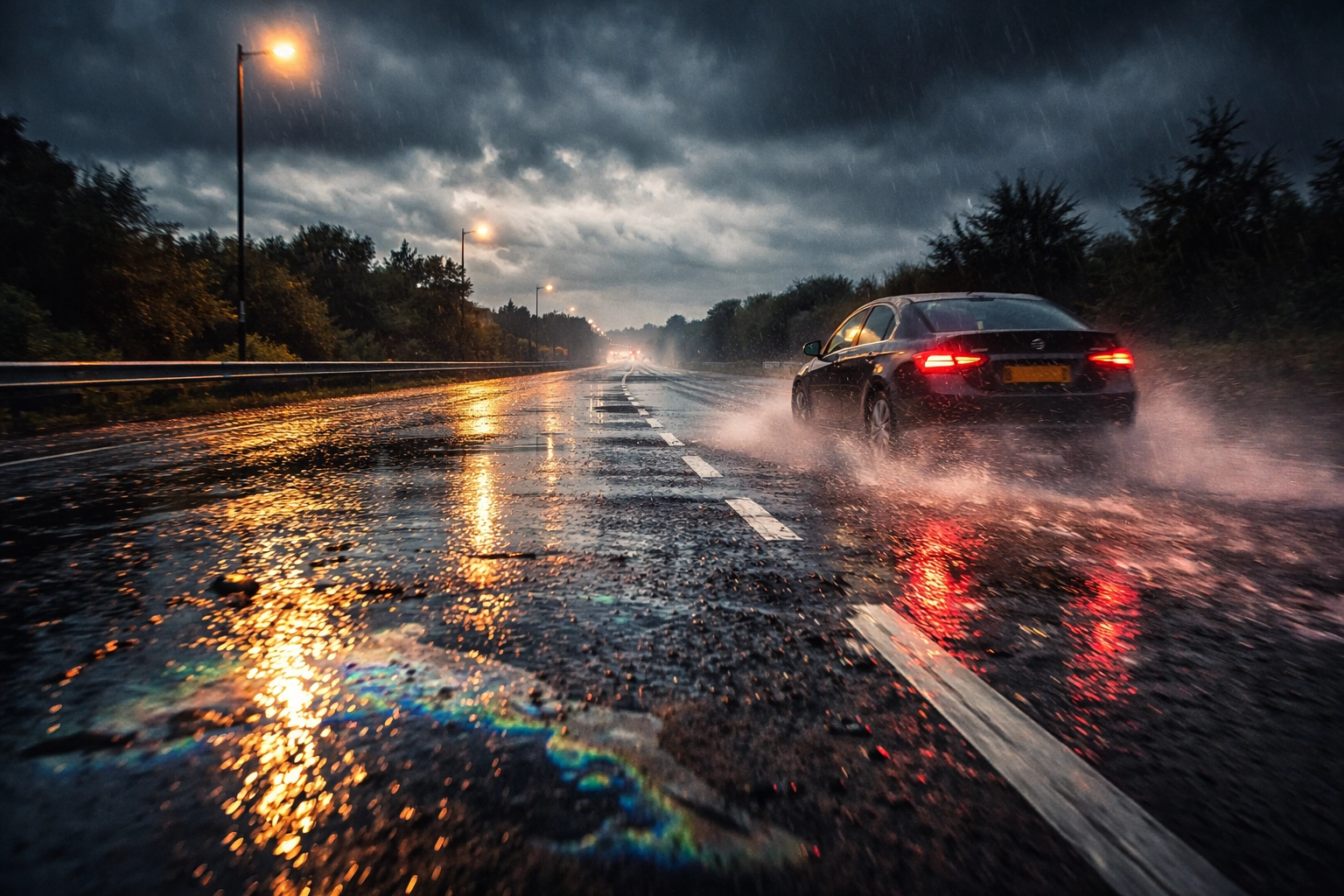
Acid Rain: An Additional Concern
In many urban and industrial areas, rainwater contains elevated levels of nitric and sulfuric acids, a phenomenon commonly known as acid rain. These acids form when industrial emissions and vehicle exhaust combine with atmospheric moisture.
Acid rain poses a dual threat to your vehicle:
Paint damage: Acidic water can etch through clear coat and paint layers, exposing the bare metal underneath
Accelerated corrosion: Once metal is exposed, the acidic moisture speeds up rust formation considerably
Even in areas not typically associated with heavy industrial activity, acid rain remains a factor that vehicle owners should consider when assessing their rust protection needs.
Why the UK Climate Is Particularly Problematic
The United Kingdom's climate presents a challenging environment for vehicle preservation. Consider the following factors:
High annual rainfall: The UK receives rain on an average of 150+ days per year
Humidity: Persistent moisture in the air extends drying times
Temperature fluctuations: Regular freeze-thaw cycles cause metal expansion and contraction, creating micro-cracks where moisture can penetrate
Road treatments: Salt and grit applied during winter months compound the effects of rainwater
This combination of factors means that vehicles in the UK face year-round exposure to conditions that promote rust formation. Even during summer months, when road salt is absent, rainwater carrying road contaminants continues to pose a significant threat to unprotected metal surfaces.
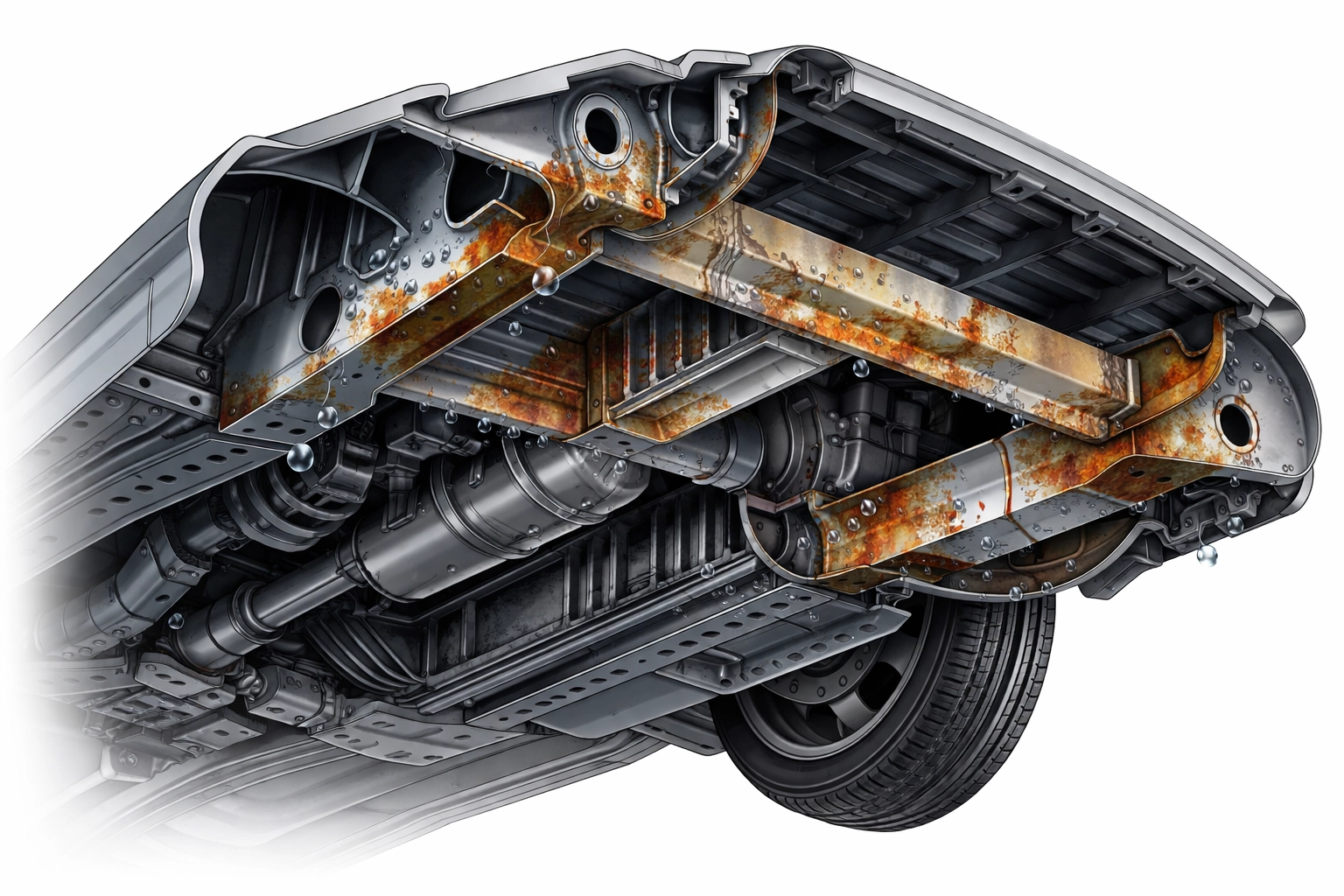
Frequency of Exposure: Why Regular Rain Matters
The cumulative effect of repeated exposure to rainwater cannot be understated. Each rain shower, puddle splash, or morning dew adds moisture to your vehicle's vulnerable areas. Over weeks, months, and years, this regular contact compounds the risk exponentially.
Vehicles that are:
Parked outdoors regularly
Driven in wet conditions frequently
Not dried or cleaned after rain exposure
Stored in damp or unventilated environments
...face a significantly higher risk of developing rust, even without exposure to road salt or coastal conditions.
Factory Protection: Is It Enough?
Modern vehicles do come with factory-applied corrosion protection, including galvanised panels, primer coatings, and underbody sealants. However, this protection has limitations:
Coverage gaps: Factory treatments often miss interior cavities, seams, and hard-to-reach areas
Wear and degradation: Road debris, stone chips, and general wear can damage protective coatings over time
Limited thickness: Factory applications tend to be thinner than professional aftermarket treatments
Variable quality: Protection levels vary significantly between manufacturers
While factory protection provides a baseline defence, it is rarely comprehensive enough to offer lifetime rust prevention, particularly in the UK's demanding climate.
Professional Rust Protection: The Definitive Solution
For vehicle owners seeking genuine, long-term protection against rainwater and all forms of moisture-related corrosion, professional rustproofing offers the most effective solution.
At Rustec, we provide comprehensive rust protection treatments using the highest-quality Dinitrol® products. Our meticulous process includes:
01: Comprehensive Inspection Every treatment begins with a thorough examination of your vehicle's undercarriage, identifying existing corrosion and vulnerable areas.
02: Full Undercarriage Steam Clean We remove all dirt, debris, and existing contamination to ensure optimal adhesion of protective coatings.
03: Cavity Wax Treatment Interior box sections, chassis rails, sills, and door cavities receive protective cavity wax that seals out moisture and prevents corrosion from the inside out.
04: Underbody Protection A comprehensive application of professional-grade underbody coating creates a durable barrier against water, contaminants, and road debris.
05: Photo Documentation You receive detailed before and after photographs documenting the treatment for your records.
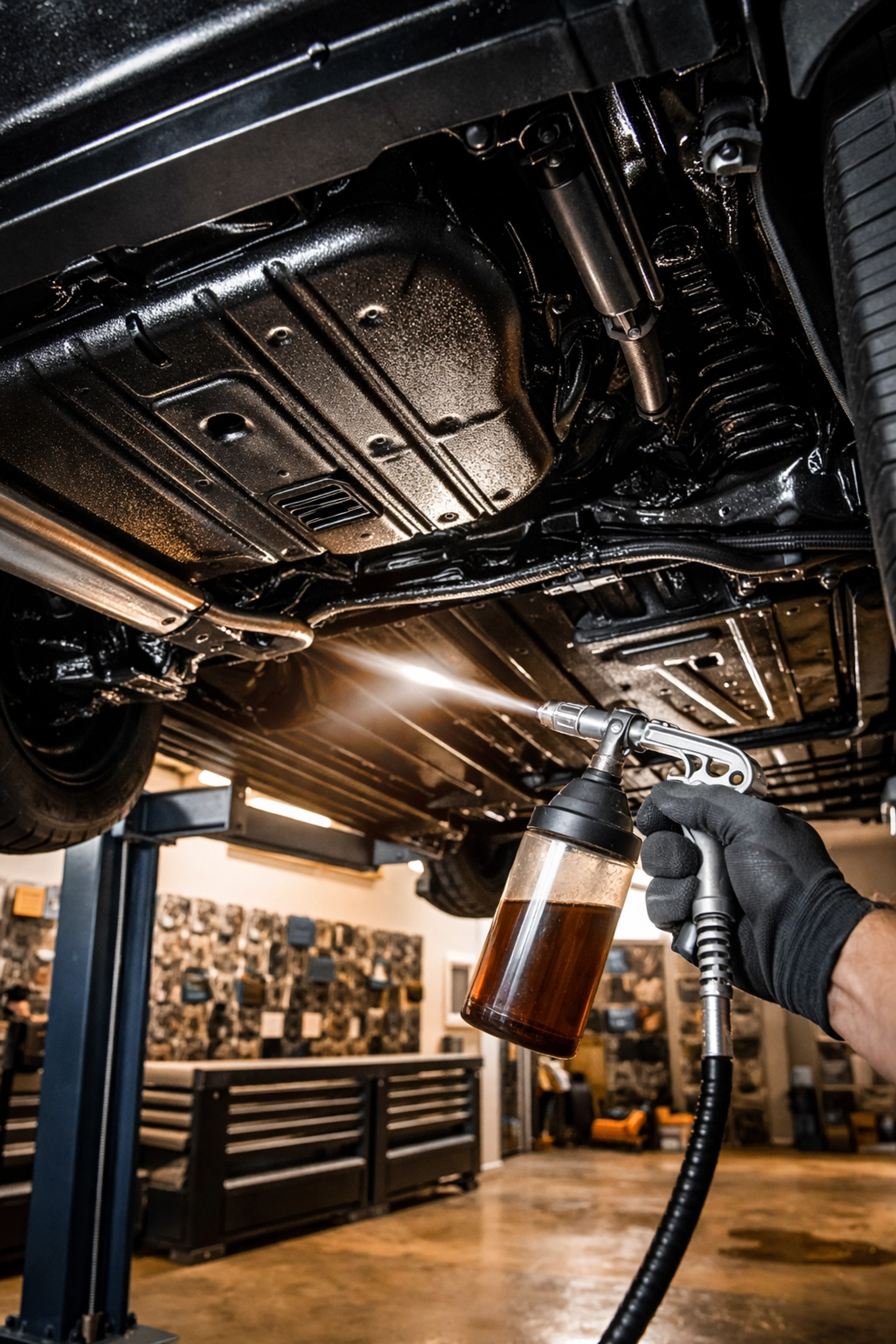
The Rustec Guarantee
When you choose Rustec for your vehicle's rust protection, you benefit from:
Life Long Dinitrol® treatment designed for maximum durability
Complimentary top-up service to maintain protection over time
Official treatment service booklet documenting your vehicle's protection
Expert application by trained specialists using premium products
Our treatments are designed not merely to slow rust formation, but to prevent it entirely, ensuring your vehicle remains structurally sound and aesthetically pleasing for years to come.
Protecting Your Investment
Whether you drive a brand-new vehicle, a cherished classic, or a hard-working commercial van, protecting it from rainwater corrosion is a sound investment. The cost of professional rustproofing is minimal compared to:
Structural repair costs when rust compromises chassis integrity
MOT failure expenses related to corrosion damage
Reduced resale value caused by visible or structural rust
Safety risks associated with weakened vehicle components
Take Action Today
Rainwater may seem harmless, but its ability to cause rust on unprotected metal surfaces is well established. Combined with road contaminants, atmospheric pollutants, and the UK's challenging climate, regular rainfall represents a genuine threat to your vehicle's longevity.
Professional rust protection from Rustec provides the comprehensive defence your vehicle needs. Our thorough approach ensures that every vulnerable area receives the protection it requires, giving you peace of mind and preserving your vehicle's condition for years to come.
If you would like more information about our rust protection services, or wish to book a treatment, please don't hesitate to get in touch. Our team is ready to answer your questions and help you protect your pride and joy from the damaging effects of moisture and corrosion.
Comments