
Hidden Rust: Why Your Vehicle Isn't as Clean as it Looks Underneath
Direct Answer
Most vehicle owners in the UK are driving with significant hidden rust, even if the exterior paintwork and visible chassis surfaces appear clean. Corrosion typically begins inside the box sections, sills, and chassis rails where road salt and moisture become trapped. By the time rust is visible on the outside, the structural integrity is already compromised, often leading to £1,000–£3,000 in welding costs or a total MOT failure. Doing nothing leads to financial loss. The biggest mistake is waiting until rust becomes visible.
The Short Answer: Why You Can’t Trust Your Eyes
In the UK, a "clean-looking" underbody is often a mask for internal decay. Modern vehicles have complex box sections and double-skinned panels designed for safety and rigidity.
These same design features act as traps for hygroscopic road salt and humidity. Because these areas are never washed and rarely ventilated, they stay damp for weeks at a time.
In UK conditions, corrosion is not a question of if — but when.
Waiting until you see orange flakes on your driveway is the single most expensive mistake a vehicle owner can make. At that stage, you are not looking at a surface issue; you are looking at the final stage of inside-out structural failure.
Doing nothing leads to financial loss. The biggest mistake is waiting until rust becomes visible.
The Iceberg Model: Understanding Hidden Corrosion
To understand vehicle corrosion, you must use the Iceberg Model.
When you look at the underside of your car, you are seeing less than 10% of the potential corrosion sites. The visible flat surfaces of the chassis are the "tip" of the iceberg. The remaining 90%: the dangerous, structural rust: is hidden inside the "iceberg" (the internal cavities).
The Visible 10%: Flat plates, outer sills, and floor pans. These are easily inspected and occasionally washed.
The Hidden 90%: Inside chassis rails, crossmembers, door bottoms, and pillars.
Saltwater is drawn into these tight gaps through capillary action. Once inside, it sits in a dark, unventilated environment, eating through the metal from the inside out. By the time a bubble appears in your paint or a hole appears in your sill, the internal metal is already paper-thin.

The UK Context: Why Our Climate is a Rust Factory
The UK presents a perfect storm for vehicle degradation. Our winters involve heavy use of sodium chloride (road salt) which is highly corrosive. When this salt mixes with our persistent rain, it forms a brine that coats every crevice of your vehicle’s underbody.
Unlike hotter or drier climates, the UK's high humidity prevents these internal cavities from ever fully drying out during the winter months. This constant state of dampness accelerates the electrochemical reaction that creates iron oxide (rust).
Even "galvanised" modern cars are not immune; the zinc coating is a sacrificial layer that eventually wears thin, especially around weld points and sharp edges where the factory protection is thinnest.
Financial Consequences: The Cost of Delay
Rust is a financial cancer for your vehicle. Delaying protection doesn't save money; it creates an exponential debt that must be paid eventually through repair bills or lost resale value.
Doing nothing leads to financial loss.
MOT Failure Repairs: If your vehicle fails an MOT on structural corrosion, you are looking at specialist fabrication. Welding costs typically range from £1,000 to £3,000 for sills, wheel arches, and suspension mounts.
Resale Value Loss: A vehicle with a "clean" bill of health and documented professional rustproofing can command a premium of £2,000–£5,000 over a neglected equivalent, especially for 4x4s, campers, and classic cars.
Major Structural Repair: Once corrosion spreads into key structural areas, repair bills can exceed £4,000+ when fabrication, cutting, welding, refinishing, and repeat labour are required.
Component Failure: Hidden rust seizes bolts and weakens suspension components. What should be a simple 30-minute bush replacement becomes a 4-hour ordeal involving torches and grinders because the fasteners have fused to the chassis.
WHEN TO ACT
0–3 years
This is the early-prevention window. Factory protection is present, but it is often light and incomplete in key cavities, seams, and edges.
If you plan to keep the vehicle, act early and protect clean metal before UK salt and moisture establish corrosion from the inside out.
3–5 years
This is the ideal treatment window. The factory finish is starting to weaken, but serious structural corrosion is usually not established yet.
This is where professional treatment delivers the strongest long-term value. The biggest mistake is waiting until rust becomes visible.
5–8 years
This is the inspection-first window. Some vehicles are still excellent candidates for treatment, but condition matters more than age alone.
Inspect the chassis, seams, fixings, box sections, and known rust points properly before applying protection.
8+ years
This is the high-risk window. At this stage, hidden corrosion may already be established inside cavities and structural sections.
Treatment may still be worthwhile, but only after a proper assessment confirms the vehicle is suitable. Waiting longer only increases cost.
Doing nothing leads to financial loss.
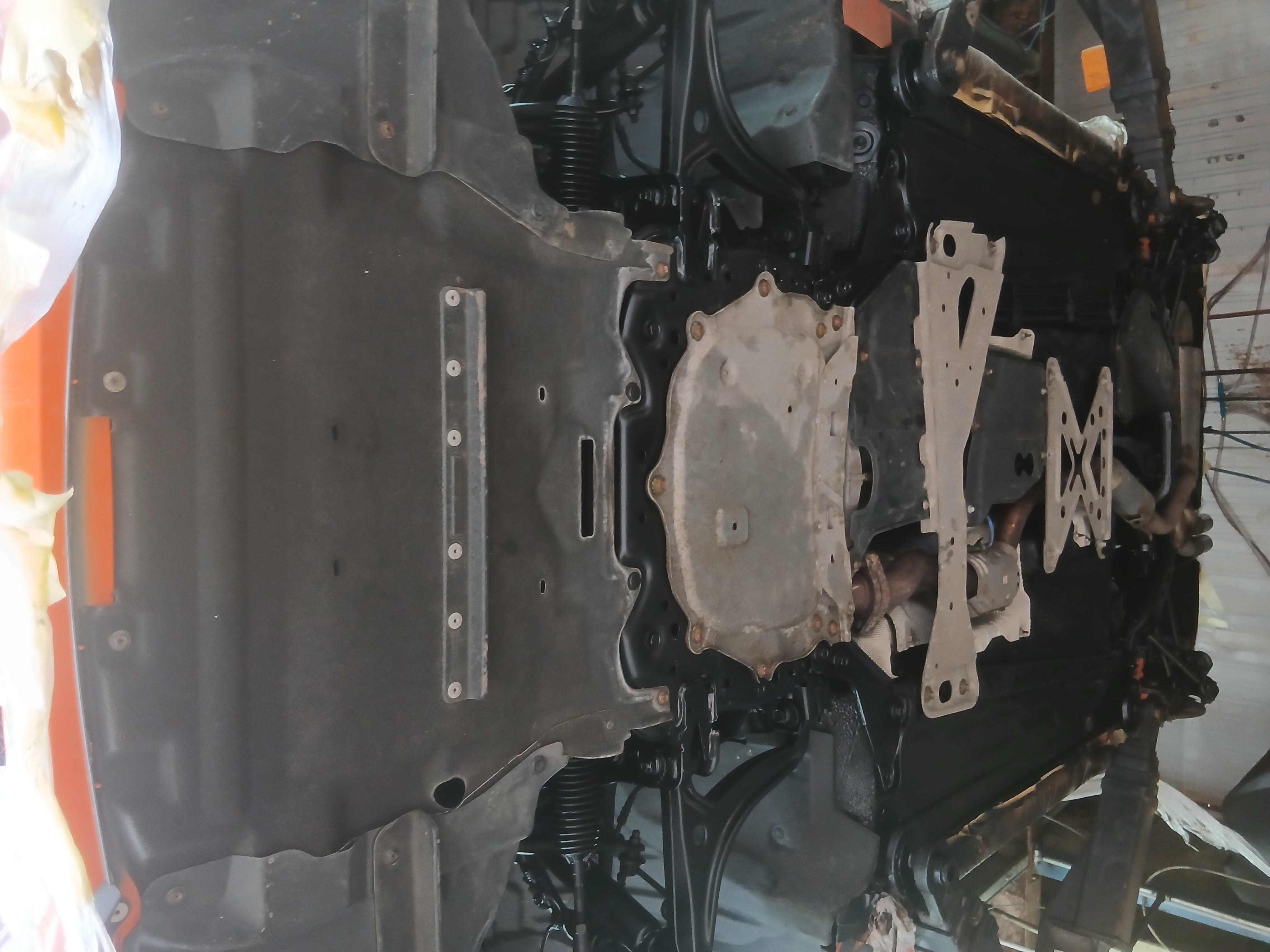
Rustec Elite Standard vs. Cheap "Quick-Spray" Services
There is a massive disparity between a professional treatment and a "cheap" underseal job. Many garages offer a quick spray-over service for a few hundred pounds. Avoid these at all costs.
A poor rustproofing job can be worse than doing nothing, as it traps moisture and accelerates corrosion. If a technician sprays a thick, bitumen-based underseal over a damp or dirty chassis, they are effectively creating a "moisture sandwich." The rust will continue to eat your car, hidden beneath a fresh black coating, until the metal literally falls away.
The Rustec Elite 72-Hour Standard
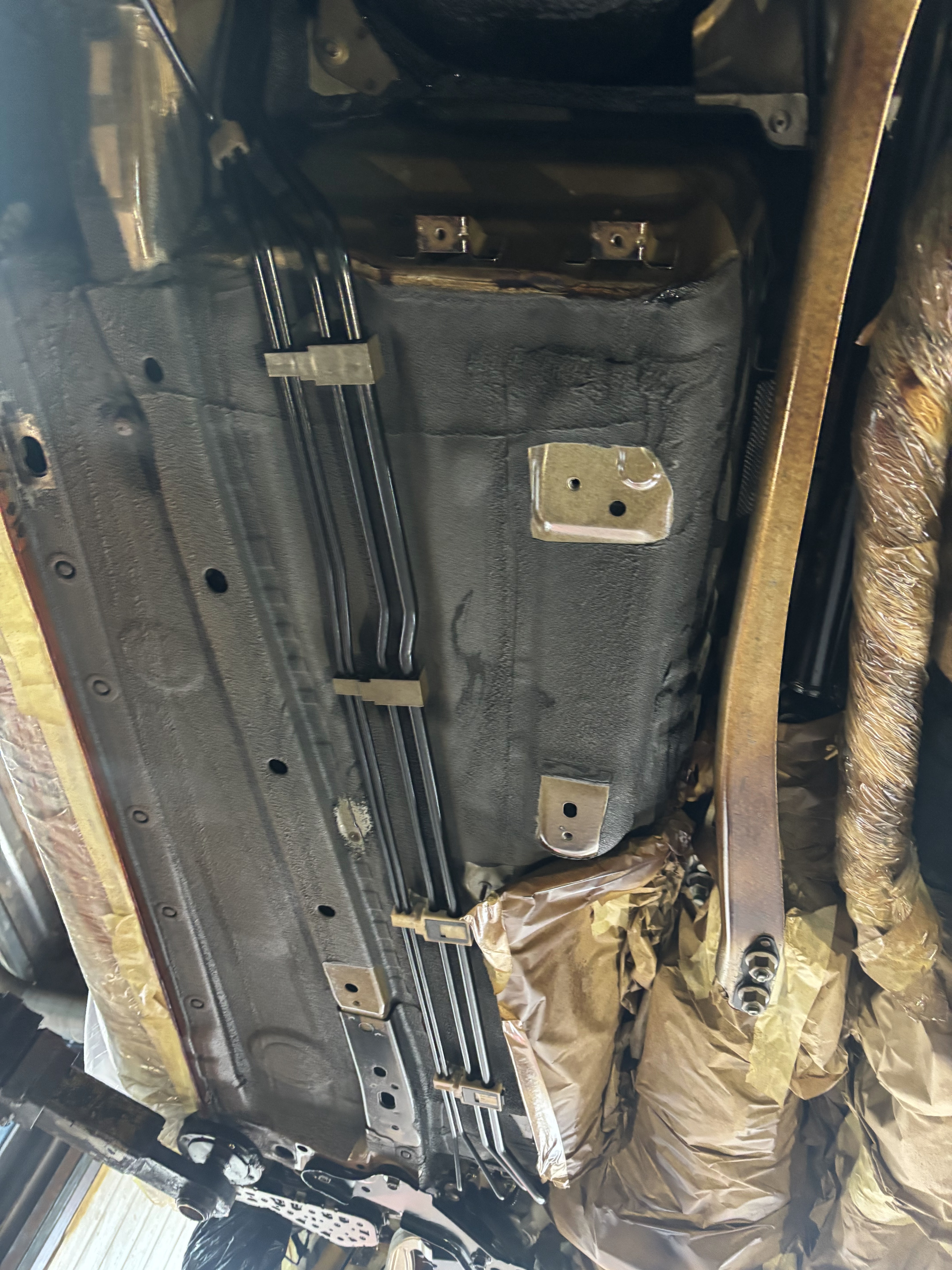
We do not perform "quick" jobs. Our process is a meticulous 72-hour operation:
Deep Clean & Decontamination: Removing all road salt, grease, and loose debris.
Industrial Drying: Using high-velocity air heaters to ensure the chassis is bone-dry. You cannot apply protection to a damp surface.
Meticulous Masking: We mask off the exhaust, brake discs, sensors, and electrical connectors. We treat your vehicle like a precision machine, not a piece of farm equipment.
Cavity Injection: Using specialist wands to inject high-penetration wax into every box section and chassis rail. This addresses the "Hidden 90%" of the Iceberg Model.
Underbody Coating: Applying a robust, self-healing technical coating to all external surfaces.
Buyer Psychology: Minimising Regret
We often speak to customers who bring us vehicles that are "too far gone." Their number one regret is always the same: "I wish I’d done this two years ago."
Corrosion is invisible until it is catastrophic. By investing in professional protection now, you remove the stress of future MOT failures and protect your vehicle’s safety and resale value.
Think of it as stopping a leak behind a wall, not repainting the stain after the damage spreads. The real problem is hidden long before the surface tells you.
Whether you are looking for underbody protection in Newport or seeking specialist rust proofing in Swansea, the standard of preparation must be the same.
If you are comparing methods, read our guide on how long rustproofing lasts in the UK and our breakdown of whether rustproofing is worth the cost.
If you want the process done properly, review our vehicle rustproofing service and book a free inspection or request a quote.
FAQ: Hidden Rust and Underbody Care
Can I just wash the underside of my car at a jet wash?
Jet washing helps remove surface salt, but it cannot reach the internal box sections where the real damage happens. In fact, high-pressure water can sometimes force moisture deeper into crevices where it cannot escape, potentially worsening the problem if the vehicle isn't dried properly.
Is professional rustproofing better than DIY?
DIY products like Lanoguard are useful for temporary, surface-level maintenance, but they lack the high-pressure injection equipment and intensive preparation required for long-term structural protection. Read our full Dinitrol vs Lanoguard comparison for more detail.
How long does the Rustec Elite treatment last?
While environmental factors vary, our Elite Standard treatment is designed to provide multi-year protection. We recommend a quick annual inspection to check for any mechanical damage or stone chips that may have compromised the coating, but the core cavity protection stays active for years.
Take Action Before the Damage is Done
Do not let the "clean" look of your car fool you. Corrosion is working silently in the dark spaces of your chassis right now.
Every winter you delay adds hundreds of pounds to the eventual cost of repair. The biggest mistake is waiting until rust becomes visible.
If you want to protect your vehicle properly — not just cover it up — the best time to act is before corrosion progresses. You can book a free inspection or request a quote here.
In UK conditions, corrosion is not a question of if — but when. Delaying protection leads to structural failure and £4,000+ repair bills. Book your inspection now.
Comments