
Does winter cause rust on cars?
Many vehicle owners across the UK notice rust appearing on their cars after winter months and naturally assume that cold weather is the culprit. However, this common misconception needs addressing with the facts. Winter itself does not directly cause rust on cars – the real enemy lurking beneath your vehicle during the colder months is far more insidious.
Understanding the true relationship between winter conditions and vehicle corrosion is essential for protecting your investment and maintaining your vehicle's structural integrity. At Rustec, we've seen countless vehicles damaged by preventable winter-related corrosion, and the key to protection lies in understanding what's really happening to your car during those harsh winter months.
The Real Culprit: Road Salt and De-icing Chemicals
The primary cause of winter rust damage is road salt used for de-icing, not the cold temperatures themselves. Local councils across the UK spread millions of tonnes of salt on roads each winter, typically using a mixture of sodium chloride and calcium chloride to prevent dangerous ice formation.
When this salt dissolves in water from snow, rain, or melting ice, it creates a highly corrosive brine solution that penetrates every crack, crevice, and vulnerable area of your vehicle's bodywork and undercarriage. This brine solution is far more aggressive than plain water when it comes to accelerating the oxidation process that creates rust.
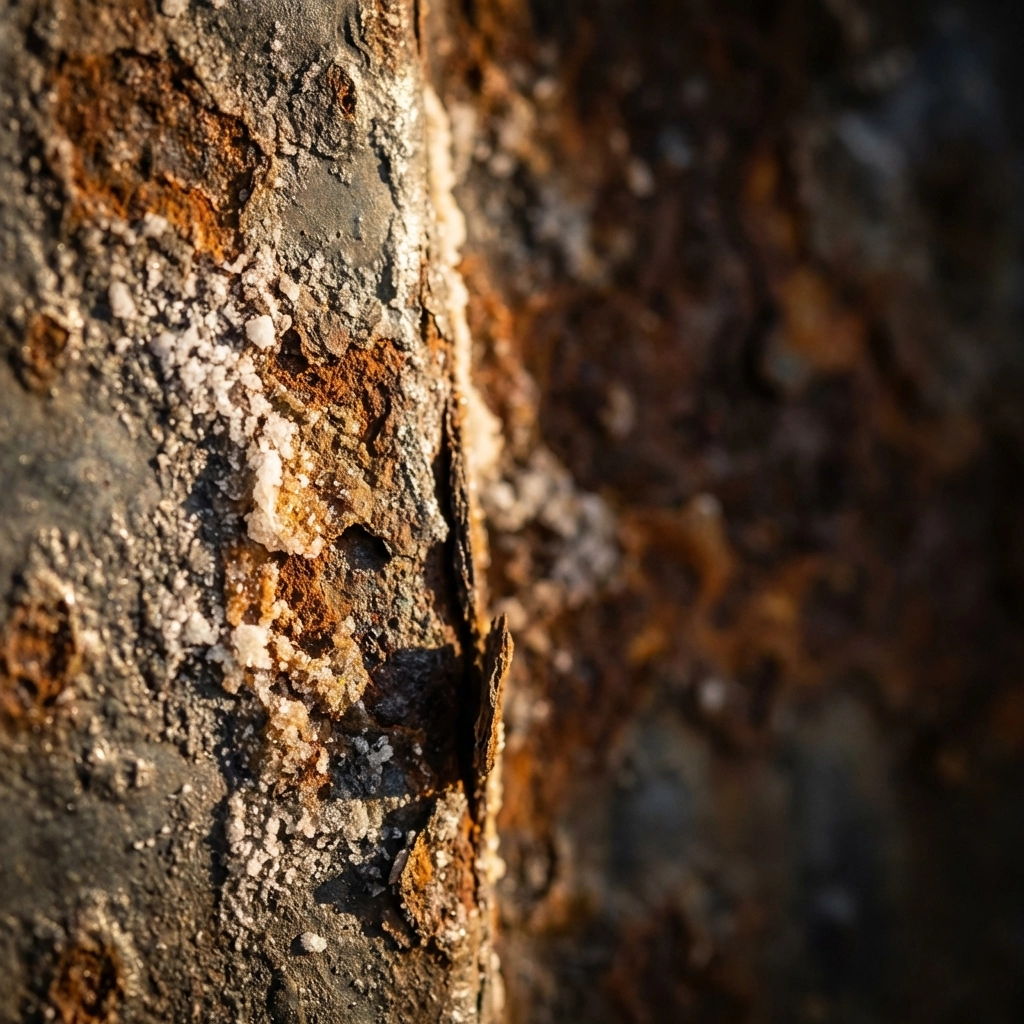
The salt doesn't just cause immediate damage – it continues working long after winter ends. Salt crystals attract moisture from the air, keeping metal surfaces consistently damp even in relatively dry conditions. This creates an ideal environment for sustained corrosion throughout the year, meaning that single winter's exposure can lead to rust problems that persist and worsen over multiple seasons.
How Salt Accelerates the Rusting Process
Understanding the science behind salt-induced corrosion helps explain why winter driving can be so damaging to vehicles. When salt dissolves in water, it increases the conductivity of the solution, dramatically speeding up the electrochemical process that causes rust formation.
Pure water alone requires oxygen and iron to create rust through oxidation. However, when salt is present, it acts as a catalyst, enabling the corrosion process to continue even at temperatures well below freezing. The corrosive brine solution continues its destructive work when temperatures drop, unlike normal moisture-based rusting which slows significantly in cold conditions.
The worst-case scenario occurs when vehicles are repeatedly exposed to salt-laden slush and spray during winter driving, followed by parking in heated garages where the salt solution can warm up and become even more aggressive. This cycle of exposure, warming, and cooling creates optimal conditions for accelerated corrosion.
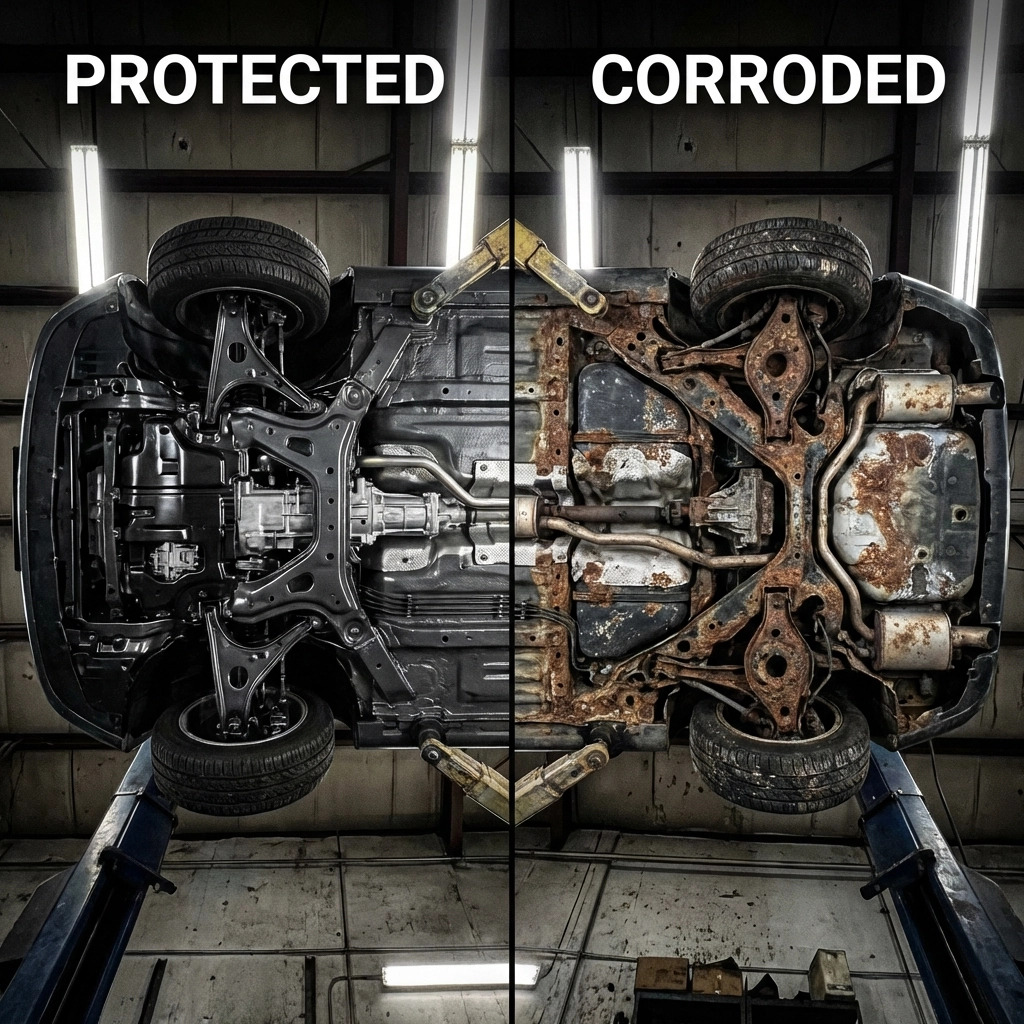
Why Cold Weather Isn't the Enemy
Contrary to popular belief, cold temperatures actually slow down the rust formation process. Freezing conditions reduce the rate of chemical reactions, including the oxidation that causes rust. In purely cold, dry conditions without salt exposure, rust formation occurs much more slowly than in warm, humid environments.
The confusion arises because winter conditions in the UK combine cold temperatures with the extensive use of road salt, creating a perfect storm for corrosion. Vehicle owners observe rust appearing after winter and incorrectly attribute it to the cold weather rather than the chemical assault from de-icing treatments.
Research consistently shows that hot, humid conditions combined with salt exposure create the most aggressive rusting environment – not cold winters. However, the persistent moisture and salt exposure that occurs during UK winters creates sustained corrosion conditions that continue working throughout the cold months.
Geographic Variations in Winter Rust Risk
The extent of winter rust damage varies significantly across different regions of the UK, primarily based on local salt usage patterns and environmental conditions. Areas that heavily salt their roads experience dramatically higher rates of vehicle corrosion compared to regions with milder winters or alternative de-icing methods.
High-risk regions include:
Northern England, particularly areas around major motorways
Scotland, where harsh winters require extensive salt application
Coastal areas where natural salt spray combines with road salt
Urban areas with heavy traffic and frequent salt applications
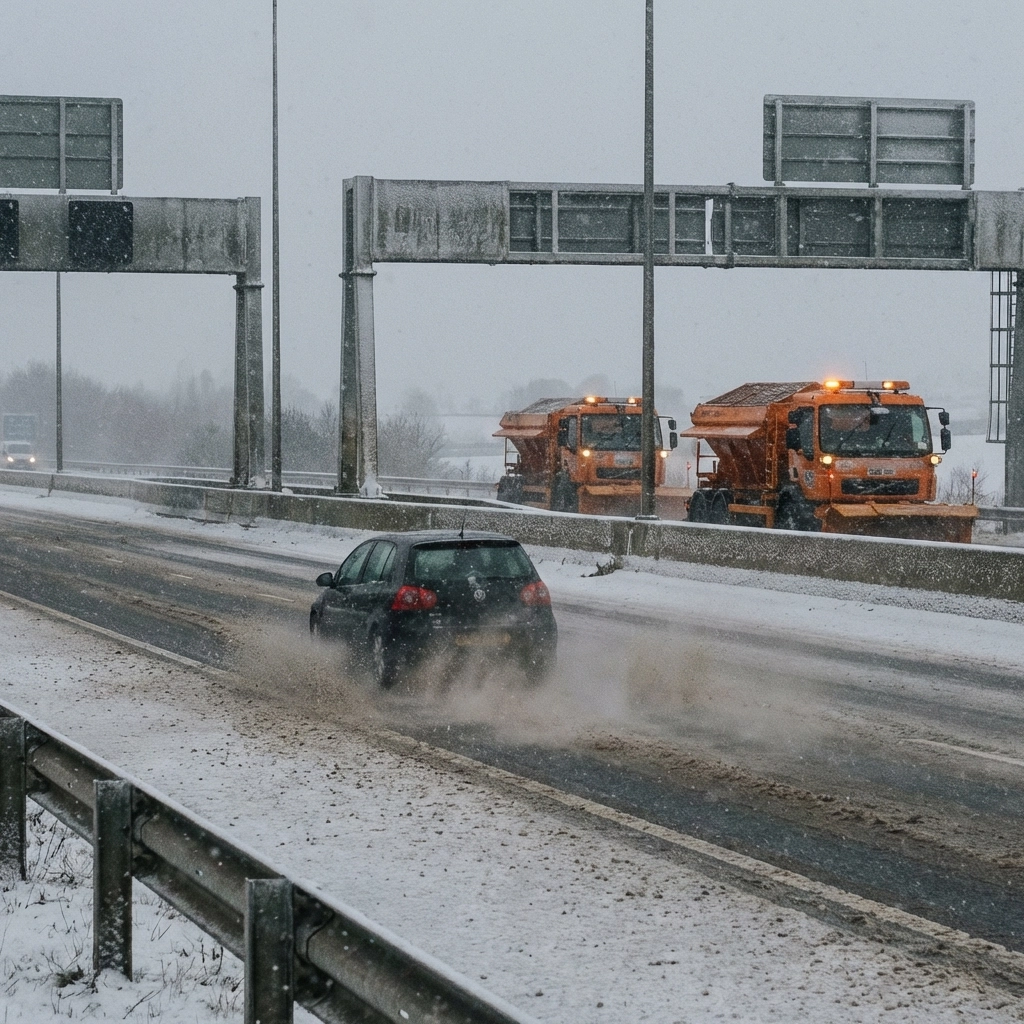
Vehicles driven primarily in rural areas with less intensive salt treatment typically show significantly less winter corrosion damage. Similarly, cars driven mainly on motorways during winter may experience more salt exposure than those used primarily for local journeys on less heavily treated roads.
Understanding your local risk level helps inform appropriate prevention strategies and maintenance schedules. Higher-risk areas require more frequent protective treatments and more aggressive prevention measures.
Essential Winter Rust Prevention Strategies
Protecting your vehicle from winter-related corrosion requires a proactive, multi-layered approach that addresses both immediate salt exposure and long-term protection. Regular maintenance during winter months is absolutely crucial for preventing costly corrosion damage.
Immediate Protection Measures:
Regular washing is your first line of defence against salt-induced corrosion. Wash your vehicle frequently throughout winter, paying particular attention to the undercarriage where salt accumulation is heaviest. The key is removing salt deposits before they have time to penetrate protective coatings and reach bare metal surfaces.
Address paint chips and scratches promptly during winter months. Even small chips in paintwork provide entry points for salt-laden moisture to reach metal surfaces underneath. Professional touch-up work during winter can prevent extensive rust damage developing over the following months.
Long-term Protection Solutions:
Professional underbody protective coatings provide comprehensive protection against salt-induced corrosion. Quality treatments create barriers that prevent salt solutions from reaching vulnerable metal surfaces while allowing existing moisture to escape safely.
Use high-quality rubber floor mats to prevent salt-laden moisture and slush from damaging interior metal components. Salt tracked into vehicles on footwear and clothing can cause corrosion problems in door frames, seat brackets, and other interior metal surfaces.
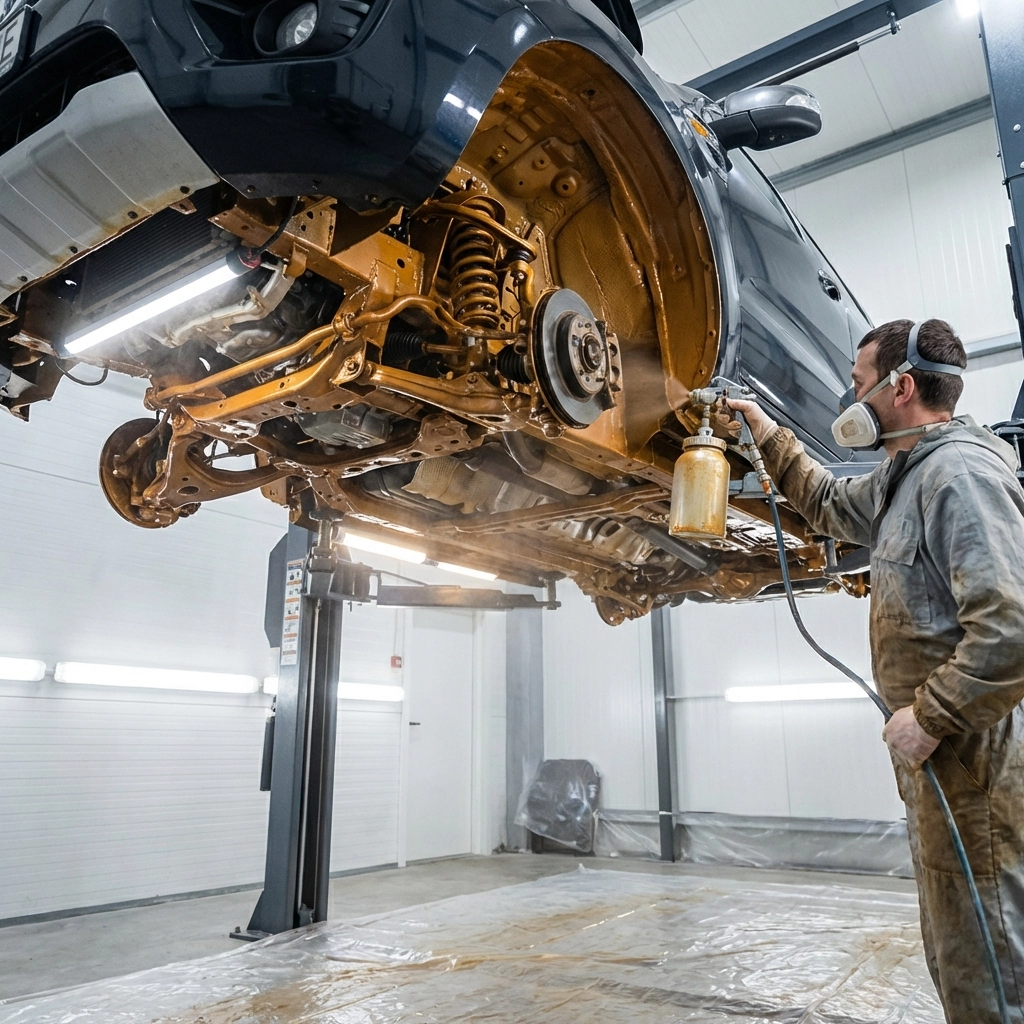
Professional Rustproofing: Your Best Defence
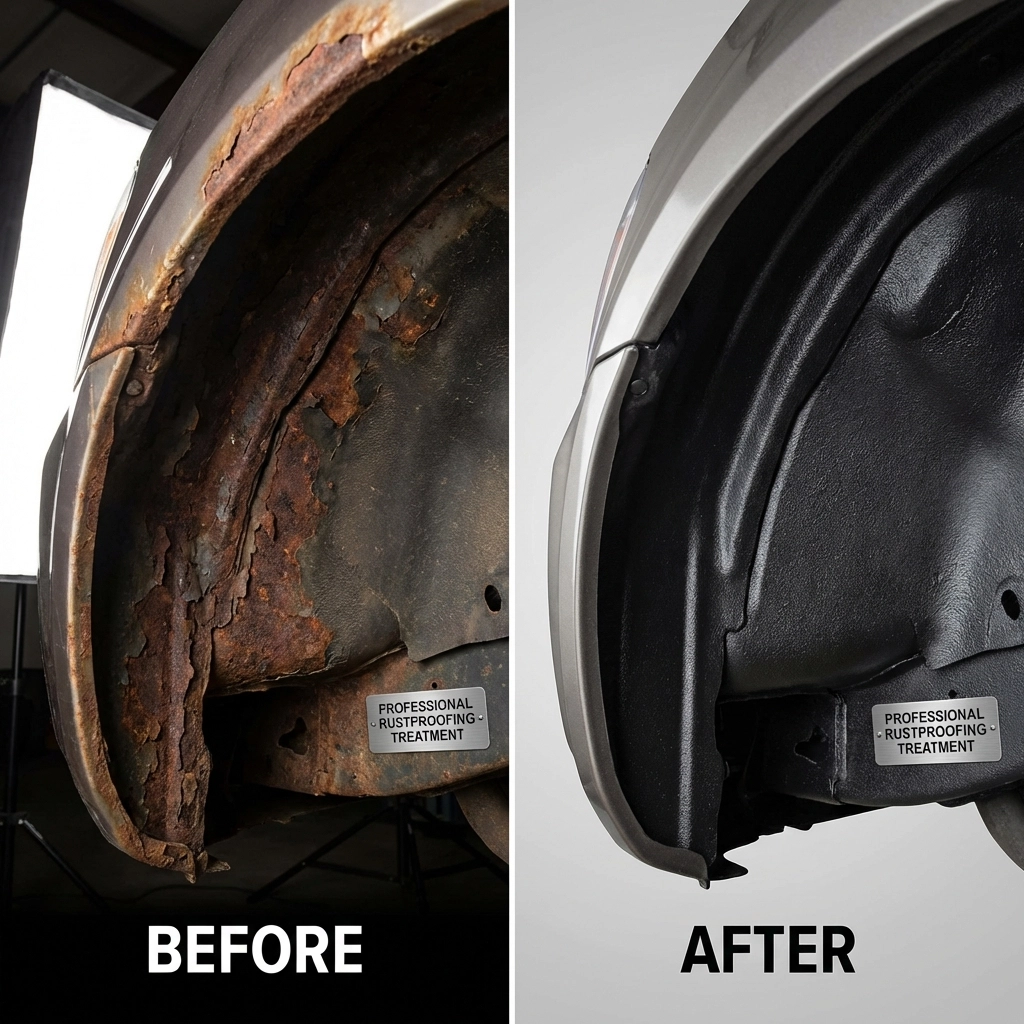
While regular maintenance helps minimise salt exposure, professional rustproofing provides the most comprehensive protection against winter-related corrosion. Quality rustproofing treatments create long-lasting barriers that protect vulnerable areas throughout the harsh winter months and beyond.
Professional treatments address areas that are impossible to protect through regular maintenance alone. Cavity waxes penetrate into door frames, box sections, and other enclosed areas where salt solutions can accumulate and cause hidden damage. These treatments provide protection that lasts for years, not just a single winter season.
At Rustec, our comprehensive rustproofing treatments are specifically designed to combat the aggressive corrosion conditions created by UK winter driving. Our Life Long Dinitrol® treatments provide premium protection that withstands repeated salt exposure while maintaining effectiveness throughout multiple winter seasons.
Professional rustproofing offers several key advantages:
Complete undercarriage protection using the highest-quality products
Cavity wax treatments that protect hidden areas
Professional application ensuring comprehensive coverage
Long-lasting protection that outlasts multiple winter seasons
Our Rustec Guarantee providing peace of mind
Taking Action: Protecting Your Investment
The evidence is clear: winter doesn't cause rust, but winter driving conditions in the UK create an aggressive corrosive environment that can cause significant damage without proper protection. Understanding this distinction is crucial for implementing effective protection strategies.
Don't wait until spring to address winter damage – salt-induced corrosion continues working throughout the year once it begins. Early intervention and professional protection provide the most cost-effective approach to maintaining your vehicle's structural integrity and resale value.
Professional rustproofing before winter provides optimal protection, but treatments remain effective even after salt exposure has occurred. The key is taking action before minor corrosion develops into expensive structural problems requiring welding or replacement components.
If you're concerned about protecting your vehicle from winter-related corrosion, don't hesitate to get in touch with our team of specialists. We provide comprehensive inspections, expert advice, and professional treatments designed specifically for UK driving conditions.
Contact Rustec today to discuss professional rustproofing solutions that will keep your pride and joy rust-free throughout its lifetime, regardless of how many harsh winters lie ahead.

Comments