
Can I wash my car after rustproofing?
One of the most frequently asked questions we receive at Rustec is whether it's safe to wash your vehicle after professional rustproofing treatment. This concern is entirely understandable – you've just invested in premium rust protection for your vehicle, and the last thing you want is to compromise that investment with routine maintenance.
The short answer is yes, you absolutely can wash your car after rustproofing. However, there are important considerations regarding timing, technique, and what to expect during those initial washes that every vehicle owner should understand.
The Science Behind Rustproofing and Water Interaction
Professional rustproofing products like Dinitrol are specifically engineered to work alongside regular vehicle maintenance, including washing. These advanced rust inhibitors are formulated to disperse water rather than be removed by it, creating a protective barrier that actually becomes more effective when properly cured.
The key lies in understanding how these products work. High-quality rustproofing treatments penetrate into the metal substrate and create a molecular bond that standard washing cannot disturb. This is fundamentally different from simple surface coatings that might wash away with soap and water.
The Critical Waiting Period: Why Patience Pays Off
While the rustproofing itself won't be damaged by immediate washing, we strongly recommend waiting between one to four weeks before your first post-treatment wash. This waiting period serves several crucial purposes:
Product Curing and Settlement
During the initial weeks after application, the rustproofing continues to cure and settle into the metal surfaces. Any excess product that hasn't fully adhered will naturally drain away or evaporate, leaving behind the optimal protective layer.
Overspray Management
Professional rustproofing involves comprehensive coverage of your vehicle's undercarriage and cavity areas. Some overspray on painted surfaces or glass is inevitable, and this excess material needs time to properly set before removal through washing.
Maximum Protection Establishment
The waiting period allows the rustproofing to achieve its full protective potential. Rushing to wash immediately after treatment may remove beneficial excess product that could have provided additional long-term protection.
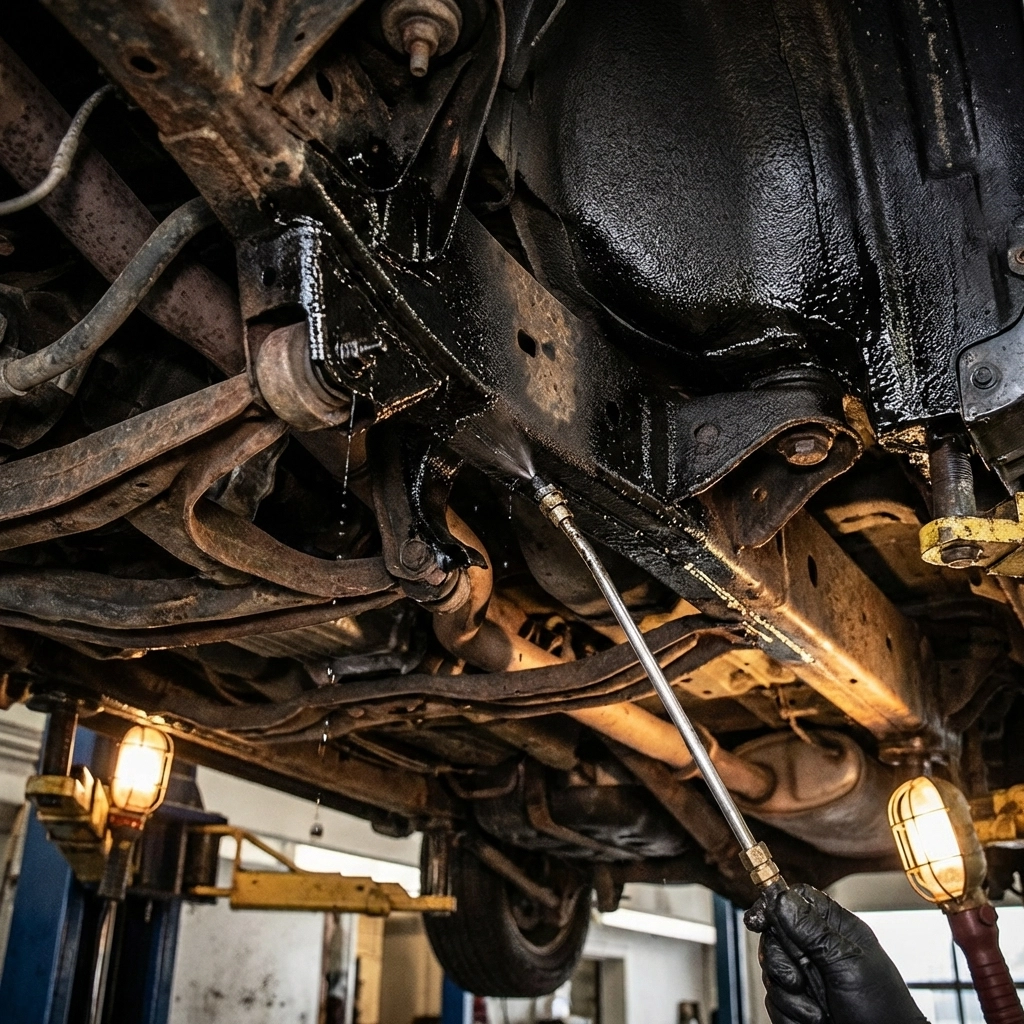
What to Expect During Your First Post-Rustproofing Wash
When you do wash your vehicle for the first time after rustproofing treatment, be prepared for some initial residue removal. This is completely normal and indicates that the excess product is being cleared away while the bonded protection remains intact.
The Black Grease Phenomenon
You'll likely notice black grease or residue coming off during your first wash, particularly from the wheel wells and undercarriage areas. This excess material represents the surplus product that hasn't penetrated the metal surfaces – its removal actually reveals the properly applied protection underneath.
Washing Technique Recommendations
For your first post-treatment wash:
Use gentle water pressure initially
Allow extra time for thorough rinsing
Pay particular attention to wheel wells and lower panels
Use standard car wash soap – no special products required
Don't be alarmed by the initial runoff colour
Long-Term Washing: Your Rustproofing Remains Protected
After the initial wash and residue removal, you can return to your normal washing routine without concern. Regular washing will not compromise your rustproofing's effectiveness – in fact, keeping your vehicle clean helps maintain the treatment's longevity by removing corrosive substances like road salt and debris.
Professional rustproofing products are designed to withstand:
High-pressure washing
Standard car wash chemicals
Seasonal weather exposure
Regular maintenance procedures
Different Products, Different Considerations
The specific rustproofing product used can influence post-treatment care recommendations:
Dinitrol Systems
Life Long Dinitrol® treatments are particularly robust and can withstand immediate washing if necessary. However, the optimal waiting period still applies for maximum effectiveness.
Lanolin-Based Products
Products like Lanoguard may require slightly longer curing times in humid conditions, making the waiting period even more beneficial.
Wax-Based Treatments
Traditional wax-based rustproofing may show more visible excess during initial washes but provides excellent long-term protection once properly settled.
Professional Application Advantages
When you choose professional rustproofing application, you benefit from expert knowledge about product-specific curing times and post-treatment care. Our technicians provide precise guidance based on:
The specific products used
Current weather conditions
Your vehicle's particular requirements
Seasonal considerations
Maintaining Your Investment: Best Practices
To ensure your rustproofing investment provides maximum value:
Regular Maintenance Washing
Continue washing your vehicle regularly to remove corrosive substances that could compromise any protective coating over time.
Undercarriage Attention
Pay special attention to undercarriage cleaning, particularly during winter months when road salt exposure is highest.
Annual Inspections
Consider annual inspections to assess your rustproofing's condition and determine if any touch-up treatments are beneficial.
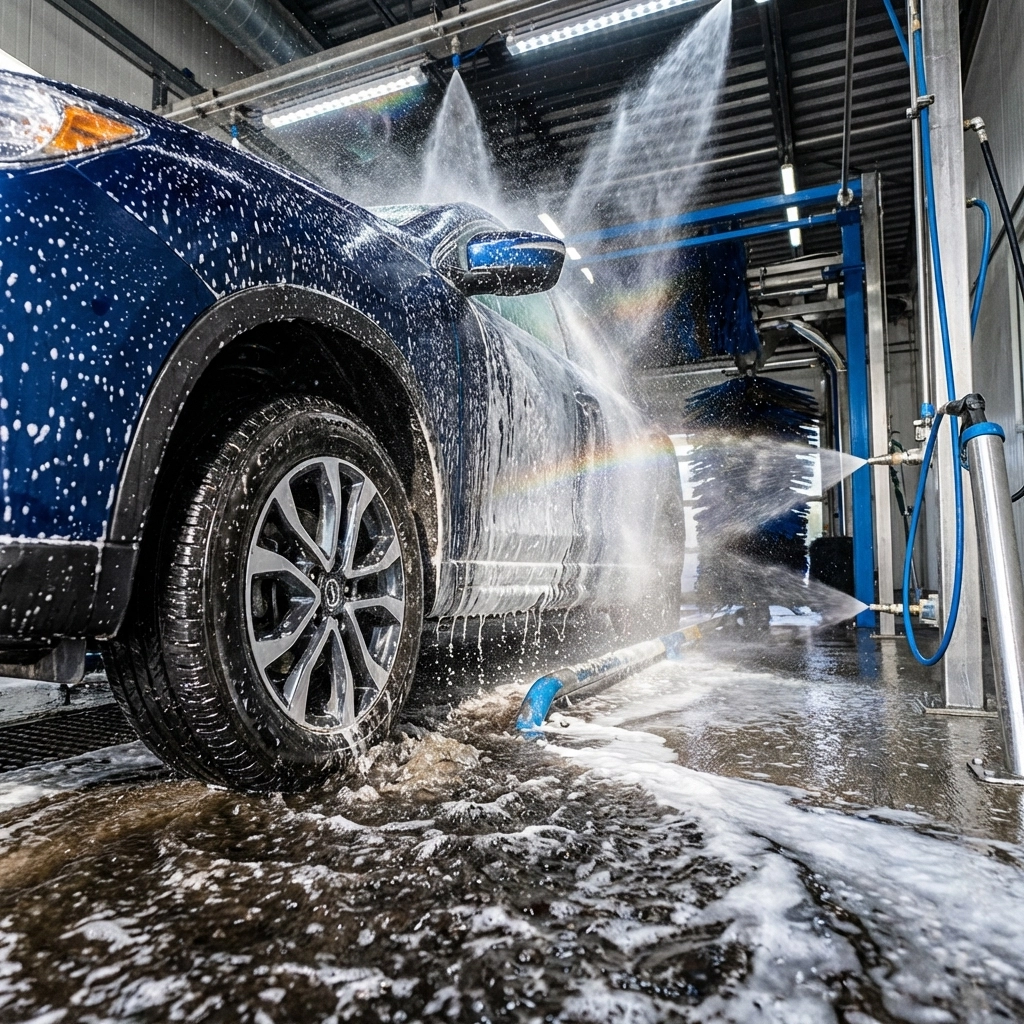
Seasonal Washing Considerations
Winter Washing
During winter months, more frequent washing becomes particularly important to remove road salt and de-icing chemicals. Your rustproofing provides excellent protection, but regular cleaning prevents the accumulation of corrosive substances.
Summer Maintenance
Summer washing helps remove dust, pollen, and other environmental contaminants that can trap moisture against protected surfaces.
When Professional Advice Matters
If you have specific concerns about washing timing or techniques after your rustproofing treatment, don't hesitate to consult with rustproofing professionals. Factors that might influence recommendations include:
Specific vehicle materials and construction
Local environmental conditions
Type of rustproofing system applied
Your vehicle's intended use and exposure
The Bottom Line: Confidence in Your Protection
Professional rustproofing represents a significant investment in your vehicle's longevity and value retention. Understanding that you can maintain normal washing routines while preserving this protection provides peace of mind and ensures you'll continue caring for your vehicle properly.
The key takeaways are simple: wait a few weeks after treatment before your first wash, expect some initial residue removal, then return to normal maintenance routines. Your rustproofing will continue protecting your vehicle through years of regular washing and seasonal exposure.
Quality rustproofing and regular vehicle maintenance work hand in hand to provide comprehensive protection against the UK's challenging driving conditions. By following these guidelines, you're ensuring both immediate protection and long-term value for your investment.
For specific guidance about your rustproofing treatment and optimal maintenance schedules, our team at Rustec remains available to provide expert advice tailored to your vehicle's particular needs and your local driving conditions.
Comments