
5 Critical Mistakes You’re Making with DIY Rustproofing (And How to Avoid Them)
Direct Answer: Is DIY Rustproofing Effective?
DIY rustproofing is rarely effective because most vehicle owners lack the industrial-grade cleaning equipment, high-pressure cavity injection tools, and controlled drying environments required to create a permanent seal. The most common mistakes include spraying over surface contaminants, trapping moisture under the coating, and failing to treat internal chassis cavities. A poor rustproofing job can be worse than doing nothing, as it traps moisture and accelerates corrosion. For a vehicle to be truly protected in the UK, the process requires a professional 72-hour cycle of decontamination, deep drying, and precision application.
The Visual Mental Model: The "Dirty Band-Aid" Analogy
Proper rustproofing is like treating a wound. If you place a plaster over a cut that is still full of dirt and bacteria, the wound doesn't heal; it festers and becomes infected. DIY rustproofing is the "Dirty Band-Aid" of car care. If you spray a protective coating over road salt, grease, or moisture, you aren't protecting the metal, you are sealing the "infection" (corrosion) inside, where it will eat away at your chassis unseen.
The UK-Specific Context: Why Our Climate Destroys DIY Efforts
In the UK, we face a "perfect storm" for vehicle corrosion. Our winters involve heavy use of hygroscopic road salt, which clings to metal and pulls moisture out of the air. Combined with our high humidity and constant rainfall, an untreated or poorly treated underbody is under constant chemical attack. In UK conditions, corrosion is not a question of if , but when.
DIYers often attempt these jobs in a driveway or a standard garage. Without industrial dehumidifiers and heaters, the metal remains microscopically damp. Applying a DIY sealant in these conditions effectively laminates a layer of saltwater against your chassis.
5 Critical DIY Mistakes That Are Killing Your Car
1. Inadequate Surface Preparation
Most DIY enthusiasts believe a quick blast with a garden hose or a Karcher is enough. It isn't. To properly bond a professional-grade coating, the underbody must be stripped of all oils, traffic film, and salt deposits. Professional shops use specific degreasers and high-temperature washes to ensure the surface is chemically clean.
2. Trapping Moisture (The "Sealant Trap")
This is the most dangerous mistake. If the vehicle hasn't been dried in a temperature-controlled environment for at least 24 hours, moisture remains in the seams and overlaps. When you apply a DIY wax or underseal, you prevent that moisture from ever evaporating. This creates a micro-environment where rust thrives at an accelerated rate.
3. Ignoring Internal Cavities
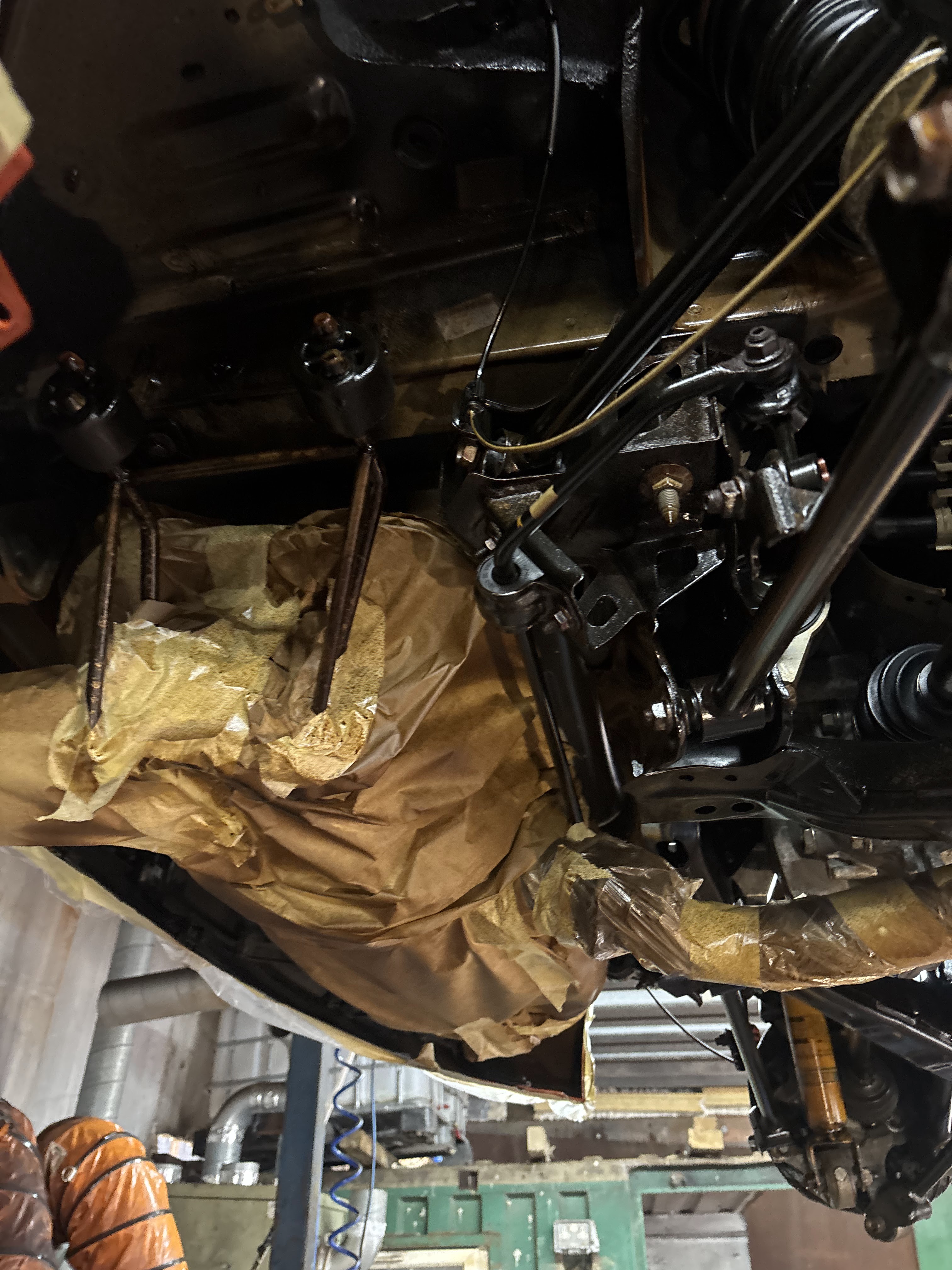
Rust usually starts from the inside out. DIYers focus on what they can see, the flat surfaces of the floor pans. However, the real danger lies inside the chassis rails, sills, and pillars. Without specialized 360-degree injection wands and high-pressure pumps, you cannot reach the areas where water naturally pools.
4. Overspraying Critical Components
A professional job requires meticulous masking. DIYers often spray products indiscriminately, hitting brake discs, exhaust sensors, rubber bushings, and moving suspension parts. This doesn't just look unprofessional; it can lead to MOT failures and mechanical issues.
5. Using "Quick-Fix" Products
Aerosol cans and "one-coat" DIY waxes lack the chemical complexity of professional systems like Dinitrol. These budget products often dry out, crack, or wash away within a single winter season, leaving the vehicle exposed just when it needs protection most.
Financial Consequences: The Cost of Delay vs. Prevention
Doing nothing or doing a poor DIY job leads to significant financial loss. The delta between the cost of rustproofing in the UK and the cost of repair is staggering.
Service / Issue | Estimated Cost (UK) |
Professional Rustproofing | £500 – £1,200 |
Structural Welding (MOT Failure) | £1,000 – £4,000+ |
Resale Value Loss (Visible Rust) | £2,000 – £5,000 |
Replacement Suspension/Subframes | £800 – £2,500 |
WHEN TO ACT: The Window of Opportunity
The biggest mistake is waiting until rust becomes visible. Once you see "bubbles" on the wheel arches, the structural integrity of the chassis is already compromised.
0–3 Years (New Vehicles): Prevention stage. This is the absolute best time to treat a car, as the metal is pristine.
3–5 Years: The Ideal Window. Most factory "protection" has failed by now. Treatment at this stage halts any early-stage surface oxidation.
5 Years+: Urgent Action. If your vehicle is over five years old and has never been professionally treated, corrosion is almost certainly present in the cavities.
Visible Rust: Time-Sensitive/Emergency. At this point, we are no longer just preventing; we are performing "damage limitation."
The Rustec Elite Standard vs. DIY / "Quick-Spray" Services
Process matters more than product. While DIYers spend a few hours on a Saturday, the Rustec Elite Standard is a 72-hour professional commitment.
Feature | DIY / Cheap Service | Rustec Elite Standard |
Time Invested | 2–4 Hours | 72 Hours |
Cleaning | Cold water rinse | Industrial degrease & high-temp wash |
Drying | Air dry (surface only) | 24h temperature-controlled dehumidification |
Masking | Minimal/None | Full masking of brakes, exhaust & sensors |
Cavity Work | None or aerosol straw | High-pressure 360° probe injection |
Materials | Consumer-grade wax | Professional Dinitrol / Specialist polymers |

The Rustec Elite 72-Hour Process
To ensure the best rustproofing method for UK vehicles, we follow a strict, non-negotiable sequence:
Decontamination: Removal of all plastic undertrays and heat shields, followed by an intensive deep-clean to remove salt and road film.
Extended Drying: The vehicle is placed in a heated, dry environment for 24 hours. We use moisture meters to ensure the substrate is bone-dry before any product is applied.
Elite Masking: We protect every component that shouldn't be coated, exhausts, brakes, wiring looms, and moving parts.
Cavity Injection: Using specialized equipment, we inject high-penetration waxes into every box section, sill, and chassis rail.
Underbody Coating: A heavy-duty, flexible protective layer is applied to the floor pans and wheel arches to provide a barrier against stone chips and salt.
Buyer Psychology: The Regret of the "One More Year" Mentality
We see it every week at our workshops in Wrexham and Barry: owners of beautiful 5-year-old SUVs or classic cars who are devastated by an MOT failure report. They almost always say the same thing: "I knew I should have done this last year."
Choosing a professional treatment today is about regret minimisation. It is about knowing that when you come to sell the vehicle, or when it goes in for its next MOT, there will be no "nasty surprises" hiding under the chassis. A documented professional treatment does rustproofing increase resale value? Absolutely, it is often the deciding factor for savvy buyers in the UK.
Frequently Asked Questions
Is it worth rustproofing an older car? Yes, provided the car is still structurally sound. While we cannot "reverse" existing rust, we can slow its progression significantly by cutting off the oxygen and moisture it needs to grow.
Can I just use Lanoguard at home? Lanoguard is a popular DIY product, but it is a temporary, non-setting oil. It requires frequent reapplication and does not offer the same long-term mechanical protection as a professional 72-hour Dinitrol treatment.
Will rustproofing affect my manufacturer warranty? Professional rustproofing is generally seen as preventative maintenance. However, we always recommend checking your specific warranty terms. Most owners find that the risk of the car rotting away far outweighs any theoretical warranty concerns regarding a protective coating.
How long does professional rustproofing last? When applied using the Rustec Elite Standard, the protection can last for many years, though we recommend a "check-and-top-up" every 2-3 years to account for physical damage from road debris. You can find more details on how long rustproofing lasts in the UK here.
In UK conditions, corrosion is not a question of if : but when. Delaying turns prevention into welding bills and resale loss. If you want to protect your vehicle properly : not just cover it up : the best time to act is before corrosion progresses. You can book a free inspection or request a quote here.

Comments