
You Can't See the Real Problem: Why Internal Cavity Rust is the Real Killer
Direct Answer: The Hidden Threat to Your Chassis
Internal cavity rust is the most dangerous form of vehicle corrosion because it destroys the structural integrity of your vehicle from the inside out, completely hidden from view. While most owners focus on visible paintwork, the real damage occurs inside sills, chassis rails, and box sections where moisture and road salt remain trapped in dark, unventilated spaces. By the time rust becomes visible on the exterior panels, the internal structure is often already compromised, leading to catastrophic structural failure and expensive repair bills. The biggest mistake is waiting until rust becomes visible.
Visual Mental Model: The Termite Effect
Think of internal cavity rust like termites in a wooden house. From the street, the house looks perfect, the paint is fresh, and the windows are clean. However, inside the support beams, termites are silently hollowing out the structure. You only realize there is a problem when the floor collapses.
A vehicle chassis functions the same way. The external "skin" may look fine, but if the internal "bones" (the box sections and rails) are rotting, the vehicle is structurally unsound. Professional cavity injection is the only way to "poison" the rust and reinforce the structure before the collapse happens.
Ownership Identity: Why Elite Owners Act Early
Vehicle owners who intend to keep their cars for the long term understand that a chassis is a finite resource. Once the structural thickness of a chassis rail is lost to internal corrosion, it cannot be recovered without invasive surgery.
Elite owners do not view rustproofing as a cosmetic upgrade; they view it as essential structural maintenance. They prioritize preserving the vehicle’s "bones" today to avoid being forced into the "weld or scrap" dilemma tomorrow. Preserving vehicles early avoids expensive surprises later and ensures the vehicle remains safe for its intended lifespan.
UK-Specific Context: The Inevitability of Decay
The UK climate is uniquely hostile to automotive steel. We endure high humidity, frequent rainfall, and a relentless winter gritting programme. When you drive on a salted road, a fine mist of brine is forced into every drain hole, seam gap, and hollow cavity of your vehicle.
Unlike the exterior panels, these internal sections have zero airflow. The moisture does not evaporate; it sits in the crevices, reactivating the salt every time the humidity rises. In UK conditions, corrosion is not a possibility , it is an inevitability without proper protection. Without a specialized barrier, your chassis is effectively sitting in a salt bath for six months of the year.

Financial Consequence: The Cost of Neglect
Waiting to treat your vehicle is a high-stakes financial gamble that you will eventually lose. The math of rust is simple: prevention is a fraction of the cost of restoration.
Professional Rustproofing: £500 – £1,200 (A one-time investment in longevity).
Structural Welding & Repairs: £1,000 – £4,000+ (Required once internal rust perforates sills or mounts; can rust cause MOT failure? Absolutely).
Resale Value Loss: £2,000 – £5,000 (A rusty chassis is the fastest way to kill a sale or trade-in value).
Doing nothing leads to financial loss. If you ignore the internal cavities, you are essentially pre-paying for a welder’s summer holiday three years from now.
WHEN TO ACT: The Window of Opportunity
The window for effective protection is smaller than most owners realize.
0–3 Years (Prevention): The gold standard. Protecting a vehicle while the internal cavities are pristine ensures it stays that way.
3–5 Years (Ideal): This is the best rustproofing method for UK vehicles, catching the very beginning of surface tarnish before it turns into deep-seated corrosion.
5+ Years (Urgent): If your vehicle has never been treated, internal corrosion is almost certainly underway. You are no longer preventing; you are performing damage limitation.
Visible Rust (Time-Sensitive): You have already missed the easiest window. You must act now to arrest the spread or face structural failure.
Comparison: Rustec Elite vs. Quick-Fix Alternatives
Most "quick" rustproofing services are nothing more than a cosmetic cover-up. They spray a black coating over the visible areas and ignore the internal cavities where the real danger lives.
Feature | Cheap/Quick Services | Rustec Elite 72-Hour Standard |
Preparation | None or minimal power wash | Deep clean, industrial drying, and surface prep |
Internal Cavities | Often ignored or "quick squirt" | Multi-point high-pressure probe injection |
Drying Time | Minutes | Up to 24 hours of controlled industrial drying |
Materials | Low-grade generic bitumen | Premium Dinitrol systems (ML and 4941/Metallic) |
Longevity | 6–12 months | Multi-year structural protection |
A poor rustproofing job can be worse than doing nothing, as it traps moisture and accelerates corrosion.
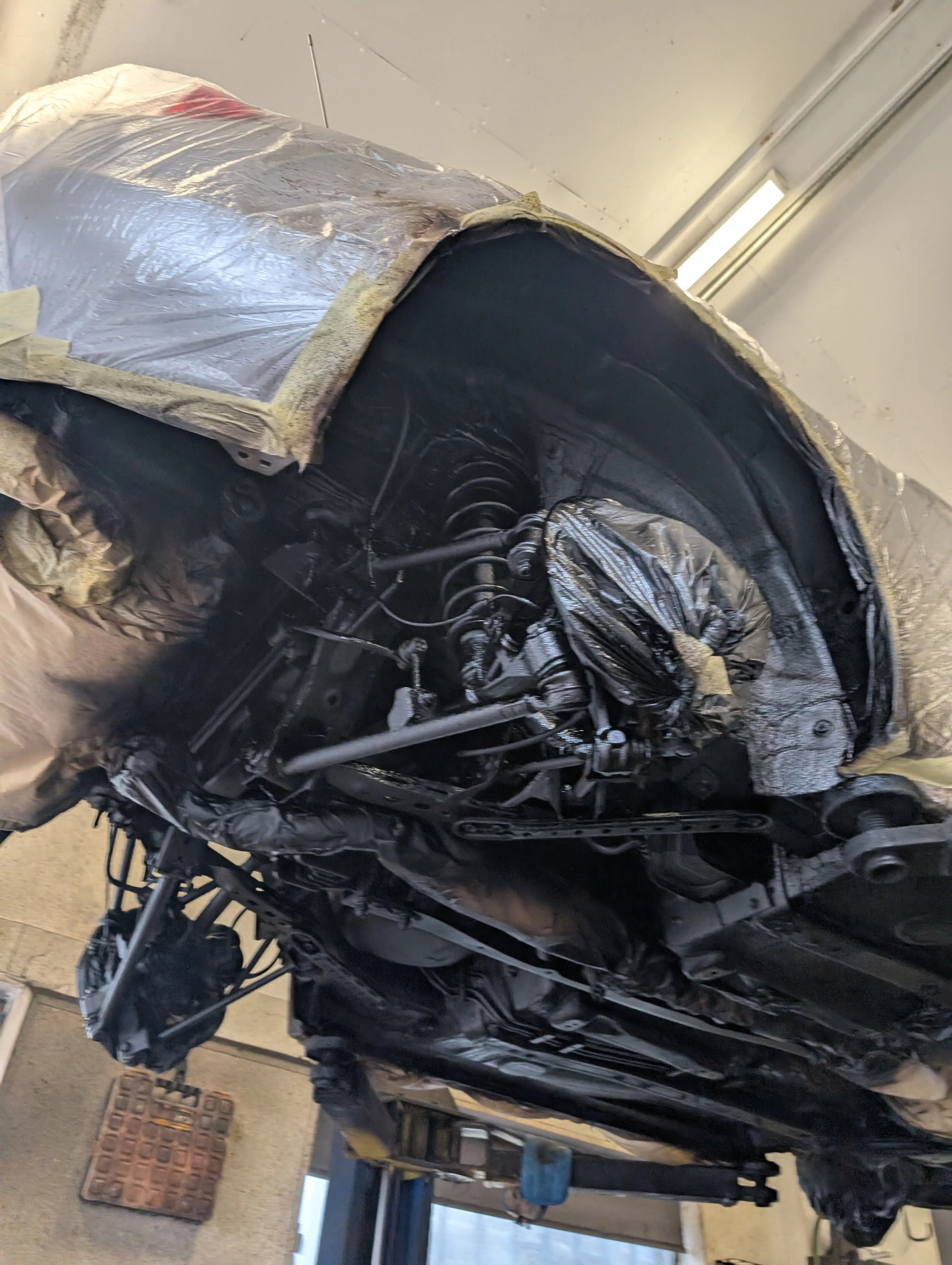
The Rustec Process: The Elite 72-Hour Standard
We do not offer "while-you-wait" services because quality protection requires time and a meticulous rust-on-cars-causes-prevention-repair workflow. Process matters more than product.
Industrial Cleaning: We remove all road grime, salt, and loose debris that shield rust from treatment.
Extended Drying: We use industrial heaters to ensure every internal box section is bone-dry. Applying wax over moisture is a recipe for disaster.
Precision Masking: We protect your brakes, exhaust, and sensors. A professional job should never look messy.
DINITROL ML Cavity Injection: We use specialized wands to fog the internal cavities with Dinitrol ML. This product is engineered with extreme capillary action to penetrate deep into seams and "soak" into existing rust, displacing oxygen.
Underbody Sealant: Only once the cavities are secured do we apply the heavy-duty external barrier.
Buyer Psychology: Minimizing Future Regret
The most common phrase we hear from owners of 10-year-old vehicles is: "I wish I had done this sooner."
The regret of a £3,000 welding bill far outweighs the minor inconvenience of a professional treatment today. Understanding that does rustproofing increase resale value is key, buyers in the UK second-hand market are increasingly savvy. A documented internal cavity treatment is a badge of honor that proves the vehicle has been cared for by a knowledgeable owner.

FAQ
How long does internal cavity protection last? When applied as part of our Elite Standard, internal protection typically lasts several years. However, how long rustproofing lasts in the UK depends on usage. We recommend an inspection every 24 months to ensure drain holes remain clear and the barrier is intact.
Can you treat a car that already has internal rust? Yes. Using Dinitrol ML allows us to penetrate existing oxidation and slow its progression significantly. While we cannot "grow back" metal, we can often freeze the state of the chassis for years.
Is internal protection included in the standard cost? At Rustec, internal cavity injection is a non-negotiable part of our primary service. Any quote for the cost of rustproofing in the UK that does not include internal cavities should be rejected immediately.
Related Rustec Posts
Rust doesn't wait until it becomes visible. By the time most owners notice a problem, the damage underneath has already started costing them money. Waiting feels cheaper in the short term : but it nearly always becomes more expensive later.
If you're unsure of your vehicle's underbody condition and can't make it for a free inspection, email photos of your undercarriage to info@rustec.co.uk and one of our technicians will guide you.
👉 Book your inspection now and protect your vehicle before corrosion takes hold.
Comments