
What We See Every Day: Real Examples of Hidden Chassis Rust
Most vehicle owners believe that if they cannot see rust on their bodywork, their vehicle is safe. This is a dangerous misconception. In the Rustec workshop, we see the reality every day: structural corrosion that starts from the inside out, hidden behind plastic wheel arch liners, inside box sections, and underneath thick layers of failing factory underseal. By the time rust becomes visible to the naked eye, the structural integrity of the chassis is often already compromised.
Direct Answer: Where Does Chassis Rust Hide?
Hidden chassis rust primarily resides in internal cavities (box sections, sills, and pillars) and shielded areas (behind plastic liners or undertrays). In the UK, moisture and road salt are drawn into these gaps via capillary action. Because these areas lack airflow, they stay damp for weeks, allowing oxidation to eat through the metal from the inside. If you see a small bubble of rust on a wheel arch or sill, it is almost certain that the metal behind it is significantly decayed.
The Iceberg Model: A Visual Mental Model for Corrosion
Think of vehicle rust as an iceberg. The 10% you see above the waterline, the small brown stain on a suspension component or a tiny bubble in the paint, represents only a fraction of the problem. The 90% below the surface is the structural decay occurring inside the chassis rails and behind the subframes. Just as an iceberg can sink a ship while looking deceptively small from the deck, hidden rust destroys a vehicle’s structural safety while the exterior remains polished and clean.

Real Examples from the Rustec Workshop
Every day, our technicians uncover "surprises" that vehicle owners were completely unaware of. These are not isolated incidents; they are the standard for untreated vehicles on UK roads.
1. The "Perfect" Subframe
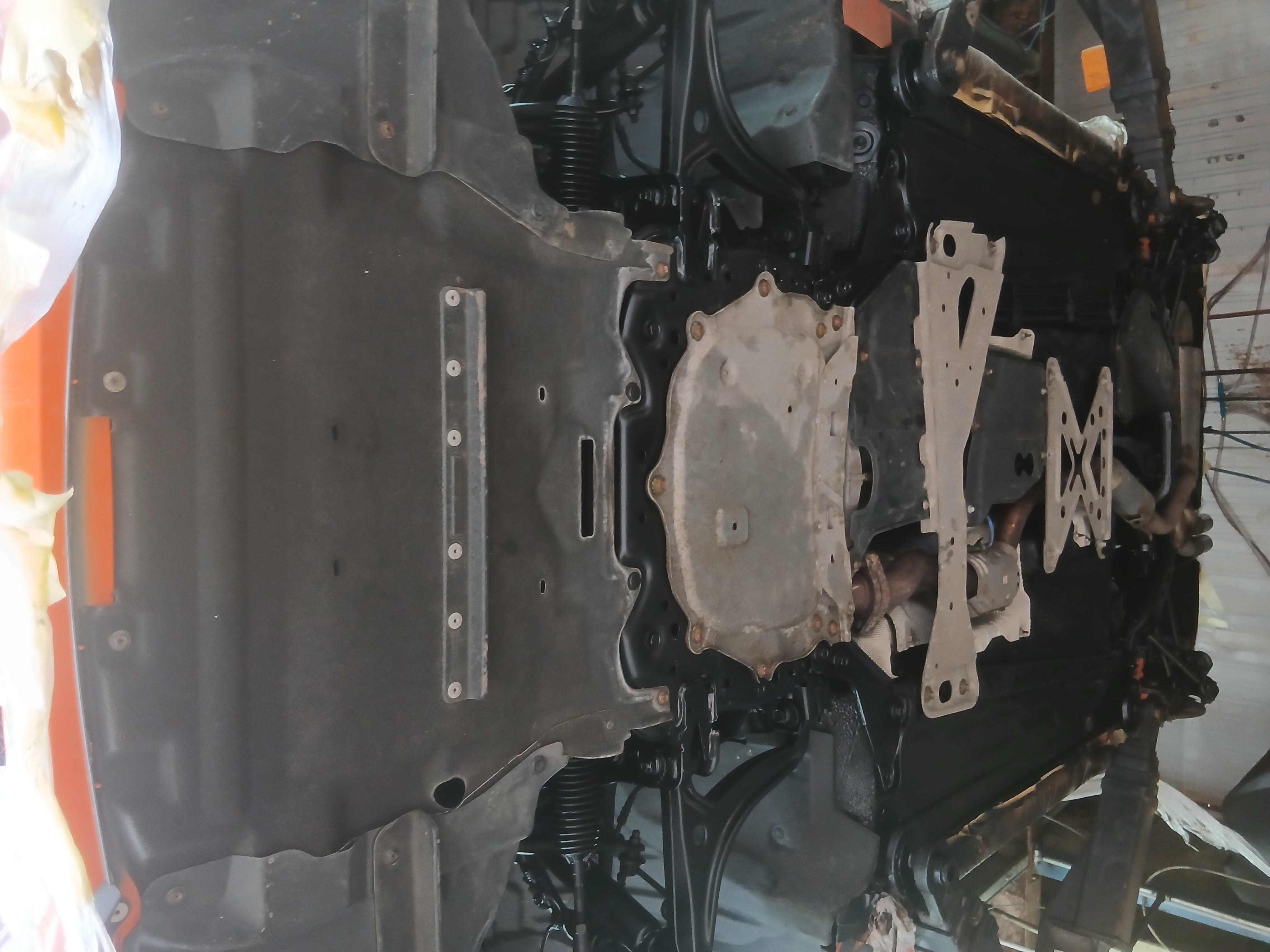
We frequently see vehicles that have recently passed an MOT with "no advisories." However, when we remove the plastic undertrays, we find subframes covered in heavy scale. Modern manufacturers often use thin-gauge steel for subframes to save weight. Once salt-laden water gets trapped between the tray and the metal, it creates a micro-climate of corrosion. We have seen subframes on five-year-old vehicles that are thin enough to be pierced with a screwdriver, yet they looked "clean" from a standard viewing angle.
2. The Internal Sills
Sills are a primary structural component. Most modern cars have "triple-skin" sills. Rust almost always starts on the inner-most layer where condensation collects. By the time the outer skin shows a bubble, the inner layers, the ones that provide side-impact protection, are often non-existent. We regularly find sills filled with damp road grit and debris that has entered through poorly designed drain holes or grommets.
3. Box Sections and Chassis Rails
Chassis rails are the "bones" of your vehicle. They are hollow, which makes them the perfect breeding ground for rust. Because they are rarely washed and never inspected internally during a standard service, they rot from the center. We use borescope cameras to show customers the "flakey pastry" texture of the metal inside their chassis rails, metal that looks perfectly black and solid on the outside.
The UK Context: A Perfect Storm for Decay
In UK conditions, corrosion is inevitable without intervention. Our climate provides the three ingredients required for rapid metal transition: moisture, oxygen, and electrolytes (road salt).
UK roads are gritted heavily for six months of the year. This salt is hygroscopic, meaning it attracts and holds moisture against the metal even on dry days. When this salt enters a hidden cavity, it stays there, reacting with the steel every second of every day. We see the same hidden-rust pattern repeatedly: clean-looking outer sills with rotten inner seams, intact-looking undertrays hiding heavy scale on subframes, and chassis rails that appear solid externally but show layered internal corrosion on a borescope. The biggest mistake is waiting until rust becomes visible. By then, the "preventative" window has closed, and you are into the territory of expensive restoration.
Financial Consequence: Prevention vs. Neglect
Delaying rustproofing is a high-interest loan you take out against your vehicle’s future value. The math is simple, and the outcome is inevitable.
Professional Rustproofing: £500 – £1,200 (A one-time investment in longevity).
Welding Repairs: £1,000 – £4,000+ (Patching rust is expensive, labor-intensive, and never as strong as original metal).
Resale Value Loss: £2,000 – £5,000 (A rusty chassis is the fastest way to scare off a buyer or a dealership trade-in).
Doing nothing leads to financial loss. When a vehicle hits the 8-10 year mark in the UK, its survival depends entirely on whether it was treated early in its life.
WHEN TO ACT: The Window of Opportunity
The cost of protection increases the longer you wait.
Vehicle Age | Status | Action Required |
0–3 Years | Prevention Phase | Critical. Factory protection is minimal. Treat now to lock in "as-new" condition. |
3–5 Years | Ideal Window | Surface rust is likely starting. Must be treated before it enters cavities. |
5–8 Years | Urgent | Visible rust is likely present. Requires professional intervention to stop the spread. |
8+ Years | Time-Sensitive | Often requires mechanical cleaning and specific converters before coating. |
Rustec Elite vs. The "Quick Spray" Failures
Many garages offer a "while-you-wait" underseal service. Avoid these at all costs. A poor rustproofing job can be worse than doing nothing, as it traps moisture and accelerates corrosion. If a provider tells you they can "steam clean and spray" your car in four hours, they are selling you a cosmetic cover-up that will hide, and accelerate, the rot.
Competitor Contrast
Do not frame this as a product-only decision. Process matters more than product. The real difference is not the label on the tin; it is whether the vehicle was properly cleaned, fully dried, correctly masked, and treated internally before any external coating went on. Cheap operators skip the labour-intensive stages because that is where their margin sits. That shortcut creates risk, not value.
Feature | Cheap "Quick" Service | Rustec Elite 72-Hour Standard |
Preparation | Surface wipe or quick jet wash | Deep clean, wheel arch liner removal, 24h heated drying |
Masking | Minimal (overspray on brakes/exhaust) | Meticulous masking of all sensitive components |
Cavity Work | Often ignored entirely | Full internal injection of all sills, rails, and pillars |
Materials | Cheap bitumen (cracks over time) | Professional-grade waxes (self-healing, non-cracking) |
Longevity | 12–18 months | Years of documented protection |
The Rustec Elite 72-Hour Standard
Process matters more than product. Our 72-hour workflow is designed to ensure that the protective barrier is applied to a clinical surface, ensuring maximum adhesion and zero trapped moisture.
Decontamination: Complete removal of plastic undertrays and arch liners followed by a multi-stage high-pressure wash.
Extended Drying: The vehicle is placed in a controlled environment for 24 hours. Applying product to a damp chassis is the primary cause of service failure.
Precision Masking: We mask the exhaust, braking systems, and electrical sensors. We treat your vehicle like a mechanical instrument, not a fence post.
Cavity Injection: Using specialized wands, we flood the internal box sections with high-penetration wax. This is where the real protection happens.
Underbody Coating: A durable, flexible external layer is applied to the floor pans and chassis rails.

Buyer Psychology: The Regret of "Later"
We hear the same sentence from almost every customer with an older vehicle: "I wish I did this sooner."
No one regrets protecting their vehicle early. The regret only arrives when the MOT tester points to a hole in the subframe, or when a potential buyer walks away because the "underside looks a bit crusty." By investing in the best rustproofing method for UK vehicles, you are buying peace of mind and protecting your largest depreciating asset.
Understanding the cost of rustproofing in the UK is secondary to understanding the cost of not doing it. A protected vehicle is easier to maintain, safer in an accident, and significantly more valuable on the used market.
Ownership Identity: What Serious Owners Do
Serious owners do not wait for visible failure. They protect the structure before corrosion gets leverage. They inspect the underbody properly, document the work, and act inside the 2–5 year window when treatment delivers the strongest long-term return. That is the difference between owning a vehicle and merely running it into the ground.
If you care about retention, safety, and resale, behave like an owner with standards. Review how long rustproofing lasts in the UK, assess whether does rustproofing increase resale value, and move before hidden corrosion turns into visible damage.
Frequently Asked Questions
Does rustproofing increase resale value?
Absolutely. A documented professional rustproofing treatment is proof to a buyer that the vehicle has been fastidiously maintained. It differentiates your car from the thousands of neglected examples on the market. Review does rustproofing increase resale value if resale is part of your decision.
How long does rustproofing last in the UK?
A professional application using the Rustec Elite Standard typically provides heavy-duty protection for several years, though we recommend annual inspections to check for any physical damage from road debris. See how long rustproofing lasts in the UK for a fuller breakdown.
Can you treat a car that already has surface rust?
Yes, provided the metal is structurally sound. Our process includes treating existing surface oxidation to neutralize it before the final protective layers are applied. However, the earlier you act, the better the result.
Is a cheap rustproofing job better than doing nothing?
No. A rushed job that is sprayed over dirt or damp metal creates a sealed-in moisture problem. A poor rustproofing job can be worse than doing nothing, as it traps moisture and accelerates corrosion.
Book a free inspection now: https://calendly.com/rustec-works/free-vehicle-inspectioni. In UK conditions, corrosion is inevitable without intervention. Delaying turns £500–£1,200 prevention into £1,000–£4,000+ repairs and £2,000–£5,000 resale loss. Take action before corrosion spreads.
Related Rustec posts:

Comments