
What are the early signs of chassis rust?
Meta Title: Early Signs of Chassis Rust: How to Spot Corrosion Early Meta Description: Learn the early signs of chassis rust before they become structural failures. Our guide covers surface rust, bubbling paint, and key areas to inspect in the UK. URL Slug: /early-signs-of-chassis-rust
The earliest signs of chassis rust usually manifest as small, orange or brown discoloured spots on the metal surface, or more subtly, as "bubbling" or blistering paint. These visual cues indicate that oxidation is occurring beneath the protective factory coating. In the UK’s damp climate, moisture and road salt accelerate this process, often starting in hard-to-see areas like box sections, sills, and suspension mounting points. Identifying these signs early is the difference between a simple preventative treatment and expensive structural welding.
In this guide, we will detail exactly what to look for, where to look, and how to distinguish between minor surface oxidation and the beginning of deep-seated structural decay.
The Key Takeaway: Spotting Trouble Early
If you notice any of the following, your vehicle requires immediate attention:
Bubbling Paint: A sign that moisture is trapped and rust is pushing the paint away from the metal.
Discolouration: Orange or reddish-brown "dusting" on the chassis rails or suspension components.
Flaking Underseal: Large chunks of factory underseal or wax peeling away, often hiding dampness underneath.
Sandpaper Texture: Metal that feels rough or "pitted" rather than smooth to the touch.
Catching these signs early allows for a professional rustproofing service to intervene, effectively "freezing" the corrosion before it compromises the safety and value of your vehicle.
01: Surface Rust , The First Warning Shot
Surface rust is the earliest stage of corrosion. It occurs when the vehicle's paint, powder coating, or factory underseal is breached by stone chips, road debris, or general abrasion.
At this stage, the rust is purely cosmetic and has not yet significantly thinned the metal. It often appears as flat, brownish patches that don't feel particularly rough. Many owners dismiss this as "just a bit of age," but in the UK, surface rust rarely stays on the surface for long. Once the bare metal is exposed to oxygen and water, the chemical reaction is relentless.
If you catch the problem here, you are in the best position. It is much easier to treat the metal and apply a protective barrier now than it is later. You might wonder, can you rustproof a car that already has rust? The answer is yes, provided the rust is at this early stage and is treated with high-penetration products like Dinitrol ML.

02: Bubbling and Blistering : The Invisible Threat
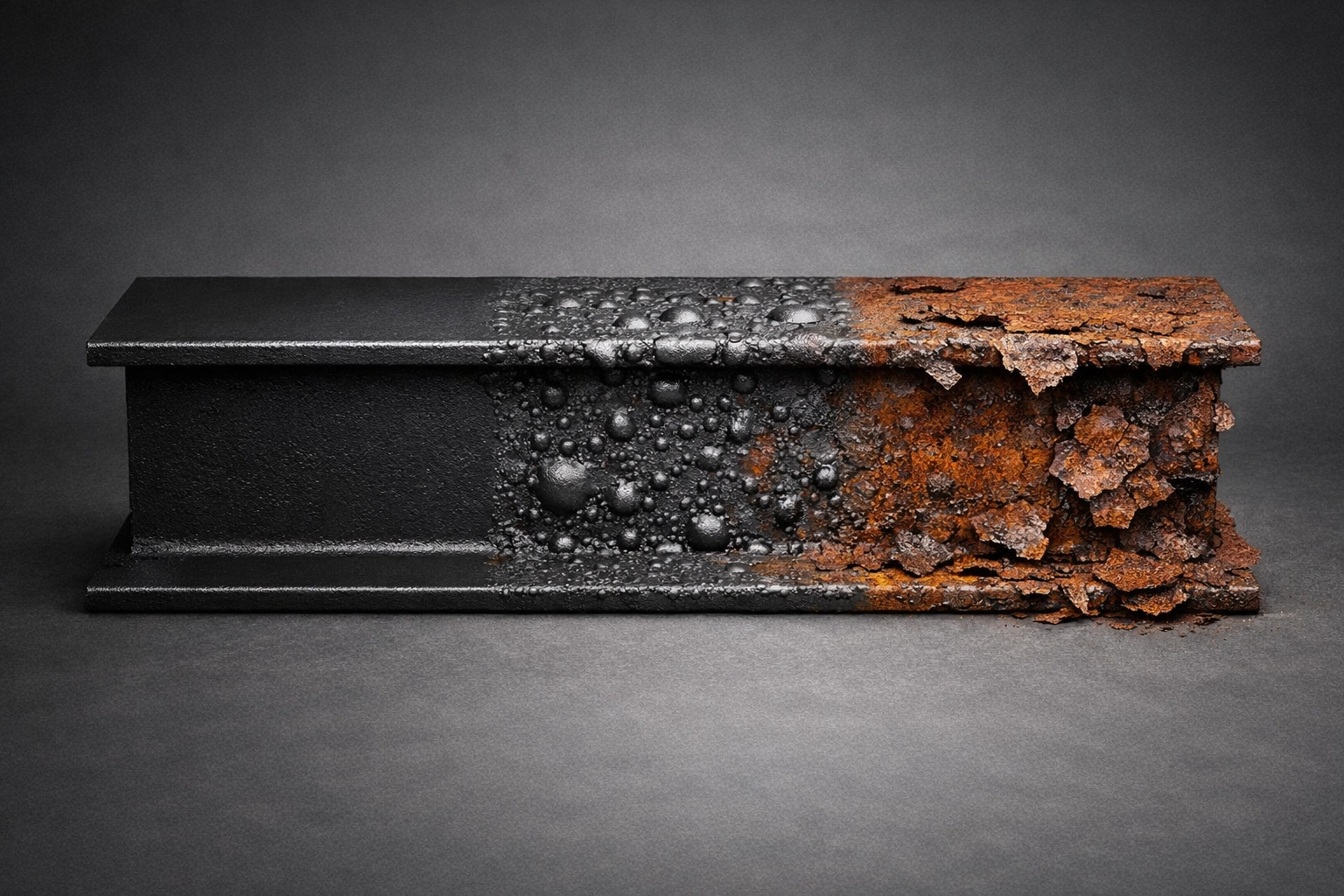
Perhaps the most deceptive sign of chassis rust is "bubbling." You may look at a chassis rail or a door sill and see the paint looks mostly intact, but it appears raised or swollen in specific spots.
This occurs because rust expands as it forms. As the iron in the steel oxidises, it grows in volume, physically pushing the paint or underseal away from the substrate. By the time you see a bubble the size of a five-pence piece, the actual area of corrosion underneath is likely three to four times larger.
Bubbling is particularly common around:
Wheel Arches: Where road grit sandblasts the paint away.
Weld Seams: Where two pieces of metal meet, creating a natural trap for moisture.
Drainage Holes: If these become blocked, water sits inside the chassis, rusting it from the inside out.
03: Where to Inspect: The "High-Risk" Zones
To truly understand the health of your chassis, you need to look where the sun doesn't shine. A quick glance at the bodywork isn't enough. Grab a torch and check these specific areas:
The Chassis Rails
These are the structural "backbone" of your vehicle. Look for any signs of the black factory coating peeling off or turning an orange-red colour. Pay close attention to the top of the rails where they meet the floor pan, as mud often sits here, holding moisture against the metal.
Suspension Mounting Points
Because these areas are under constant stress, any thinning of the metal due to rust is a major safety concern. Early signs include "scaling": where the rust looks like it’s forming layers, similar to a pastry.
Inner Sills and Valances
These are the areas directly behind your side skirts. They are frequently bombarded by water from the front tyres. If you see "rust staining" (streaks of orange water) running down from these areas after rain, it is a sign that the internal cavities are corroding.

04: The UK Factor : Why Early Signs Progress Quickly
In the UK, we face a "perfect storm" for vehicle corrosion. Our winters involve heavy use of road salt (sodium chloride), which acts as an electrolyte, significantly speeding up the rusting process. Furthermore, our high humidity means that once a vehicle gets wet, it stays damp for longer, especially in the enclosed "box sections" of the chassis.
This is why a vehicle that looks perfect in July can show significant "scale" by the following March. Understanding the best rustproofing method for UK roads is essential for any owner planning to keep their car for more than a few years.
05: Surface Rust vs. Structural Corrosion
It is vital to distinguish between what can be saved and what requires a welder.
Early/Surface Rust: Can be scraped, cleaned, and chemically converted or sealed. The structural integrity remains 100%.
Scale Rust: The metal is starting to flake. You can pick bits off with your fingernail. This requires more aggressive cleaning and high-quality cavity waxes to stop.
Structural Corrosion (Perforation): The rust has eaten all the way through. You can poke a screwdriver through the metal. At this point, the vehicle will likely fail its MOT and requires metal replacement.
At Rustec, our comprehensive inspection process determines exactly which stage your vehicle is at. We provide photo documentation so you can see exactly what we see, ensuring complete transparency.
06: How Rustec Addresses Early Signs
When we identify early signs of rust, we don't just "spray over it." That is a recipe for disaster, as it traps moisture and accelerates the decay. Instead, we follow a meticulous process:
Thorough Undercarriage Steam Clean: To remove all salt, grease, and loose debris.
Full Drying: Using industrial heaters to ensure no moisture is trapped.
Meticulous Masking: Protecting your brakes, exhaust, and bodywork.
Treatment: Applying the highest-quality products, such as Dinitrol, which includes a penetrating cavity wax (ML) for the "hidden" rust and a robust underbody wax (4941) for external protection.
This professional approach ensures your "pride and joy" remains rust-free throughout its life, backed by our Rustec Guarantee. If you are choosing between different products, you might find our guide on Dinitrol vs Lanoguard helpful in deciding which level of protection suits your vehicle's current condition.
Summary Checklist for Owners
To keep your vehicle in optimal condition, perform a "rust check" every six months:
Wash the underside: Use a pressure washer to clear out wheel arches and chassis rails.
Visual check: Look for orange stains or paint bubbles.
Touch test: Feel the chassis rails; they should be smooth and oily/waxy, not dry and rough.
Check the MOT history: Even if you just bought the car, check previous advisories for "underseal covering components" or "minor corrosion."
Related Questions / FAQ
Can I just spray WD-40 on early rust? While WD-40 is a water displacer, it is not a long-term rust preventative. It will wash off within a few miles of wet driving. You need a dedicated automotive wax or oil-based coating that bonds to the metal.
Is rustproofing worth it if I only see a tiny bit of rust? Absolutely. In fact, that is the best time to do it. It is far cheaper to prevent rust from spreading than it is to cut out rotten metal and weld in new sections later.
How often should I have my chassis inspected? We recommend a professional inspection once a year, ideally before the winter salt hits the roads. At Rustec, we offer a complimentary top-up service and yearly checks as part of our premium packages to ensure your protection remains intact.
Does a clean MOT mean my car has no rust? Not necessarily. An MOT tester is looking for structural failures or "excessive" corrosion within 30cm of mounting points. A car can have significant surface rust and "hidden" corrosion in the sills and still pass an MOT.
Don't wait for a small bubble to become a big hole. If you’ve spotted any of the signs mentioned in this guide, or if you simply want the peace of mind that comes with a professional evaluation, we are here to help.

Comments