
Should I rustproof my new car?
- Lloyd Saunders
- Jan 18
- 5 min read
You've likely already read that modern cars come with factory corrosion protection. You've probably seen advice suggesting that rustproofing a new vehicle is unnecessary. And yet, here you are, still wondering whether you should protect your brand-new car.
That lingering doubt? It's worth listening to.
The truth is more nuanced than a simple yes or no. Factory protection is real, and it does work: to a point. But whether that protection is sufficient for your car, in your driving conditions, across your ownership timeline, is an entirely different question.
Let's address your concerns head-on.
What factory rust protection actually covers
Every new car sold in the UK comes with some level of corrosion protection applied during manufacturing. This typically includes:
Galvanised steel panels on key body sections
E-coat (electrocoat) primer applied before paint
Wax-based cavity sealants in some enclosed sections
Basic underbody coatings on exposed areas
This protection is genuine. Manufacturers have invested heavily in corrosion prevention because rust-related warranty claims are expensive. Most new cars now carry corrosion warranties ranging from six to twelve years.
So why isn't this enough?
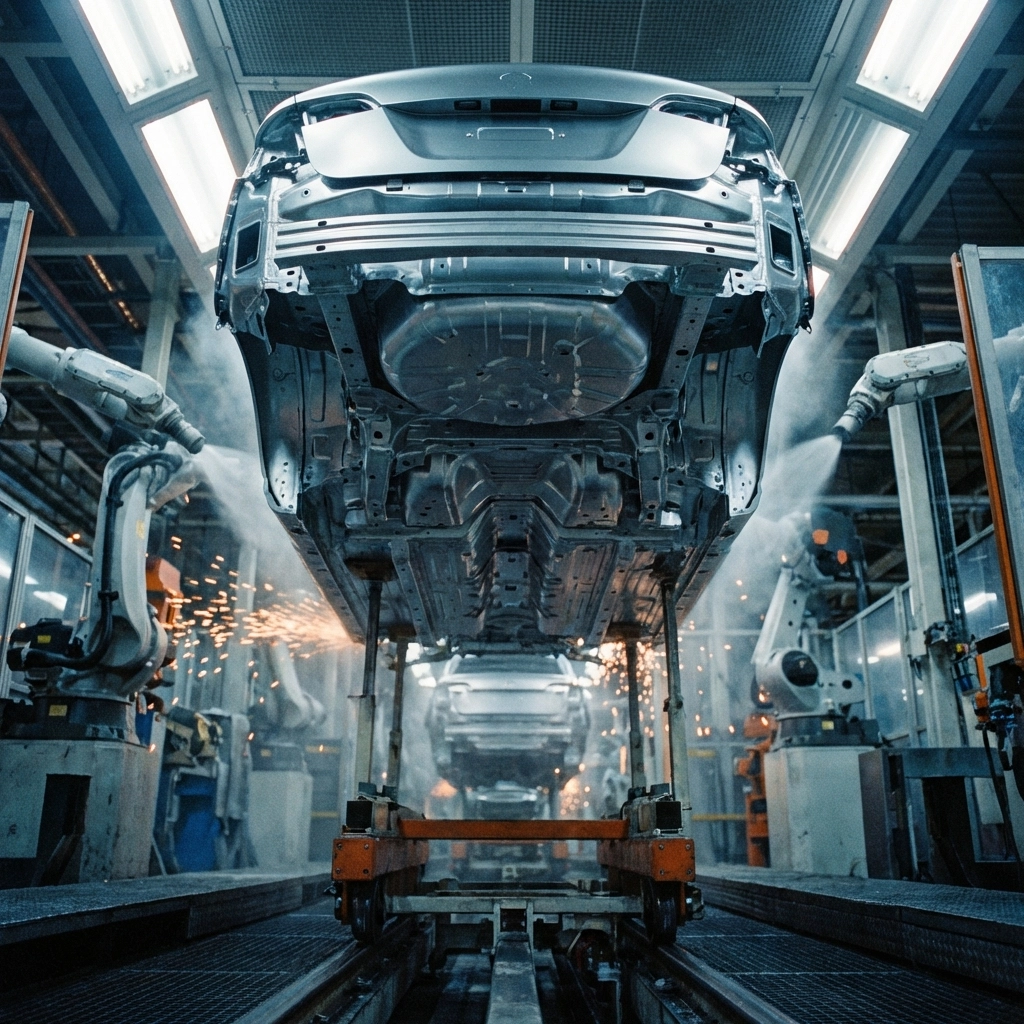
The gap between "protected" and "fully protected"
Factory protection is designed to meet warranty obligations: not to provide comprehensive, lifetime rust prevention. There's an important distinction here.
Galvanised panels protect against surface corrosion on body panels, but they don't cover every component. Chassis rails, suspension mounting points, brake lines, and countless other structural elements may not receive the same treatment.
E-coat primers provide excellent adhesion and base-level protection, but they're applied in a single, thin layer. Once stone chips, scratches, or abrasions breach this layer, the underlying steel becomes vulnerable.
Cavity sealants applied at the factory are often minimal. Manufacturers focus on high-visibility areas and may skip harder-to-reach cavities where moisture accumulates over time.
Underbody coatings vary dramatically between manufacturers. Some apply comprehensive protection; others provide only basic coverage that deteriorates within the first few years.
The result? Factory protection establishes a baseline, but it leaves gaps: gaps that UK driving conditions are particularly effective at exploiting.
Why UK roads accelerate rust formation
The United Kingdom presents a uniquely challenging environment for vehicle preservation. Our combination of climate and road maintenance practices creates ideal conditions for corrosion.
Road salt is the primary concern. Local councils spread approximately two million tonnes of salt on UK roads each winter. This salt doesn't simply disappear when temperatures rise: it accumulates in wheel arches, chassis cavities, and underbody recesses. When mixed with moisture, salt creates an electrolyte solution that dramatically accelerates the corrosion process.
Persistent moisture compounds the problem. The UK averages 156 rainy days per year. Vehicles rarely dry completely between exposures, meaning the electrochemical reaction that causes rust continues almost constantly during autumn and winter months.
Road grit and debris cause physical damage to protective coatings. Every motorway journey exposes your underbody to stone chips that breach factory protection and create entry points for moisture and salt.
Coastal environments introduce additional salt spray, even for vehicles that never encounter gritted roads.
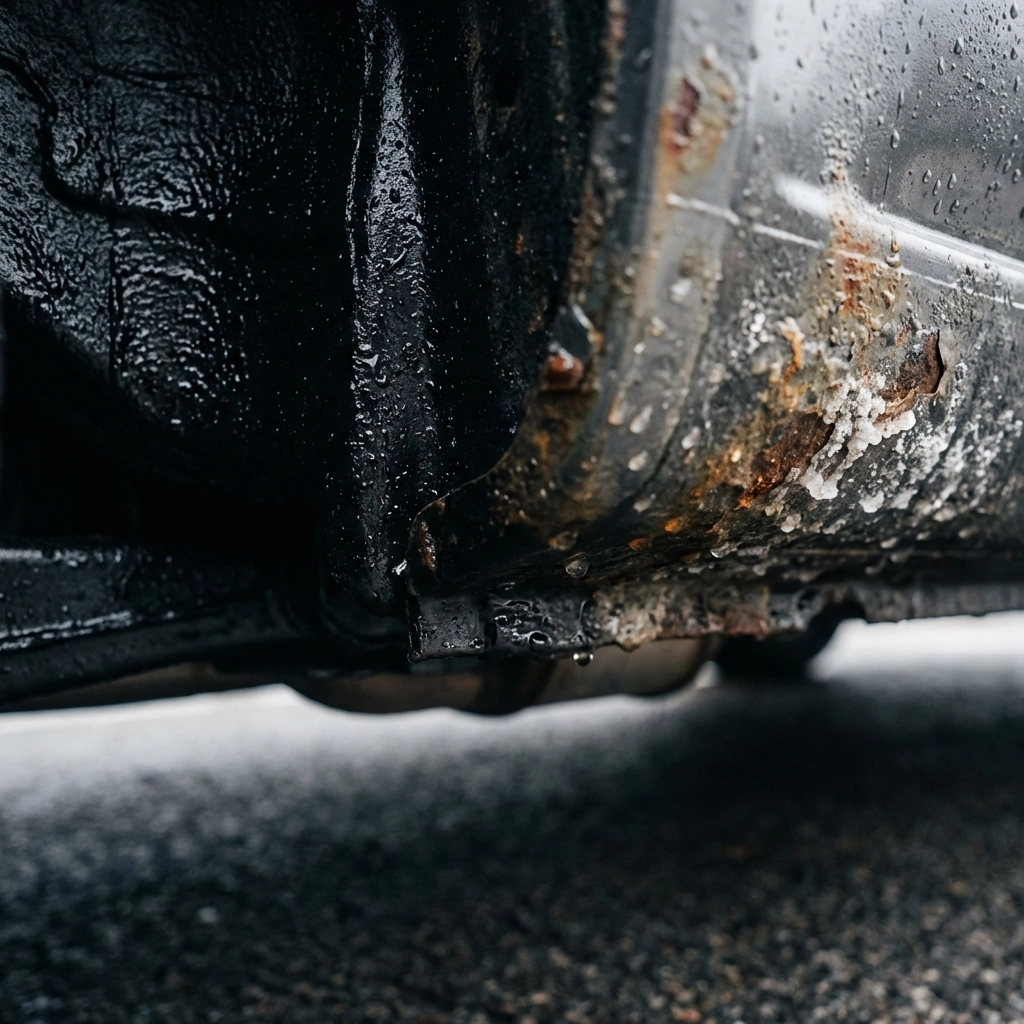
The hidden cost of waiting
One argument against rustproofing new cars suggests waiting until rust appears, then addressing it. This approach seems logical but misunderstands how corrosion develops.
Rust doesn't announce itself with obvious warnings. By the time you notice bubbling paint or visible corrosion, the damage has typically been progressing for months or years in areas you cannot see. Enclosed chassis sections, box sections, and cavity spaces corrode from the inside out. The first visible sign often indicates extensive hidden deterioration.
Repair costs escalate exponentially once rust establishes itself. Treating a rust-free vehicle costs a fraction of repairing structural corrosion. Welding repairs, panel replacement, and the labour involved in addressing established rust can quickly exceed the vehicle's residual value: particularly on older cars.
Safety implications are equally serious. Structural rust compromises crash protection, weakens suspension mounting points, and can affect brake line integrity. What begins as a cosmetic concern can become a genuine safety hazard.
Resale value suffers significantly. Buyers: particularly those purchasing used 4x4s, vans, and premium vehicles: actively inspect for underbody corrosion. A rust-free underside commands a meaningful premium, while visible corrosion raises immediate concerns about overall vehicle condition.
When rustproofing your new car makes sense
Not every new car owner needs additional rustproofing. Your decision should account for several factors:
Your location matters. If you live in a rural area with regularly gritted roads, near the coast, or in regions with harsh winters, your exposure risk increases substantially. Urban drivers on well-maintained roads face lower: but not zero: risk.
Your ownership timeline matters. Planning to keep your vehicle for three years before trading? Factory protection will likely suffice. Intending to keep it for a decade or longer? Proactive protection becomes increasingly valuable.
Your vehicle type matters. Some vehicles are more rust-prone than others. 4x4s, vans, and vehicles with complex underbody structures offer more opportunities for moisture accumulation. Land Rovers, commercial vehicles, and campervans particularly benefit from comprehensive treatment.
Your usage patterns matter. Regular motorway driving increases stone chip exposure. Off-road use introduces mud, water, and debris into areas that factory protection may not adequately cover. Fleet vehicles covering high mileage accumulate exposure faster than low-mileage commuter cars.

What professional rustproofing actually involves
Professional rustproofing goes far beyond spraying product onto an underbody. A comprehensive treatment involves:
Thorough inspection to assess current condition and identify vulnerable areas specific to your vehicle.
Complete underbody cleaning to remove road grime, salt deposits, and any existing contamination that could compromise adhesion.
Cavity treatment using specialist waxes designed to penetrate enclosed sections, box sections, and hard-to-reach areas that factory protection often misses.
Underbody protection using high-quality products that remain flexible, self-healing, and resistant to the stone chips and abrasions that defeat rigid coatings.
Documentation of the treatment for your records and potential future buyers.
The difference between professional treatment and DIY application lies in access, equipment, and expertise. Professionals identify and treat areas that home applications simply cannot reach effectively.
Making your decision
If you've read this far, you're clearly taking the decision seriously: which is exactly the right approach.
Consider your specific circumstances. A three-year lease on a vehicle you'll return to the dealer? Factory protection is probably adequate. A new Ford Transit you'll operate for fifteen years? Professional rustproofing represents a sound investment in long-term preservation.
The cost of treating a new vehicle is significantly lower than addressing established corrosion later. The products adhere better to clean, undamaged surfaces. The protection begins immediately, before UK conditions have any opportunity to compromise factory coatings.
The best time to rustproof a new car is before its first winter on salted roads. The second-best time is now: whatever stage of ownership you've reached.
At Rustec, we provide comprehensive rustproofing treatments using premium Dinitrol products, backed by our service guarantee. Our approach combines meticulous preparation, thorough cavity treatment, and complete underbody protection to ensure your vehicle remains rust-free throughout your ownership.
If you're still weighing your options, we're happy to discuss your specific vehicle and circumstances. There's no obligation: just honest advice from specialists who understand what UK conditions do to vehicles over time.
Your new car represents a significant investment. Protecting that investment from the corrosion that affects thousands of UK vehicles each year is a decision you're unlikely to regret.
Comments