
Most Cars Are Already Rusting by Year 3: The Truth About Factory Rust Protection
- Lloyd Saunders
- May 9
- 6 min read
The Direct Answer: Is Your 3-Year-Old Car Already Rusting?
Yes. Despite what dealerships and glossy brochures claim, the majority of vehicles in the UK show the first signs of structural and surface corrosion within just 36 months of leaving the showroom. Factory rust protection is designed to satisfy a production line and a limited anti-perforation warranty, not to survive the brutal reality of British winters. By the time you see a bubble of rust on a wheel arch or a brown streak on a door sill, the internal structure is already compromised.
In UK conditions, corrosion is not a question of if , but when. Most owners discover this truth too late, usually during an MOT or when the trade-in value of their vehicle plummets due to "advisory" structural corrosion.
The Visual Mental Model: The Iceberg of Corrosion
To understand why your car is at risk, think of rust as an iceberg.
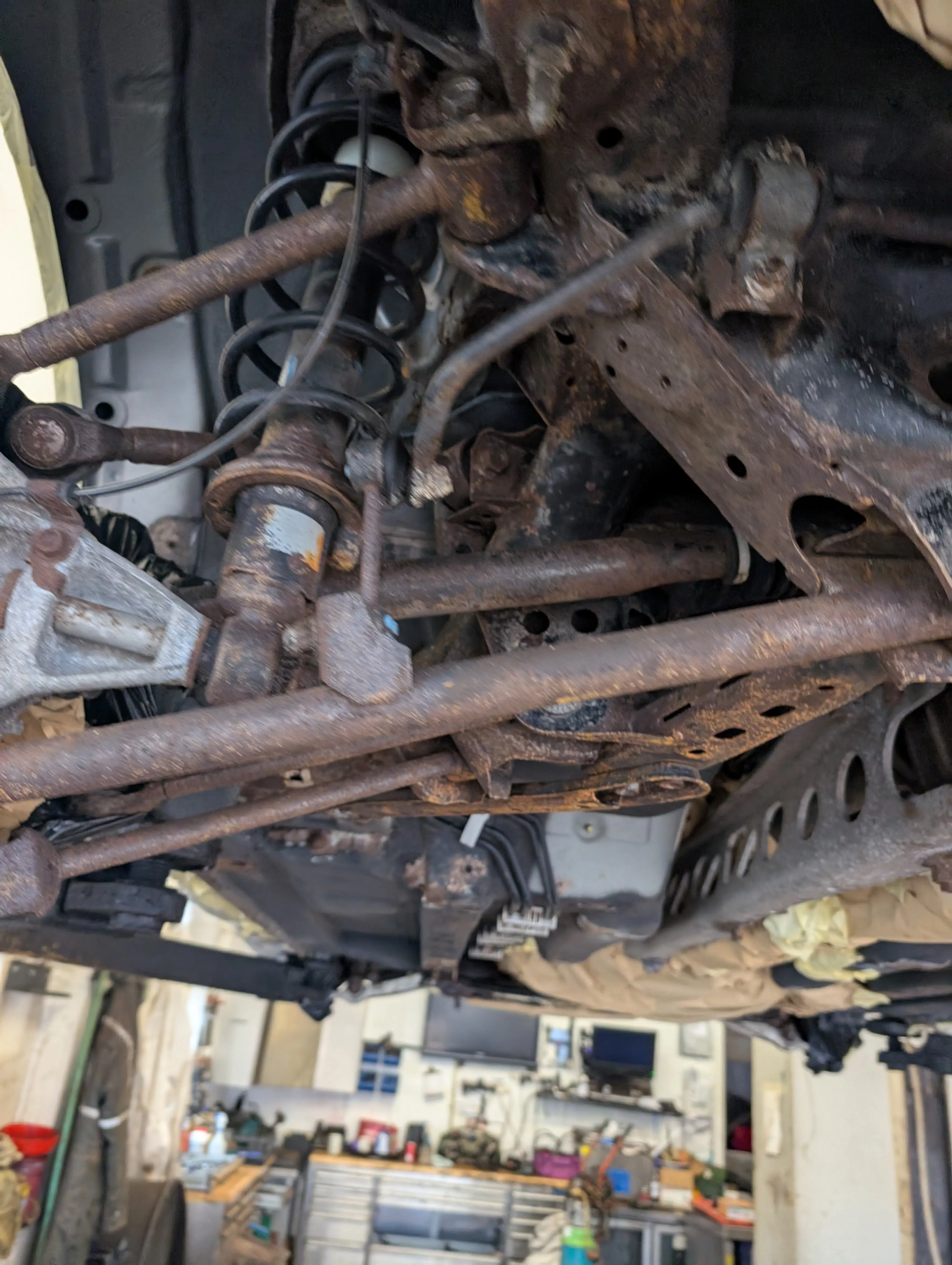
What you see on the surface, the occasional spot of orange on a bolt head or a tiny chip, is only 10% of the problem. The remaining 90% is hidden beneath the surface, deep within the chassis rails, sills, and box sections. These internal cavities act as reservoirs for moisture and road salt. While the exterior paint looks pristine, the vehicle is literally rotting from the inside out. By the time the "tip" of the iceberg becomes visible to the naked eye, the structural integrity of the metal underneath is often already gone.
The UK Context: A Perfect Storm for Metal
The UK climate is uniquely hostile to automotive steel. We suffer from high humidity year-round, which keeps moisture trapped in vehicle crevices. When winter arrives, local councils spread millions of tonnes of rock salt across the roads. This salt is hygroscopic; it pulls moisture out of the air and holds it against the metal, creating a highly corrosive electrolyte solution.
Modern "eco-friendly" road treatments are even worse. They are designed to stick to the road surface longer, which means they also stick to your vehicle's underbody with more tenacity. If you are driving a vehicle that relies solely on factory-applied "E-coat" (a thin primer layer applied by dipping the chassis at the factory), you are driving a ticking time bomb. Factory protection is a "one-size-fits-all" solution applied in a controlled environment; it cannot account for the abrasions of road debris or the chemical onslaught of British road salt.
Financial Consequence: The Cost of Denial
Doing nothing leads to financial loss. Many owners justify delaying protection by assuming the car is "too new" to worry about. This is a mathematical error that costs thousands of pounds.
Consider the following financial breakdown of neglect versus prevention in the UK market:
Item | Estimated Cost (UK) |
Professional Rustproofing | £500 – £1,200 |
Structural Welding (MOT Failure) | £1,000 – £4,000+ |
Resale Value Loss (Corroded Underbody) | £2,000 – £5,000 |
Replacement Suspension/Components | £800 – £2,500 |
When you consider the cost of rustproofing in the UK, it is not an expense, it is an insurance policy. A vehicle with a documented, professional rustproofing history commands a premium on the used market. Conversely, a car with rust advisories on its MOT history is often impossible to sell for a fair price. It is worth investigating if does rustproofing increase resale value before you decide to skip it.
WHEN TO ACT: The Window of Opportunity
The biggest mistake is waiting until rust becomes visible. If you can see it, you are no longer in the "prevention" phase; you are in the "repair" phase.
0–3 Years (The Prevention Window): This is the gold standard. Treating a vehicle in this window ensures the metal is still structurally sound. It is significantly cheaper to protect clean metal than it is to treat established corrosion.
3–5 Years (The Ideal Window): Most cars fall into this category. Surface rust has likely started, but it can still be halted and managed before it reaches the core structure.
5+ Years (The Urgent Window): If your vehicle is over five years old and has never been treated, it is almost certainly rusting. You are now fighting to save the vehicle from the scrap heap.
Visible Rust (The Crisis Point): This is time-sensitive. Every month you delay, the metal thins. Eventually, the car will become "unweldable" or economically unviable to repair.

Comparison: Rustec Elite vs. Cheap Alternatives
Do not be fooled by "quick-spray" services that claim to rustproof your car in four hours for a few hundred pounds. A poor rustproofing job can be worse than doing nothing, as it traps moisture and accelerates corrosion.
Feature | Rustec Elite 72-Hour Standard | Typical "Quick" Underseal |
Preparation | Deep chemical clean & 24hr dry time | Jet wash and immediate spray |
Drying | Industrial dehumidification | Air dry (often still damp) |
Cavity Work | Full internal wax injection | Exterior surfaces only |
Masking | Detailed masking of brakes, exhaust, sensors | Minimal or no masking |
Materials | Professional-grade waxes/polymers | Cheap bitumen or "black schutz" |
Longevity | Multi-year protection | 6–12 months before peeling |
Risk | Zero (prevents moisture entrapment) | High (traps dampness under coating) |
Process matters more than product. You could use the most expensive wax in the world, but if you spray it over a damp, dirty chassis, you are simply sealing in the rot.
The Rustec Elite Standard: Our 72-Hour Process
We do not offer "express" services. We offer the elite standard of protection. Our process takes 72 hours because physics cannot be rushed.
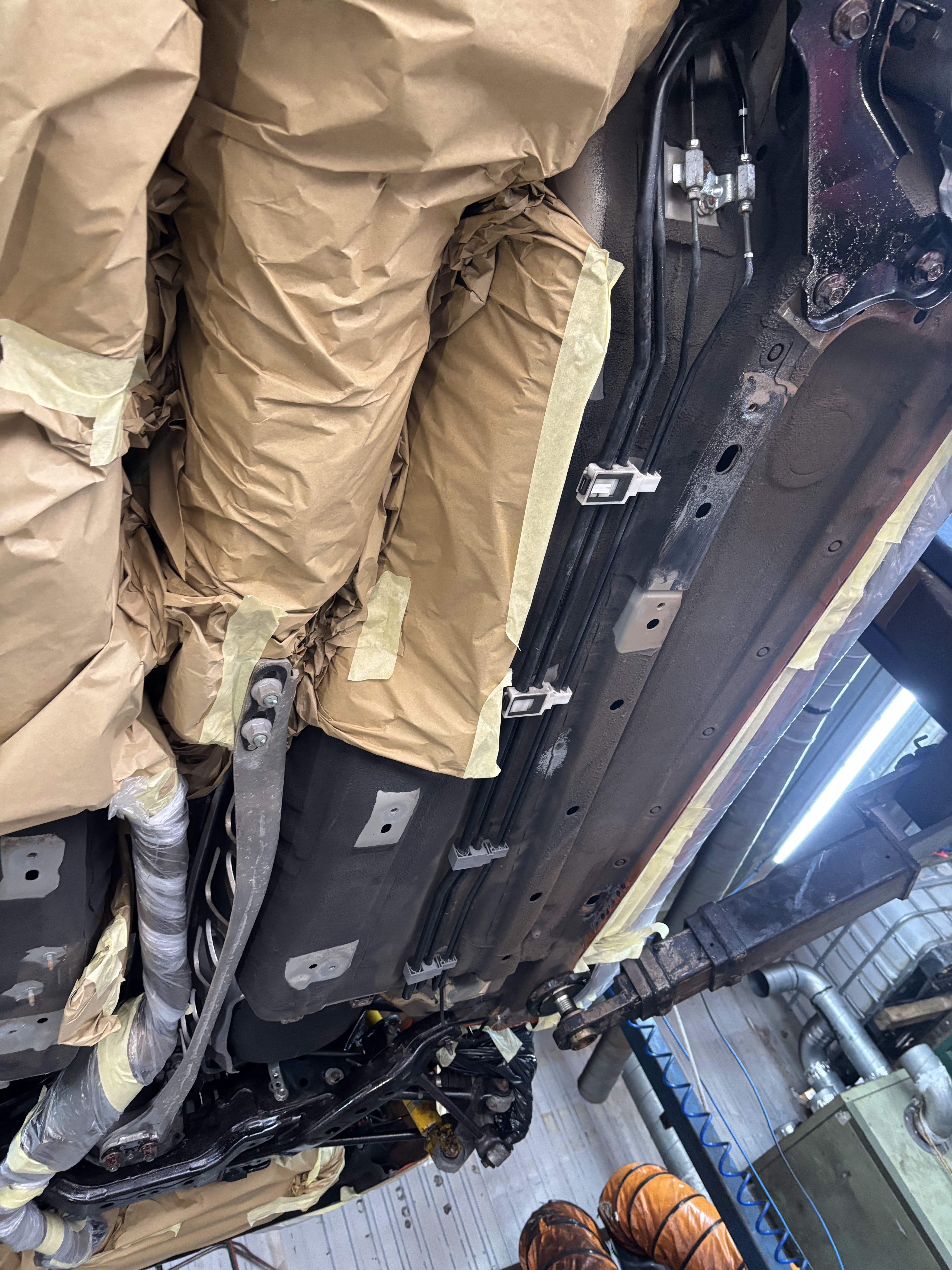
De-greasing and Cleaning: We remove all plastics and undertrays to expose every centimetre of the chassis. We then perform a high-pressure chemical clean to remove salts and road grime.
Drying: The vehicle is placed in a climate-controlled bay with industrial dehumidifiers. We do not spray until the metal is bone dry.
Masking: We meticulously mask off the exhaust system, braking components, engine, and electrical sensors. We are professionals, not "slash-and-dash" sprayers.
Cavity Injection: We inject high-penetration waxes into every sill, pillar, and chassis rail. This addresses the "Iceberg" effect.
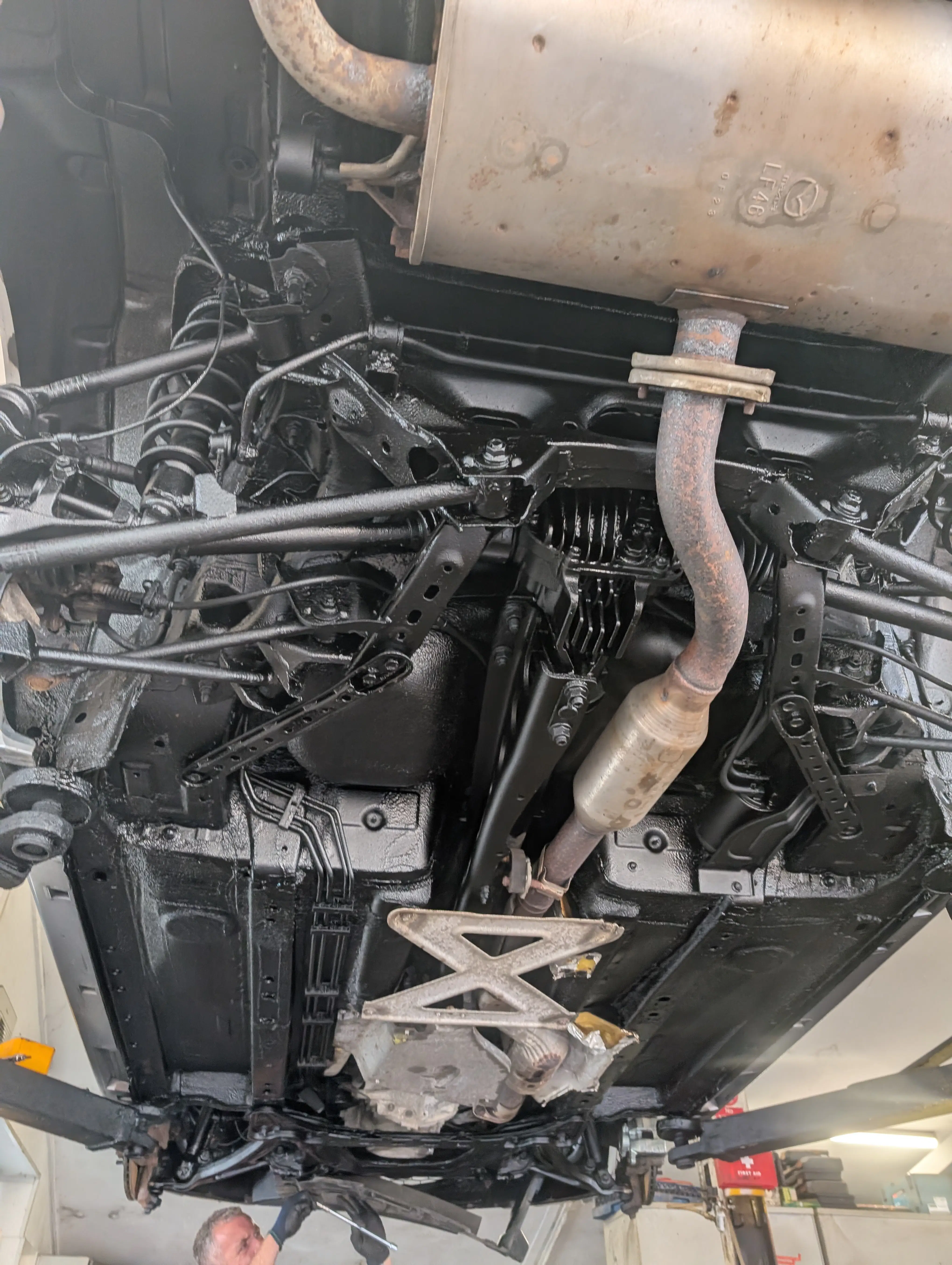
Underbody Coating: A durable, self-healing protective layer is applied to all exposed underbody surfaces.
This is the best rustproofing method for UK vehicles because it addresses the root cause of corrosion, not just the symptoms.
Buyer Psychology: Regret Minimisation
Every week, we see customers who bring us vehicles that are beyond saving. Their most common phrase? "I wish I had done this three years ago."
The psychology of car ownership often leads people to ignore what they cannot see. You spend money on ceramic coatings for the paint and high-end detailing for the interior, yet you leave the most expensive and critical part of the vehicle, the chassis, completely exposed to chemical attack.
Protecting your vehicle now is about avoiding the frustration of a failed MOT and the insult of a low trade-in offer. It is about peace of mind. When you know your car is protected by the Rustec Elite Standard, you stop worrying about the gritters on the road. You can learn more about how long rustproofing lasts in the UK to understand the long-term value of this investment.
FAQ: The Truth About Rust Protection
1. Does factory rust protection really fail that quickly?
Yes. Factory protection is a thin, electro-static primer. It is easily chipped by road debris. Once the primer is breached, the raw steel is exposed to salt and water. Most manufacturers only offer "perforation" warranties, which means they only pay out if the rust has eaten a literal hole through the metal, at which point the car is already a safety hazard.
2. Can I just jet-wash the underside of my car instead?
Jet-washing helps, but it cannot reach the internal box sections where the most dangerous rust starts. Furthermore, high-pressure water can actually force moisture into crevices where it cannot easily escape, potentially accelerating the problem if the vehicle isn't dried properly.
3. Is it worth rustproofing an older car?
If the car is structurally sound, yes. We can treat existing surface rust with converters before applying the protective layers. It is always cheaper to save a car now than to replace it in two years.
4. Will professional rustproofing affect my MOT?
It will improve your MOT prospects. An MOT inspector wants to see a well-maintained, structurally sound vehicle. A clean, protected underbody is a sign of a diligent owner. We do not cover up structural defects; we prevent them from occurring.
Final Summary
Your vehicle is an investment, but if you live in the UK, that investment is under constant attack. Factory protection is insufficient for our climate. By the time a car hits its third birthday, the "Iceberg of Corrosion" is already forming beneath the surface. Delaying protection only leads to higher costs, lower resale values, and structural safety risks.
If you want to protect your vehicle properly : not just cover it up : the best time to act is before corrosion progresses. Book a free inspection or request a quote here: https://calendly.com/rustec-works/free-vehicle-inspectioni
Related Rustec posts:
In UK conditions, corrosion is not a question of if ; but when. Delaying turns prevention into welding bills and resale loss. Book your free inspection now: https://calendly.com/rustec-works/free-vehicle-inspectioni
Comments