
Can I paint over rust before undersealing?
Yes, you can paint over rust before undersealing, but the sequence and products you choose are absolutely critical to preventing future corrosion problems. Many vehicle owners make the mistake of rushing this process or using incompatible products, which can actually accelerate rust formation rather than prevent it.
The short answer is that proper rust treatment and painting should be completed before applying any underbody protection. However, understanding the correct methodology and product compatibility is essential for long-term success.
The Correct Sequence for Rust Treatment and Undersealing
Professional rust prevention follows a precise sequence that cannot be shortcuts without compromising effectiveness:
Step 1: Comprehensive Rust Assessment and Removal Begin with thorough cleaning using wire brushes, steel wool, or mechanical means to remove loose rust, flaking paint, and debris. This step is crucial – any remaining loose material will continue to deteriorate beneath subsequent treatments.
Step 2: Surface Preparation Sand all treated areas with appropriate-grade sandpaper, paying particular attention to the boundaries where rust meets sound metal. This creates the mechanical bond necessary for primer adhesion and ensures smooth transitions between treated and untreated areas.
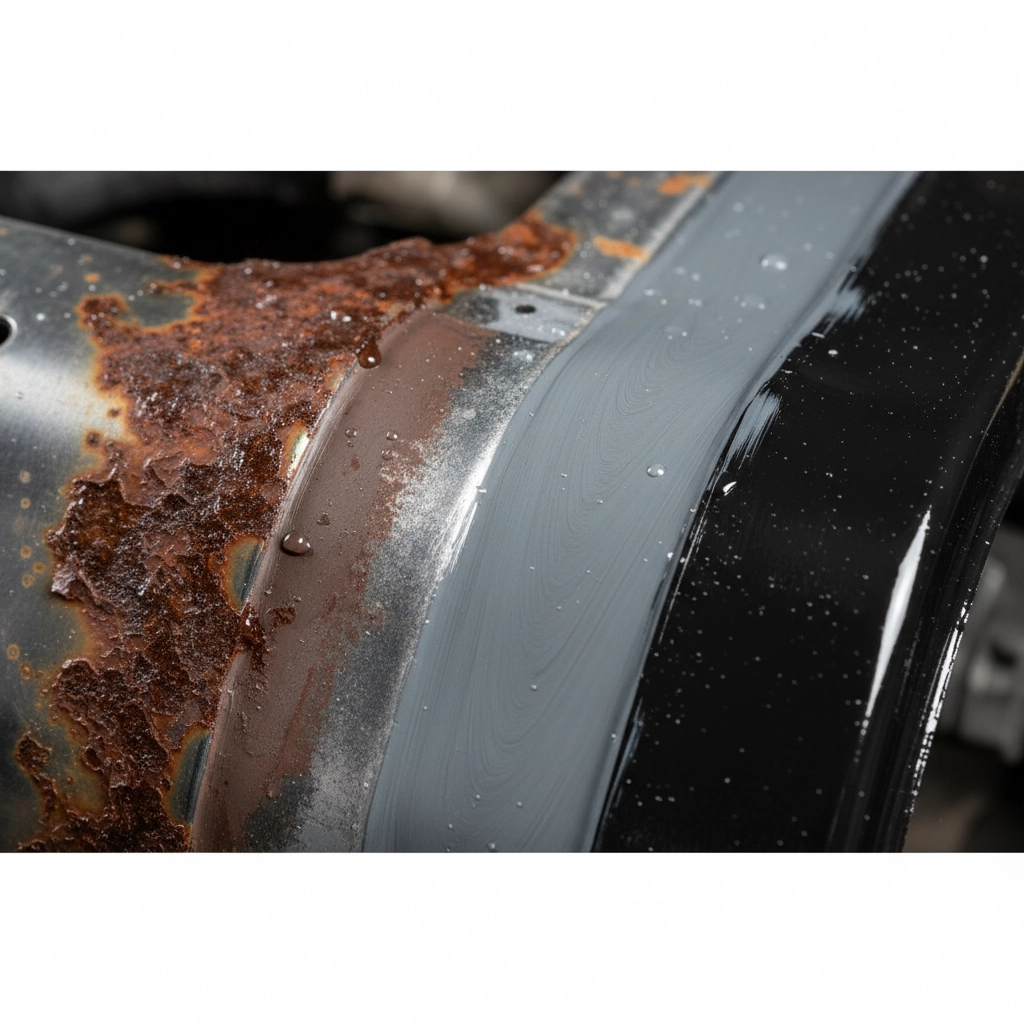
Step 3: Chemical Rust Treatment Apply a high-quality rust converter or neutralising primer specifically designed for automotive applications. These products chemically transform existing rust into a stable compound that prevents further oxidation.
Step 4: Protective Primer Application Once the rust converter has fully cured, apply a corrosion-resistant primer designed for metal surfaces. This creates the foundation for subsequent paint adhesion and provides additional barrier protection.
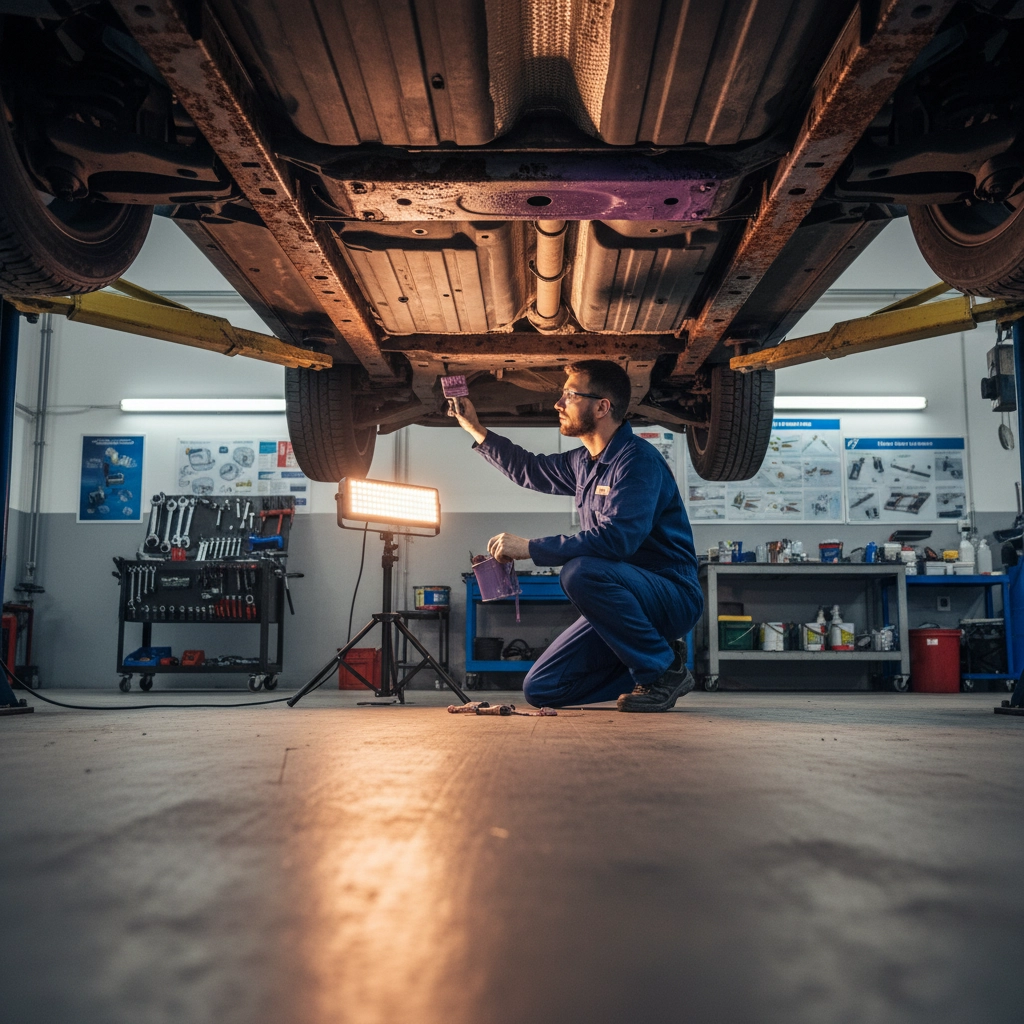
Step 5: Protective Paint Coating Apply exterior-grade metal paint in multiple thin coats rather than single thick applications. This ensures proper curing, maximum durability, and optimal protection against moisture penetration.
Step 6: Underbody Protection Application Only after complete paint curing should underbody protection be applied, and product selection here is critical for success.
Why Product Compatibility Matters
The relationship between paint and underseal products is complex and poorly understood by many DIY enthusiasts. Traditional bitumen-based underseals and some wax-type coatings can create moisture traps when applied over painted surfaces, leading to accelerated corrosion rather than protection.
Problematic Combinations:
Heavy bitumen underseals over paint
Cheap wax-based products without proper adhesion properties
Rubberised coatings that lack breathability
Compatible Systems: Modern underbody protection systems such as Dinitrol's range of products are specifically formulated to work effectively over properly prepared painted surfaces. These advanced formulations provide superior corrosion resistance without creating the moisture-trapping issues associated with older technologies.
Professional vs DIY Considerations
While the theoretical process appears straightforward, achieving professional-grade results requires significant expertise, proper equipment, and access to premium-quality products.
DIY Limitations:
Difficulty accessing all rust-prone areas without proper lifting equipment
Incomplete rust removal due to limited visibility and tools
Product application inconsistencies leading to coverage gaps
Inadequate surface preparation affecting long-term durability
Limited access to professional-grade materials
Professional Advantages:
Comprehensive inspection capabilities to identify all affected areas
Access to professional-grade rust treatment and protection products
Proper application equipment ensuring consistent coverage
Experience with product compatibility and optimal application techniques
Lifetime guarantees on workmanship and materials
The Rustec Professional Approach
At Rustec, our comprehensive rustproofing process addresses every aspect of rust prevention, from initial assessment through to long-term maintenance planning.
Our Methodology:
Detailed pre-treatment inspection identifying all current and potential rust sites
Thorough undercarriage cleaning removing salt, debris, and loose materials
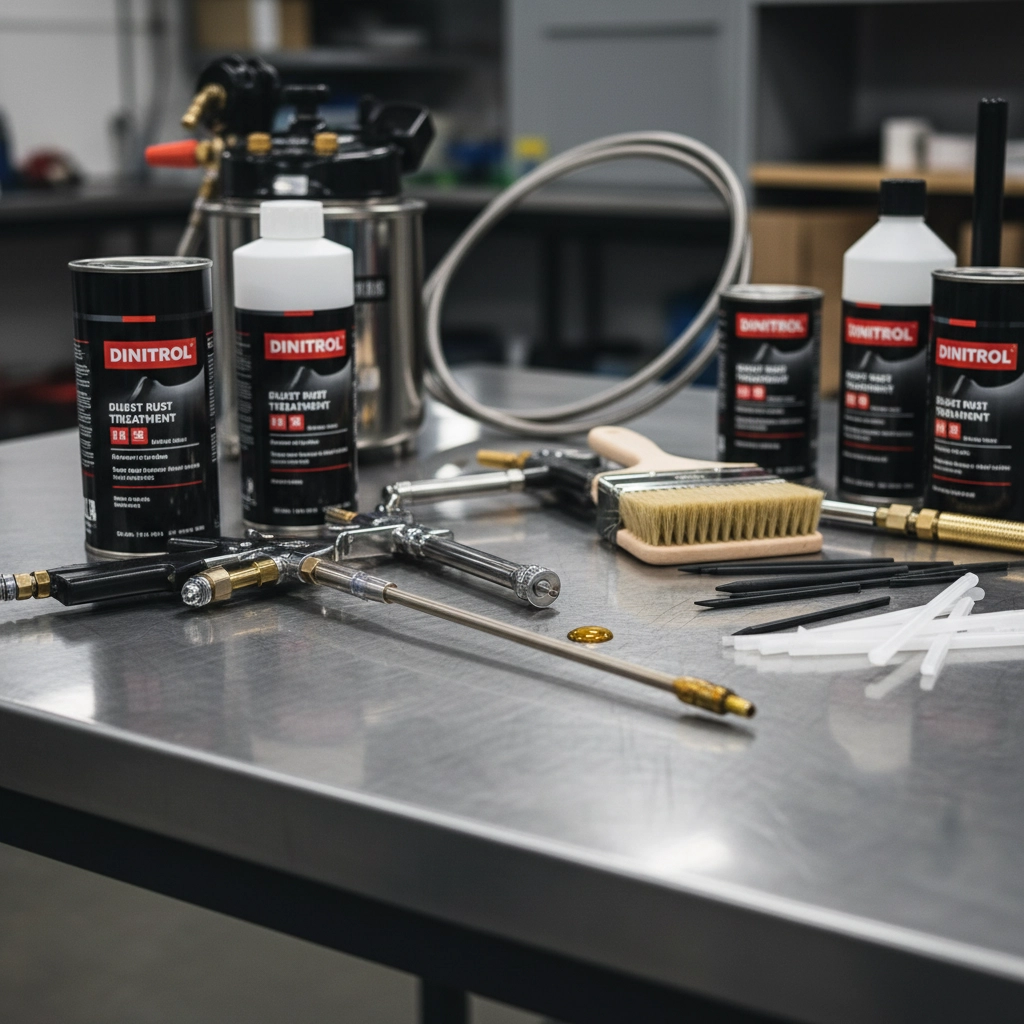
Professional rust treatment using premium Dinitrol products
Systematic application ensuring complete coverage of all vulnerable areas
Quality control verification with photographic documentation
Post-treatment inspection confirming treatment effectiveness
Our technicians understand the critical importance of proper surface preparation and product sequencing. When rust treatment and painting are required, we ensure complete compatibility between all applied systems, eliminating the risk of moisture entrapment or chemical incompatibility.
Understanding Different Underseal Types
Not all underbody protection products are created equal, and understanding these differences is crucial when planning treatment over painted surfaces.
Dinitrol Systems:
ML (Cavity Wax): Penetrating protection for enclosed spaces
4941: Thixotropic underbody compound suitable for painted surfaces
RC900: High-build protective coating for extreme conditions
Each Dinitrol product is formulated for specific applications and substrate compatibility, ensuring optimal performance when applied according to manufacturer specifications.
Traditional Products: Older underseal technologies including heavy bitumen compounds and basic wax systems often lack the sophisticated chemistry required for compatibility with painted surfaces, leading to long-term adhesion and moisture-related problems.
Critical Success Factors
Several factors determine the success of painting over rust before undersealing:
Surface Preparation Quality: Inadequate rust removal or surface preparation inevitably leads to treatment failure, regardless of product quality.
Product Selection: Choosing compatible rust treatment, primer, paint, and underseal systems prevents chemical incompatibility issues.
Application Timing: Allowing adequate curing time between each treatment stage ensures optimal adhesion and performance.
Environmental Conditions: Temperature, humidity, and contamination during application significantly affect treatment success.
Coverage Completeness: Even small gaps in treatment coverage can become initiation points for future corrosion.
When Professional Treatment Is Essential
Certain situations demand professional intervention regardless of DIY capabilities:
Structural rust affecting chassis integrity
Extensive corrosion requiring welding or fabrication work
Classic or high-value vehicles where mistakes could be costly
Commercial vehicles requiring documented treatment for compliance
Situations where lifetime protection guarantees are needed
Common Mistakes to Avoid
Rushing the Process: Each treatment stage requires adequate curing time for optimal effectiveness.
Product Mixing: Combining incompatible products can create chemical reactions that compromise protection.
Inadequate Preparation: Shortcuts in rust removal or surface preparation guarantee premature failure.
Coverage Gaps: Incomplete treatment coverage creates corrosion initiation points.
Environmental Neglect: Applying treatments in unsuitable weather conditions affects curing and performance.
Long-Term Maintenance Considerations
Even professional-grade rust treatment and undersealing requires ongoing maintenance for optimal longevity. Regular inspection, particularly after winter months when road salt exposure is highest, allows early identification of any treatment degradation.
Professional maintenance services ensure continued effectiveness through systematic inspection, touch-up treatments where necessary, and proactive protection of newly vulnerable areas.
Making the Right Choice
While painting over rust before undersealing is technically possible and often necessary, the complexity of achieving long-lasting results makes professional treatment the preferred option for most vehicle owners.
Rustec's comprehensive approach eliminates the risks associated with DIY treatment while providing lifetime protection guarantees and ongoing maintenance support. Our experienced technicians understand the intricacies of rust treatment sequencing and product compatibility, ensuring optimal results that protect your investment for years to come.
For vehicles requiring rust treatment before protective undersealing, professional assessment and treatment provide the confidence that comes with expert application and comprehensive warranties. Contact our team to discuss your specific requirements and discover how our proven methodology can provide the long-term protection your vehicle deserves.

Comments